
Composers Who Were Inspirational Teachers
All over the world children are returning to school after the summer break. It seems timely to look at a few composers, who aside from writing extraordinary music, were also inspirational teachers. Today’s programme explores not only the composers music but also how they influenced their students
Antonio Vivaldi
Gloria: Gloria in excelsis Deo
Oxford Schola Cantorum
Northern Chamber Orchestra
Nicholas Ward
JS Bach
15 Two-Part Inventions: No 6 in E Major BWV 777
Peter Serkin (piano)
Gustav Holst
St Paul’s Suite: Jig
St Paul’s Chamber Orchestra
Christopher Hogwood (conductor)
Grace Williams
Sea Sketches: Calm Sea in Summer
Manitoba Chamber Orchestra
Roy Goodman (Conductor)
Leonard Bernstein
Overture: Candide
New York Philharmonic
Leonard Bernstein (conductor)

Antonio Vivaldi 1678 – 1741) ranks amongst the greatest Baroque composers and his influence during his lifetime was widespread across Europe. He pioneered many developments in orchestration and violin technique and established the concerto form as a widely accepted genre for both composers and performers. In September 1703, Vivaldi became Master of Violin at an orphanage called Devout Hospital of Mercy in Venice and soon became a successful teacher of music. Many of his compositions were written for the all-female music ensemble at the school and he was responsible for all the musical activity at the institution, composing two new concertos every month. Gloria in excelsis Deo from Gloria RV 589 is a familiar and popular piece among the sacred works of Vivald, probably composed in 1715
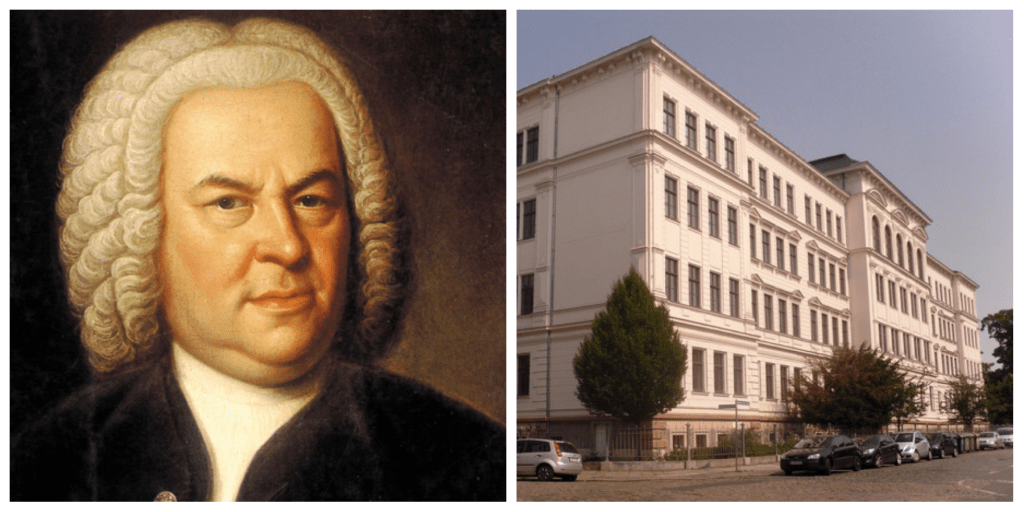
Johann Sebastian Bach (1685-1750) was an instructive and clear teacher and produced a band of pupils who followed in his footsteps as a composer. His teaching style was thorough; for months he required his students to practise nothing but simple exercises for the fingers of both hands, at the same time emphasising the need for clearness and distinctness. Not until his high expectations were met did Bach allow his pupils to practise his own substantial works. He would often write short studies which incorporated a particular exercise to help his students improve. These pieces include the Six Little Preludes for Beginners and the Fifteen Two-part Inventions, both of which Bach composed for a particular pupil. It has been estimated that some 300 students of the Thomasschule where Bach taught went on to become musicians and teachers.

The music of Gustav Holst (1874-1934) combines an international flavour based on the styles of composers such as Maurice Ravel and Igor Stravinsky. In the early years after leaving the Royal College of Music made his living as a trombone player in the Carl Rosa Opera Company and various other orchestras. He became music master at St. Paul’s Girls’ School in 1905 and director of music at Morley College in 1907. St Paul’s Suite in C major (Op. 29, No. 2) takes its name from St Paul’s Girls’ School in Hammersmith, London where Holst served as the school’s “music master” from 1905 to 1934. The suite is one of many pieces he wrote for the school’s students. The use of traditional English melodies keeps the work relatively simple and the end result is a superb piece of light music. Fellow composer Ralph Vaughan Williams considered him not only a good composer but a great teacher.

Grace Mary Williams (1906-1977) was a Welsh composer, generally regarded as Wales’s most notable female composer and the first British woman to score a feature film. From 1932 Williams taught in London, at Camden Girls’ School and the Southlands College of Education. During the Second World War, the students were evacuated to Grantham in Lincolnshire, where she composed some of her earliest works, including the Sinfonia Concertante for piano and orchestra, and her First Symphony. One of her most popular works, Fantasia on Welsh Nursery Tunes (1940) was written during this period. Sea Sketches for string orchestra was written in 1944 and her music is vividly evocative of the sea, in all its variety of moods.
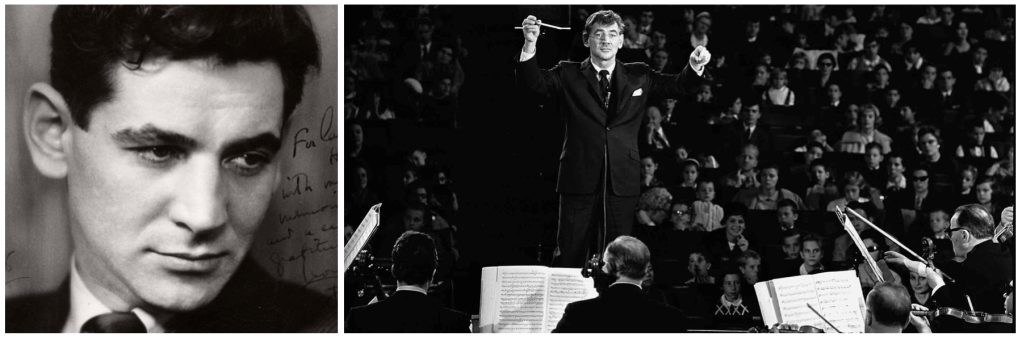
Leonard Bernstein was a famous composer, conductor, and pianist. However, of all his achievements, Bernstein’s daughter Jamie has said that her father was proudest of his work as an educator. A prime example of Leonard Bernstein’s teaching was the series of Young People’s Concerts he began just two weeks after becoming director of the New York Philharmonic in 1958. Backed by the orchestra, Bernstein gave beginner courses on music for children and their parents at Carnegie Hall and Lincoln Center. They continued for fourteen years under Bernstein’s baton and CBS broadcast them on weekend mornings and, for three years, in prime time.

Leave a comment