
Classical music has been the source of inspiration to many jazz musicians over the years such as Alice Coltrane, Charlie Mingus, Nina Simone and Miles Davis. But have there been any classical composers who been inspired to compose works influenced by the medium of jazz? Phil Whelan and Paul look at some incredible compositions where Classical meets Jazz
Dmitri Shostakovich (1906-1975)
Jazz Suite No 1 III. Foxtrot (Blues)
Russian State Symphony Orchestra
Dmitry Yablonsky (conductor)
William Russo (1928-2003)
Street Music: Three Pieces for Blues Band and Orchestra (2nd Movt)
Siegall-Schwall Band
San Francisco Symphony Orchestra
Seiji Ozawa (conductor)
Igor Stravinsky (1882-1971)
Piano-Rag Music
Thomas Adès (piano)
Kurt Weill (1900-1950)
The Ballad of Mack the Knife from The Threepenny Opera
Gerald Price
Original Off-Broadway Cast Recording (1954)
George Gershwin (1898-1937)
Rhapsody in Blue
Benjamin Grosvenor (piano)
Royal Liverpool Philharmonic
James Judd (conductor)

Dmitri Shostakovich was one of the most important musical figures of the 20th century. His 15 symphonies and his 15 string quartets represent a fascinating variety of musical styles – full of brutal irony, hysterical anger, bitter introspection and mock optimism. It’s extraordinary, therefore, that this ‘serious’ composer should write two jazz suites that were light-hearted, with certainly a nod to the influence of jazz. His Jazz Suite No 1 was composed in 1934 when Shostakovich was 28 years old and the quirky orchestration accentuates the unique character of Shostakovich’s music. Although Shostakovich is known for his intense, serious and emotional large-scale works, he was also very in tune with popular culture as the jazz suite shows.
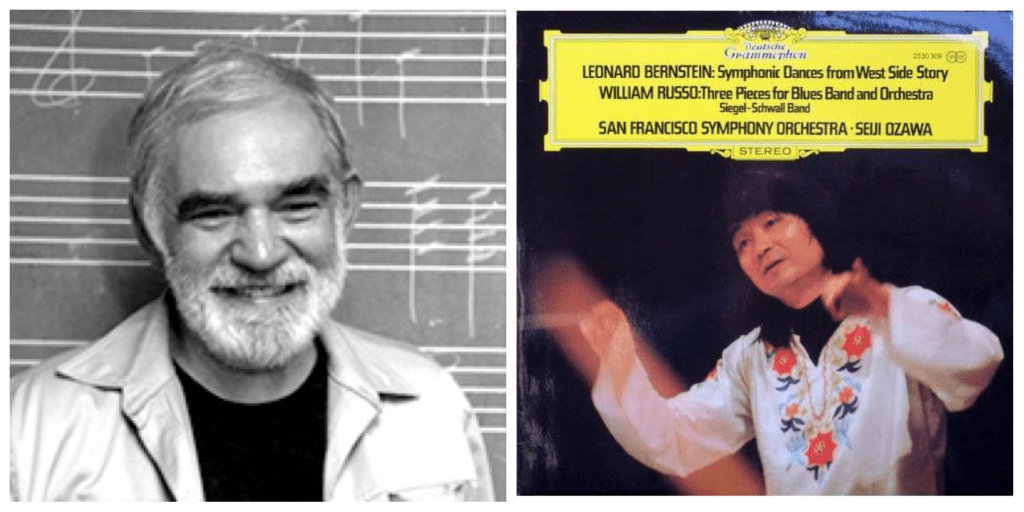
William Russo wrote orchestral scores for the Stan Kenton Orchestra in the 1950s and, at the same time, composed classical music, including symphonies, choral works, works for the theatre, often utilising elements from different genres. In 1959, his Symphony No. 2 in C received a Koussevitsky award, and the work was performed by the New York Philharmonic that year with Leonard Bernstein conducting and trumpeter Maynard Ferguson appearing as soloist. In 1966 Seiji Ozawa heard the Siegel-Schwall Blues Band perform in a Chicago bar and came up with the idea of combining blues and symphonic music and commissioned William Russo to compose a work. The result was recorded by Deutsche Grammophon and became one of their best-selling albums of all time.

Igor Stravinsky composed the Piano-Rag Music in 1919. He had, by that time, emigrated to France after his studies with Nikolai Rimsky-Korsakov in Russia and was confronted with American jazz combos. Stravinsky’s knowledge of jazz was at first limited to scores brought to him from the United States, however, he had managed to hear live jazz bands by the time he finished Piano-Rag. Stravinsky incorporates elements from his Russian period (shifting accents and bitonality) with rhythmic and harmonic fragments from ragtime. He wrote the piece for Arthur Rubinstein but it was premiered by José Iturbi on November 8 1919 in Lausanne.

Mack the Knife or The Ballad of Mack the Knife is a song composed by Kurt Weill with lyrics by Bertolt Brecht for their 1928 music drama The Threepenny Opera. The song tells of a knife-wielding criminal of the London underworld called Mack the Knife. The song became a popular standard recorded by many artists after it was recorded by Louis Armstrong in 1955. The most popular version of the song was by Bobby Darin in 1959, whose recording became a number one hit in the US and UK and earned him two Grammy Awards. Ella Fitzgerald also received a Grammy for her performance of the song in 1961. The song was a last-minute addition that was inserted before its premiere in 1928. Weill intended the singer to be accompanied by a barrel organ. At the premiere, the barrel organ failed, and the pit orchestra had to quickly provide the accompaniment for the street singer.
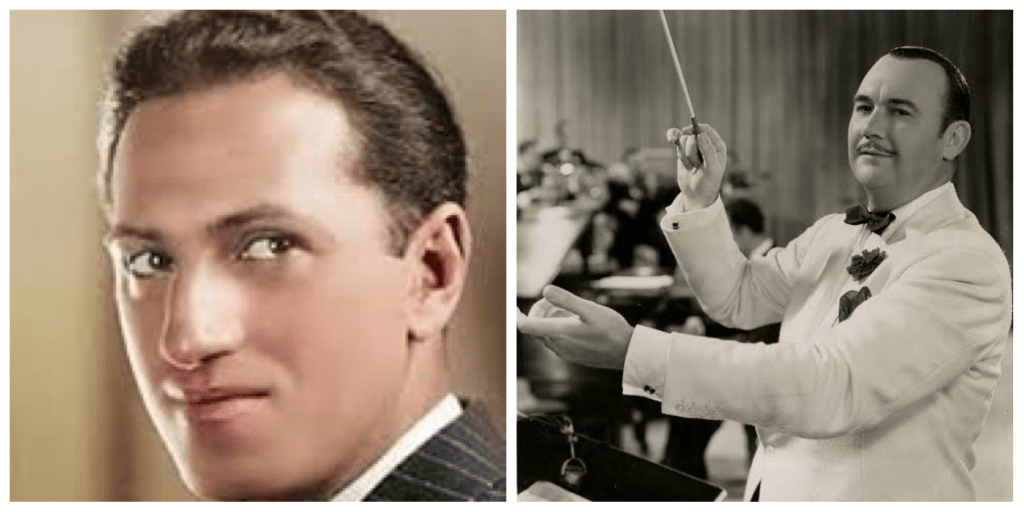
George Gershwin’s Rhapsody in Blue is well known for its integration of jazz rhythms with classical music. It was premiered on February 12, 1924, as part of bandleader Paul Whiteman’s An Experiment in Modern Music concert at New York’s Aeolian Concert Hall. The composition, perhaps Gershwin’s most famous, is one of the most performed of all American concert works, and its opening clarinet glissando is one of the most recognized musical passages in the world. Legend has it that Gershwin completely forgot that Whiteman had commissioned a work from him for the upcoming concert in New York. George’s brother Ira, read in a newspaper that Whiteman would soon perform a new ‘jazz concerto’ by George Gershwin. On hearing the news George expressed astonishment, but immediately set about writing one of the greatest American concert works with only five weeks left before the premiere.

Leave a comment