
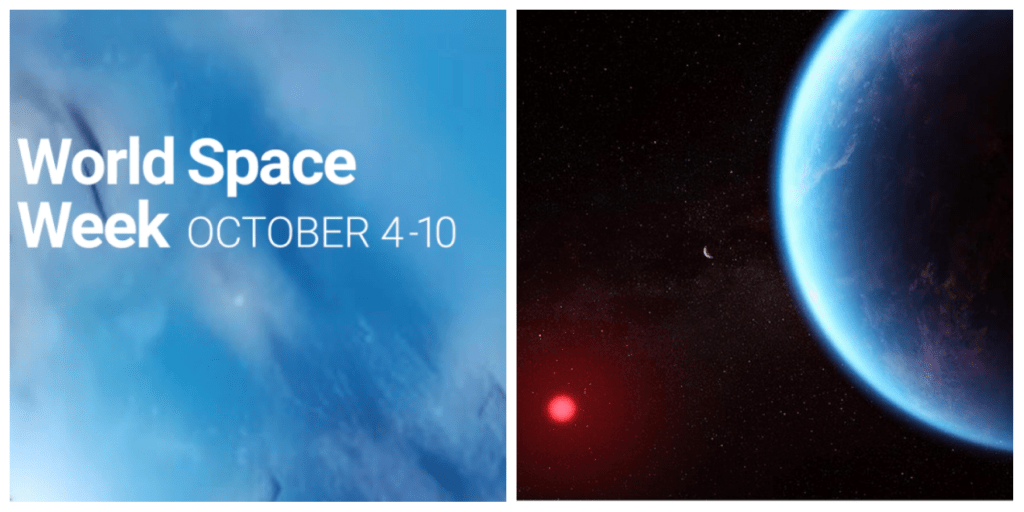
It’s World Space Week (4-10 October) whose aim is to strengthen the link between space and society through public education, participation, and dialogue on the future of space activity. Exciting stuff, especially as it is perfectly timed with the news this week that many astronomers are no longer even asking whether there is life elsewhere in the Universe as they are very optimistic of detecting life signs on a faraway world within our lifetimes – possibly in the next few years. It seems appropriate, therefore, to join the excitement by looking at music that has connotations with space and to hear how composers have created works with the cosmos in mind.
Philip Glass (b. 1937)
Musical Interlude from The Voyage
Vienna Radio Symphony Orchestra
Dennis Russell Davies (conductor)
Antonin Dvorak (1841-1904)
Rusalka: Song to the Moon
Lucia Popp (soprano)
Munich Radio Orchestra
Stefan Soltesz (conductor)
Richard Strauss (1864-1949)
Also sprach Zarathustra
Berlin Philharmonic Orchestra
Herbert von Karajan
Eric Whitacre (b. 1970)
Deep Field: Earth Choir
Royal Philharmonic Orchestra
Eric Whitacre Singers
Virtual Choir 5
Gustav Holst (1874-1934)
The Planets: Jupiter, The Bringer of Jollity
London Symphony Orchestra
Andre Previn (conductor)

Philip Glass’ The Voyage is an allegory about the spirit of exploration and the dislocation that must occur whenever different cultures clash. What drives people to travel, what are they looking for? Characters from the past and the future give different answers – including the scientist who travels across the universe without ever leaving his wheelchair, Christopher Columbus on his deathbed preparing for his last journey to the stars and travellers from another planet who crash on Earth are all part of this extraordinary work.

Dvořák followed in the nationalist footsteps of his predecessor Bedřich Smetana and his style absorbed folk influences. He wrote Rusalka, his penultimate opera, at the age of sixty, with just three years left to live. It proved his biggest operatic hit. Based on the folk tale of Undine, the water nymph, the aria comes in Act I, when Rusalka (the ‘little mermaid’) tells her father she has fallen in love with a mortal, and wants to become human. Having been pointed in the direction of the local witch, Rusalka sings to the moon, with the wish that the moon tells her beloved all about her. The Song to the Moon remains the shining-hit aria of the whole work.
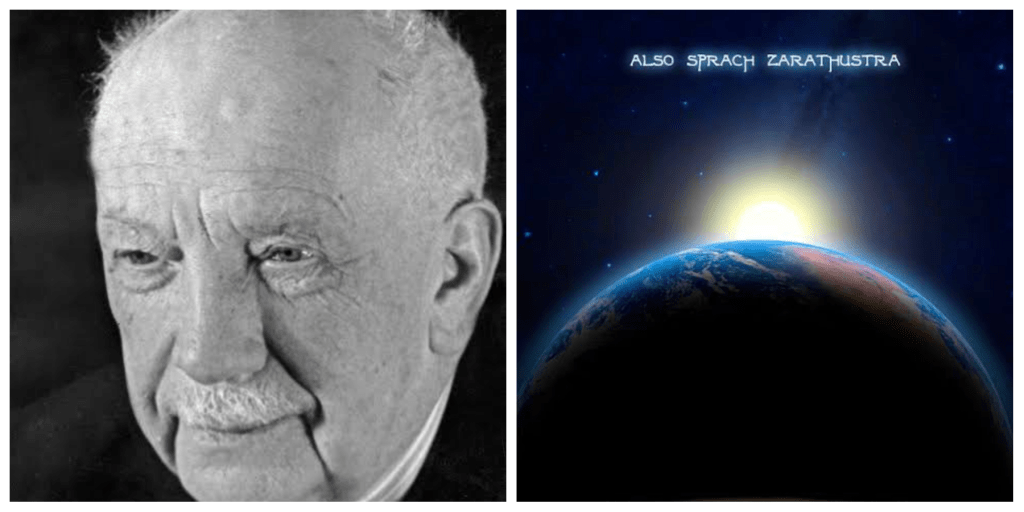
For some, Also sprach Zarathustra was the most memorable feature of Stanley Kubrick’s 2001: A Space Odyssey. Nevertheless, the non-concert going public probably remains largely ignorant of what happens in Zarathustra after its colossal 21-bar opening, featured in the 1968 film, culminating in that stupendous brass-and-percussion bang and celebrated skull-numbing organ blast.It’s difficult to discern why it should have been less frequently performed than, say, Strauss’ Ein Heldenleben – possibly the association with Friedrich Nietzsche’s knotty philosophical work of the same name – but the work is glorious and represents Strauss at his best.

Eric Whitacre is one of the most popular musicians of our time. His concert music has been performed throughout the world by millions of amateur and professional musicians alike, while his ground-breaking Virtual Choirs have united singers from over 110 different countries. Deep Field was inspired by the world’s most famous space observatory, the Hubble Space Telescope, and its greatest discovery – the iconic Deep Field image. Turning its gaze to a tiny and seemingly dark area of space (around one 24-millionth of the sky) and left for a 10-day long exposure, the Hubble Space Telescope revealed over 3,000 galaxies that had never previously been seen, each one composed of hundreds of billions of stars. Deep Field features Virtual Choir 5: more than 8,000 voices, aged 4-87, from 120 countries around the world.

Ironically, Holst was was rather distressed at the immediate success of the seven-movement The Planets when it was introduced in 1919 – he never considered it one of his best efforts. Holst began composing the work in 1914, yet, in spite of the first section’s title, Mars, the Bringer of War, it is not a war piece, for Holst was into it before the holocaust started. In his preface to The Planets, Holst advised that there is no program in the pieces and that the subtitles should be sufficient to guide the imagination of the listener. Holst’s music is brilliant, dramatic, and picturesque. Jupiter, the Bringer of Jollity, is the most thoroughly English section of the work, with Jupiter’s high spirits projected through broad, infectiously energetic musical themes.


Leave a comment