
Although it is one of the most complex of all musical instruments, the organ has the longest history and the largest and oldest repertoire of any instrument in Western music. From the earliest organs, first appearing in the 3rd century BC, through to the its most popular period during the Baroque era and its most important composer Johann Sebastian Bach (1685–1750), the organ witnessed significant tonal and mechanical advances and the gradual emergence of national schools of organ building. In today’s programme Phil and I explore some of the composers who have composed music for this magnificent instrument

Largest organ in the world, Broadwalk Hall, USA
George Frederic Handel (1685-1759)
Organ Concerto op 4, No 3 on G minor HWV 291 II. Allegro
Academy of Ancient Music
Richard Egarr
Leos Janacek (1854-1928)
Glagolitic Mass JW 3/9 VII Organ Solo
Ivan Sokol (organ)
Charles-Marie Widor (1844-1937)
Symphony No 5 in F minor op 21 I. Allegro vivace
Frederic Ledroit (organ)
Olivier Messiaen (1908-1992)
The Nativity of the Lord III. Eternal Purpose
Richard Gowers (organ)
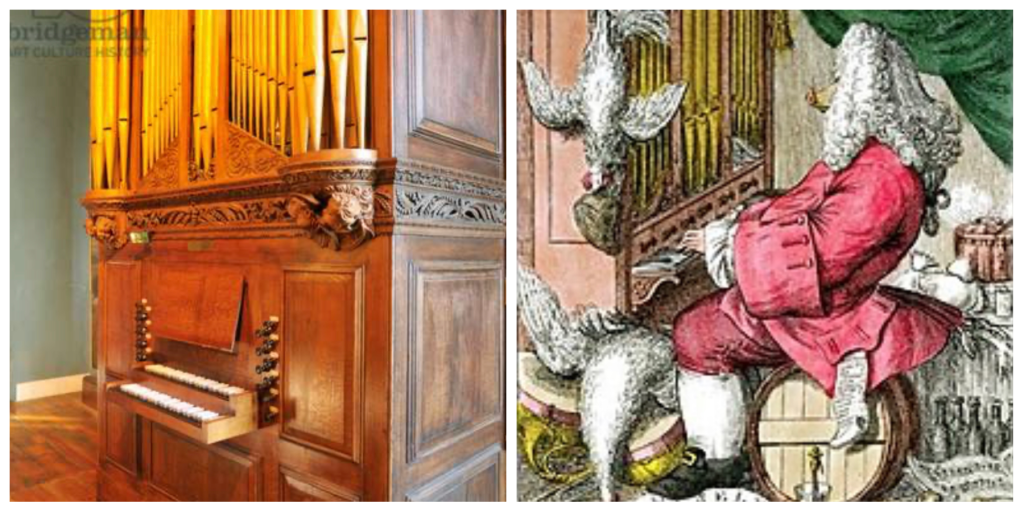
Caricature of Handel playing the organ
The Handel organ concertos, Op. 4, HWV 289–294, are six organ concertos for chamber organ and orchestra composed by George Frideric Handel in London between 1735 and 1736. They were written as interludes in performances of oratorios in in the newly opened theatre of John Rich in Covent Garden and were the first works of their kind for this combination of instruments. Handel’s prowess as an organist was well known so he decided to showcase himself as a virtuoso composer-performer, thus providing a rival attraction to the celebrated castrato Farinelli, the glittering star of his competitors.

Leoš Janáček was inspired by Moravian and other Slavic music, including Eastern European folk music, to create an original, modern musical style.
Although primarily an opera composer, Janáček had extensive experience working with choirs, as well as writing a large amount of choral music, so composing a work on the scale of the Glagolitic Mass was well within him grasp. Janáček’s Glagolitic Mass is considered an important work of the 20th century and the text used for the Mass is based on the Glagolitic alphabet, an early Slavic alphabet and the predecessor of the modern Cyrillic alphabet. During the Mass, Janáček introduces a dramatic organ solo of considerable originality – a moto perpetuo of wild energy.
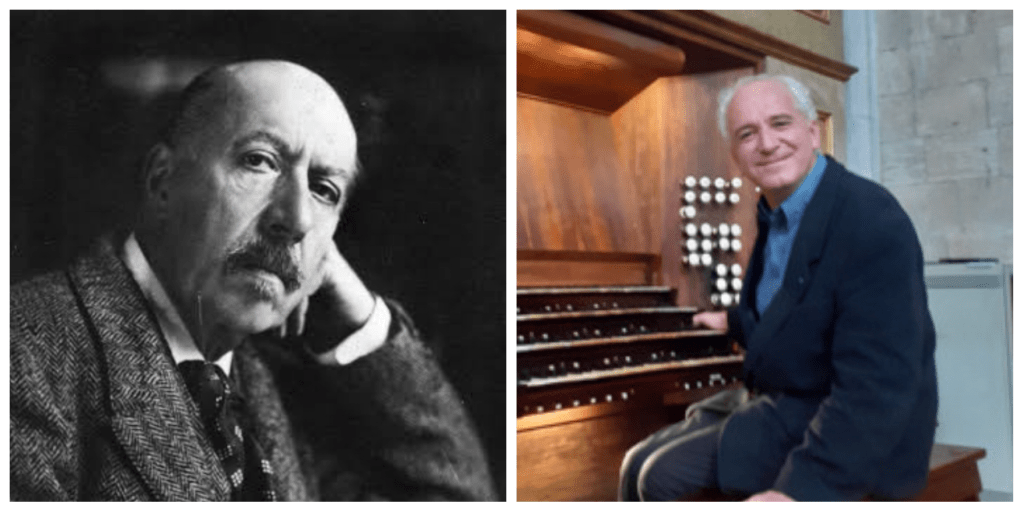
Charles-Marie Widor was a French organist, composer and teacher of the late Romantic era. As a composer he is known for his ten organ symphonies, especially the toccata of his fifth organ symphony, which is frequently played as recessional music at weddings and other celebrations. He also was organ professor at the Paris Conservatory from 1890 to 1896 (following César Franck). He was a prolific composer, writing music for organ, three symphonies for orchestra and organ, several songs for piano and voice, four operas and a ballet. Although referred to as a ‘symphony’, this work does not fit that title in the traditional sense – rather, the term is intended to convey the composer’s full use of the organ’s range and musical colour, in the same way that other composers employ all of the orchestra’s possibilities when writing a standard symphony.
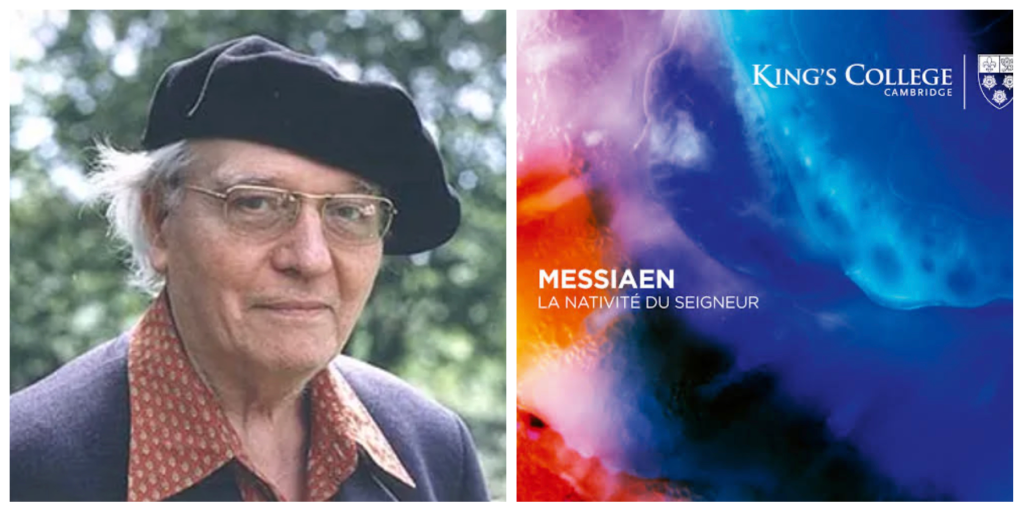
Olivier Messiaen was a French composer, organist, and ornithologist who was one of the major composers of the 20th century. He studied and absorbed foreign music, including Ancient Greek rhythms, Hindu rhythms, Balinese and Javanese Gamelan, birdsong, and Japanese music and composed music for chamber ensembles, orchestra, voice, solo organ, and piano. He also experimented with the use of novel electronic instruments developed in Europe during his lifetime.
Messiaen maintained that a musical composition must be measured against three separate criteria: it must be interesting, beautiful to listen to, and touch the listener. The Eternal Purpose from The Nativity of the Lord fits all three criteria beautifully.

Leave a comment