Leopold Stokowski (1882-1977) was a British conductor, composer, organist who became one of the leading conductors of the early and mid-20th century. He was music director of the Cincinnati Symphony Orchestra, the Philadelphia Orchestra, the NBC Symphony Orchestra, New York Philharmonic Orchestra, the Houston Symphony Orchestra, the Symphony of the Air and many others but is best known for his long association with the Philadelphia Orchestra. He gained a reputation as a musical showman and his free-hand manner of conducting soon became one of his trademarks. But he shaped the ‘Philadelphia Sound’ by encouraging ‘free bowing’ from the string section and ‘free breathing’ from the brass section.
Franz Liszt
Hungarian Rhapsody No 2
RCA Victor Orchestra
Leopold Stokowski (conductor)
Igor Stravinsky
Rite of Spring
Philadelphia Orchestra
Leopold Stokowski (conductor)
JS Bach arr Stokowski
Chaconne
Leopold Stokowski (conductor)
Richard Wagner arr Stokowski
Dad Rheingold
Entrance of the Gods into Valhalla
Bournemouth Symphony Orchestra
Jose Serebrier
Dmitri Shostakovich
Symphony No 5 4th movt
Stadium Symphony Orchestra of New York
Leopold Stokowski (conductor)
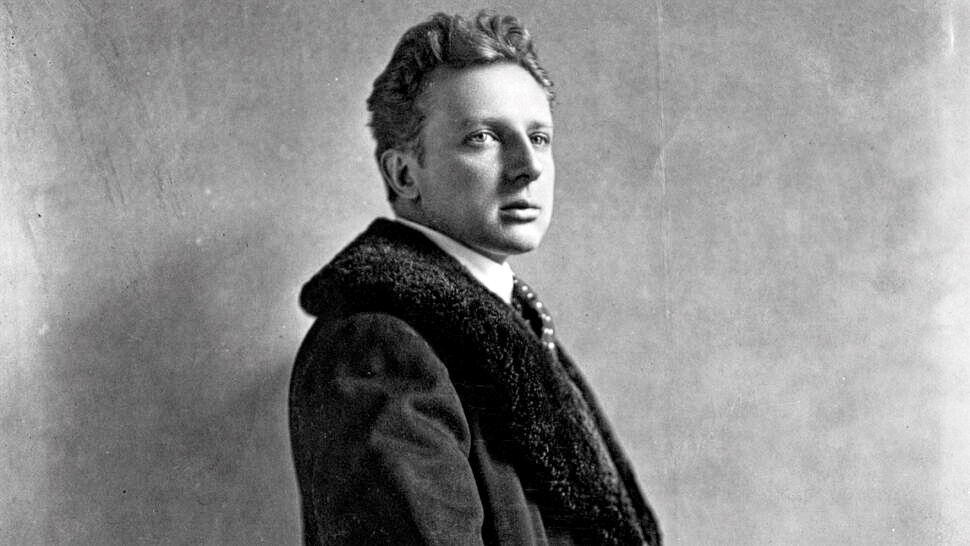
Born and raised in London, Stokowski studied at the Royal College of Music – at the age of thirteen, one of the youngest students to do so – alongside fellow organ student Ralph Vaughan Williams. Aged only 20, he was appointed the organist and choir director of St. James’s Church, Piccadilly eventually whilst also studying at The Queen’s College, Oxford, where he earned a Bachelor of Music degree in 1903.
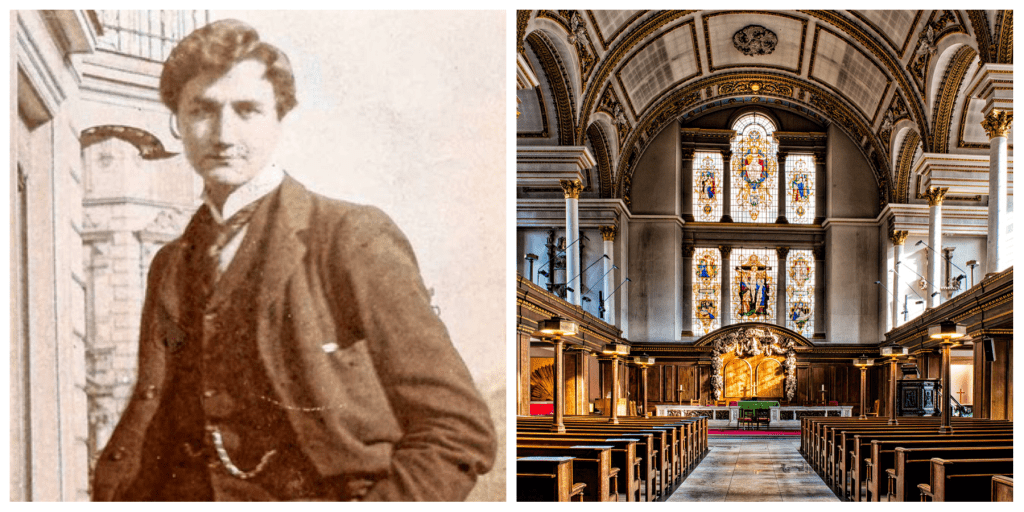
St James Church, Piccadilly
In 1905, Stokowski began work in New York City as the organist and choir director of St. Bartholomew’s Church but moved to Paris for additional study in conducting. Success as a conductor came early when he was offered post of musical director of Cincinnati Symphony Orchestra in 1909 where he introduced the concept of ‘pops concerts’ and began championing the work of living composers such as Richard Strauss, Sibelius, Rachmaninoff, Elgar and many others.

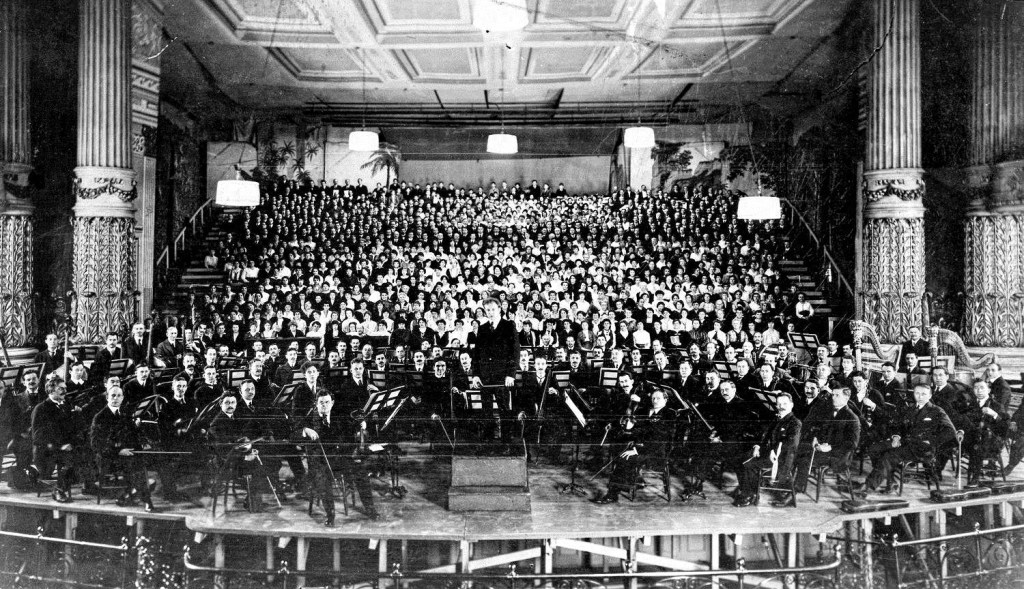
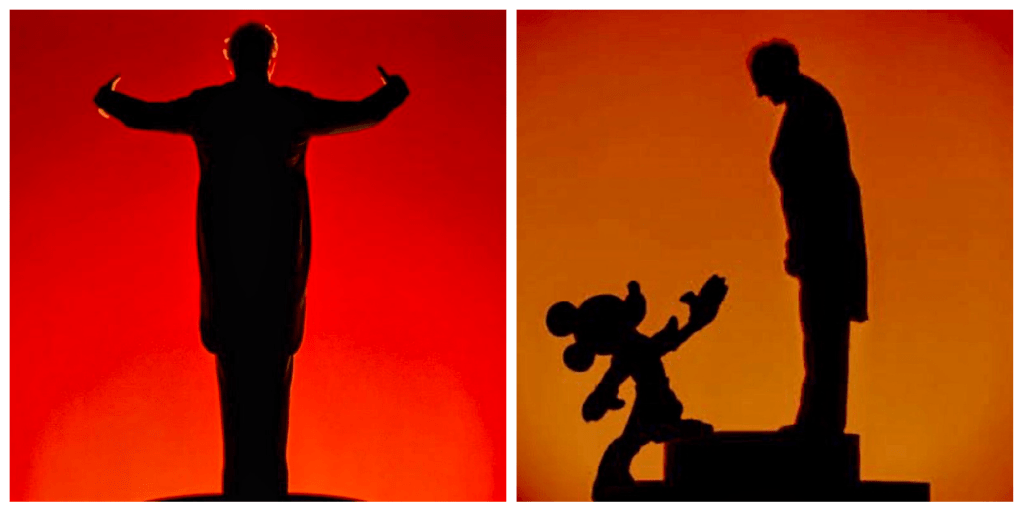
His appointment as music director of the Philadelphia Orchestra in 1912 brought him some of his greatest accomplishments and recognition. He gained a reputation as a musical showman with his enthusiasm for grand gestures, such as throwing the score on the floor and experimenting with new lighting – darkening the hall with only his head and hands lighted to cast theatrical shadows. He conducted without a baton and his free-hand manner of conducting soon became one of his trademarks. Over the years he shaped the sumptuous ‘Philadelphia Sound’ and altered the seating arrangements of the orchestra’s sections by adopting the seating plan of first and second violins together on the conductor’s left, and the violas and cellos to the right, the first conductor to do so.

He amended the orchestrations of Beethoven, Tchaikovsky, Sibelius, Johann Sebastian Bach, and Brahms, upsetting many music critics as he did so, but at the same time gave American premieres of many new works such as the symphonies of Shostakovich Mahler’s 8th Symphony, and the works by Igor Stravinsky such as The Rite of Spring.
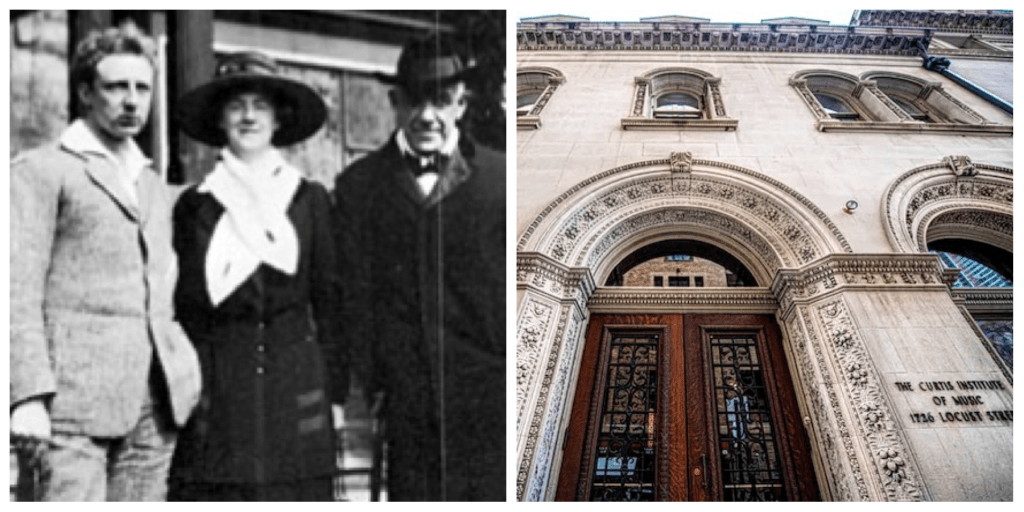
Seldom an opera conductor, Stokowski did give the American premieres in Philadelphia of the original version of Mussorgky’s Boris Godunov (1929) and Alban Berg’s Wozzeck (1931) and in 1933, he started concerts for younger audiences which are still a tradition in Philadelphia and many other American cities. Along the way he also managed to convince Mary Louise Curtis Bok to set up the Curtis Institute of Music.
His celebrity status allowed Stokowski to appear as himself various films such as The Big Broadcast of 1937 and, in the same year, conducting and acting in One Hundred Men and a Girl, with Deanna Durbinand Adolphe Menjou. In 1939, Stokowski collaborated with Walt Disney to create the motion picture for which he is best known: Fantasia. He conducted all the music and included his own orchestrations for Bach’s Toccata and Fugue in D minor and Mussorgsky’s/Schubert’s Night on Bald Mountain/Ave Maria. Stokowski even got to talk to (and shake hands with) Mickey Mouse on screen, in a famous silhouette footage though, he would later say modestly that Mickey Mouse got to shake hands with him!
Stokowski also became chief conductor of the NBC Symphony Orchestra in 1941 with a focus on contemporary music giving the US premieres of new works by Prokofiev, Stravinsky, Hindemith, Milhaud, Howard Hanson, William Schuman, Morton Gould and many others. He also conducted several British works with this orchestra, including Vaughan Williams’ 4th Symphony, Holst’s The Planets, and George Butterworth’s A Shropshire Lad.

In 1944 Stokowski helped form the New York City Symphony Orchestra, making music accessible for middle-class workers as ticket prices were set low, and performances took place at convenient, after-work hours. In 1945, he founded the Hollywood Bowl Symphony Orchestra and in 1946 he became Chief Guest Conductor of the New York Philharmonic. Again his tenure with the orchestra included many US Premiere such as Prokofiev’s 6th and world premiere recordings of Vaughan Williams’s 6th Symphony and Olivier Messiaen’s L’Ascension.

Stokowski’s International career took him to the Festival of Britain celebrations where he conducted the Royal Philharmonic Orchestra at the invitation of Sir Thomas Beecham and engagements with the London orchestras, Berlin Philharmonic, Suisse Romande, French National Radio and Czech Philharmonic orchestras. From 1955 to 1961, Stokowski was the Music Director of the Houston Symphony Orchestra and continued to appear in public until 1975. His final recordings were in June 1977, a few months before his death in Nether Wallop, Hampshire, England at the age of 95.


Leave a comment