Both music and food bring pleasure to our mind, body, and spirit, and since music has a strong connection to our feelings and emotions, it changes how we perceive the food we eat. Composers have certainly been influenced by food over the years so here are a few works composed with food in mind…
Sergei Prokofiev
For The Love of Three Oranges III. March
Orchestra of the Lyon National Opera
Kent Nagano (conductor)
Henry Purcell
If Music Be The Food of Love
The Kings Singers
Bohuslav Martinu
Le Revue de Cuisine III. Charleston
Sinfonia Lahti Chamber Ensemble
Gabriella Smith
Carrot Revolution
Aizuri Quartet
William Walton
Belshazzar’s Feast: Then Sing Aloud To God
Collegium Musicum of London
Royal Philharmonic Orchestra
Andre Previn (conductor)
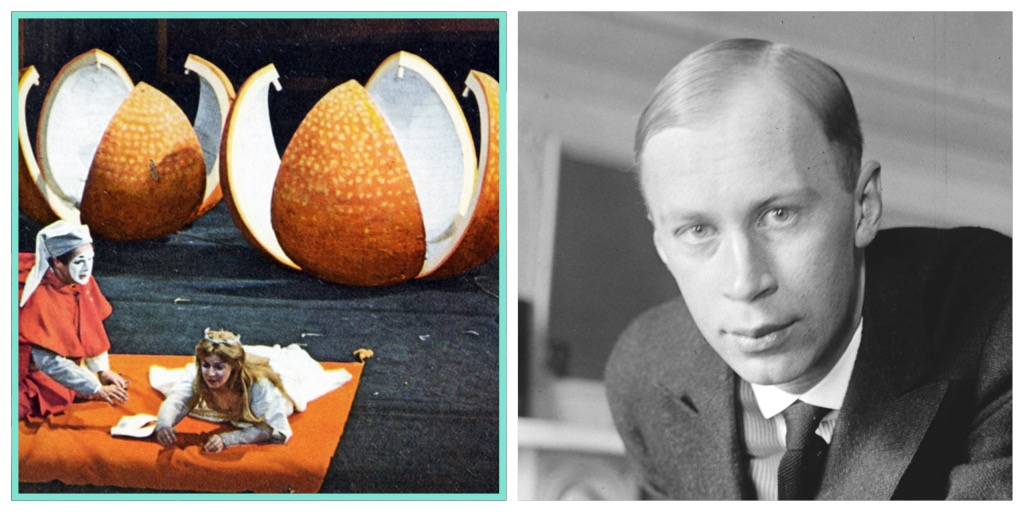
Sergei Prokofiev
The Love for Three Oranges is a celebration of absurdity, humor, and the power of laughter to overcome adversity. The opera tells the story of Prince Tartaglia who is cured of his depression by the love for three magical oranges. The plot involves fantastical elements, slapstick humor, and a dose of surrealism, making it a delightful and unconventional work in Prokofiev’s repertoire. It remains a beloved and frequently performed work in the operatic repertoire, offering a playful and lighthearted experience for both performers and audiences.

Henry Purcell
One of the greatest English composers, Henry Purcell was known for his contributions to both sacred and secular music. His music has influenced countless composers and musicians throughout history, and his works are still an integral part of the classical repertoire. If Music Be the Food of Love is part of a collection of English songs and is known for its elegance and and lyricism. The words are from a play by Colonel Henry Heveningham and the text expresses the idea that music has the power to nurture and amplify love.It is one of Purcell’s most cherished and frequently performed songs.

Bohuslav Martinu
La Revue de Cuisine is a one-act jazz ballet composed by Martinu in 1927, often performed as a suite and is considered one of his most popular and engaging works. The ballet is characterised by its playful and jazzy style, reflecting the influence of the European jazz scene during the 1920s. It tells the story of a love triangle involving various kitchen utensils that come to life, such as a pot, a lid, a dish, a rag, a broom, and a can opener. The plot is whimsical and surreal, with the characters interacting and competing for attention, resulting in comical and imaginative scenarios. The work showcases Martinu’s ability to blend classical and jazz elements with a score that features syncopated rhythms and bluesy melodies. The ballet is scored for a chamber ensemble: violin, clarinet, bassoon, trumpet, cello, and piano.

Gabriella Smith composed her string quartet, Carrot Revolution, in 2015 for her friends the Aizuri Quartet. The idea was inspired by a quote attributed to the artist Cezanne: the day will come when a single, freshly observed carrot will start a revolution. The piece celebrates new ways of looking at old things, such as the string quartet – a 250-year-old genre – as well as some of Gabriella Smith’s older musical influences (Bach, Perotin, Gregorian chant, Georgian folk songs, and Celtic fiddle tunes). Carrot Revolution is a patchwork of her contrasting influences and full of different and unexpected sounds, showcasing the string quartet in new way. Gabriella’s current projects include a large-scale work for Kronos Quartet and in December 2023, her work Tumblebird Contrails will be performed by the Royal Stockholm Philharmonic Orchestra, conducted by Esa-Pekka Salonen.
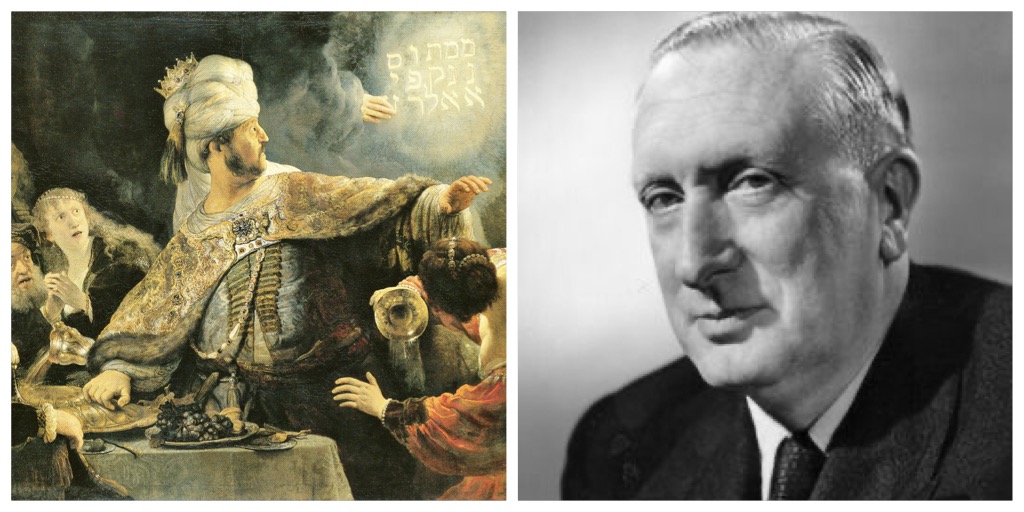
William Walton
Belshazzar’s Feast is one of William Walton’s most celebrated works and is an oratorio for baritone, double chorus, and orchestra, composed beween 1930-1931. The text is based on the biblical account of the fall of Babylon and King Belshazzar’s infamous feast, during which a mysterious hand wrote on the palace wall. It is considered one of Walton’s masterpieces and has earned a place in the choral and orchestral repertoire. Belshazzar’s Feast is a powerful and dramatic work that combines elements of modernism but composed in an accessible style. It features dense choral writing, colorful orchestration, and a wide range of emotions, from jubilation to despair. The use of dissonance and rhythmic intensity adds to the tension and drama of the work.


Leave a comment