Some insects are well known for the sounds they make and certain insect sounds – like those of grasshoppers and cicadas – have been likened to music over the years. In fact, insects are a crucial part of what’s been called “nature’s symphony”, so let’s take a brief look at how insects have inspired composers to write music.
Ralph Vaughan Williams (1872-1958)
Overture The Wasps
Hallé Orchestra
Sir Mark Elder (conductor)
Josquin des Prez (1450-55 to 1521)
El Grillo (The Cricket)
Hilliard Ensemble
Roger Cichy (b. 1956)
Bugs: Army Ants
University of St Thomas Symphonic Wind Ensemble
Matthew George (conductor)
Nikolai Rimsky Korsakoff (1844-1908) arr Grigory Feygin
Flight of the Bumble Bee
Bolshoi Theatre Violin Ensemble
Irina Seizewa (piano)
Julij Rejentowitsch (conductor)
Dmitri Shostakovich (1906-1975)
The Gadfly: III.Folk Feast
London Symphony Orchestra
Maxim Shostakovich (conductor)

Early in his career, in 1909, Ralph Vaughan Williams was invited to compose incidental music for the Cambridge Greek Play, an old tradition at Cambridge University where, every three years, a Greek play is given entirely in the ancient Greek language. The play chosen in 1909 was Aristophanes comedy The Wasps. The overture Vaughan Williams composed captures the lively and whimsical spirit of the original play and his use of folk-like melodies and dynamic rhythms contribute to the festive atmosphere of the overture. Ralph Vaughan Williams was Britain’s most important and influential composer of the first half of the twentieth century. However, after WW II, his musical stock languished to a large degree, owing to the predominance of radical musical modernism, and it became fashionable to denigrate Vaughan Williams and his British peers as hopelessly passé. Vaughan Williams, Butterworth, Holst, Delius, and others were snidely dismissed as ‘pastoralists,’—composers of lush, beguiling, tuneful, nationalistic music that reeked of nature. Indeed, Benjamin Britten scornfully deemed them the ‘cowpat’ school but fortunately time has erased his woeful assessment.

Josquin des Prez is considered one of the greatest composers of the Renaissance and had a profound influence on the music of 16th-century Europe. His music is expressive and emphasised the relationship between text and music, Josquin was a singer and his compositions are mainly vocal. These include masses, motets and secular chansons. El Grillo (The Cricket) was written in the early 16th century and is regarded as one of Josquin’s most popular works. He wrote the song to either honour or make fun of his colleague at the House of Sforza, an Italian court singer named Carlo Grillo
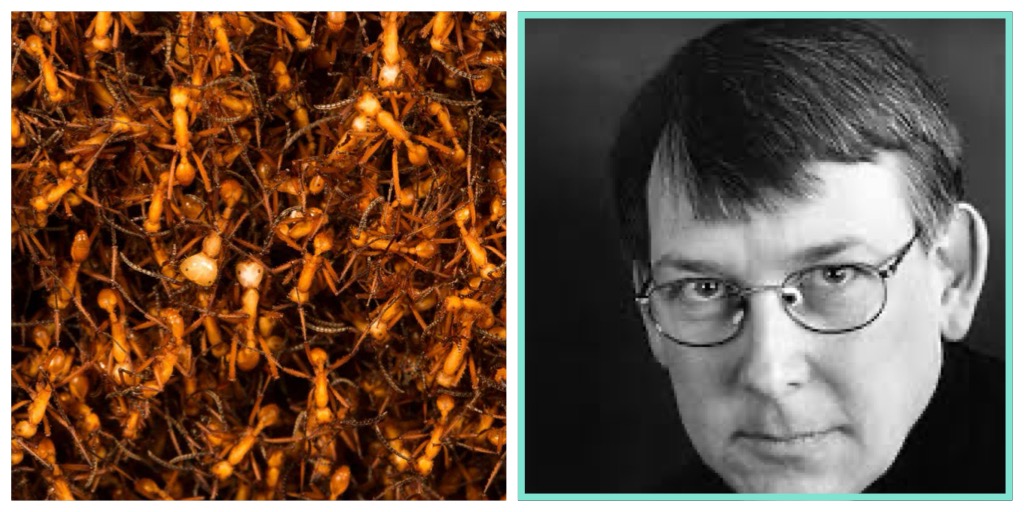
Roger Cichy
Roger Cichy served as Associate Director of Bands at the University of Rhode Island and at Iowa State University. His works include commissions by the University of Georgia Wind Symphony, Kansas State University Symphony Band, Des Moines Symphony and University of Wisconsin Symphonic Band. His suite for symphonic band, Bugs, gives a ‘musical personality’ to selected insects offering music that is humorous, inventive, and capricious all at the same time. Dragonfly, Praying Mantis, Black Widow Spider, Tiger Swallowtail and Army Ants all provide the perfect subject material for Cichy’s score. Cichy created a dissonant march portraying the army ants as savage predators which are constantly on the move.
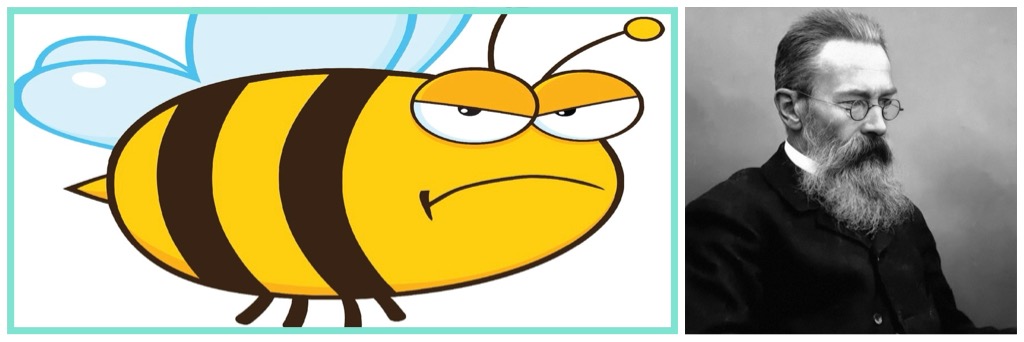
The Flight of the Bumblebee is a famous and virtuosic orchestral interlude written by Nikolai Rimsky-Korsakov for his opera The Tale of Tsar Saltan. The piece is known for its rapid and intricate violin passages, simulating the buzzing sound of a bumblebee. It is often performed as a standalone piece, showcasing the technical skill of the soloist. Rimsky-Korsakov’s composition has become widely recognized and is frequently used in various forms of popular culture. Known primarily for his fifteen operas, Rimsky Korsakov was instrumental in the rising importance of that genre in Russia. In the West he is known primarily for his Russian Easter Festival Overture and the symphonic suite, Scheherazade. His ability as an orchestrator and teacher of orchestration is one of his many legacies – Igor Stravinsky was one of his students.

Dmitri Shostakovich’s score for The Gadfly features a variety of emotive pieces. The Romance from the soundtrack is especially notable and has been widely performed as a standalone piece. Shostakovich’s music for The Gadfly captures the dramatic and intense atmosphere of the story, reflecting both the historical context and the emotional depth of the characters. The composer’s use of motifs and orchestration contributes to the evocative nature of the soundtrack. That The Gadfly (1955) is both tuneful and engaging has sometimes been taken to reflect Shostakovich’s improved political situation following the death of Stalin. In reality it is the best evidence for the autonomy of his art in that its composition coincided with a personal crisis in his family life. Scoring the film, an Italian-set historical drama directed by Aleksandr Faintsimmer (previously responsible for Lieutenant Kijé), was the only project he managed to complete between the deaths, a year apart, of his wife and his mother. Khachaturian had been lined up to provide the music. Shostakovich, only stepping in when his colleague fell ill, responded with his customary versatility and professionalism.

Leave a comment