
Crucial to our existence, Air is ever-present yet impossible to see. Its energy can cause rapid change such as shifts in the wind’s direction and fluctuations in temperature. Air is essential to life because it contains oxygen, but it also has destructive attributes when storms are created. Wind and turbulence has excited composers over the centuries and inspired them to compose some of the most dramatic music written. Our programme looks at the power of wind and its impact on music…
Ludwig van Beethoven (1770-1827)
Symphony No 6: Movt 4 ‘The Storm’
Vienna Philharmonic Orchestra
Claudio Abbado (conductor)
Jean Sibelius (1865-1957)
Overture to The Tempest Op 109
Royal Danish Orchestra
Okku Kanu (conductor)
Anton Webern (1883-1945)
Im Sommerwind: Idyll for Orchestra
Staatskapelle Dresden
Giuseppi Sinopoli (conductor)
Grace Williams (1906-1977)
Sea Sketches: I. High Winds
Manitoba Chamber Orchestra
Roy Goodman (Director)
Frédéric Chopin (1810-49)
12 Etudes Op 25: Etude No 11 in A minor ‘ Winter Wind’
Vladimir Ashkenazy (piano)

When Beethoven set about devoting an entire symphony to the beauty and power of nature, he was probably influenced by another great work with references to nature. One of the biggest musical hits in Beethoven’s home of Vienna during those years was The Creation, a work Haydn wrote near the end of his career and recounts the biblical story of the Creation.
Nature as a retreat was of great importance for Beethoven personally. Above all during the summertime, Beethoven loved to escape from the dirt and hectic pace of Vienna. Famous for his restless disposition, Beethoven frequently changed his residence, but always felt at home in the countryside. Several of Beethoven’s compositions have nicknames given by publicists or posterity but Pastoral Symphony is Beethoven’s very own name, and so are the descriptions he gave for each of its five movements.

Sibelius composed prolifically until the mid-1920s, but after completing his Seventh Symphony (1924), the incidental music for The Tempest (1926), and the tone poem Tapiola (1926), he stopped producing major works in his last 30 years. The Tempest Op. 109, is incidental music to Shakespeare’s The Tempest and he composed it mainly in the late summer 1925, his last major work before his tone poem Tapiola.
The music displays an astounding richness of imagination and inventive capacity and is considered by some as one of Sibelius’s greatest achievements. Consisting of 34 pieces, for vocalists, mixed-voice choir, harmonium and a large orchestra it was first performed in Copenhagen on 15 March 1926. The first night attracted international attention but Sibelius was not present as he was working on new commissions in Rome. He did not hear the music for the first time until the autumn of 1927 when the Finnish National Theatre in Helsinki staged the work.
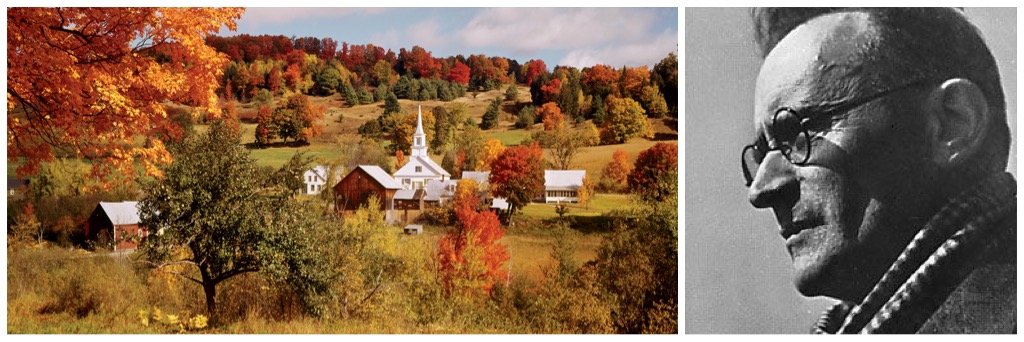
Im Sommerwind, written prior to his studies with Arnold Schoenberg, is far removed from the lean compositions of Anton Webern’s maturity. The work dates from 1904, when the composer was 20 years old. Only weeks after completing this work, Webern met the 30-year-old Schoenberg and became his pupil. In his critique of Im Sommerwind, Schoenberg expressed the opinion that the young composer had here reached a stylistic dead-end, a realisation that had already dawned on Webern.
Under Schoenberg’s influence, Webern went on to write some of the most influential music of the 20th century, which continues to resonate with composers of our own time and challenges today’s audiences with its compression and seeming expressive sparseness. In 1945, as the Russian army was advancing on Vienna, the composer took his wife to the seeming safety of the mountain village of Mittersill, near Salzburg. There, in a tragic accident, Webern was shot and killed by a soldier of the American occupying forces.

Grace Williams is regarded by many as one of Wales finest composers. She wrote two symphonies, the earlier being the first symphony ever composed by a Welsh composer, a mass, one opera, numerous other pieces for orchestras and chamber ensemble, as well as accomplished vocal works. She was the first British woman to score a feature film, with Blue Scar in 1949. Her compositions were often influenced by the Welsh landscapes and the ever changing mood of the sea.
Grace Williams composed Sea Sketches in 1944, while living in Hampstead, London. Shortly after completing the work Williams returned to her home town of Barry in south Wales. The suite was premiered by the BBC Welsh Orchestra conducted by Mansel Thomas in 1947. Since then Sea Sketches has become one of her most popular works.

Étude Op. 25, No. 11, in A minor, is a solo piano technical study composed by Frédéric Chopin in 1836. It was first published together with all études of Opus 25 in 1837, in France, Germany, and England. It is a study for developing stamina, dexterity, and technique – essential skills for any concert pianist. Although the study emphasises right hand dexterity, both hands play an important role throughout the piece; the melody is sung through the heavy left hand, and the right hand contributes the étude’s namesake with rapid scales and arpeggios. The American music writer and critic James Huneker, in his preface to the Schirmer edition of Chopin’s études, famously asserted of this étude, ‘Small-souled men, no matter how agile their fingers, should not attempt it.’


Leave a comment