
Brahms composed a double concerto for violin and cello. Bach for two violins. Other great composers also wrote double concertos too such as Mozart, Mendelssohn, Stravinsky, Bartok, Telemann, Vivaldi and Haydn. But a concerto for more than a single instrument and orchestra can still be seen as a special event due to the rarity of performances. For the adventurous composers (and performers) the number of potential instrumental pairings seems infinite and although the genre may never truly rival the solo concerto in terms of popularity, there are many double concertos to stimulate both performer and audience alike.
Felix Mendelssohn (1809-1847)
Concerto For 2 Pianos In A Flat Major: III. Allegro Vivace
Benjamin Frith and Hugh Tinney (piano)
RTE Sinfonietta
Richard Strauss (1864-1949)
Duett Concertino for Clarinet and Bassoon
Thomas Friedli (clarinet)
Klaus Thuneman (bassoon)
Matthias Aeschbacher (conductor)
Lausanne Chamber Orchestra
Frederick Delius (1862-1934)
Concerto for violin, cello and orchestra: Final section
Tasmin Little (violin)
Raphael Wallfisch (cello)
Royal Liverpool Philharmonic Orchestra
Sir Charles Mackerras
Francis Poulenc (1899-1963)
Concerto for 2 Pianos and Orchestra in D Minor FP 61: 3. Finale. Allegro molto
Alexander Tamir and Bracha Eden (piano)
Sergiu Comissiona (conductor)
Orchestre de la Suisse Romande
Wolfgang Amadeus Mozart (1756-1791)
Concerto for 2 Pianos No. 10 in E-Flat Major, K. 365/316a: III. Rondo. Allegro
André Previn and Radu Lupu (piano)
London Symphony Orchestra

The Concerto for Two Pianos and Orchestra in A♭ major was written by Mendelssohn when he was 15 years old in 1824.
Written for two pianos and a full orchestra, the work received its first public performance in Berlin and the composer and his mentor, Ignaz Moscheles, who inspired its composition, were the soloists.
This concerto and its predecessor, the E major concerto, may have been the first works composed for full orchestra by Mendelssohn
The concerto was not played for many years until the manuscript was found in the archive of the Berlin State Library in 1950.
Benjamin Frith (piano) has been a first prize winner in the Rubinstein Masters Competition, a prize winner in the Mozart Memorial Competition (London) and was awarded top prize in the Busoni International Piano Competition.
He has established himself as an international concert artist and has worked with many of the world’s leading conductors and orchestras.
Hugh Tinney (piano) first came to international recognition by winning first-prize in two international competitions, the 1983 Pozzoli in Italy and the 1984 Paloma O’Shea in Spain, and since then he has performed in more than 30 countries throughout Europe, the United States, South America and the Far East.
In 1987, he was a prize-winner in the Leeds Piano Competition.

The Duet-Concertino for clarinet and bassoon, TrV 293, with string orchestra and harp in F major, was written by Richard Strauss in 1946/47 and premiered in 1948.
It is the last purely instrumental work he wrote.
The impetus for completing it was a commission in the summer of 1947 from Otmar Nussio for his orchestra, the Italian Swiss Orchestra.
The concerto was written with an old friend in mind, Hugo Burghauser, who had been the principal bassoonist with the Vienna Philharmonic but had since emigrated to New York.
The work is written in three movements (Allegro moderato – Andante – Rondo), although the second movement acts as little more than a brief transition between the outer movements.
Thomas Friedli (clarinet) won 1st Prize at the Geneva International Music Competition in 1972 and was from 1971 to 1986 principal clarinetist of the Bern Symphony Orchestra.
He appeared at festivals in Lucerne, Ibiza, Stresa, Gstaad, Bratislava or São Paulo to name a few and premiered numerous pieces by composers such as Franz Tischhauser or Sándor Veress
Besides his activity as a soloist and principal clarinetist, Thomas Friedli was also an accomplished chamber musician and had a particular preference for bringing neglected works to life.
A dedicated teacher, he gave masterclasses and led a professional performer’s class at Conservatoire de Genève from 1978 until his death during a hiking accident in Madeira in April 2008.
Klaus Thunemann (bassoon) was principal bassoon of the North German Radio Symphony Orchestra of Hamburg from 1962 to 1978. During this time he also appeared frequently in chamber music and as a soloist.
Thunemann has an extensive discography, recording the bassoon repertoire of Vivaldi, Mozart and others for labels including Philips Records and Deutsche Grammophon. On his recordings, he has collaborated with many artists including pianist Alfred Brendel, oboist Heinz Holliger, and the chamber group I Musici.

The Double Concerto for Violin, Cello, and Orchestra by Frederick Delius was composed between April and June 1915 while Delius lived in Watford, England.
The work is dedicated to the sister duo of violinist May Harrison and cellist Beatrice Harrison, who premiered the piece under conductor Henry Wood on February 21, 1920 in Queen’s Hall, London.
Delius was inspired to compose the Double Concerto after attending a December 1914 performance of the Brahms’s Double Concerto in A minor performed by sisters May and Beatrice Harrison with the Hallé Orchestra under conductor Thomas Beecham in Manchester.
Delius began work on the composition by April 1915 and was completed in June 1915.
During her 30 year career, Tasmin Little (violin) has performed 20 times at the BBC Proms, including two concerts at The Last Night of the Proms to a global audience of 100 million, and at Proms in the Park to a live audience of 40,000.
She performed twice for HM the Queen and in 2012 was awarded an OBE for Services to Music. She was awarded a CBE in the King’s First Birthday Honours List in June 2023.
She is an advocate of music education and has twice been invited to speak in the House of Commons to members of both the Lords and the Commons regarding the importance of education and the Arts in the UK.
In 2019 she became Co-President of the Yehudi Menuhin School.
With a discography of over 70 discs Raphael Wallfisch (cello) is one of the most recorded classical artists in the world.
A BBC survey named Wallfisch’s recording of the Dvorak Cello Concerto the best recording of the work in the past 25 years.
He has been at the forefront of playing and commissioning new works by contemporary composers, working with Sir Peter Maxwell Davies, Kenneth Leighton, James MacMillan, Rodion Schedrin, John Tavener and many others.

Francis Poulenc’s Concerto for Two Pianos and Orchestra in D minor FP 61, was composed over the period of three months in the summer of 1932.
The concerto was commissioned by and dedicated to the Princess Edmond de Polignac, an American-born arts patron to whom many early-20th-century masterpieces are dedicated, including Stravinsky’s Renard, Ravel’s Pavane pour une infante défunte, Kurt Weill’s Second Symphony, and Satie’s Socrate.
The premiere was given on September 5, 1932, at the International Society for Contemporary Music in Venice.
Poulenc and his childhood friend Jacques Février were concerto soloists with the La Scala Orchestra, with Désiré Defauw (later conductor of the Chicago Symphony Orchestra) conducting.
Poulenc was thrilled by the warm acclaim his work received and later performed the concerto with Benjamin Britten in England in 1945.
Bracha Eden and Alexander Tamir were Israeli pianists who performed as a duo.
They met while studying at the Rubin Academy with Alexander Schroeder, a pupil of Artur Schnabel. Schroeder encouraged them to play together and they formed their piano duo in 1952.
Eden and Tamir recorded the complete works for two pianos and piano duet of Brahms, Mendelssohn, Mozart, Rachmaninoff, Schubert and Schumannm and were awarded the Grand Prix du Disque for their recording of Brahms Sonata in F minor for Two Pianos, Op. 34b.
They gave the American premiere of Lutosławski’s Paganini Variations (1955) and, at the suggestion of Stravinsky himself, were the first to perform and record the piano duet version of The Rite of Spring.

It is not known when Mozart completed his Concerto for Two Pianos and Orchestra in E-flat major, K. 365/316a, but research shows that cadenzas for the first and third movements are written in his and his father’s handwriting on a type of paper used between August 1775 and January 1777.
However, most sources indicate that it was composed in 1779.
It is presumed that Mozart wrote it to play with his sister Maria Anna, later performing it in a private concert with pupil Josepha Barbara Auernhammer.
The concerto was originally scored for the two pianos together with two oboes, two bassoons; two horns; and strings.
Mozart expanded the score in 1782 with pairs of clarinets, trumpets and timpani.
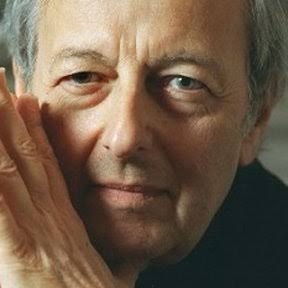
André Previn’s career had three major genres: Hollywood films, jazz, and classical music.
In each he achieved success, and the latter two were part of his life until the end.
In movies, he arranged and composed music. In jazz, he was a celebrated trio pianist, a piano-accompanist to singers of standards, and pianist-interpreter of songs from the Great American Songbook.
In classical music, he also performed as a pianist but gained television fame as a conductor, and during his last thirty years created his legacy as a composer of art music.
Radu Lupu (piano) is firmly established as one of the most important musicians of his generation.
He won first prize in three competitions: the 1966 Van Cliburn, the 1967 Enescu International, and the 1969 Leeds International.
Radu Lupu performed with all the great orchestras of the world, including Berlin Philharmonic, Vienna Philharmonic, Royal Concertgebouw, all the major London and American orchestras.
In 2006 he was presented with 2 awards: the Premio Internazionale Arturo Benedetti Michelangeli, and, for a second time, the Abbiati prize (conferred by the Italian Critics’ Association).

Leave a comment