
“All music was new music once,” we often have to remind ourselves, and the same is true of conductors: they were all young once upon a time. But what does age have to do with a conductor’s artistic vision, or prowess with a baton? In Conversation looks at some of today’s up-an-coming conductors and we hear if their recordings justify the hype.
Alpesh Chauhan (age 31)
Principal Guest Conductor of the Dusseldorf Symphony Orchestra
Music Director Birmingham Opera Company
Klaus Mäkelä (age 28)
Chief Conductor & Artistic Advisor: Oslo Philharmonic
Music Director: Orchestre de Paris
Artistic Partner: Concertgebouw Orchestra
Music Director Designate: Chicago Symphony Orchestra (from September 2027)
Lahav Shani (age 34)
Music Director Israel Philharmonic Orchestra,
Chief Conductor Rotterdam Philharmonic Orchestra.
Chief Conductor Munich Philharmonic Orchestra (from September 2026)
Kahchun Wong (age 37)
Chief Conductor: Japan Philharmonic Orchestra
Principal Guest Conductor: Dresdner Philharmonic
Principal Conductor and Artistic Advisor: The Hallé (from 2024/25)
Peter Tchaikovsky (1840-1893)
The Snow Maiden Op 12 Act 3: Dance of the Tumblers
BBC Scottish Symphony Orchestra
Alpesh Chauhan (conductor)
Jean Sibelius (1865-1957)
Symphony No 2 in D Major Op 42 Movt 3 Vivacissimo
Oslo Philharmonic Orchestra
Klaus Mäkelä (conductor)
Kurt Weill (1900-1950)
Symphony No 2: Movt 3 Allegro Vivace
Rotterdam Philharmonic Orchestra
Lahav Shani (conductor)
Gustav Mahler (1860-1911)
Symphony No 5; Movt 5 Rondo
Japan Philharmonic Orchestra
Kahchun Wong (conductor)
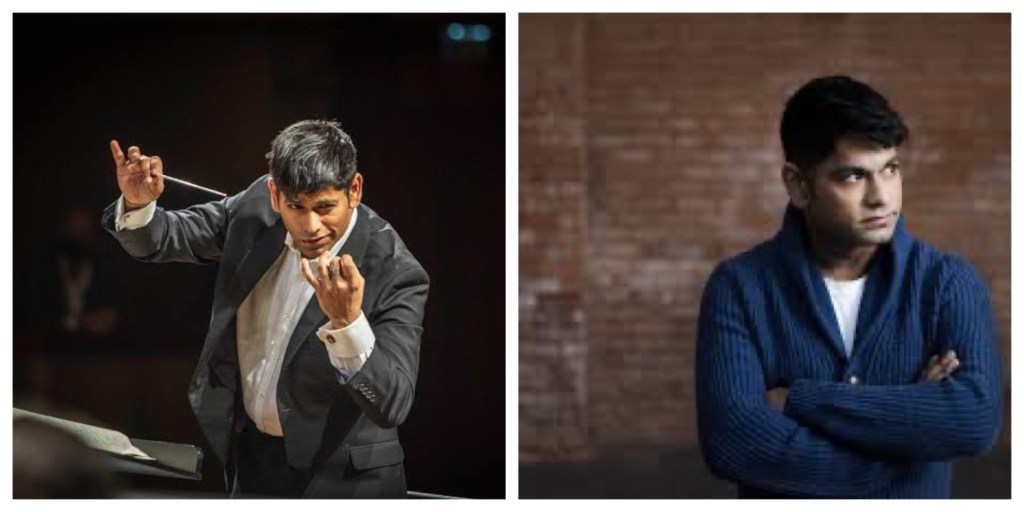
Born in Birmingham, Alpesh Chauhan studied ‘cello at the Royal Northern College of Music in Manchester before continuing at the RNCM to pursue conducting.
In addition to his regular commitments in Dusseldorf and Birmingham he has conducted the Los Angeles Philharmonic, National Symphony Orchestra Washington, Oslo Philharmonic, the Hallé, London Philharmonic, Philharmonia and BBC Symphony Orchestras.
He is known for his interpretations of the late Romantic and 20th century repertoire, including works by Brahms, Tchaikovsky, Bruckner, Mahler, Strauss, Shostakovich and Stravinsky alogside contemporary and living composers such as Thomas Adès, Anna Clyne, Sofia Gubaidulina.
Alpesh is a keen advocate of music education for young people and is a patron of Awards for Young Musicians, a UK charity supporting talented young people from disadvantaged backgrounds
He works with the National Youth Orchestra of Scotland and orchestras of the Royal Conservatoire of Scotland and the Royal Northern College of Music.
He received a distinguished BAFTA award as conductor of the 2015 BBC Ten Pieces film which brought the world of classical music into secondary schools across the UK. He received an OBE in HRH The Queen’s New Year’s Honours in January 2022.
His debut album featuring orchestral works by Tchaikovsky with the BBC Scottish Symphony Orchestra in June 2023 was named BBC Music Magazine’s Orchestral Choice of the Month.

Tchaikovsky, in 1873, was asked to provide music to the exotic play The Snow Maiden written by Ostrovsky for an assortment of three Moscow theatre companies with Bolshoi singers and ballet participants. Tchaikovsky warmed to the task producing interludes, melodramas (music to accompany spoken scenes), songs, and dances.
However, there can be some confusion about what Snow Maiden music an audience is going to hear because Rimsky-Korsakov subsequently composed an opera based on the same story and with essentially the words of the play as his libretto. This operatic encroachment was initially upsetting to Tchaikovsky but subsequently, he did acknowledge his admiration for Rimsky’s work.
Both composers wrote a dance, which is variously translated as Dance of the Tumblers, and are both bright and vigorous with lots of tambourines!

Klaus Mäkelä is Chief Conductor of the Oslo Philharmonic since 2020 and Music Director of Orchestre de Paris since 2021.
As Artistic Partner of the Royal Concertgebouw Orchestra, he assumes the title of Chief Conductor at the start of the 2027/28 season.
An exclusive Decca Classics Artist, Mäkelä has recorded the complete Sibelius Symphony cycle with the Oslo Philharmonic and two albums featuring Ballets Russes scores by Stravinsky and Debussy with Orchestre de Paris.
The Ballets Russes continues as a major focus of Mäkelä’s third season with the Orchestre de Paris
With the Royal Concertgebouw Orchestra Mäkelä conducts Mahler’s Symphony No. 3 and Bruckner’s Symphony No.5 as part of a complete cycle celebrating the 200th anniversary of the composer’s birth.
In April 2024, the Chicago Symphony Orchestra announced Klaus Mäkelä as its next Music Director, starting 2027/28.
As a cellist Mäkelä partners with members of the Oslo Philharmonic, Orchestre de Paris and Royal Concertgebouw Orchestra.
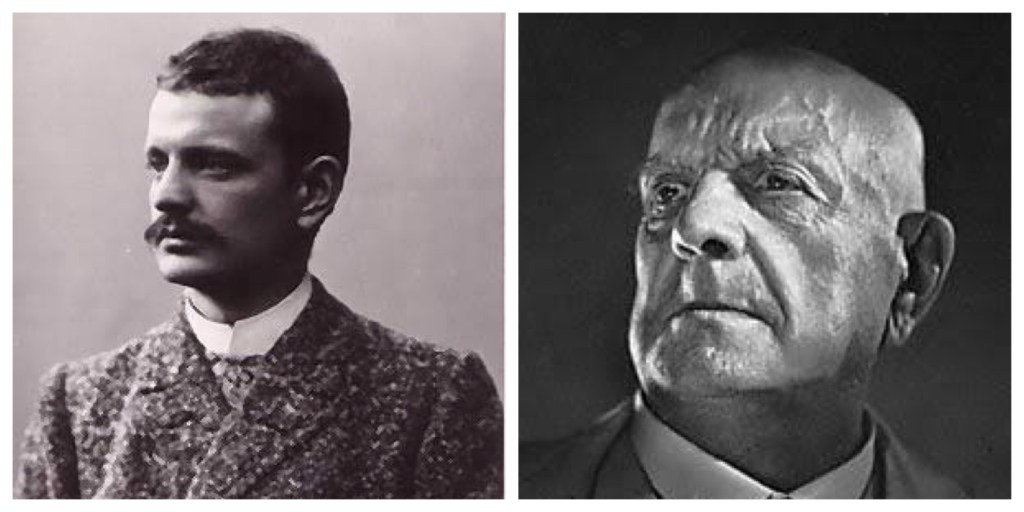
In the closing years of the nineteenth century, Finns were fired with excitement over homegrown culture – collecting traditional music and dance, delving into ancient Finnish legends and returning to use the Finnish language.
Sibelius turned out a hearty diet of patriot compositions and a few of his successes from this nationalist period – the tone poems The Swan of Tuonela, Lemminkäinen’s Return, and Finlandia among them – began to earn him a reputation beyond Finnish borders.
Sibelius’s Symphony No. 2 in D Major marked a signal success (as did three further sold-out performances the week of its premiere.
Helsinki audiences had understood the new symphony to be an overt expression of the political conflict then reigning over Finland.
Sibelius objected to this interpretation, preferring that no programmatic implications be attached to this work.
Nonetheless, this symphony does seem to express something specific to the Finnish imagination.
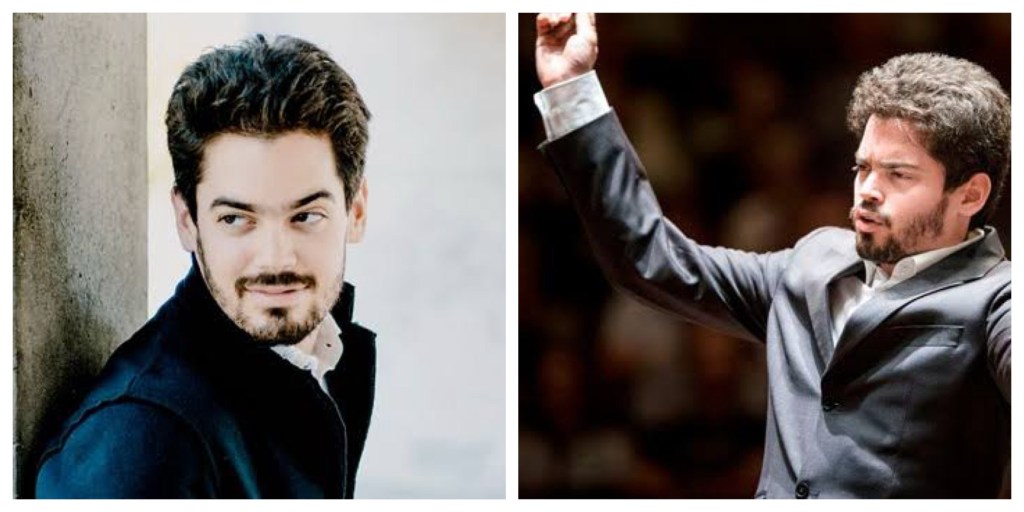
Since 2018, Lahav Shani has been the Chief Conductor of the Rotterdam Philharmonic Orchestra, the youngest conductor to hold the position in the orchestra’s history.
From the 20/21 season he started his position as Music Director of the Israel Philharmonic Orchestra, taking over from Zubin Mehta who held the position for 50 years.
Shani was previously Principal Guest Conductor of the Vienna Symphony Orchestra.
In February 2023 the Muunich Philharmonic Orchestra appointed Lahav Shani as their new Chief Conductor, starting from September 2026.
Shani’s close relationship with the Israel Philharmonic Orchestra began well over 10 years ago. He debuted with the orchestra aged sixteen, and in 2007 performed Tchaikovsky Piano Concerto under the baton of Zubin Mehta aged eighteen. He then went on to play regularly with the orchestra as a double bassist.
In 2013, after winning the Gustav Mahler International Conducting Competition in Bamberg, the orchestra invited him to step in to conduct their season-opening concerts. Since then, he has returned to the orchestra every year as both a conductor and pianist.
As a guest conductor highlights include engagements with Vienna Philharmonic, Berlin Philharmonic, Gewandhaus Orchestra, Bayerischer Radio Symphony Orchestras, London Symphony Orchestra, Orchestra of La Scala, Boston Symphony Orchestra, Chicago Symphony Orchestra, Royal Concertgebouw Orchestra and Philadelphia Orchestra
As a pianist, Shani has performed as a soloist with Daniel Barenboim, Zubin Mehta and Gianandrea Noseda. He has play-directed piano concerti with many orchestras including the Vienna Philharmonic, Philharmonia Orchestra and Staatskapelle Berlin

Regarding Kurt Weill, most people think not ‘symphonies’, but of Threepenny Opera and Mack the Knife. They also think of the style of jazz that could be descibed as ‘Germanic’, combining nostalgia, satire, and more than a hint of sleaze!
Yet in 1921 he wrote a symphony, perhaps best described as a mixture of Mahler, Strauss and Schoenberg and close to serialism whilst not quite abandoning tonality.
In the twenties, Weill’s new form of popular opera attracted much attention in Germany, and eventually an unenviable hostility from the Nazis.
1927 saw his first collaborations with Berthold Brecht with a cantata about Lindbergh’s trans-Atlantic flight and the Mahagonny-Songspiel.
Subsequently, theatre works including Die Dreigroschenoper (1928), The Rise and Fall of City of Mahagonny (1929), and Der Silbersee (1932) consolidated his popular idiom.
Driven from Germany in 1933, he came to Paris, where he wrote his Second Symphony (1933/4).
The first performances under Bruno Walter enthused the public, but the Press (thinking he should stick to theatre) echoed the Nazis with a condemnation so wholesale that he never again dared venture beyond the theatre.
It is scored for a ‘classical’ orchestra with one flute doubling piccolo, plus two trombones, and the third movement is a march that parodies the Nazi ‘goose-step’, before the opening bars return to spark off a riotous romp of a coda. Whether or not intentional, Weill’s point seems clear: hounded from his homeland and devastated, he wasn’t about to let it get him down.
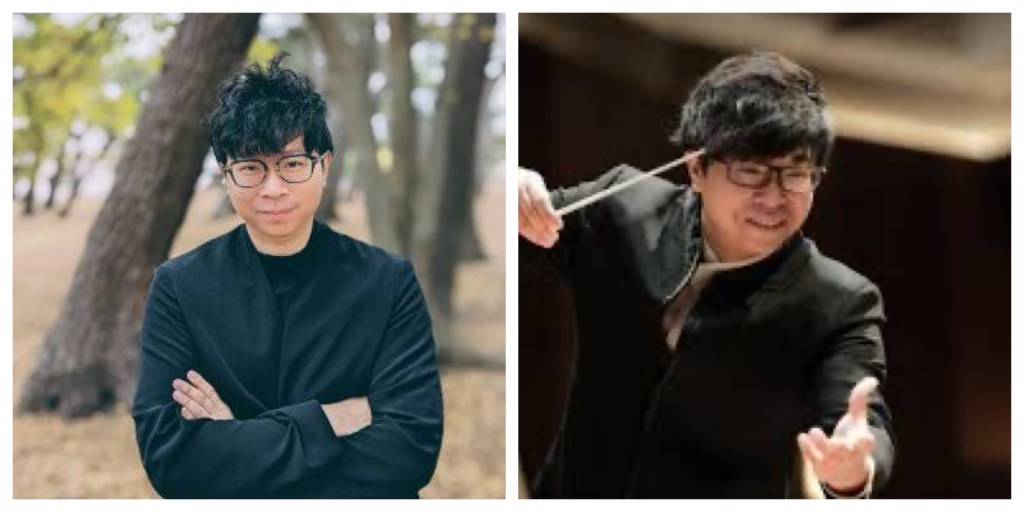
Internationally acclaimed for his electrifying stage presence and his thoughtful exploration of Eastern and Western artistic legacies, Singaporean-born Kahchun Wong is the Chief Conductor of Japan Philharmonic Orchestra and the Principal Guest Conductor of Dresden Philharmonie.
He will succeed Sir Mark Elder as the newly appointed Principal Conductor and Artistic Advisor of the Hallé from 2024/25.
In his final appearance as Chief Conductor of Nürnberger Symphoniker last summer, Wong led the successful world premiere of his orchestration of Mussorgsky’s Pictures at an Exhibition to an audience of 75,000 at the annual Klassik Open Air in Luitpoldhain.
This sinfonia concertante version, specially composed for folk instrumental soloists from Singapore Chinese Orchestra, was also widely broadcast on 3SAT and BR-Klassik.
Since winning the Mahler Competition in 2016, Wong has guest conducted distinguished orchestras such as New York Philharmonic, The Cleveland Orchestra, Detroit Symphony, the Hallé, Royal Liverpool Philharmonic, Czech Philharmonic Orchestra, Orchestre National du Capitole de Toulouse, Shanghai Symphony Orchestra, Osaka Philharmonic Orchestra, Tokyo Metropolitan Symphony Orchestra and Yomiuri Nippon Symphony Orchestra.
Wong has forged strong relationships with many living composers.
In 2023/24, he will conduct the UK premiere of Toshio Hosokawa’s Prayer with BBC Symphony Orchestra at the Barbican, as well as the world premiere of Thai composer Narong Prangcharoen’s Reflection of Shadow, commissioned specially for his inaugural concert as Principal Guest Conductor at Dresdner Philharmonie.
He has led the world premiere of Reena Esmail’s Concerto for Hindustani Violin written for the renowned guru Kala Ramnath with Seattle Symphony Orchestra in 2022, as well as the US premiere of Tan Dun’s Fire Ritual with New York Philharmonic in 2019.
In his Suntory Hall subscriptions with Japan Philharmonic Orchestra, he regularly programmes works by composers such as Akira Ifukube, Yasushi Akutagawa, Kiyoshige Koyama and Yuzo Toyama.
At the invitation of the Tokyo Opera City Foundation, he has led a highly successful performance of Toru Takemitsu’s ambitious orchestral cycle Arc, which was selected as one of the top contemporary concerts of 2022 by major Japanese critics.
Wong has enjoyed strong collaborations with soloists such as Nelson Freire, Thomas Hampson, Barbara Hannigan, Gerhard Oppitz, Christian Tetzlaff, Patricia Kopatchinskaya, Gautier Capuçon, Daniel Lozakovich, Mao Fujita, Sergei Nakariakov, and Vilde Frang.
In December 2019, Wong became the first artist from Singapore to be conferred the Order of Merit by the Federal President of Germany for his dedicated service and outstanding achievements in Singaporean-German cultural relations and the advancement of German musical culture abroad.

Gustav Mahler was never satisfied with his Fifth Symphony and over the last nine years of his life he revised it continually. These revisions reveal Mahler’s lifelong nagging self-doubt and although Mahler lived most of his life in the 19th century, his music, with its myriad complexities and psychological layers, reflects 20th century sensibilities. The Fifth Symphony, in particular, with its conflict, brutality, joy, and upheaval, speaks to the fundamental uncertainties of our time.
Mahler clearly understood that his Fifth Symphony charted new musical realms, not only for himself, but also for music in general. He knew it would take listeners time to catch up to his musical innovations;
Unlike Mahler’s first four symphonies, Mahler insisted that the Fifth Symphony was ‘pure’ music, with no accompanying programme or extra-musical ideas. Mahler wanted people to hear the Fifth Symphony as music first and foremost.
The last of five movements, the Rondo-Finale explodes with unrestrained joy. The opening horn and wind solos recall Mahler’s first symphony, and sweep away all the doubt, fear and grief of the preceding movements in a triumphant celebration.


Leave a comment