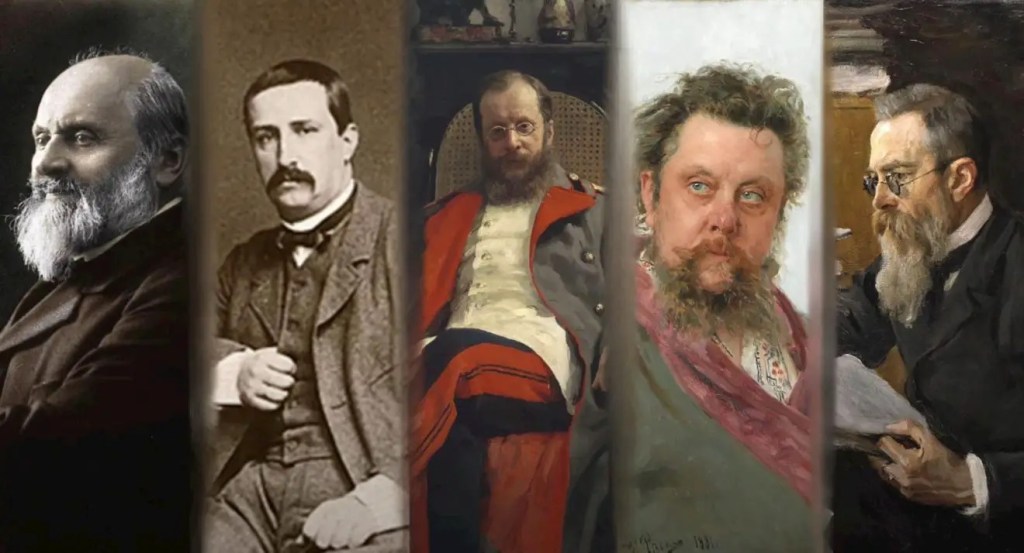
The Mighty Handful or ‘The Five’ were a qroup of five Russian composers—César Cui, Alexander Borodin, Mily Balakirev, Modest Mussorgsky, and Nikolay Rimsky-Korsakov – who, in the 1860s, attempted to create a national school of Russian music, free of the influence of Italian opera, German lieder, and other western European forms. They composed operas on distinct Russian subjects and incorporated the influence of native music in their songs. Their works included ‘tolling of church bells’, Caucasian dances, Cossack, church chants and village songs. Centred in St. Petersburg, the members are often considered to have been a rival faction to the more cosmopolitan, Moscow-centred composers such as Tchaikovsky, even though Borodin and Rimsky-Korsakov emphasised traditional European training in their work.
Mily Balakirev (1837-1910)
Symphony No 2: Finale – Tempo di polacca
BBC Philharmonic
Vassily Sinaisky (conductor)
Alexander Borodin (1833-1887)
String Quartet No 2: Movt 2 Schezo
Borodin Quartet
Modest Mussorgsky (1839-1881)
Night On A Bare Mountain
Berlin Radio Symphony Orchestra
Ogan Durjan (conductor)
César Cui (1835-1918)
25 Preludes Op 64: No 25 in C Major Allegro non troppo
Jeffrey Biegel (piano)
Nikolai Rimsky-Korsakov (1844-1908)
Russian Easter Hymn Overture
Rotterdam Philharmonic Orchestra
David Zinman (conductor)

Mily Balakirev – composer, pianist, and conductor – developed a musical language that expressed nationalistic sentiment and was a source encouragement to many Russian composers, including Tchaikovsky. A pivotal figure, fusing traditional folk music and experimental classical music practices initially begun by Mikhail Glinka. He imparted to The Five his musical beliefs, which continued to underlie their thinking long after he left the group in 1871, and encouraged their compositional efforts. The results of his influence were several works which established these composers’ reputations individually and as a group. He performed a similar function for Tchaikovsky at two points in the latter’s career – in 1868–69 with the fantasy-overture Romeo and Juliet, and in 1882–85 with the Manfred Symphony. Often, the musical ideas normally associated with Rimsky-Korsakov or Borodin originated in Balakirev’s compositions, which Balakirev played at informal gatherings of The Five. However, his slow pace in completing works for the public deprived him of credit for his inventiveness, and pieces that would have enjoyed success had they been completed in the 1860s and 1870s made a much smaller impact. Balakirev began work on a second symphony, Symphony No. 2 in D minor in 1900, but did not complete the work until 1908. After a nervous breakdown and consequent sabbatical, he returned to classical music but did not wield the same level of influence as before.
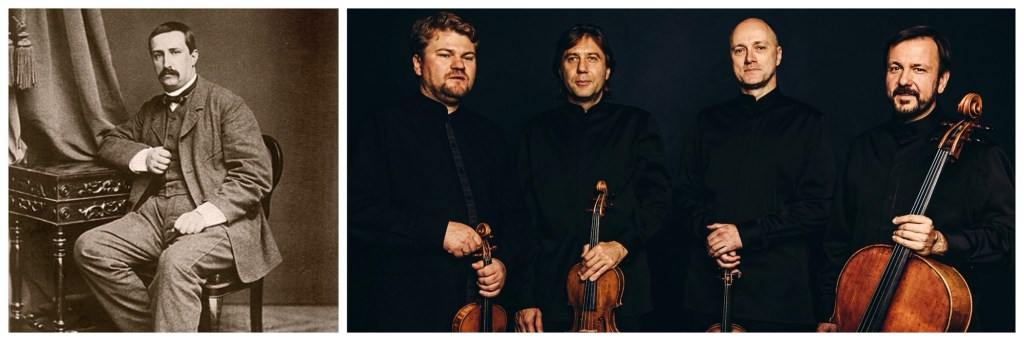
Alexander Borodin was both a composer and also a notable scientist. His compositions place him in the front rank of Russian composers. From 1850 to 1856 he studied at the Medico-Surgical Academy, specializing in chemistry, and received a doctorate in 1858 after which he studied for a time in western Europe. On his return to Russia he became adjunct professor of chemistry at the Medico-Surgical Academy and full professor in 1864. Borodin’s composing life was never more than relaxation from his scientific work. In addition to his research and teaching, he helped found medical courses for women in 1872 and became the founder of a School of Medicine for women, where he taught several courses. Borodin’s scientific research and teaching duties as an adjunct professor of Chemistry in the Medico-Surgical Academy at St. Petersburg interrupted his composition of the Second Symphony. As a result, this symphony took several years to complete. It consists of four movements and is considered the most important large-scale work completed by the composer himself. The symphony fits in the debate over the merit of folklore elements and traditional western art music values, which was a central conflict of Romantic nationalism. The work was popular, but according to Rimsky-Korsakov, only enjoyed “moderate success”. He also composed two string quartets, a dozen remarkable songs, the unfinished Symphony No. 3 in A Minor, and his tone poem In the Steppes of Central Asia. His melodies reflect the character of Russian folk melodies, and like other composers of the Russian national school, he used striking harmonies unconventional in western European music.
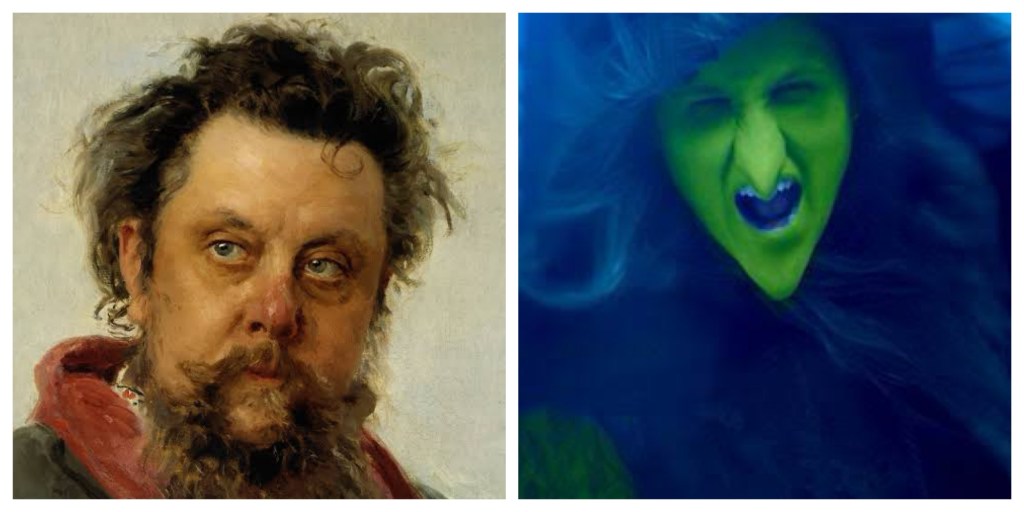
Night on a Bare Mountain is orchestral work by Modest Mussorgsky that was completed in June 1867. The piece evoked the pagan festivities of the midsummer Slavic holiday associated with the summer solstice, involving fire, water, and fertility rituals as well as the gathering of witches and spirits. The work had not been performed in public at the time of the composer’s death in 1881; it was revised by his colleagues and still later by other generations of composers and conductors. At the time of his death, many of his works, including Night on Bald Mountain, were both unpublished and unrevised but Rimsky-Korsakov took up Night on Bald Mountain, rearranging and reorchestrating it in a more conservative manner, retaining Mussorgsky’s ferocious energy while somewhat lessening the piece’s demonic sound. He rejected his friend’s original conclusion of crashing dissonance and savagery, substituting an ending in which dawn and church bells disperse the gathered demons. The piece first reached an international audience in this form, when Rimsky-Korsakov conducted it in concert at the Paris Exhibition of 1887 and Mussorgsky’s original version was not published until 1968. Mussorgsky was a composer who resisted the establishment and could described as a troubled soul. Sadly, he began to show signs of alcoholism, to the degree that drinking eventually caused his death just days after his 42nd birthday.
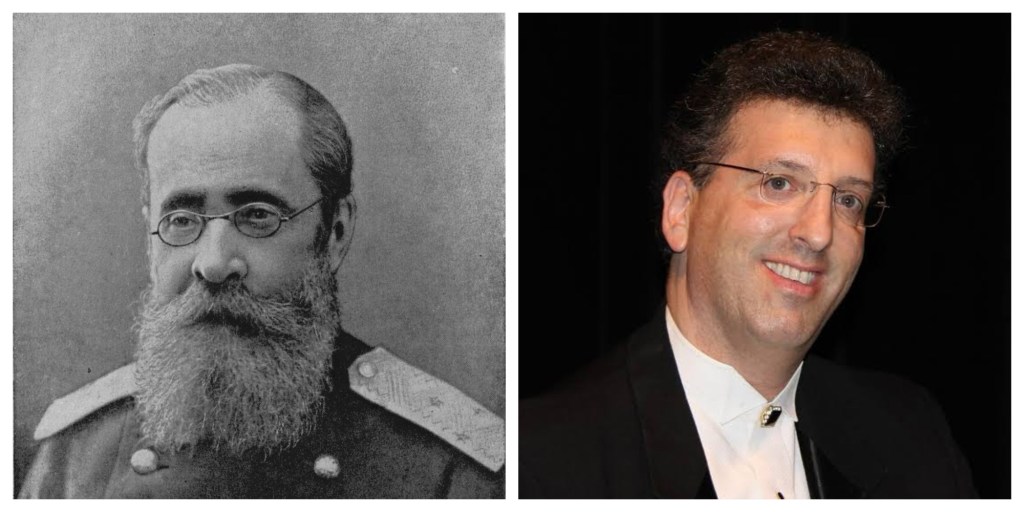
César Cui composed operas, songs, and piano music and was also music critic and military engineer. In 1851 he entered the school of engineering in St. Petersburg, eventually studying at the Academy of Military Engineering, becoming a lecturer there in 1857. His pupils included General M.D. Skobelev, a hero of the Russo-Turkish war, and Tsar Nicholas II, retiring with the rank of lieutenant general. Cui’s friendship with Balakirev developed his musical interests and from 1864 to 1877 he was music critic for the St. Petersburg News . Cui composed 10 operas only but he is at his best in the miniature forms, notably his short piano compositions and his songs. He composed the pPeludes in 1903, and they were published the same year. Each prelude explores a different key, utilizing both major and minor tonalities.

Nikolai Rimsky-Korsakov combined his music career with his professional career in the Russian Navy, first as an officer in the Navy and then as inspector of the Naval Bands. He was a master orchestrator and strongly believed in developing a nationalistic style of classical music. Elements of Russian society beginning with folk tales and folk songs, combined with uniquely Russian musical elements were important in his work. The use of ‘exotic’ harmonic, melodic, and rhythmic elements of music, which to European ears were considered musical orientalism helped Rimsky-Korsakov forge a national musical identity. This isn’t to say that Rimsky-Korsakov was unaware of European trends. He studied them as part of his appointment as professor of musical composition, harmony, and orchestration at the St. Petersburg Conservatory. His own techniques of composition and orchestration were broadened by exposure to the works of composers such as Richard Wagner. His best-known works include Scheherazade, Capriccio Espagnol and the Russian Easter Festival Overture. Each of these works focused on a different musical source: Scheherazade on orientialism, Capriccio Espagnol on folk song, and the Russian Easter Festival Overture on Orthodox liturgical themes. Rimsky-Korsakov regarded the Russian Easter Festival Overture as a kind of homage to both his national music history and to his two friends, Modest Mussorgsky and Alexander Borodin. While the Russian Easter Festival Overture will be most open to those who are familiar with the music of the Russian Orthodox church, the music was intended by Rimsky-Korsakov to capture the wonder of the Easter night. It is at the end, with the ringing of bells, we come into the Russian meaning of Easter.


Leave a comment