Olympic medals were awarded for architecture, music and literature until the middle of the 20th century. In Ancient Greece, art and sport went hand in hand, with the ideal way to achieve harmony considered to be by exercising both body and mind. Sadly, there are no longer medals to be won in the arts at the modern-day Olympics but music still plays an important part, certainly in the opening and closing ceremonies. Phil Whelan and I look at some of the the great music either used or commissioned for the Olympics over recent years with the surprising inclusion of a work composed in 1734
Antonio Vivaldi (1678-1741)
L’Olimpiade RV725 Sinfonia: Allegro
Concerto Italiano
Rinaldo Alessandrini (conductor)
Atlanta 1996
Michael Torke (b. 1961)
Javelin
Boston Pops Orchestra
John Williams (conductor)
Beijing 2008
Xiaogang Ye (b. 1955)
The Starry Sky
Noriko Ogawa (piano)
Royal Scottish National Chorus and Orchestra
José Serebrier (conductor)
Los Angeles 1984
Philip Glass (b. 1937)
The Olympian
Philip Glass (piano and studio)
Moscow 1980
Dmitri Shostakovich (1906-1975)
Festive Overture
London Symphony Orchestra
Maxim Shostakovich (conductor)
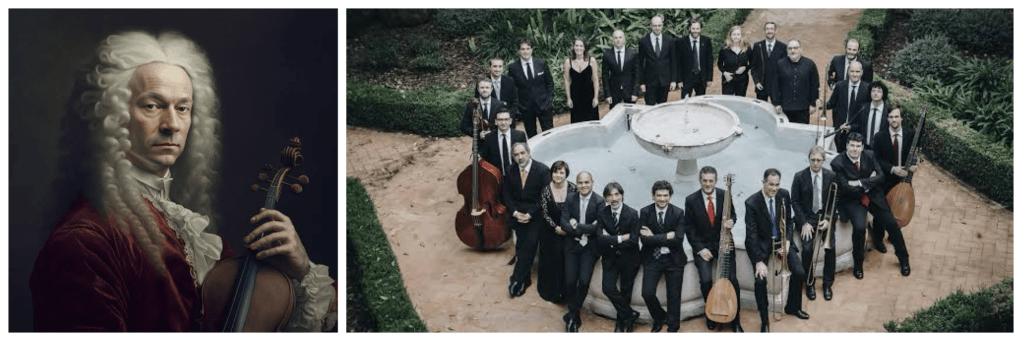
More than 50 composers set Pietro Metastasio’s libretto L’Olimpiade between 1733 and 1815, starting with Caldara and including along the way such names as Pergolesi, Galuppi, Cimarosa, Cherubini and Paisiello.
Compared to these figures, some of the most illustrious in 18th-century opera, Vivaldi was a bit of an outsider, yet his L’Olimpiade was the second to appear, receiving its première in 1734 less than a year after Caldara’s had hit the stage in Vienna.
The story is played out against the backdrop of the Olympic Games (the ancient version, naturally), at which the prize is the hand of the princess Aristea. Licida has fallen in love with her and, being no athlete himself, prevails on his friend Megacle to compete under his name.
The most effective and intimate moments occur in the recitatives but the arias are highly enjoyable pieces in their own right.
Along with Bach and Handel, Vivaldi ranks amongst the greatest Baroque composers and his influence during his lifetime was widespread across Europe
He pioneered many developments in orchestration, violin technique and programmatic music and he consolidated the emerging concerto form into a widely accepted and followed idiom.
Many of his compositions were written for the all-female music ensemble of the Ospedale della Pietà, a home for abandoned children.
After almost two centuries of decline, Vivaldi’s musical reputation underwent a revival in the early 20th century, with many of his compositions, once thought lost, have been rediscovered – some as recently as 2015.
His music remains widely popular in the present day and is regularly played all over the world.
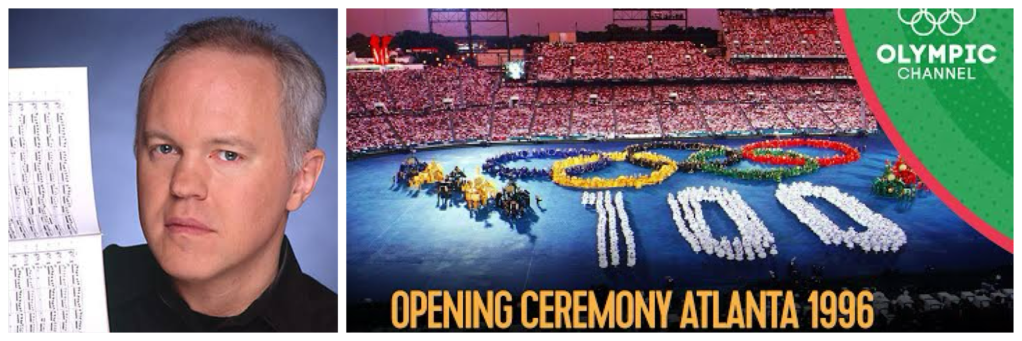
Michael Torke’s Javelin was also performed in the opening ceremony of the 1996 Summer Olympics, which took place in Atlanta.
Javelin was commissioned by the Atlanta Committee for the Olympics, which was about to celebrate the 50th anniversary of the Atlanta Symphony Orchestra.
It is a brief, breezy showpiece with plenty of rhythmic verve, complete with memorable tunes and a funky post-minimalist vibe.
Torke had three goals for this Atlanta Symphony’s anniversary piece: to use the orchestra as a virtuosic instrument, to use triads (three-note tonal chords) and for the music to be thematic.
Its fast tempo evokes a generally uplifting, sometimes courageous, yet playful spirit.
Michael Torke’s work has been described as some of the most optimistic, joyful and uplifting music to appear in recent years.
He is a master orchestrator and has created a series substantial body of works in virtually every genre. He has been commissioned by The Philadelphia Orchestra, the San Francisco Symphony, New York City Ballet, Alvin Ailey, National Ballet of Canada, Metropolitan Opera, Théâtre du Châtelet, English National Opera, London Sinfonietta, Lontano, De Volharding, and the Smith, Ying, and Amstel Quartets, among other orchestras, ballet companies, and ensembles.
He has been composer-in-residence with the Royal Scottish National Orchestra.

The Starry Sky was commissioned for the opening opening ceremony of the Beijing Olympic Games in 2008. Lang Lang, the celebrated Chinese pianist, was invited to play piano with thousands of gymnasts and dancers in the center of the newly built China’s National Stadium, Bird’s Nest.
For several years prior to the ceremony, hundreds of composers at home and abroad had been submitting music samples to the director of the ceremony, Zhang Yimou, but no composition was approved until Xiaogang Ye submitted his extract.
In June 2008, Lang Lang recorded the work with China Philharmonic Orchestra conducted by Long Yu, finishing the recording of the concerto for the opening ceremony within 6 hours.
The Starry Sky was performed in the opening ceremony of the Beijing Olympic Games at 8:00 PM, on August 8th, 2008 in one of the most spectacular Olympic opening ceremony performances since the modern Games commenced.
Born on 23 September 1955, Xiaogang Ye is regarded as one of China’s leading contemporary composers. He studied at the Eastman School of Music and University of Rochester in New York and now divides his time between Beijing and Exton, Pennsylvania.
His compositions include symphonic works, a range of chamber music, stage works and film music, with much of his music bearing a connection to Chinese culture and tradition.
Ye has been appointed as the International Chair in Composition at the Royal Northern College of Music in Manchester as well as the founding dean of the School of Music at the Chinese University of Hong Kong.
Ye has received numerous prizes and awards and in 2020 he became a member of the American Academy of Arts & Science.

Philip Glass was commissioned by the 1984 Olympic Committee to write a work, The Olympian – Lighting of the Torch, for performance at the spectacular opening ceremony of the Games in Los Angeles. It is a short piece scored for orchestra and voices and composed in Glass’ minimalist style.
Philip Glass has had an extraordinary and unprecedented impact upon the musical and intellectual life of his times.
His associations, personal and professional, with leading rock, pop and world music artists date back to the 1960s and he is the first composer to win a wide, multi-generational audience in the opera house, the concert hall, the dance world, in film and in popular music – simultaneously.
He studied with the legendary pedagogue Nadia Boulanger (who also taught Aaron Copland , Virgil Thomson and Quincy Jones) and worked closely with the sitar virtuoso and composer Ravi Shankar.
He returned to New York in 1967 and formed the Philip Glass Ensemble – seven musicians playing keyboards and a variety of woodwinds, amplified and fed through a mixer.
The new musical style that Glass was evolving was eventually dubbed ‘minimalism.’
Much of his early work was based on the extended reiteration of brief, elegant melodic fragments that wove in and out of an aural tapestry.
Glass has composed more than thirty operas, large and small; fourteen symphonies, thirteen concertos; soundtracks to films; nine string quartets; a growing body of work for solo piano and organ.
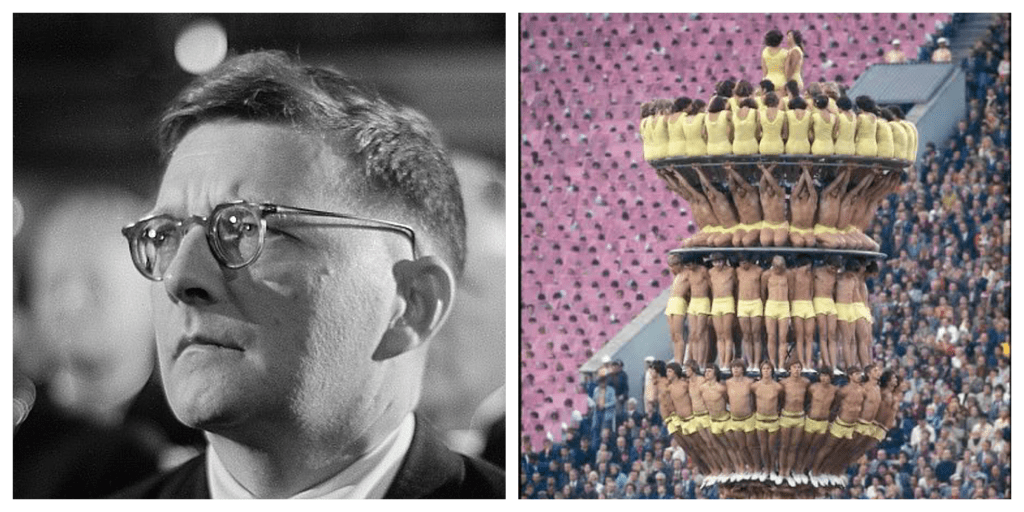
Five years after Shostakovich’s death, the Festive Overture was chosen as the signature musical theme of the 1980 Summer Olympics in Moscow.
Written for a concert in Moscow at the Bolshoi Theatre celebrating the 37th anniversary of the October 1917 Revolution, this 1954 piece, written after the death of Stalin in 1953, seems to contain so much of Shostakovich’s life and humour.
Shostakovich said that it represented ‘the state of mind of a man who has undergone the ordeals of war, who has defeated the enemies of the homeland, and now seeks to rebuild his country.’
But, taken as the piece was probably written in 1954, it more clearly expresses his delight at the removal of one of his most debilitating critics.
One of Shostakovich’s friends, told the story that ‘the speed with which he wrote was truly astounding…. He was able to talk, make jokes, and compose simultaneously.’
As he completed each page, it was sent to the music copyist to create the parts.
Three days later, the work was complete.
One writer compared the work to the structure of an official celebration in itself: action contrasted with solemnity.

Leave a comment