
Bela Bartók is considered one of the most important composers of the 20th century. He and Franz Liszt are regarded as Hungary’s greatest composers. Bartók belongs to the generation of modernist European composers – Schoenberg, Berg, Webern, Stravinsky and Varèse – who rose to prominence at the beginning of the 20th century. Together with his compatriot, Zoltan Kodály, Bartók forged a Hungarian musical style that drew inspiration from native folk song, but with a modernist edge.
Béla Bartók
Piano Quintet: IV. Poco a poco più vivace – Vivace molto (1903)
Chilingirian String Quartet
Stephen de Groote (piano)
Béla Bartók
Bluebeard’s Castle, Sz. 48: Door 5. The Kingdom. Ah! Lásdez az én birodalmam (1911)
Jessye Norman (soprano)
Lászlo Pólgár (bass)
Chicago Symphony Orchestra
Pierre Boulez (conductor)
Béla Bartók
Music for Strings, Percussion and Celesta, Sz. 106: IV. Allegro molto (1936)
Royal Concertgebouw Orchestra
Bernard Haitink (conductor)
Béla Bartók
Concerto For Orchestra, BB 123 (Sz.116): 5. Finale (Pesante – Presto) (1943)
Budapest Festival Orchestra
Iván Fischer (conductor)
Béla Bartók
7 Romanian Folk Dances, Sz. 68: No. 5, Poarga românească (1915)
St Paul Chamber Orchestra
Hugh Wolff (conductor)

Piano Quintet (1903)
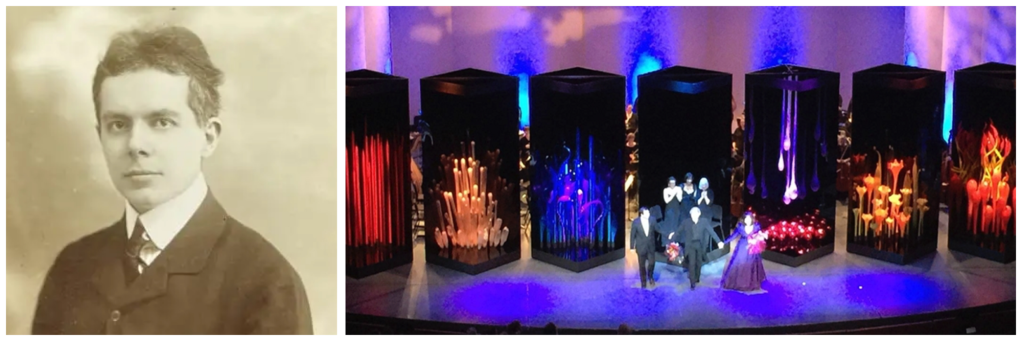
Béla Bartók was born in an area of Europe rich in peasant culture, but was soon set on a path of intense musical training in the classical tradition.He enrolled at the Liszt Academy in Budapest, where he would eventually replace its piano professor István Thoman. Bartók began his Piano Quintet in C major in Berlin in October 1903 not long after graduating from the Liszt Academy. In 1902 Bartók had heard Strauss’s Also sprach Zarathustra and its influence was certainly apparent in his early symphonic poem, Kossuth. Simultaneously, however, Bartók was also beginning to explore a national musical language as a way to express his own strongly held Hungarian identity, and this tension between stylistic forebears and a desire to forge something new characterizes much of his Piano Quintet (1903). The work was first performed in Vienna at the Ehrbar Saal on 21 November by the Prill Quartet with the composer himself taking the piano part. The quintet was subsequently revised and the revision first performed on 7 January 1921—though its success with audiences apparently disturbed the composer. Indeed, Zoltán Kodály and the composer’s then-wife, Márta Ziegler, thought Bartók had destroyed the work. It was subsequently rediscovered by Bartók scholar Denijs Dille in January 1963.
Bluebeard’s Castle (1911)
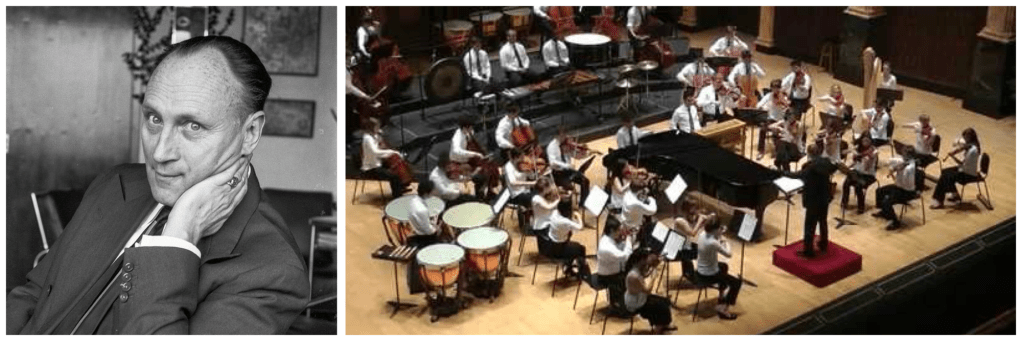
By the 1910s, Bartók had become increasingly interested in collecting and transcribing folk tunes and dances from Hungary, Romania, Croatia, Yugoslavia and even Turkey and North Africa, and continued, with rare dedication, for decades. These melodies and rhythms inspired Bartók, who began to conceive music that fused their characteristic elements with the highly developed musical language of the day. In 1911, Bartók tried his hand at opera, producing the one-act opera Duke Bluebeard’s Castle based on the French folktale of the bearded man who murders a series of wives but softened by the librettist Béla Balázs into a tale of despair and loneliness. Bluebeard (bass) takes Judith (soprano), his newest bride, home to his gloomy castle. She makes him unlock his secret doors one by one, and when she has penetrated his innermost secret she takes her place, another failure, among the other wives behind the last door, leaving Bluebeard in his loneliness. Bartók entered his opera into a competition but was rejected by the jury. He had to wait until 1918 before the opera was finally put on the stage (in Budapest in May) since it was only then that the composer’s reputation had been established through the success of his one-act ballet, The Wooden Prince, staged in Budapest in 1917. Bartók’s music mirrors the subtle psychology of Bluebeard’s and Judith’s relationship, echoing and enforcing their changes of mood, ultimately emphasising the degree to which they have grown apart. At the end, Bluebeard addresses his former wives, virtually heedless of Judith’s presence, and when he adorns her with robe, crown, and necklace, her protestations are distant and hopeless. Finally, as the music returns to the ominous texture of the opening, darkness once more envelops the stage.
Music for Strings, Percussion and Celesta (1936)
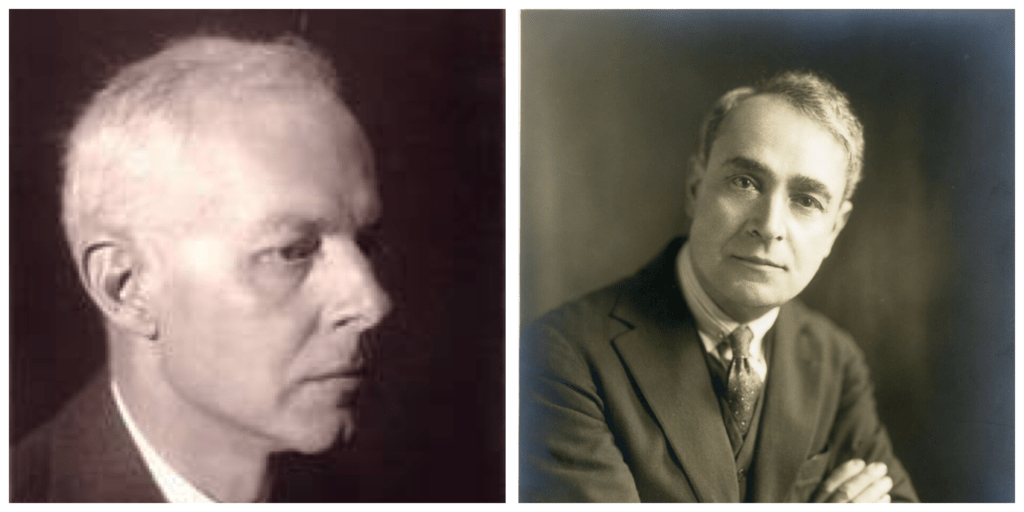
In 1934, the Swiss conductor Paul Sacher married Maja Stehlin, the widow who had inherited the Roche pharmaceutical fortune. Finding himself now one of the richest men in the world, Sacher poured his wealth into one of his greatest passions: new music. In 1926, Sacher had founded the Basle Chamber Orchestra, an ensemble dedicated to performing both new works and neglected music from the pre-classical era. To celebrate the ensemble’s tenth anniversary, Sacher commissioned a new work from one of the day’s most cutting-edge composers: Béla Bartók. By 1936, the 55-year-old Bartók was unaccustomed to earning much from his compositions but, having set to work on the commission during his annual summer vacation in Switzerland, the piece he wrote, Music for Strings, Percussion and Celesta, would be recognized as one of his greatest masterpieces. The music is simultaneously primitive and sophisticated; wild and controlled; serene and terrifying; serious and slapstick. One of the piece’s most immediately striking features is its unique instrumentation: Bartók calls for two string orchestras arrayed on opposite sides of the stage—one is the mirror image of the other. In the middle and toward the back is an array of percussion and keyboard instruments: xylophone, snare drum, cymbals, tam-tam, bass drum, timpani, piano and celesta. This unusual set up allows for antiphonal effects from the strings as musical ideas zoom back and forth across the hall. Music for Strings, Percussion and Celesta is divided into four movements, each of which has a distinct character.
Concerto for Orchestra (1944)
Bartok’s Concerto for Orchestra was written in 1944 for the Koussevitzky Music Foundation in memory of Mrs. Natalie Koussevitzky. The early months of 1943 found Bartók in poor health. Despite this, he managed to deliver three of six scheduled lectures at Harvard University. His hosts, however, insisted that he undergo a thorough physical examination, the results of which revealed a lung disease as well as other problems. Before Bartók left the New York City hospital, Sergei Koussevitzky made an offer of one thousand dollars from the Koussevitzky Foundation for a new work for orchestra that would honour the memory of the conductor’s wife who had died during the previous year. He was reluctant to accept the commission for fear that his poor health might prevent him from completing the work. Koussevitzky decided to offer Bartók an advance as a demonstration of good faith that the composer’s fears were unfounded. The resulting work, the Concerto for Orchestra, not only was completed, but has gone on to become one of the twentieth century’s greatest masterpieces. Its first performance took place on 1 December 1944 in Boston, with Koussevitzky directing the Boston Symphony Orchestra. The work comprises five movements: Introduzione, Giuoco delle copie (Game of Pairs), Elegia. Intermezzo interotto (Interrupted Interlude) and Finale.

Romanian Folk Dances (1915-1917)
In the late nineteenth century, Hungarian style music had been used with great success by major composers such as Brahms and Liszt as coloration or substance in many of their most famous works. Among Liszt’s most stunning works in this genre are the nineteen Hungarian Rhapsodies which proved to be so popular they soon made regular appearances in concert halls throughout the work. Brahms’ Hungarian Dances paid tribute to the Hungarian style in 21 dances. But, something was wrong: and Bartók and Kodály discovered it. This so-called “Hungarian style” stemmed quite narrowly from gypsies (Roma) and was thoroughly romanticized. In fact, the style was not representative of authentic Hungarian folk music. Traveling throughout the most remote regions of Hungary, Bartók and Kodály transcribed, saved, recorded on an “Edison” phonograph, and classified thousands of folk tunes which provided tunes, rhythms, harmonies, and ideas for their compositions as well as scholarly monographs and a gigantic set of twelve volumes containing their research. The intent was to provide examples of, foundation for, and a renaissance of authentic Hungarian music. This quest led both men into Transylvania, now a part of Romania, but which had been part of Hungary for many years until added permanently to Romania in 1920. Thus, we find the legitimacy of Romanian Folk Dances as a source for Hungarian folk style. Bartók was particularly drawn to Romanian folk traditions because he felt that these had been more isolated from outside influences and were therefore more authentic. The Romanian Dances were written between 1915-1917, first for piano and later orchestrated. Béla Bartók died in New York on 26 September 1945. Amongst his last words were: “The trouble is that I have to go with so much still to say”

Leave a comment