
Joseph Haydn served for thirty years as Kapellmeister to Prince Nikolaus von Esterhazy, one of the most distinguished patrons of music ever. When the prince died in 1790, Haydn was offered a generous pension and might reasonably have been expected to retire after an honorable career. Instead, the 58-year-old composer was reinvigorated by making two lengthy visits to London in the years 1791-2 and 1794-5, where he discovered new audiences and new avenues of expression. For the enthusiastic London audiences, he composed twelve symphonies, six quartets, and a vast amount of other music. Rather than drifting comfortably into the shadows, the aging composer opened up a new musical world in which he created some of his finest works.
Symphony No. 93 in D Major, Hob. I:93: IV. Finale. Presto ma non troppo
Royal Concertgebouw Orchestra
Nikolaus Harnoncourt (conductor)
Piano Sonata in C, H.XVI No.50: 1. Allegro
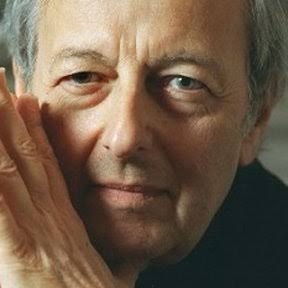
Alfred Brendel (Piano)
String Quartet in G Minor, Op. 74 No. 3, Hob. III:74 ‘The Rider’: IV. Finale. Allegro con brio
Alban Berg Quartet
Symphony No. 104 in D Major, Hob. I:104 “London”: IV. Finale: Spiritoso
Stuttgart Radio Symphony Orchestra
Sir Roger Norrington (conductor)
The Creation, Hob.XXI:2: Pt. 3, Praise the Lord, Ye Voices All!
Handel and Haydn Society
Jeremy Ovenden (tenor)
Margaret Lias (alto)
Matthew Brook (bass-baritone)
Sarah Tynan (soprano)
Harry Christophers (conductor)
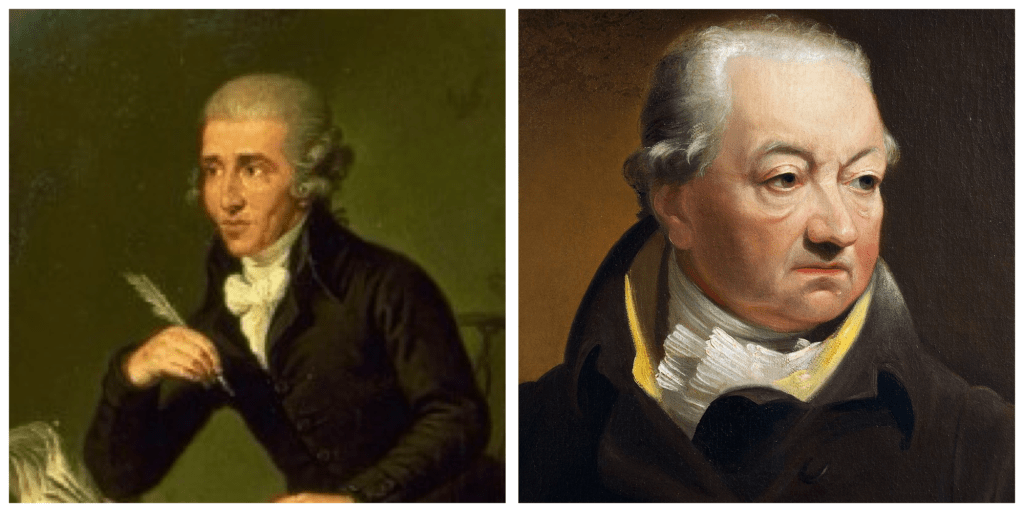
Symphony No. 93 in D Major
Johann Peter Salomon was a German-born violinist, composer and entrepreneur who had been based in London for a decade, and was now determined to get the newly-free Haydn to front his concerts in the English capital. It would be the musical coup of the century in a city which knew and loved Haydn’s music and would be thrilled if the man himself was to visit there in person. Salomon’s telentless pursuit of Haydn paid off. He offered Haydn an astounding contract: £300 for an opera, £300 for six symphonies, a £200 copyright fee, £200 for twenty other smaller compositions, and a guaranteed minimum of £200 from a benefit concert: a total of £1200 minimum, at a time when £30 would rent a comfortable house in London for a year. Once the details were settled, Haydn arrived in England at the start of January 1791, crossing the English Channel which was the first time the 58 year old Haydn had seen the ocean.The six symphonies composed for Haydn’s first English visit are those now known as nos 93 to 98. Nos 93-96 were composed in London in 1791 while nos 97 and 98 were composedthe following year. Most of them received their premieres in 1792, Haydn’s second year in London. They were designed for Salomon’s concerts in the Hanover Square Rooms, and they were universally received with near-hysterical enthusiasm. The press reports of the time, and Haydn’s letters and journal, report on what could only be described as ‘Haydn Mania’ which perdonified many of his appearances and performances. All of the symphonies composed for London are written in the four-movement structure which Haydn himself had helped establish as the classical norm: a fast first movement (usually with a slow introduction), a slow movement in a lighter, lyrical vein; , a fast-paced minuet and trio and very fast finale. Symphony no 93 in D was completed in London in early 1791, soon after his arrival. It was premiered on 17 February 1792, more than a year later.
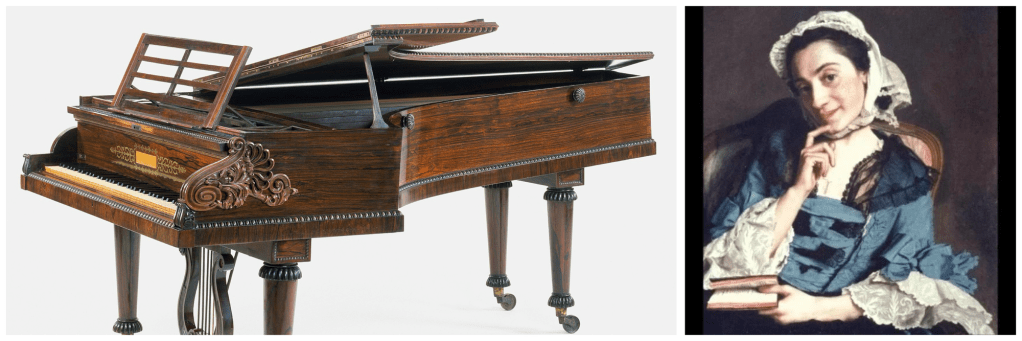
Piano Sonata in C, H.XVI No.50
In 1795, Haydn, at a young 63, was completing the second and last of two triumphant trips to London. During this last visit to the English capital, he became acquainted with Therese Jansen, a brilliant pianist for whom he wrote three sonatas – the final three of his prodigious output in the form. The sonatas were composed not just for an English performer, but for one of the large English pianos of the day. These instruments, with their extended keyboards which gave the piano ‘extra’ notes, proved so much to Haydn’s liking that he took one back to Vienna with him! In Haydn’s time piano sonatas were plentiful: in the very year of him presenting Piano Sonata in C, Beethoven composed his first three piano Sonatas (Op. 2), which he dedicated to Haydn; Mozart had written his 18th and last sonata in 1789; Johann Christian Bach (1735-1782) produced 35 sonatas; for Carl Philipp Emanuel Bach (1714-1788), estimates range from 150 to 200 sonatas; and Muzio Clementi (1752-1832), wrote 35 of an eventual output which amounted to nearly double that number. It is not surprising that the two greatest of these sonata-writing composers, Mozart and C.P.E. Bach (died 1782) eventually had the most influence upon Haydn, just as it was inevitable that his own first sonatas, from the period of about 1750 to 1767, were closely related to the Baroque suite. The keyboard writing in Piano Sonata in C is full of brilliance and flair and speak highly of the abilities of its dedicated, Therese Jansen-Bartolozzi.
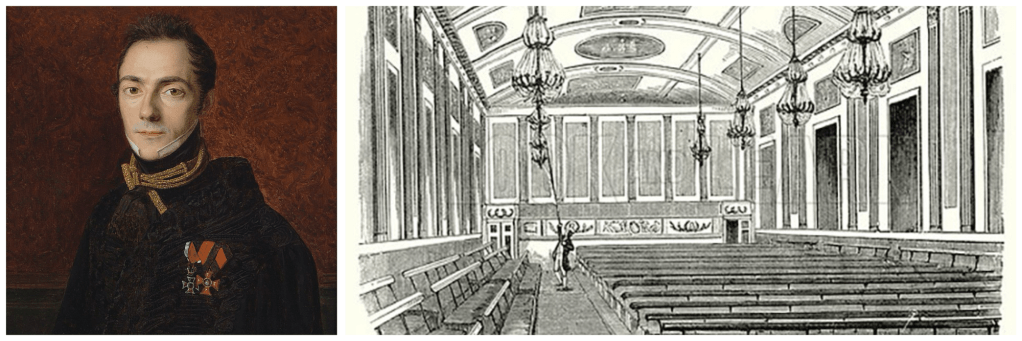
String Quartet in G Minor, Op. 74 No. 3, Hob. III:74
Between the London visits, Haydn lived quietly in Vienna, composing music for his second trip. It was during this period, in 1793, that he wrote the six quartets of his Opus 71 and Opus 74. These quartets are dedicated to Count Franz d’Apponyi, and while they are sometimes called the “Apponyi Quartets,” they were written with London audiences in mind, first performed in that city, and published there. In London, Haydn’s quartets were performed in an 800-seat hall on the same program with symphonies. Accordingly, Haydn conceived them not so much as intimate and subtle chamber music but as more public utterances, and the extroverted first violin parts, the brilliant writing, clear textures and transitions, and general tunefulness of this music can be seen as evidence that Haydn was consciously trying to write a different kind of string quartet. The Quartet in G Minor, the last of the cycle, has long been the most popular with audiences. The energy and galloping rhythms of its outer movements have earned it the nickname ‘Rider’ a name not originated by Haydn.
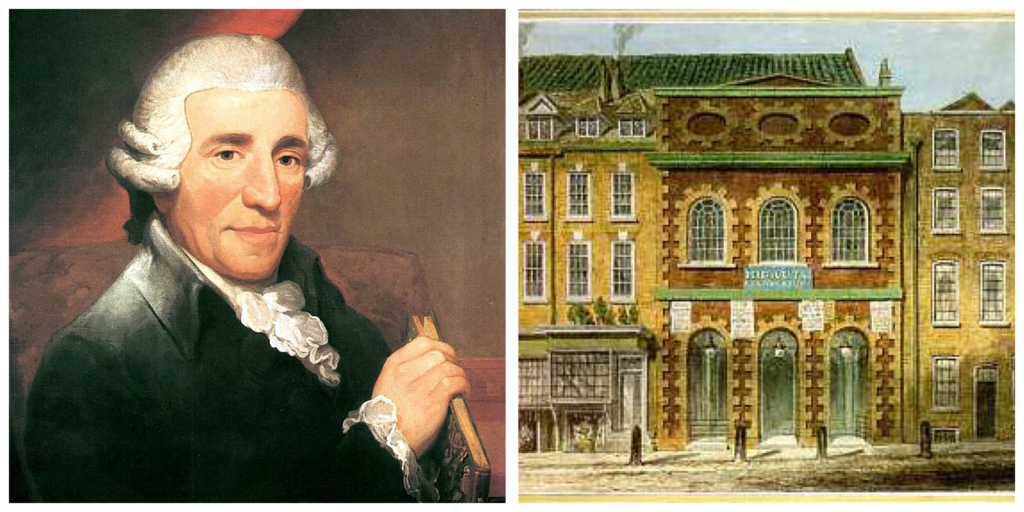
Symphony No. 104 in D Major, Hob. I:104 ’London’
Haydn was treated like royalty – or at least like Europe’s greatest composer – upon his arrival in England. Haydn returned to a breathlessly expectant London in February of 1794. The English were not disappointed. The last symphony to which alone among the 12 the name ‘London’ has become particularly attached, was first heard on April 13, 1795, and was also the main event of Haydn’s London farewell concert, for his own benefit, three weeks later. Of the latter, Haydn recorded in his diary: “The hall was filled with a picked audience. The whole company was delighted and so was I. I took in this evening 4000 gulden. One can make as much as this only in England.” By this time Salomon was no longer able to afford his own series and Haydn had become associated with another presenter. The Symphony No.104 in D Major is Haydn’s grand finale to London and is a potpourri of Slavonic folk tunes which Haydn heard during his years on the Esterházy estates. The opening theme had long been thought of as a London tribute, quoting from the street-song Hot Cross Buns, but in recent years has been identified as Oj Jelena, a ballad sung by the Croatians living in Eisenstadt when Haydn made his home there.
The Creation, Hob.XXI:2:
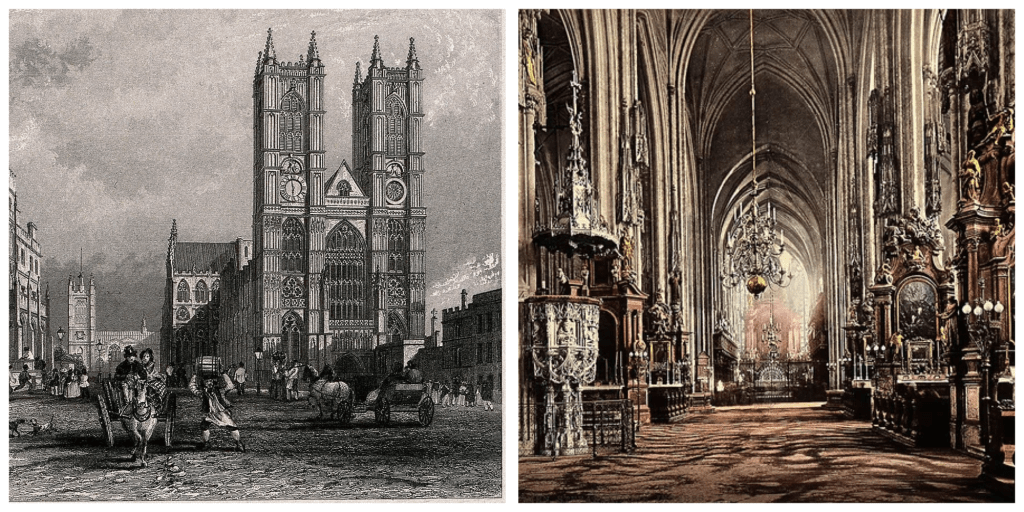
Haydn was a deeply religious man, and The Creation is his personal statement of faith. He was a life-long Catholic, having received his early musical education as a chorister at St. Stephen’s, Vienna’s main cathedral. There are few works of sacred music more cheerful than The Creation. It is a profound statement of an optimistic and assured faith, and of a belief in music’s ability to edify, uplift, and inspire the listener. By the time he composed The Creation in 1797, Haydn was also a celebrity.He moved in Europe’s leading intellectual and social circles, and he was as famous in Paris and London as he was at home in Vienna. He read widely, and his library’s shelves were stocked with tomes by the leading thinkers of his day, especially those of the German Enlightenment. When Haydn received the text for The Creation during his second visit to London in 1794-95, it immediately clicked with his religious and intellectual sensibilities. The rumor that the text had been intended for the great George Frideric Handel (1685-1759) himself only increased Haydn’s interest. During his first London visit, in 1791-92, Haydn attended the annual Handel commemoration in Westminster Abbey. There, he heard over a thousand performers sing two of Handel’s most famous oratorios, Messiah and Israel in Egypt. Interestingly, it was Israel in Egypt, with its massive choruses and delightful orchestral effects (including musical depictions of buzzing flies, jumping frogs, and a thunderous hailstorm) that impressed Haydn more. When the impresario Johann Peter Salomon handed him a text that had been among Handel’s effects at his death, Haydn took the text back with him to Vienna and started planning the work that would be the culmination of his long career. The full score, prepared and published by Haydn in 1800, contained both the German and the English, making it the first major work ever printed with a bi-lingual text.
Haydn’s Compositions in London
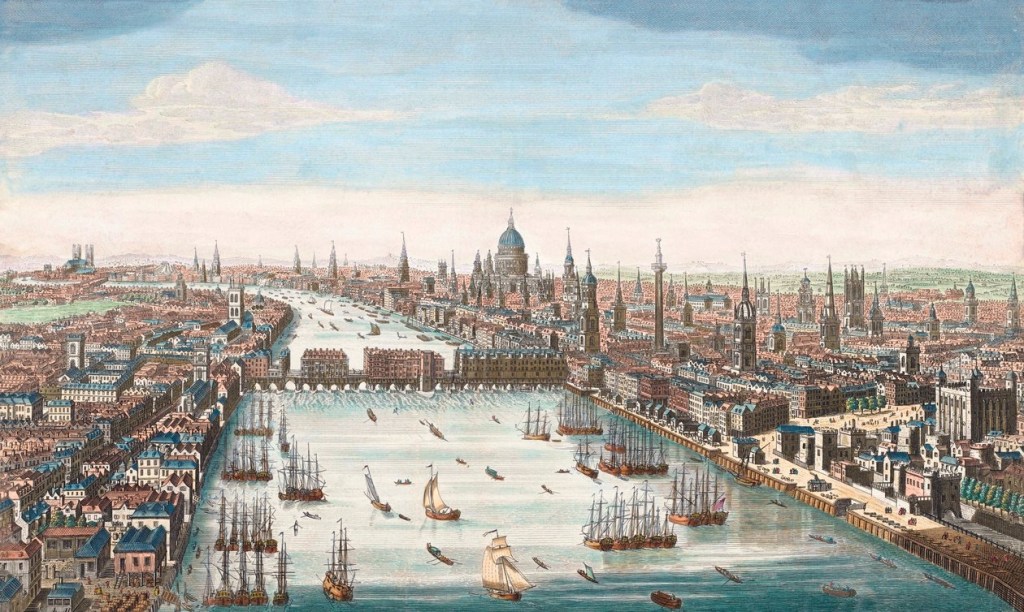
Haydn composed twelve symphonies while he resided in London (Nos. 93-104) which are among his most famous and frequently performed works. These symphonies showcased Haydn’s mature style, characterized by bold orchestration, vivid contrasts, and expansive forms. Additionally, he composed a series of string quartets (Op. 71 and Op. 74), which further solidified his reputation as the ‘father of the string quartet.’ Haydn’s contributions to piano literature during his time in England were substantial. He composed several sonatas, which are now staples of the piano repertoire.These include the three sonatas of Hob. XVI: 50, 51, and 52, composed in London around 1794-1795. These works demonstrate Haydn’s innovative approach to the piano, featuring a greater range of dynamics, expanded keyboard use, and a more challenging technical demand, reflecting the capabilities of the English pianos, which were more robust compared to their Viennese counterparts. The piano’s broad range and sonority allowed Haydn to explore new textures and expressive possibilities. His London sonatas often exhibit a grandeur and scale that were unprecedented in his earlier works. After his two successful trips to London (1791-1792 and 1794-1795) Haydn returned to Vienna in 1795. His experiences in England left an indelible mark on his compositional style.The last phase of his creative life saw him composing the oratorios The Creation and The Seasons, which were influenced by the grandeur and scale of the musical forms he had explored in London.

Leave a comment