
Mozart’s late symphonies are considered to be amongst the greatest works in classical music. Among his 41 symphonies, Nos. 36 (Linz), 38 (Prague), 39, 40, and 41 (Jupiter) standout as unique achievements. They show how his style changed over time and how he became the consummate composer. These symphonies were written between 1783 and 1788 and blend beautiful melodies, drama with a heartfelt sense of joy.
So, who was Mozart? He was a child prodigy who, aged 7 years, spent a lot of his childhood traveling with his family, performing for important people such as patrons, academics and musicians. His father, Leopold, organised these tours essentially to show off Mozart’s skills. Mozart was born on January 27, 1756, in Salzburg, Austria and grew up there with his family. His father was a composer, violinist, and music theorist so Mozart has a good start in learning the basics of music theory.
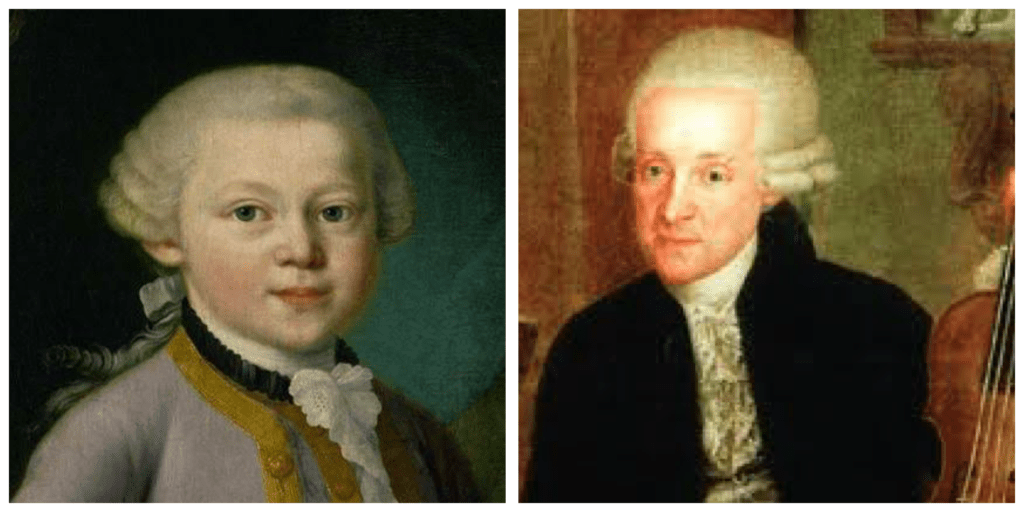
By the time he was five, he could master and memorise music quickly, such as a minuet his sister Nannerl was practicing. By eight, he was already writing symphonies for full orchestras! The Mozart family travelled extensively across Europe and between 1763 and 1766, they visited cities in Germany, Brussels, Paris (where they even met King Louis XV), London, and more. They even went to Vienna, where both Mozart and his sister caught smallpox. By the time Mozart was 13, he was writing really complex music such as his Symphony No. 8. He was especially influenced by Johann Christian Bach, who he met in London when he was just eight. Bach’s style had a big impact on Mozart, and he even arranged some of Bach’s music into piano concertos.
Wolfgang Amadeus Mozart
Symphony No. 36 in C major, K. 425 (‘Linz’) IV. Presto
Academy of St Martins-in-the-Fields
Neville Marriner (conductor)
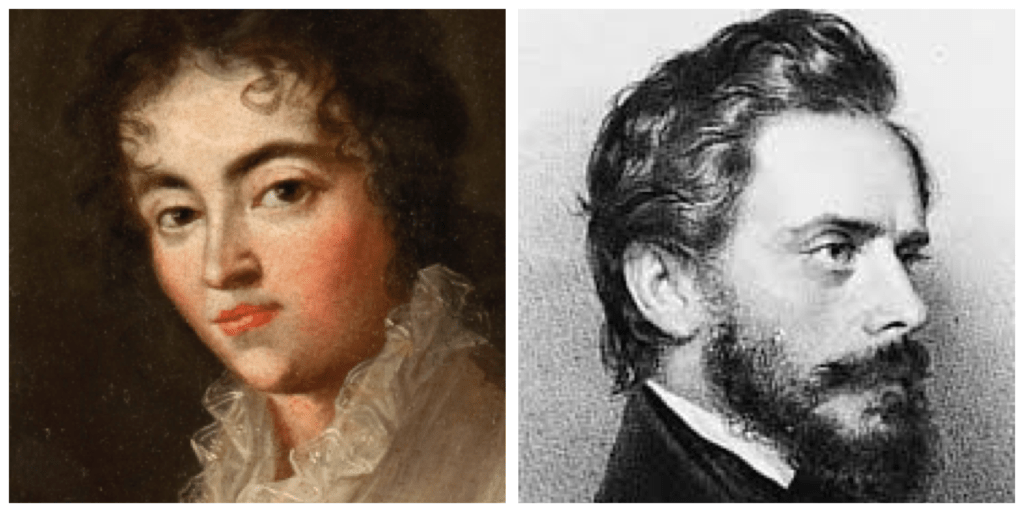
In 1783, Mozart headed to Salzburg with his new wife, Constanze, hoping to reconcile himself to his father who wasn’t enamoured about their marriage. Unfortunately, they didn’t manage to work things out, and this tension stayed with Mozart for the rest of his life. On their way back to Vienna, Wolfgang and Constanze stopped in Linz and stayed with a friend, Count Thun-Hohenstein. When Mozart found out there was a concert coming up, he decided to compose a new symphony in just a few days. The result was his Symphony No. 36, known as the Linz. symphony. It’s astonishing that Mozart could create something so complete and sophisticated in such a short time but since moving to Vienna, Mozart had gained confidence in his composing skills which is reflected in this symphony. He noted the final movement should be played very fast, offersing a thrilling finish to this great symphony
Wolfgang Amadeus Mozart
Symphony No. 38 in D major, K. 504 (“Prague”) I. Allegro
Mozarteum Orchestra Salzburg
Ivor Bolton (conductor)
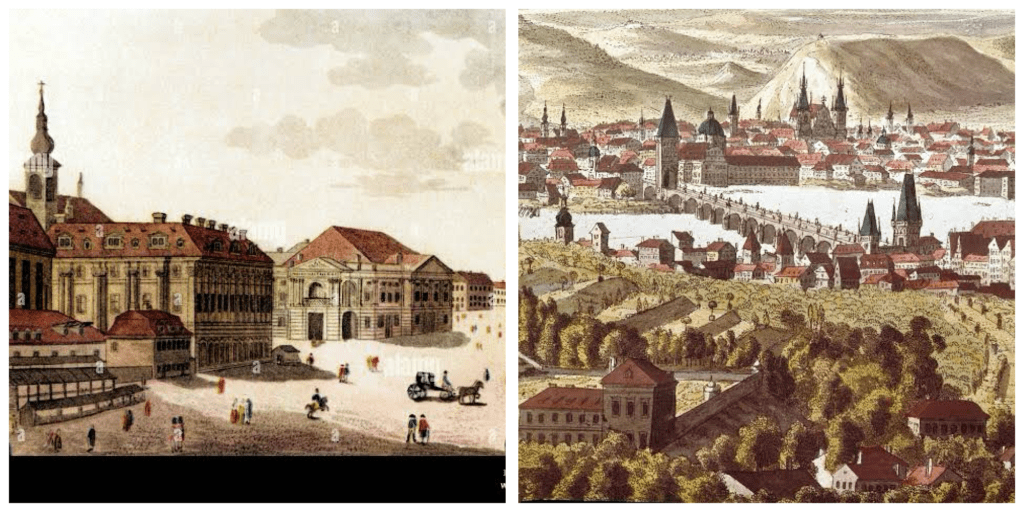
Mozart settled in Vienna in 1781, marrying Constanze Weber in 1782, though he continued moving homes frequently during his final decade. His versatility spanned operas, and piano concertos which remain a pinnacle achievement in classical music. Unlike later composers, Mozart prioritised immediate audience appeal over legacy, as reflected in his concert-driven career. But 1786 was a happy time for Mozart as his opera, The Marriage of Figaro, had thrilled audiences in Prague and the work received enthusiastic reviews. People were excited about the possibility of Mozart coming to the city to perform and perhaps conduct his opera. Mozart travelled to Prague in style with Constanze, some fellow musicians, a servant, and even his dog Gauckerl. They stayed at Count Franz Joseph Thun’s palace, a patron who had known Mozart since his Salzburg days who treated them to sumptuous meals, concerts and lavish parties. The highlight of the visit was when Mozart performed two public shows: a concert at the National Theatre on January 19, 1787, and a performance of Figaro three days later. He brought his new symphony from Vienna, which he had finished on December 6, 1786. The sophistication of the symphony represented some of his finest work with the first movement being one of the most complex he’d ever written

Wolfgang Amadeus Mozart
Symphony No. 39 in E-flat major, K. 543 III. Menuetto
Vienna Philharmonic Orchestra
Leonard Bernstein (conductor)
Mozart’s Prague Symphony No. 38 had hinted at some big changes as Mozart was composing symphonies with dramatic and dynamic music. The Prague symphony different offered a different structure – without a minuet – and more complex harmonies. This led to his last three symphonies, Nos. 39, 40, and 41, which he finished on June 26, July 25, and August 10. These symphonies were innovative, emotional, and deep compared to his earlier work. But his change of style is especially surprising because he was going through very difficult times personally. He was suffering financially and people in Vienna weren’t listening to his music anymore so he had fewer concerts and commissions. He even had to ask his friend Michael Puchberg for help. The Symphony No. 39 didn’t receive much attention when it was first composed and there is no record of when it premiered. Mozart’s plan to perform it as part of a concert series fell through due to poor ticket sales. To make things worse, his only daughter passed away just three days after he finished the symphony. The minuet in this symphony is based on a traditional Austrian folk dance, and is written in a relaxed and easy style.

A detail of the first page of the autograph manuscript of Mozart’s G minor Symphony K. 550. The text notes that he completed it on July 25, 1788.
Wolfgang Amadeus Mozart
No. 40 in G minor, K. 550 I. Allegro molto
Hamburg Camerata
Claus Bantzer (conductor)
Mozart only composed two symphonies in a minor key, one in 1773 and the other in 1788. Both are dramatic works and in the key of G minor, which he used to express sadness and intense emotions. The sSymphony No 40 K. 550, has always been an important wor with one of Mozart’s biographers referring to it a work of pain and sorrow. It’s known for being intense and a somewhat wild but it still follows the rules of classical music. At the time, Mozart was going through a tough period in his life. The first part of the symphony begins without a slow introduction, which was unusual for Mozart. Even though it’s one of his most loved works, it’s not clear if he ever performed it during his lifetime. There are two versions of the symphony: one with clarinets and one without.
Wolfgang Amadeus Mozart
Symphony No. 41 in C major, K. 551 (“Jupiter”) IV. Molto allegro
London Symphony Orchestra
Claudio Abbado (conductor)
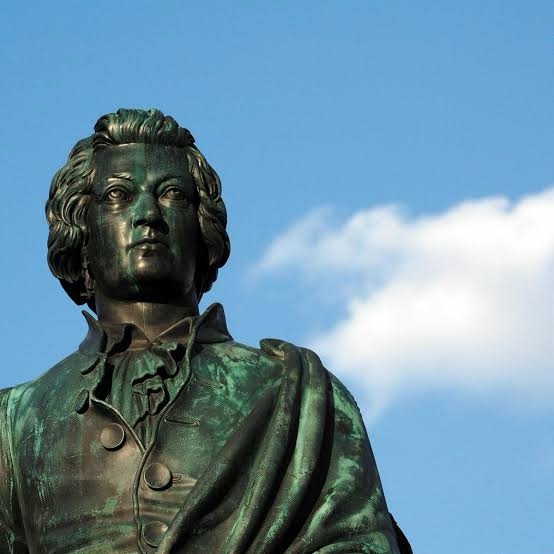
Mozart finished his last symphony, the ‘Jupiter’ on August 10, 1788. Despite all his difficulties, 1788 was an incredibly productive year for Mozart, with thirty new works added to his catalogue. Earlier that year, his opera Don Giovanni had its second run in Vienna, and in June, he started working on his final three symphonies, completing them in under two months. The Symphony No 41 was the third of these. The name Jupiter was actually given to the symphony after Mozart’s death, likely by Johann Peter Salomon, an English impresario who was responsible for bringing Haydn to London and commissioning Haydn’s London symphonies.The symphony is an extraordinary masterpiece but the finale is especially stunning. It features a famous four-note theme that Mozart weaves together with four other themes in a complex counterpoint. The climax comes when all five themes play together, ending with a dramatic flourish of brass and timpani. This serious and powerful ending helped make the Jupiter a favourite alongside Beethoven’s symphonies in the 19th century. Mozart died on December 5, 1791, at just 35 years old. Some theories suggest he might have died from a condition like Schönlein-Henoch purpura, but the exact cause remains a mystery.

Mozart Rumours
Mozart wasn’t buried in a pauper’s grave; his burial was standard for Vienna’s middle class at the time. His wife Constanze and patron Gottfried van Swieten ensured he had a proper coffin.
Tourette’s Syndrome: There’s no solid evidence Mozart had Tourette’s; his humour was just typical of his time.
The story about Mozart rehearsing the Requiem on his deathbed is likely exaggerated.
The rumour that Antonio Salieri poisoned Mozart is probably false.
Mozart didn’t wear colorful wigs as suggested in the movie Amadeus; he only wore wigs on formal occasions.
While listening to Mozart might boost your mood, there’s no proof it increases intelligence.

Leave a comment