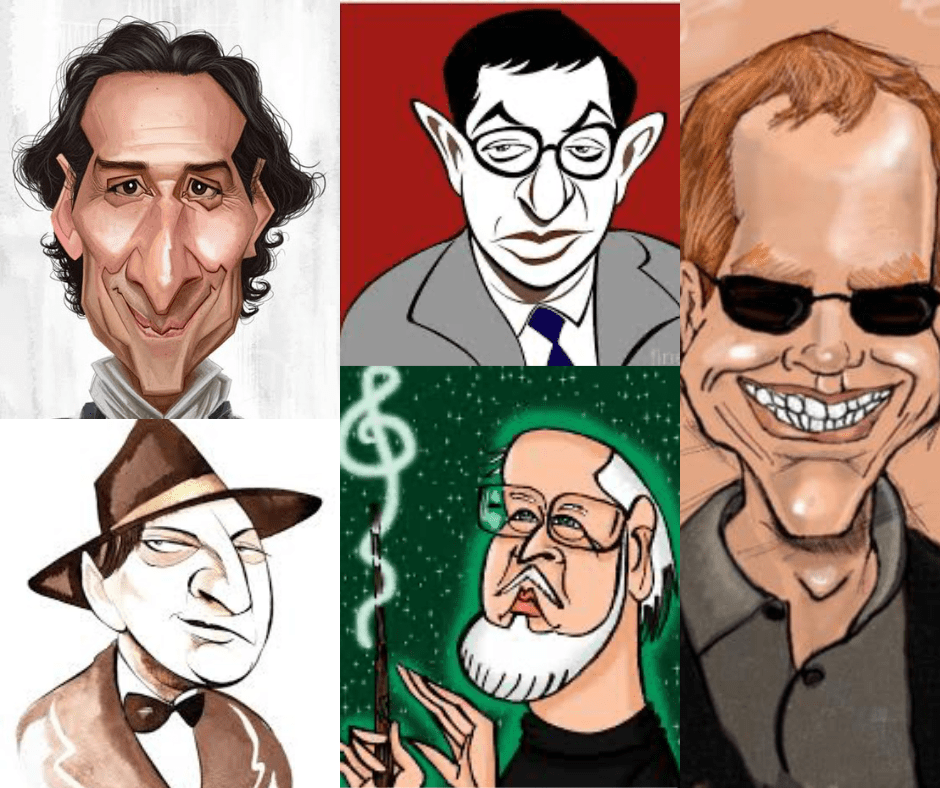
Their work is listened to by millions and the music of film composers is some of the most recognisable ever written. But what kind of music do these composers write when they have no visual elements to stimulate their creativity? Today’s programme looks at some original concert works composed by well known composers from the world of film.
Bernard Herrmann (1911-1975)
Symphony No 1 (1941): IV. Rondo (Epilogue a la Processional)
National Philharmonic Orchestra
Bernard Herrmann (conductor)
Danny Elfman (b. 1953)
Violin Concerto ‘Eleven Eleven’ IV. Giocoso.
Royal Scottish National Orchestra
Sandy Cameron (violin)
John Mauceri (conductor)
Alexandre Desplat (b. 1961)
Pelléas et Mélisande, Sinfonia Concertante for Flute and Orchestra (2013) I. Like a Hunted Bird
Emmanuel Pahud (flute)
Orchestre National de France
Erich Korngold (1897-1957)
Violin Concerto in D Major Op 35 (1945) III. Allegro assai vivace
Gil Shaham (violin)
London Symphony Orchestra
Andre Previn (conductor)
John Williams (b. 1932)
Sound the Bells (1993)
Recording Arts Orchestra of Los Angeles
John Williams (conductor)
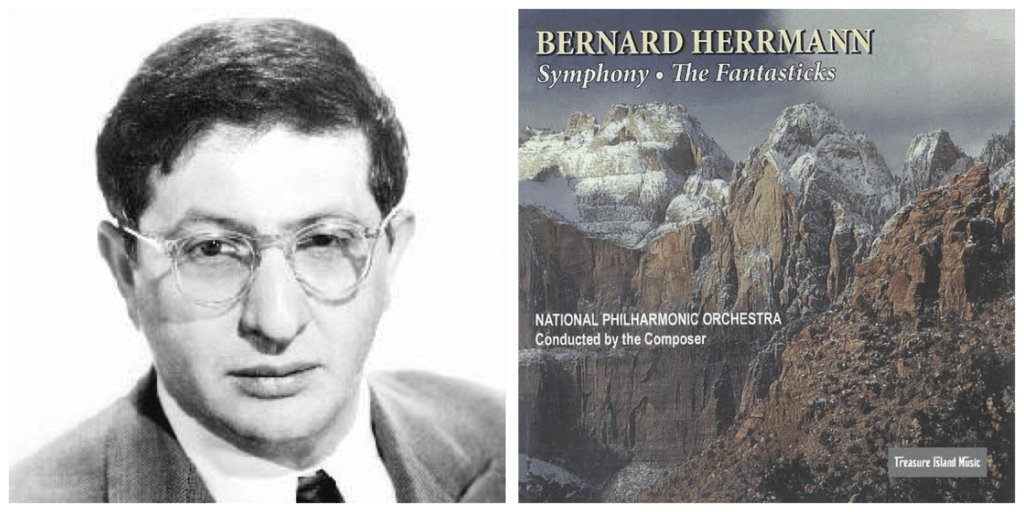
Bernard Herrmann (1911-1975)
Symphony No 1 (1941): IV. Rondo (Epilogue a la Processional)
National Philharmonic Orchestra
Bernard Herrmann (conductor)
Bernard Herrmann was a prominent figure in London’s music, renowned both as a composer and conductor. His deep appreciation for British music was evident in his work as a conductor, which initially brought him recognition. Born in New York City in 1911, Herrmann studied composition with Bernard Wagenaar at the Juilliard School and was influenced by Philip James and Percy Grainger at New York University.
Herrmann began his career by composing music for radio dramas such as Orson Welles’s The Mercury Theatre on the Air and composing and directing music for numerous CBS series, such as The Columbia Workshop. His early radio work laid the groundwork for his future success in film scoring. In film, op Herrmann’s first score was for Citizen Kane in 1941, followed by collaborations with Alfred Hitchcock on iconic films like Vertigo, North by Northwest and Psycho. His score for Psycho is one of the most imitated pieces in film history and he is responsible for revolutionising film scoring with his unique harmonic and rhythmic style. He won an Academy Award for The Devil and Daniel Webster in 1941.
Beyond his film music, Herrmann composed significant concert and operatic works. His Sinfonietta was first published in 1935 and the Moby Dick Cantata was composed between 1936 and 1938, inspired by Herman Melville’s novel and premiered at Carnegie Hall in 1940. His only opera, Wuthering Heights, based on Emily Brontë’s novel, was written from 1943 to 1951 but was not performed until after his death.
As a conductor, Herrmann championed lesser-known composers and led numerous orchestras, including the BBC Symphony Orchestra and the London Symphony Orchestra. He founded the New Chamber Orchestra of New York in 1931 and later became the chief conductor of the CBS Symphony Orchestra from 1940 to 1955, introducing many British compositions to American audiences.
Herrmann’s Symphony No. 1, a four-movement orchestral work, was completed in 1941 and revised in 1973. It marked his final foray into non-programmatic music and was initially well-received but later became less known. Despite declining health, Herrmann remained active until his death on December 24, 1975, working on new film scores and planning recordings. His legacy continues to inspire, with many advocating for the rediscovery of his lesser-known works like his Symphony No. 1
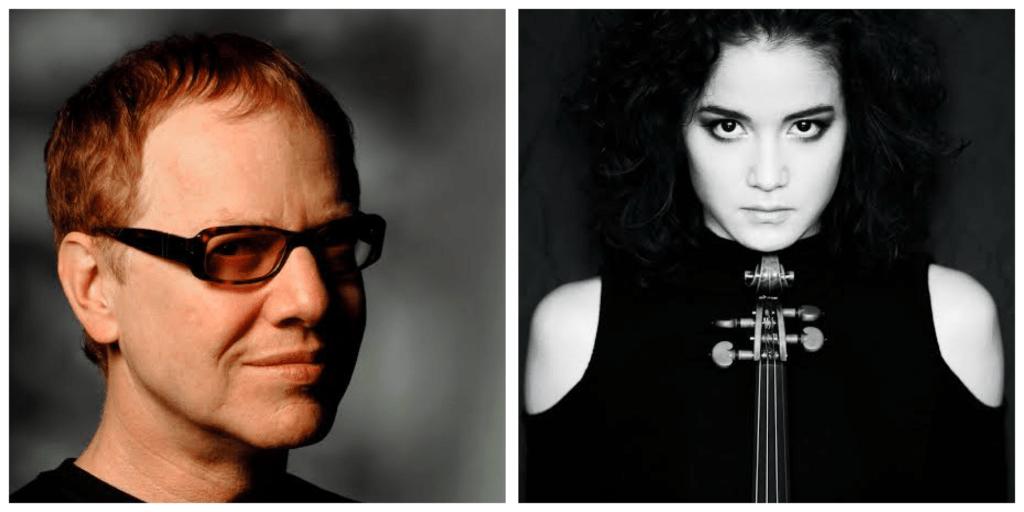
Danny Elfman (b. 1953)
Violin Concerto ‘Eleven Eleven’ IV. Giocoso.
Royal Scottish National Orchestra
Sandy Cameron (violin)
John Mauceri (conductor)
Danny Elfman is one of the most sought-after film composers today and is known for his collaborations with directors like Tim Burton, Gus Van Sant, and Sam Raimi. His career began with Pee-wee’s Big Adventure and his work now includes scores for over 100 films, such as Oscar-nominated scores for Milk, Good Will Hunting and Men in Black. He also composed scores for iconic films such as Edward Scissorhands and Batman. Elfman is also known for his theme music for The Simpsons and Desperate Housewives.
Born in Los Angeles, Elfman co-founded Oingo Boingo and has subsequently received numerous awards, including four Oscar nominations and seven Saturn Awards. In addition to his music for film, Elfman composes orchestral works such as Serenada Schizophrana and his Violin Concerto. Recent projects include scoring Doctor Strange in the Multiverse of Madness and Tim Burton’s series Wednesday.
Writing the Violin Concerto ‘Eleven Eleven’ in 2017 was a pivotal moment for Danny Elfman as he has now composed various concert commissions, with his concerto marking his first attempt at composing for symphony orchestras without external elements. With the Violin Concerto Elfman sought to bridge the gap between film and classical music audiences by crafting a work that would challenge film fans while appealing to classical listeners. He aimed to fuse post-Romanticism with modern rhythms and harmonies in a four-movement structure. Elfman collaborated closely with violinist Sandy Cameron, who guided him on the possibilities of writing for the violin. The title ‘Eleven Eleven’ reflects the concerto’s 1111 measures, a coincidence that seemed almost mystical.
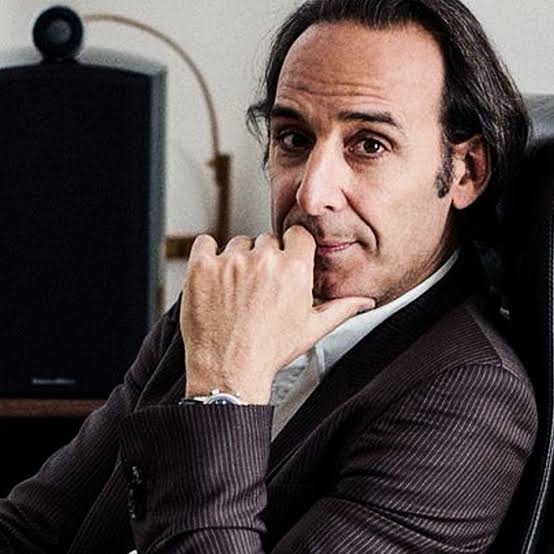
Alexandre Desplat (b. 1961)
Pelléas et Mélisande, Sinfonia Concertante for Flute and Orchestra (2013) I. Like a Hunted Bird
Emmanuel Pahud (flute)
Orchestre National de France
Alexandre Desplat, a two-time Academy Award winner and eleven-time nominee, is renowned as one of the most accomplished heirs of French film composers. Inspired by composers like Maurice Jarre, Bernard Herrmann, and Nino Rota, Desplat’s interest in film music was solidified after hearing John Williams’ score for Star Wars.
Born to a French father and a Greek mother, Desplat grew up in a culturally rich environment, studying piano, trumpet, and flute. He enriched his classical education with Brazilian and African music, collaborating with artists like Carlinhos Brown and Ray Lema. Desplat’s career began with European films, working with directors like Philippe de Broca and Francis Girod. He gained international recognition with his score for Girl with a Pearl Earring in 2003. Notable collaborations include films by Wes Anderson, Roman Polanski, and Guillermo del Toro. His scores for The Grand Budapest Hotel and The Shape of Water earned him Academy Awards. Desplat continues to be celebrated for his eclectic and prolific work, having composed over 130 film scores.
Alexandre Desplat’s Pelléas et Mélisande is a symphonie concertante for flute and orchestra, drawing inspiration from Maurice Maeterlinck’s Symbolist play and Claude Debussy’s opera. This piece diverges from traditional concertos by integrating the flute as a crucial yet not isolated element, emphasising the interplay between orchestra and soloist. The themes of love, loss, and mystery are woven throughout, with the flute used to evoke the enigmatic character of Mélisande. The premiere performance featured Emmanuel Pahud on flute, accompanied by the Orchestre National de France, with Desplat conducting. This composition blend Desplat’s cinematic experience with classical techniques, and is a fine example of his adaptability within the orchestral genre.
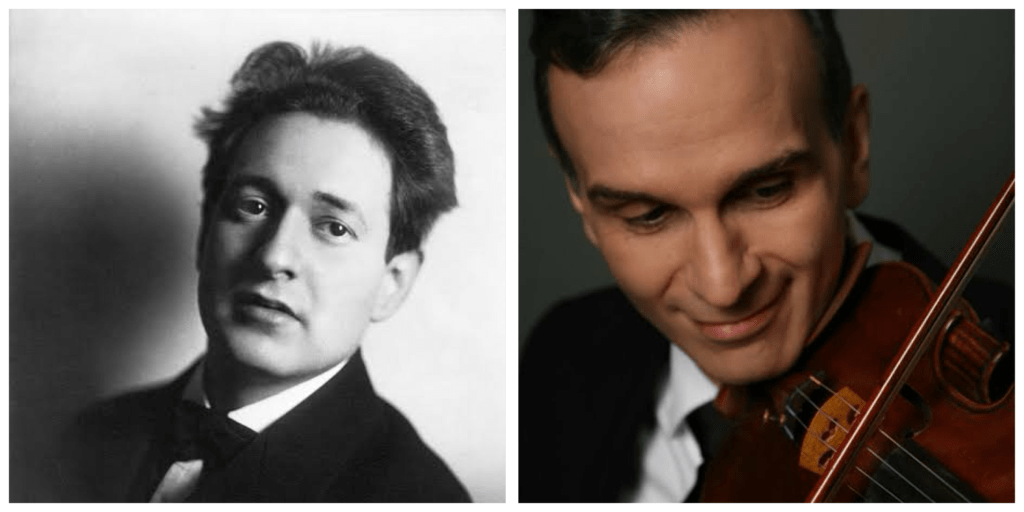
Erich Korngold (1897-1957)
Violin Concerto in D Major Op 35 (1945) III. Allegro assai vivace
Gil Shaham (violin)
London Symphony Orchestra
Andre Previn (conductor)
Erich Wolfgang Korngold was known for his concert and chamber music, operas, and stage works before his illustrious Hollywood career. Born on May 29, 1897, in Brünn, Moravia (now Brno, Czech Republic), Korngold was a child prodigy. His family moved to Vienna when he was four, where his father became a prominent music critic. Korngold began composing at age eight and was acknowledged by Gustav Mahler as a musical genius in 1906.
In 1909, Korngold’s father published his early compositions, including the ballet Der Schneemann and Piano Sonata No 1, which impressed figures like Richard Strauss. The orchestral version of Der Schneemann premiered in 1910 at the Vienna Hofoper, marked a significant milestone for Korngold.. His Piano Trio, Op. 1, also premiered that year in Munich and New York, solidifying his reputation as a prodigy. In 1911, Artur Schnabel premiered his Piano Sonata No 2, while Artur Nikisch conducted his first orchestral work, the Schauspiel Ouvertüre. The Sinfonietta in B Major (1913) demonstrated his skill in large-scale orchestral compositions, and the Violin Sonata in G Major highlighted his chamber music abilities. Korngold’s early success set the stage for his later achievements in Hollywood.
The Violin Concerto, composed in 1945, is a testament to Korngold’s musical creativity, defying any notion that his brilliance waned after his prodigious childhood. Raised in the rich Viennese tradition, Korngold was influenced by the likes of Wagner, Strauss, and Mahler, which reflects in the musical invention and romantic expression of his music.
Korngold’s work in Hollywood, where he composed 23 film scores, was not a departure from his Viennese roots but an extension of his development as a composer. His film scores enriched his symphonic output, as evident in the Violin Concerto, which draws themes from films between 1937 and 1939. The concerto, performed for the first time by Jascha Heifetz in 1947, follows a classic three-movement structure in D major. The first movement is lyrical and energetic, the second a beautiful Romance, and the finale is spirited with hints of folk dance.
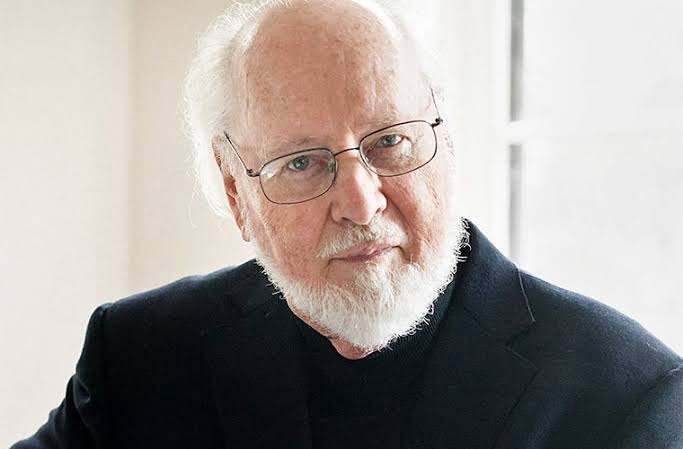
John Williams (b. 1932)
Sound the Bells (1993)
Recording Arts Orchestra of Los Angeles
John Williams (conductor)
John Williams is one of America’s most accomplished composers, with a career spanning over five decades. He was music director and laureate conductor of the Boston Pops Orchestra, and has worked with many of the world’s great orchestras such the Boston Symphony, New York Philharmonic and the Vienna Philharmonic Orchestras. Williams has received numerous prestigious awards, including the National Medal of Arts, Kennedy Center Honor, and multiple Academy Awards, Grammys, and Golden Globes.
Throughout his career, Williams has composed music for over 100 films, including iconic collaborations with Steven Spielberg on Schindler’s List, E.T., Jaws, Jurassic Park, and the Indiana Jones series. He has also scored all nine Star Wars films and the first three Harry Potter films. Williams has worked with legendary directors like Alfred Hitchcock and has collaborated with musicians such as Itzhak Perlman and Joshua Bell. He holds 52 Oscar nominations, making him the most-nominated living person.
Born in New York, Williams moved to Los Angeles in 1948 and studied composition under Mario Castelnuovo-Tedesco. After serving in the Air Force, he attended Juilliard and began his film career working with many of the great film composers of that era.. Williams has also composed concert works, including symphonies and concertos, and has contributed music to significant cultural events like the Olympic Games and the rededication of the Statue of Liberty. He holds honorary degrees from 21 universities and was inducted into the American Academy of Arts & Sciences in 2009.
John Williams created the festive piece Sound the Bells! for the Boston Pops Orchestra’s 1993 tour of Japan, coinciding with the wedding of Crown Prince Naruhito and Masako Owada. Williams noted, I saw our concerts as an opportunity to celebrate the event with a specially written fanfare. I’ve always been fascinated by Japan’s large temple bells, which inspired my use of percussion, though I didn’t aim to replicate their sound. Initially composed as a fanfare for brass and percussion, Williams later orchestrated it for a full orchestra and included it on his 2002 album American Journey.


Leave a comment