
Percy Grainger is remembered as one of Australia’s greatest musical figures who played a pivotal role in the early 20th-century revival of British folk music. Born in Victoria, Australia, Grainger’s fascination with music and innovation led him to Europe, where he became deeply involved in the English folk song movement. From 1905 onward, he travelled through rural England, collecting and recording traditional songs—often using wax-cylinder phonographs, a groundbreaking method at the time. This enabled him to capture the authentic performances of local singers, preserving over 300 songs and creating more than 200 cylinder recordings, many of which documented music that had never before been written down.
Grainger’s friendships with influential composers such as Frederick Delius and Edvard Grieg further shaped his musical outlook. His association with Grieg, in particular, left a lasting impression, inspiring Grainger to champion Nordic music and incorporate its elements into his own work. As a composer and arranger, Grainger was known for his experimental spirit, exploring new rhythmic and structural forms in works like the Hill Songs. He was also an early adopter of music technology, experimenting with music machines in search of new modes of musical expression
Programme Excerpts
Percy Grainger
Mock Morris (1911)
City of London Sinfonia
Richard Hickox (conductor)
Percy Grainger
The Lads of Wamphray (1905)
Melbourne Symphony Orchestra
Andrew Davis (conductor)
Percy Grainger
Youthful Rapture (1901)
Bournemouth Sinfonietta
Moray Welsh (cello)
Percy Grainger
Lincolnshire Posy (1937): Lord Melbourne
Dallas Wind Symphony
Jerry Junkin (conductor)
Percy Grainger
The Warriors (1913-1916))
BBC Philharmonic Orchestra
Richard Hickox (conductor)
Despite achieving international fame as a virtuoso pianist and innovative composer, Grainger often felt that his career did not fully realise his ambitions. Nevertheless, his legacy endures through his pioneering folk song collections, inventive compositions, and his lasting influence on both British and Australian music
Percy Grainger
Mock Morris (1911)
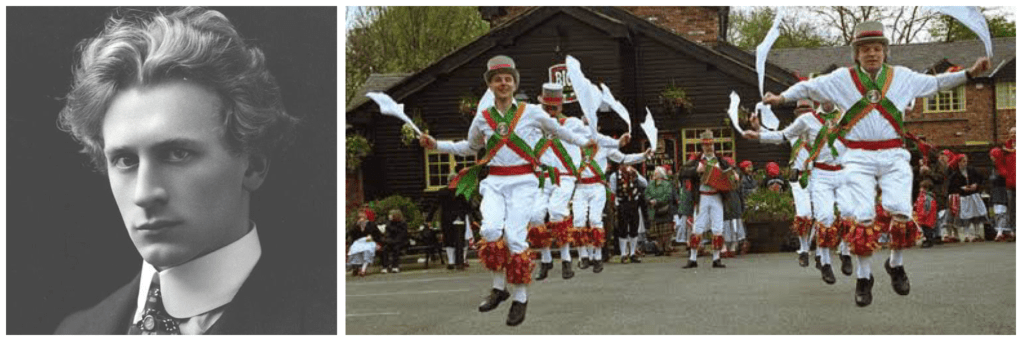
George Percy Grainger, born July 8, 1882, in Brighton, Victoria, was the only child of architect John Harry Grainger and Rose Annie Aldridge. Educated mainly at home by his mother, he showed early musical talent, debuting as a pianist at age 10 and giving his first concert at 12. At 13, he left Australia to study at the Hoch Conservatorium in Frankfurt. Grainger moved to London in 1901, where his talent and charisma made him a favorite in high society and established him as a leading concert pianist and composer. Inspired by Edvard Grieg, he became deeply involved in collecting and arranging English folk songs, which shaped much of his later work. Composed in 1910 during his London years, Grainger’s Mock Morris is a lively, original piece for string orchestra or piano, inspired by the rhythms and spirit of English Morris dance but containing no actual folk tunes. Its energetic, ‘jogging’ rhythms and independent musical lines exemplify Grainger’s distinctive style, capturing the essence of Morris dance through inventive harmony and structure.

Percy Grainger
The Lads of Wamphray (1905)
Percy Grainger composed The Lads of Wamphray March in 1905 as a birthday gift for his mother, designing it from the outset as a work for wind band. The march draws its inspiration from a dramatic Scottish border ballad that recounts the bloody feud between the Maxwell and Johnstone clans, a tale preserved in Sir Walter Scott’s Minstrelsy of the Scottish Border. Grainger sought to capture the wild, daring spirit of the cattle-raiding borderers who roamed the Anglo-Scottish frontier from the 14th to 16th centuries, aiming to evoke their devil-may-care energy and swashbuckling bravado through his music.
Rather than relying on traditional folk melodies, Grainger crafted entirely original themes for the march. These were derived from his earlier choral setting of the same ballad, written in 1904 for male chorus and orchestra. The structure of the march reflects the shifting moods and dramatic episodes of the ballad’s narrative, employing a rondo form with contrasting sections and inventive variations on the main theme. This approach allows the music to mirror the story’s tension and excitement, enhanced by Grainger’s adventurous harmonic language and rhythmic inventiveness.
The piece received its premiere in London, performed by the Band of His Majesty’s Coldstream Guards. Years later, Grainger revised the work to suit the instrumentation of American wind bands, ensuring its continued popularity and adaptability.

Percy Grainger
Youthful Rapture (1901)
Percy Grainger’s Youthful Rapture (1901) is an early and seldom-performed original composition for cello and piano that offers a revealing glimpse into the composer’s evolving artistic voice during his youth. The piece was inspired by a close friendship Grainger formed with a cellist classmate while studying in Frankfurt, for whom he specifically wrote the work. Characterised by its lyrical warmth and expressive depth, Youthful Rapture reflects Grainger’s emerging style, Despite its modest scale, the piece shows Grainger’s early inventiveness in harmony and melody, foreshadowing the creativity that would define his later compositions.

Percy Grainger (1882-1961)
Lincolnshire Posy: Lord Melbourne
Commissioned by the American Bandmasters Association for their 1937 convention in Milwaukee, Wisconsin, Percy Grainger’s Lincolnshire Posy stands as a landmark work for concert band. The piece, consisting of six movements, is based on folk songs Grainger collected during 1905–06 in Lincolnshire, England, using both traditional notation and early phonograph wax cylinder recordings. The partial premiere took place on March 7, 1937, performed by the Milwaukee Symphonic Band, a group largely composed of brewery workers from local companies. Due to the technical demands of the music, only the first, second, and fourth movements were performed at this debut; the third and fifth movements were considered too difficult, and the sixth was still incomplete. Grainger expressed frustration with the ensemble’s limitations, famously remarking that the band members ‘cared more about their beer than the music.’
Unlike many composers who adapted folk tunes by altering or modernising them, Grainger sought to preserve the unique style and personality of each original singer. He described each movement as a ‘musical portrait’ not only of the melody but also of the singer’s individual interpretation, including irregular rhythms, vocal tone, phrasing, and expressive nuances. This approach was fuelled by Grainger’s admiration for the creativity of rural folk singers and his bitterness over the neglect and fading of authentic folk traditions. He dedicated Lincolnshire Posy to ‘the old folk singers who sang so sweetly to me,’ emphasising his respect for their artistry.
One notable movement, Lord Melbourne, exemplifies this philosophy. It is a spirited war song collected from Lincolnshire that tells the story of an Englishman from Devonshire who fought valiantly under King Charles II and Queen Anne. Grainger’s music captures the bold, heroic character of both the song and its original singer, faithfully reflecting the irregular rhythms and expressive delivery recorded on wax cylinders. Throughout Lincolnshire Posy, Grainger’s inventive harmonies, shifting metres, and rich orchestration combine to evoke the distinctive voices and personalities behind these treasured English folk songs, making the work a masterpiece of wind band literature.
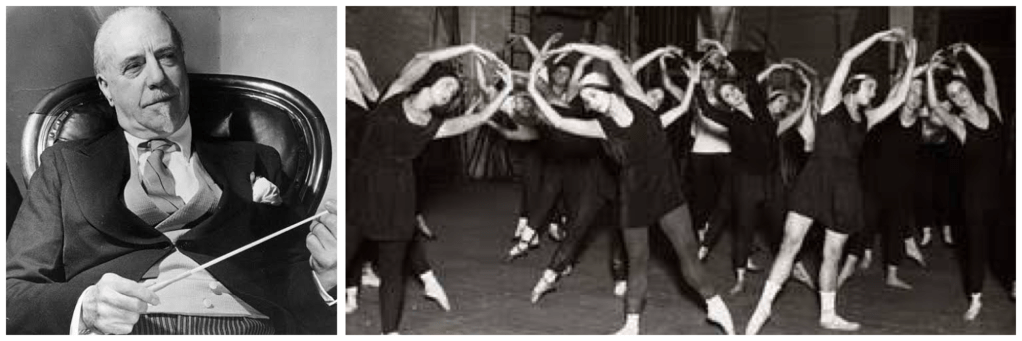
The Warriors: Music to an Imaginary Ballet is a large-scale orchestral work composed by Percy Grainger between 1913 and 1916, and dedicated ‘in admiration and affection’ to Frederick Delius. The piece was originally inspired by a 1911 suggestion from Sir Thomas Beecham, who hoped Grainger would compose a ballet for Sergei Diaghilev’s Ballets Russes. Although Beecham never provided the promised scenario, Grainger pressed on, beginning the work in London and completing it in San Francisco. With no storyline forthcoming, he subtitled the piece Music to an Imaginary Ballet. Grainger envisioned the music as a series of vivid scenes featuring the ‘ghosts of male and female warrior types of all times and places,’ brought together for wild dances, processions, and amorous interludes, all tinged with a sense of wistfulness.
The orchestration is exceptionally ambitious, requiring a massive percussion section, three pianos, off-stage brass led by an assistant conductor, and the full complement of standard orchestral forces. Grainger’s innovative use of percussion and his technique of ‘double-chording’ – where unrelated chord groups move freely above and below each other—create a kaleidoscopic and experimental sound world. Structurally, the work unfolds in one continuous movement divided into eight sections that range from martial and dance-like to slow and pastoral. Grainger’s inventive approach includes passages where percussion and off-stage brass play in conflicting rhythms and tempi, requiring multiple conductors and drawing comparisons to the experimental techniques of Charles Ives.
The Warriors premiered at the Norfolk Music Festival in Connecticut on June 7, 1917, with Grainger conducting. Some sources also cite a 1919 performance by the Chicago Symphony Orchestra under Frederick Stock as a significant early presentation. The West Coast premiere took place at the Hollywood Bowl in 1928, followed by Grainger’s onstage marriage to Ella Viola Ström. Upon its debut, critics were divided, with some calling the work ‘magnificent’ and others deeming it ‘a magnificent failure.’ Today, The Warriors stands as a testament to Grainger’s experimental spirit as is one of his most distinctive and ambitious compositions.
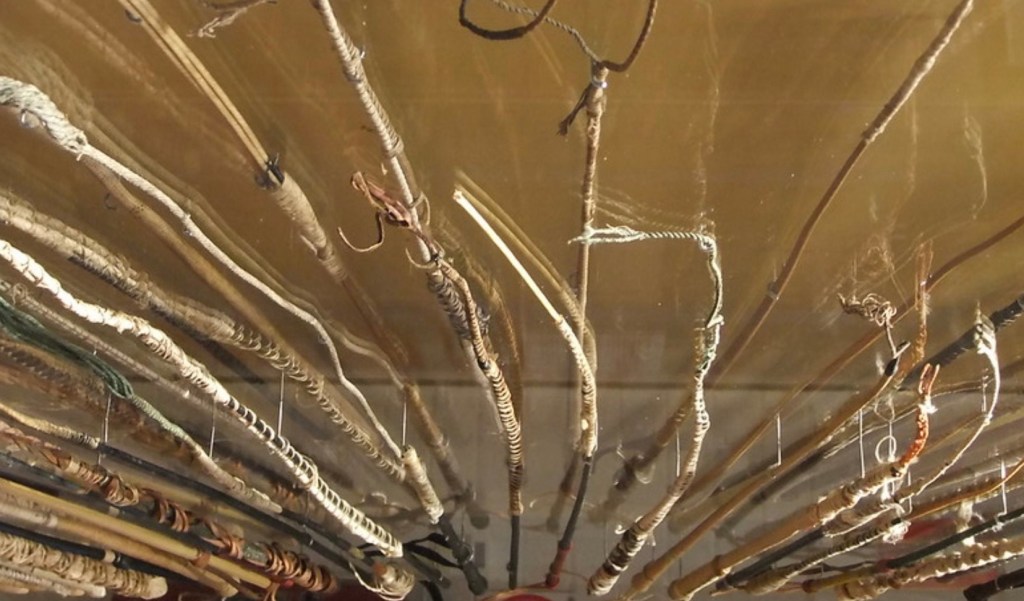
Percy Grainger openly practiced sadomasochism, as documented in his letters and the Grainger Museum collection. He expressed fantasies involving bondage and whipping, shared with his wife Ella, who accepted and participated in these preferences. Grainger both gave and received corporal punishment, evident in photos showing whip marks on his body. He struggled with self-judgment, describing his desires as ‘childlike’ and ‘evil,’ reflecting the stigma of his time. He meticulously recorded his sexual life, hoping for future understanding. Some linked his proclivities to the strict, disciplinary relationship with his mother

Determined to ensure his life and work would be commemorated in his hometown, Percy Grainger established the Grainger Museum at the University of Melbourne, which officially opened its doors in December 1938. Grainger was deeply involved in the planning, design, and curation of the museum, envisioning it as a purpose-built autobiographical institution that would preserve not only his compositions and manuscripts but also a wide array of personal items, correspondence, and artifacts reflecting his creative achievements and cultural context. The museum remains unique in Australia as the only purpose-built autobiographical museum, housing an internationally significant archive of over 100,000 items.

Percy Grainger married Ella Viola Ström, a Swedish poet, painter, and musician, on August 9, 1928. Their wedding took place during the intermission of one of Grainger’s concerts at the Hollywood Bowl in Los Angeles, witnessed by an audience of 15,000 to 22,000 people. The ceremony featured the largest orchestra ever to perform there, with 126 musicians playing Grainger’s composition To a Nordic Princess, written as a wedding gift for Ella. Ella was both an inspiration and performer for Grainger, learning to play bells, marimba, and xylophone for his music and appearing on recordings. The couple lived together at 7 Cromwell Place in White Plains, New York, from their marriage until Grainger’s death in 1961; Ella remained there until her own death in 1979. Their marriage was marked by Grainger’s flair for spectacle and his deep affection for Ella, whom he called the best thing that ever happened to him. In his later years, Grainger continued to perform and revise his earlier works, though he composed little new music after the 1930s. His final public concert took place in 1960. Percy Grainger died in White Plains, New York, on 20 February 1961, leaving behind a legacy preserved in the museum he so carefully conceived


Leave a comment