Composing a first symphony is a real landmark for any composer. There have been some remarkable successes, while others faced either failure or harsh criticism. Beethoven’s Symphony No. 1 was well received at its premiere in Vienna in 1800, Berlioz’s Symphonie Fantastique (1830) broke new ground with its programmatic storytelling and innovative orchestration and Shostakovich’s Symphony No. 1 (1924-1925) quickly established the composer’s international reputation. There were also some notable failures such as Rachmaninoff Symphony No 1 and Scriabin Symphony No 1 but here are some of the successful first symphonies that made the grade…
Charles Bizet (1838-1875) – age 17
Symphony in C (1855) I. Allegro vivo
Aarhus Symphony Orchestra
Marc Soustrot (conductor)
Edward Elgar (1857-1934)
Symphony No 1 In Ab major Op 55 (1908) IV. Allegro
Staatskapelle Berlin
Daniel Barenboim (conductor)
Dmitri Shostakovich (1906-1975)
Symphony No 1 in F minor (1924-25) IV. Lento-Allegro molto – age 18
Boston Symphony Orchestra
Andris Nelson (conductor)
William Walton (1902-1983)
Symphony No 1 in B Flat minor (1934-35) I. Allegro assai
Philharmonia Orchestra
Louis Fremaux (conductor)
Gustav Mahler (1860-1911)
Symphony No 1 in D major (1887-88)
Czech Philharmonic Orchestra
Semyon Bychkov (conductor)
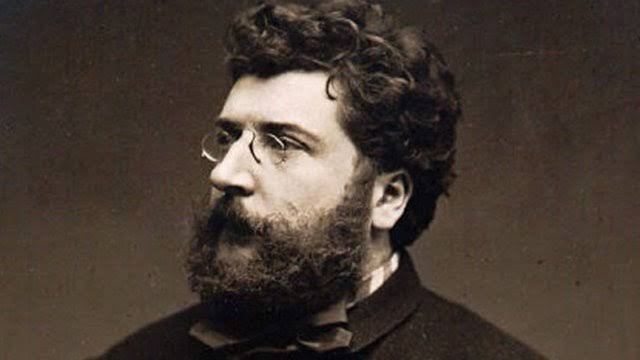
Charles Bizet (1838-1875) – age 17
Symphony in C (1855) I. Allegro vivo
Georges Bizet, however, had no such problems, composinv his Symphony in C in 1855 at the age of 17 while studying at the Paris Conservatoire under Charles Gounod. He completed the work in about a month as a student assignment, demonstrating extraordinary talent in melody, thematic development, and orchestration. Despite its quality, Bizet showed no interest in having the symphony performed or published; it was never played during his lifetime and was not mentioned in his letters or known to early biographers. After Bizet’s death, the manuscript was preserved by his widow, Geneviève Halévy, and was eventually discovered in the Paris Conservatoire archives by Jean Chantavoine in 1933. The symphony received its first public performance in 1935 in Basel, Switzerland, conducted by Felix Weingartner, after being brought to light by biographer Douglas Charles Parker.
The work was immediately recognized as a youthful masterpiece, drawing comparisons to Mendelssohn’s A Midsummer Night’s Dream overture. The symphony follows the classical four-movement form and the symphony closely emulates Gounod’s Symphony in D, sharing many stylistic similarities including direct quotations.
Even though Bizet’s work surpasses Gounod’s it is believed Bizet suppressed the symphony because he was aware of its similarities to Gounod’s work and because symphonies were considered academic exercises in 19th-century France, where opera was the main path to fame. Bizet later reused themes from the symphony in works such as The Pearl Fishers and L’Arlésienne. Since its rediscovery, the symphony has been widely performed and acclaimed and is now regarded as one of his most significant orchestral achievements
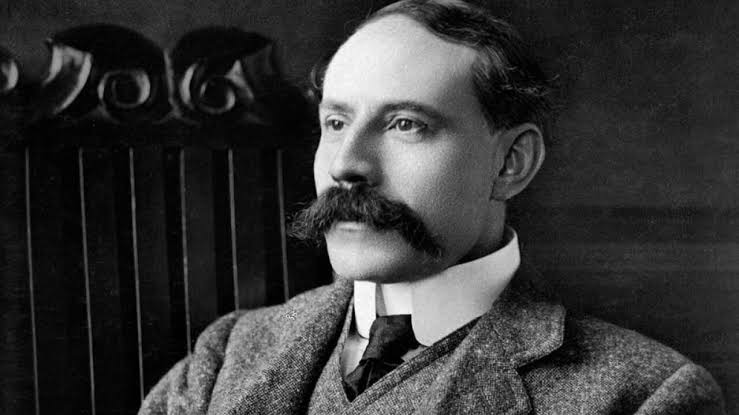
Edward Elgar (1857-1934)
Symphony No 1 In Ab major Op 55 (1908) IV. Allegro
Edward Elgar enjoyed immense success when he composed his Symphony No. 1 in A-flat major, Op. 55, between 1907 and 1908, although the idea had first taken shape around 1898. Originally intended as a programmatic work inspired by General Gordon, Elgar ultimately abandoned this idea,, creating instead a purely symphonic piece reflecting a broad human experience and hope for the future. This symphony was Elgar’s first completed symphony and one of only two he finished during his lifetime.
The premiere took place on December 3, 1908, in Manchester, performed by the Hallé Orchestra under Hans Richter. It was met with extraordinary acclaim, achieving over 100 performances worldwide within its first year-an unprecedented success for a new orchestral work at the time. Critics and audiences hailed it as a landmark in British symphonic music, with Elgar himself describing its rapid popularity as ‘very wild’. The symphony helped establish Elgar as a major symphonic composer and revitalised the English symphonic tradition.
Scored for a large orchestra, the symphony has four movements and is full of memorable melodies, rich orchestration and emotional depth. It remains a staple of the British orchestral repertoire, frequently performed and recorded, including Elgar’s own 1931 recording with the London Symphony Orchestra. The symphony’s success marked a turning point for British music, inspiring future generations of composers and securing Elgar’s legacy as a leading figure in late Romantic symphonic music

Dmitri Shostakovich (1906-1975)
Symphony No 1 in F minor (1924-25) IV. Lento-Allegro molto – age 18
Dmitri Shostakovich composed his Symphony No. 1 in F minor, Op. 10, between 1924 and 1925 as his graduation piece for the Petrograd Conservatory, completing it at the age of 19. The symphony premiered in Leningrad on May 12, 1926, conducted by Nicolai Malko, and swiftly brought the young composer international fame.
This four-movement symphony, lasting about 30 to 35 minutes, is mature and original, foreshadowing many elements of Shostakovich’s later style. The work blends a playful, almost neo-classical clarity with biting sarcasm, revealing characteristics that became hallmarks of Shostakovich’s later style. Influences from Tchaikovsky, Prokofiev, Stravinsky (particularly Petrushka), and Mahler are evident, the orchestration is inventive and the use of piano within the orchestra is especially unusual for symphonies of that era.
Originally conceived as a conservatory assignment, Shostakovich initially dismissed the symphony, but its success at the premiere made him a celebrity in Soviet and international music circles. It was soon championed by major conductors such as Bruno Walter, Toscanini, Klemperer, and Stokowski. Scored for a large orchestra, Shostakovich’s Symphony No. 1 remains a landmark debut in the symphonic repertoire – technically brilliant, full of inventive orchestration and a blend of humour and tragedy. It is now a cornerstone of 20th-century symphonic music and heralded the arrival of a major new voice in classical music.

William Walton (1902-1983)
Symphony No 1 in B Flat minor (1934-35) I. Allegro assai
William Walton’s Symphony No. 1 in B♭ minor, composed between 1931 and 1935, stands as a landmark British symphonic work. Influenced by Sibelius yet marked by Walton’s distinct personal voice, the symphony combines Romantic expressiveness with modern harmonic language but doesn’t venture into the avant-garde.
Commissioned by Sir Hamilton Harty for the Hallé Orchestra, Walton faced significant challenges completing the symphony, particularly the finale, which was first performed separately in 1934. The full four-movement work premiered in 1935, conducted by Harty with the BBC Symphony Orchestra. The symphony is dedicated to Walton’s former girlfriend Imma, despite being composed during a turbulent personal period involving their breakup and Walton’s new relationship with Alice, Viscountess Wimborne.
The symphony is scored for a large orchestra and remains one of the most frequently performed and recorded British symphonies of the 20th century. The premiere of the complete work in 1935 was met with overwhelming enthusiasm, and it quickly gained international recognition, performed by leading orchestras and conductors worldwide.

Gustav Mahler (1860-1911)
Symphony No 1 in D major (1887-88)
For Mahler, music was a means to explore profound cosmic personal questions, particularly his search for the meaning of existence. This quest both exhausted and inspired him, as he viewed symphonic composition as creating a self-contained artistic universe, uncompromising in its expression. His Symphony No 1 premiered in Budapest on November 20, 1889, with Mahler conducting, but it was poorly received. Critics dismissed it as a ‘parody of a symphony’, doubting Mahler’s compositional talents despite his recognised skills as a conductor.
Initially titled A Symphonic Poem in Two Parts, the symphony originally had five movements with descriptive titles reflecting themes of youth and human comedy, including a funeral march but after the negative reception in 1893, Mahler extensively revised the symphony, retitling it Titan: A Tone Poem in the Form of a Symphony and providing a program linking it to Jean Paul’s novel Titan. However, he later abandoned the program line and the final version, Symphony No. 1 omitted the second movement, ‘Blumine,’ which was rediscovered only in 1967.
The symphony calls for a large orchestra – the largest assembled for a symphony at the time – and opens with a single A note spanning seven octaves, serving as a backdrop for natural birdcalls, including a clarinet cuckoo call, emphasizing nature’s sounds over traditional musical themes. The symphony initially challenged audiences but it later gained recognition as a masterpiece and affirmed Mahler’s arrival as a fully mature symphonist.



Leave a comment