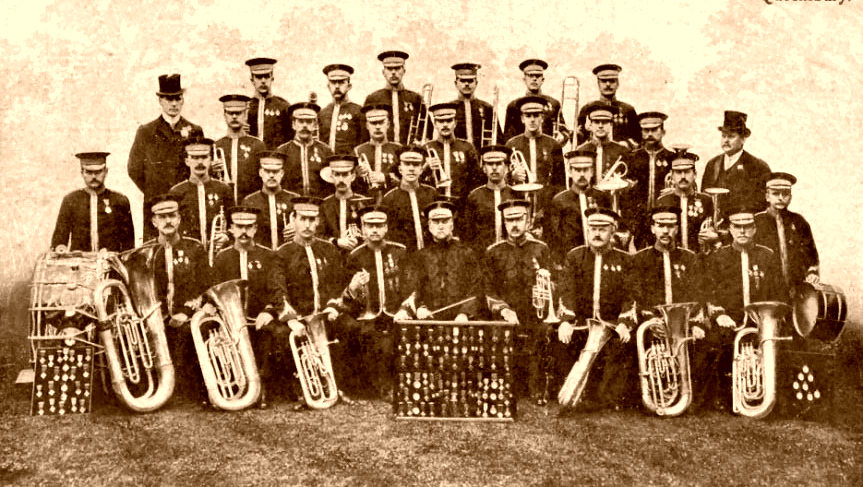
The golden age of brass band compositions occurred in the late 19th and early 20th centuries in the UK. This period saw the creation of many original works specifically for brass bands, moving beyond arrangements of orchestral and popular music. A landmark moment was Percy Fletcher’s Labour and Love in 1913, the first original brass band contest piece, which set a precedent for later classic works such as Holst’s A Moorside Suite (1928), Elgar’s The Severn Suite (1930), and Ireland’s A Downland Suite (1932). These compositions helped elevate the brass band repertoire to a high artistic level, combining technical brilliance and musicality, marking a peak in brass band culture before the disruptions of the World Wars.
Gustav Holst (1874-1934)
Moorside Suite (1928) Scherzo & Trio
The Fairy Band
Kenneth Dennison (conductor)
Sir Edward Elgar (1857-1934)
Severn Suite op 87 (1930)
Black Dyke Mills Band
Roy Newsone (conductor)
Sir Arthur Bliss (1891-1975)
Kenilworth: March (1936)
Black Dyle Band
John Wilson (conductor)
Herbert Howells (1892-1993)
Pageantry (1934)
The Atlantic Brass Band
Salvatore Scarpa (conductor)
John Ireland (1879-1962)
A Downland Suite (1932): Rondo
London Brass Virtuosi
David Honeyball (conductor)
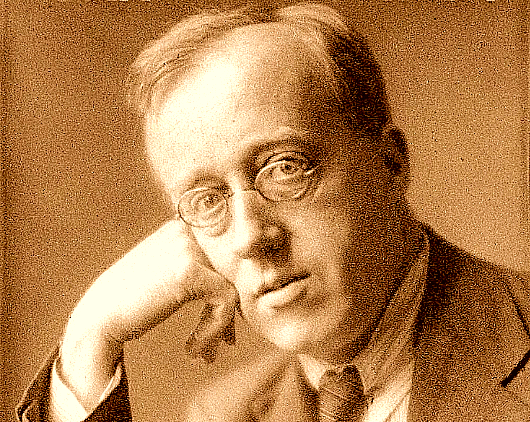
Gustav Holst (1874-1934)
A Moorside Suite (1928)
Gustav Holst’s A Moorside Suite, composed in 1927-28 was commissioned by the BBC and the National Brass Band Festival Committee specifically for the final of the 1928 National Brass Band Championships of Great Britain held at Crystal Palace.
This suite, Holst’s only composition for brass band despite his background as a trombone player and his prior military band works, consists of three movements: Scherzo, Nocturne, and March. Instrumentation for A Moorside Suite follows the traditional British brass band setup, including an Eb soprano cornet, solo and first and second Bb cornets, flugelhorn, three Eb tenor horns, two Bb baritones, two euphoniums, three trombones (first, second, and bass), and Eb and Bb tubas.
Holst attended the 1928 competition and listened to all 15 bands perform the suite. The Black Dyke Mills Band, conducted by William Halliwell, won the event. Holst expressed great satisfaction with the performances, famously commenting that he had ‘listened to musicians conducted by musicians’. The suite’s sophistication, combining rhythmic complexity, melodic invention, and dynamic subtlety, marked a significant development in twentieth-century brass band repertoire. Its success inspired further commissions of major works by British composers for brass band competitions, including Elgar’s The Severn Suite and Ireland’s A Downland Suite.
A Moorside Suite remains one of the most important pieces in the brass band repertoire, showing Holst’s mature compositional style through its three contrasting movements.

Sir Edward Elgar (1857-1934)
Severn Suite op 87 (1930)
Sir Edward Elgar’s The Severn Suite, Op. 87, composed in 1930, is a late work and one of his final major compositions. It was written as a test piece for the National Brass Band Championship, commissioned to celebrate the 25th anniversary of the competition held at Crystal Palace, London. The suite was dedicated to Elgar’s friend, the author and critic George Bernard Shaw.
Originally composed for brass band, Elgar re-orchestrated the suite for full symphony orchestra, producing one of his finest late works, which he conducted in a recording with the London Symphony Orchestra. The Severn Suite bridges brass band and orchestral traditions and stands as a significant late contribution to British brass band repertoire and orchestral music alike. An organ transcription, titled Organ Sonata No. 2, Op. 87a, was made by Ivor Atkins based on the brass band version, though it omitted the Minuet and included some interpolations.
Its title references the River Severn running through Worcester, with the movements’ subtitles evoking historic landmarks in the city. Sir Edward Elgar was a central figure in late 19th- and early 20th-century English Romantic music, credited with stimulating a renaissance of English music. He was largely self-taught in composition but proficient on violin, organ, piano, and bassoon. He began his career as a freelance musician, supporting himself through teaching, conducting, and performing. His breakthrough came with the Enigma Variations (1899), followed by acclaimed works such as the oratorio The Dream of Gerontius (1900) and the Pomp and Circumstance marches. Appointed Master of the King’s Musick in 1924, Elgar’s later years saw diminished output following his wife’s death, though he continued to compose until his death in 1934.

Sir Arthur Bliss (1891-1975)
Kenilworth: March (1936)
Sir Arthur Bliss’s Kenilworth, composed in 1936, is a virtuosic brass band march subtitled ‘Homage to Queen Elizabeth’. The work reflects his stature as a leading British composer who would later become Master of the Queen’s Music. The title references Kenilworth Castle, historically linked to Queen Elizabeth I, thereby connecting the work to English heritage and royal pageantry. Kenilworth stands among Bliss’s contributions to the brass band repertoire, alongside works such as Welcome the Queen and the Adam Zero Suite.
Musically, the march is bright, energetic, and rhythmically vibrant, featuring virtuosic passages that test the technical abilities of the musicians. It combines ceremonial grandeur with lively, joyful themes, making it a popular choice for competitions and concerts. The writing shows Bliss’s mastery of brass textures and his skillful blending of traditional march elements with a modern harmonic language. Published around 1936 by R. Smith & Co. Ltd. in London, it maintains its place in the brass band repertoire and continues to be frequently performed and recorded by leading brass bands worldwide.
Born in London on August 2, 1891, Sir Arthur Bliss was educated at Rugby School and Pembroke College, Cambridge. He briefly studied at the Royal College of Music under Ralph Vaughan Williams and Gustav Holst before his studies were interrupted by World War I. After the war, Bliss quickly gained recognition as an avant-garde and experimental composer with works such as Rhapsody (1919) and A Colour Symphony (1922). Over time, his style evolved toward a more romantic and classical idiom, producing notable ballets including Checkmate (1937) and Adam Zero (1946), as well as film scores like Things to Come (1935). During World War II, Bliss served as Director of Music at the BBC, where he helped lay the foundations for the future Third Programme. He was knighted in 1950 and appointed Master of the Queen’s Music in 1953, a position he held until his death on March 27, 1975.

Herbert Howells (1892-1993)
Pageantry (1934)
Herbert Howells’s Pageantry, composed in 1934, is a three-movement suite for brass band and is one of his most significant and frequently performed instrumental works. Renowned for its symphonic approach to brass band writing, the suite was commissioned for the British Open Brass Band Championship and marked Howells’s first major work for brass band, following in the tradition of earlier distinguished test pieces by composers such as Gustav Holst (A Moorside Suite) and Edward Elgar (The Severn Suite). The suite was dedicated to The Musicians’ Company and premiered at the 1934 British Open held at Belle Vue Pleasure Gardens.
The suite reflects the influence of contemporaries such as William Walton and his use of modes give the work an antique yet fresh tonal character. While it remains uncertain whether Howells himself prepared the brass band parts or if a skilled editor or arranger, possibly Frank Wright, was involved, the resulting score is richly layered and colourful. Pageantry is regarded as a creative high point in brass band literature, standing alongside works by Holst, Elgar, and John Ireland.
Herbert Howells was primarily renowned for his extensive output of Anglican church music. Born on October 17, 1892, in Lydney, Gloucestershire, he showed early musical promise and, in 1912, won a scholarship to the Royal College of Music, where he studied under Charles Villiers Stanford and others. Howells’s career was marked by both creative brilliance and personal tragedy. Diagnosed with Graves’ disease in 1915, he underwent pioneering radium treatment, which allowed him to continue composing despite poor health. The sudden death of his nine-year-old son Michael in 1935 deeply affected him, leading to a period of mourning and influencing his masterpiece Hymnus Paradisi (1938), a requiem-like work premiered in 1950.
Howells taught composition at the Royal College of Music and served as organist at several institutions, including St Paul’s Girls’ School, where he succeeded Gustav Holst. He composed a vast body of sacred music, including over twenty settings of the Magnificat and Nunc Dimittis, many central to the Anglican choral tradition. Howells received numerous honors, including a CBE in 1953 and appointment as a Companion of Honour in 1972. He died in London on February 23, 1983, aged 90, and his ashes were interred in Westminster Abbey.

John Ireland (1879-1962)
A Downland Suite (1932)
John Ireland’s A Downland Suite is a brass band composition in 1932 for the National Brass Band Championship of Great Britain, held at the Crystal Palace. The suite was dedicated to Ireland’s friend Kenneth Wright and was won by the Fodens Motor Works Band, conducted by Fred Mortimer. The suite comprises four movements,
Musically, the suite paints a vivid picture of the Sussex downs, reflecting Ireland’s affection for the English countryside and its Saxon heritage. It is both technically demanding and expressive, designed as a contest piece that requires skillful interpretation and control. The first three movements were arranged for string orchestra by Geoffrey Bush, a student of Ireland, while the entire suite was transcribed for wind band by Ray Steadman-Allen in 1997. The suite is frequently performed and recorded in both its original brass band form and orchestral arrangements by ensembles such as the London Philharmonic Orchestra and the City of London Sinfonia.
John Ireland (1879–1962) was born in Cheshire and studied at the Royal College of Music under Charles Villiers Stanford alongside contemporaries Vaughan Williams and Holst. He became the youngest fellow of the Royal College of Organists at 16 and served as organist at St Luke’s, Chelsea, later teaching composition at the Royal College of Music, mentoring notable pupils such as Benjamin Britten. His music is influenced by Debussy, Ravel, and Stravinsky and often inspired by English landscapes like the Sussex Downs. Ireland lived much of his life in Chelsea before retiring to Sussex, where he died in 1962.


Leave a comment