Classical music history is filled with hidden gems – composers whose works rival the greats yet remain largely unknown to wider audiences. Here are five composers whose music offers a fresh perspective and a rewarding listening experience beyond the familiar names.
Joseph Martin Kraus (1756–1792)
Symphony in E minor (1782/83) III. Presto
Swedish Chamber Orchestra
Petter Sundkvist (conductor)
Dora Pejačević (1885–1923)
Piano Concerto op 33 (1913) III. Allegro con fuoco
Oliver Triendl (piano)
Brandenburg Orchestra Frankfurt
Howard Griffiths (conductor)
Pauline Viardot García (1821–1910)
Havanaise (1880)
Cecilia Bartoli (mezzo)
Jean-Yves Thibaudet (piano)
Ernest Chausson (1855–1899)
Symphony in Bb major op 20 (1890) III. Animé
Basel Symphony Orchestra
Sir Ivor Bolton (conductor)
Carl Nielsen (1865-1931)
Symphony No. 5, Op. 50 (1920-1922) IId. Allegro
Danish National Symphony Orchestra
Fabio Luisi (conductor)

Joseph Martin Kraus (1756–1792)
Symphony in E minor (1782/83)
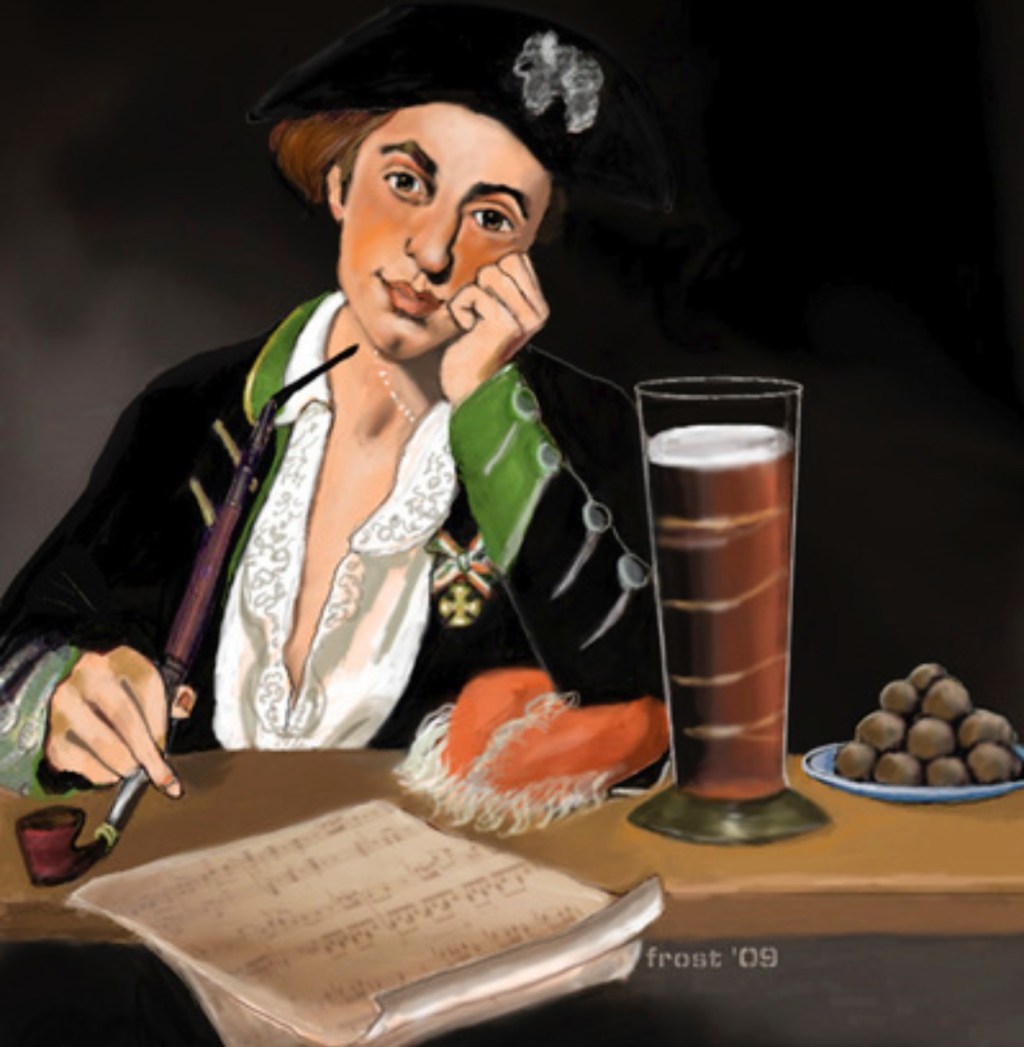
Joseph Martin Kraus (1756–1792) was a German-Swedish composer of the Classical era, often referred to as ‘the Swedish Mozart’ for the innovative and emotionally charged character of his music. Born in Miltenberg am Main, Kraus moved to Sweden in 1778, where he became a central figure in the musical life of King Gustav III’s court, eventually serving as chief conductor of the Royal Court Orchestra.
Kraus’s early years were marked by studies in Mannheim and Göttingen, where he developed a keen interest in both literature and music. His career took a decisive turn after his opera Proserpin impressed Gustav III, leading to his appointment as kapellmeister. The king later sent Kraus on a four-year European tour (1782–1786) to study theatre and opera, an experience that broadened his artistic horizons.
Kraus’s legacy includes operas, sacred music, and chamber works, though many of his symphonies have been lost or misattributed. Among his surviving orchestral works, the Symphony in E minor (VB 141) stands out as a testament to his musical capabilities. Composed between December 1782 and March 1783, the symphony was likely completed in Regensburg as a gift to the Thurn und Taxis court. It was initially published under the name of Giuseppe Cambini in 1787, but later research, including manuscript analysis and stylistic comparison, confirmed Kraus as the true composer.
Kraus blends the Sturm und Drang drama of the late eighteenth century – an artistic movement that emphasised passion, nature, and personal creativity – with the precision of Classical form, earning praise from contemporaries such as Haydn. His music bridges the gap between late Baroque and early Romantic styles and although his symphonies are rarely performed today, their innovative qualities influenced later composers.
Dora Pejačević (1885–1923)
Piano Concerto op 33 (1913)
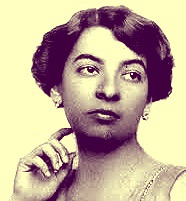
Dora Pejačević (1885–1923) was a pioneering Croatian composer, pianist, and violinist, widely recognised as the first woman in Croatia to compose orchestral works. As a leading figure in early 20th-century Croatian music, Pejačević broke new ground both artistically and socially.
Born into an aristocratic family in Budapest, Pejačević began her musical journey composing in the Romantic tradition. Over time, her style evolved to embrace modernist and expressionist influences, reflecting the changing artistic currents of her era. Her experiences as a paramedic during World War I left a profound mark on her music, introducing recurring themes of death, isolation, and nihilism.
A landmark in her career was the Piano Concerto in B minor, Op. 33, composed in 1913. This was her first orchestral work and marked her as the first Croatian composer to write a piano concerto. The concerto stands as a testament to her transition from Romanticism to more modern musical expressions, incorporating impressionistic and expressionistic harmonies that mirrored the turbulent historical and emotional landscape of the early 20th century. Pejačević’s musical style was deeply influenced by the poetry and philosophy of figures like Rainer Maria Rilke and Friedrich Nietzsche, imbuing her compositions with emotional depth and philosophical introspection. Her Piano Concerto Op. 33 is considered a landmark in Croatian music history, blending virtuosic demands with the evolving musical language of her time. Through her innovative spirit and expressive power, Dora Pejačević remains a central figure in the development of Croatian and European music.
Pauline Viardot García (1821–1910)
Havanaise (1880)
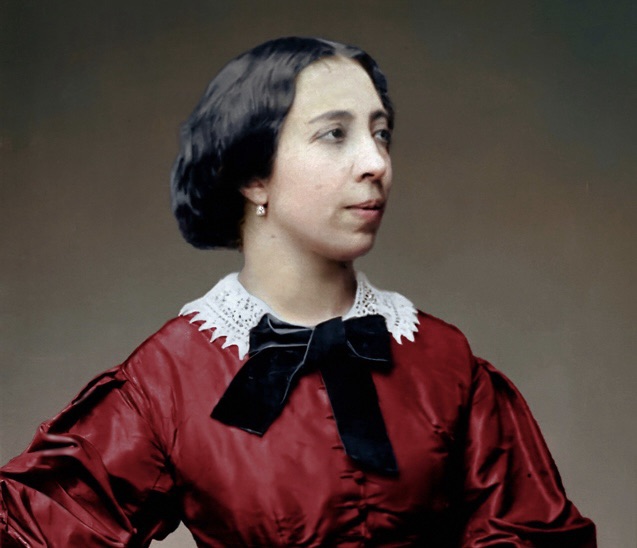
Pauline Viardot García (1821–1910) was a French mezzo-soprano, composer, and influential teacher of Spanish descent. Born into a distinguished musical family in Paris – her father, Manuel García, was a renowned vocal pedagogue, and her sister, Maria Malibran, was a celebrated opera singer – Viardot initially trained as a pianist under Franz Liszt before her family steered her toward a singing career following her sister’s early death.
Viardot made her operatic debut in 1839 as Desdemona in Rossini’s Otello, quickly establishing herself as a sensation across Europe and Russia. She became known for her dramatic stage presence, exceptional vocal technique, and versatility, performing in a wide repertoire and collaborating with many of the era’s leading composers and writers, including Berlioz and Brahms, preniering the Alto Rhapsody at Brahms request.
As a composer, Viardot wrote over 100 songs, drawing on Spanish, French, Italian, German, and Russian influences. Her music is known for its stylistic range, from simple, folk-like melodies to complex, through-composed structures, and for its ability to blend national styles. She also arranged and adapted works by other composers, such as Chopin’s mazurkas, and her own family’s music.
One example of her compositional style is Havanaise, an arrangement of a piece originally composed by her father. The song, reflecting the Cuban-influenced habanera style popular in 19th-century Europe, incorporates rhythmic dance patterns and guitar-like effects, showcasing Viardot’s Spanish heritage. The vocal line is expressive, sometimes diverging from the main melody to convey passion and agony, and features a dramatic cadenza with descending chromaticism in the final verse. This work exemplifies Viardot’s skill in fusing folk elements with emotional intensity and demonstrates her ability to transcend the traditional expectations placed on female composers of her time.
After retiring from performance in 1863, Viardot became a highly respected teacher at the Paris Conservatory and continued to exert considerable influence in European musical circles through her salons and mentorship until her death in 1910.
Ernest Chausson (1855–1899)
Symphony in Bb major op 20 (1890)
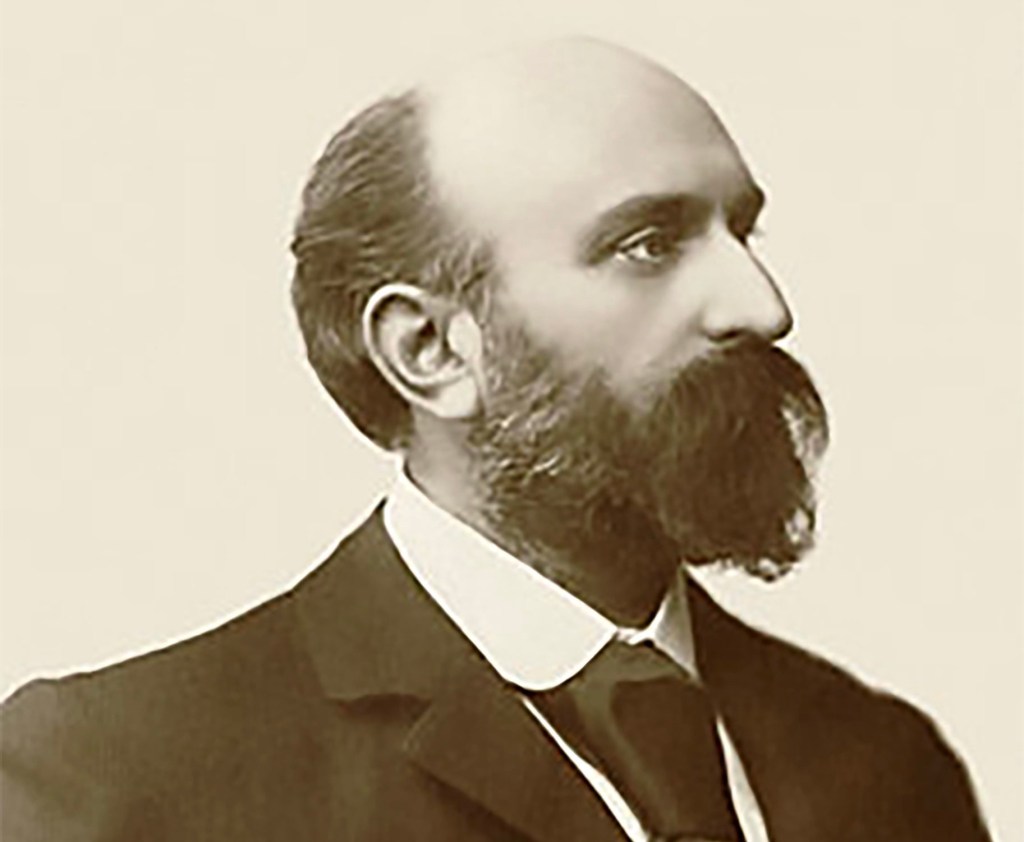
Ernest Chausson was born in 1855 in Paris into a wealthy bourgeois family. Although he initially pursued a career in law – earning a doctorate and becoming a barrister in 1877 – Chausson’s passion for music soon took precedence. In 1879, he turned to music in earnest, studying composition with two of France’s most prominent composers, Jules Massenet and César Franck.
Chausson’s artistic development was profoundly shaped by his exposure to Wagner’s operas, particularly after attending performances in Bayreuth. This influence is evident in his early works, though over time he cultivated a distinctive voice blending late Romanticism with the emerging currents of French Impressionism. From 1886, Chausson served as secretary of the Société Nationale de Musique, a position that brought him into close contact with leading French composers such as Gabriel Fauré, Claude Debussy, and Henri Duparc.
Despite composing a relatively small body of work, Chausson is highly regarded for the depth and refinement of his music. His compositions are characterised by rich chromaticism, passionate expression, and masterful orchestration, qualities that have secured his place in the French musical canon.
Among his most significant achievements is the Symphony in B-flat major, Op. 20, completed in 1890. This was Chausson’s only symphony and marked a stylistic shift away from Wagner’s influence toward a more personal French Romantic idiom. Structured in four traditional movements, the symphony features lush harmonies, lyrical melodies, and transparent orchestration. It combines the emotional depth and chromatic richness inherited from César Franck with Chausson’s own expressive intensity and structural cohesion. The work is widely seen as a bridge between late 19th-century Romanticism and the modern French music that would follow, and it remains a cornerstone of the French orchestral repertoire.
Tragically, Chausson’s life was cut short at the age of 44. On 10 June 1899, while cycling near his country estate, Château de Moussets in Limay, he lost control on a downhill slope and crashed into a brick wall. The impact was fatal, and his death was almost instantaneous. While some early speculation suggested suicide, given Chausson’s history of depression, most scholars now agree it was a tragic accident—he may have even been riding with one of his daughters at the time. His untimely death was deeply mourned by the French artistic community, with prominent composers such as Debussy, Fauré, and Albéniz among those who attended his funeral.

Carl Nielsen (1865-1931)
Symphony No. 5, Op. 50 (1920-1922)
Carl Nielsen (1865–1931) is widely regarded as Denmark’s most prominent composer, as well as a gifted violinist and conductor. Born on 9 June 1865 in Sortelung, near Norre Lyndelse on the island of Funen, Nielsen grew up in a poor but musically talented family. His earliest musical experiences came from playing in a military band and participating in his father’s amateur orchestra, which laid the foundation for his lifelong devotion to music.
Nielsen studied at the Royal Danish Academy of Music from 1884 to 1886, and soon after, he joined the Royal Danish Orchestra as a second violinist, a position he held for sixteen years. He later rose to the roles of concertmaster and conductor, frequently leading performances of his own works. From 1916 until his death, he also taught at the Royal Danish Academy of Music, shaping the next generation of Danish musicians.
Over his career, Nielsen composed six symphonies, concertos for violin, flute, and clarinet, the celebrated opera Maskarade, and a wealth of songs and chamber works. His musical style evolved from early influences such as Brahms and Grieg to a distinctive modern voice characterised by progressive tonality – a technique in which the music shifts through different tonal centres rather than settling in a traditional key. Although Nielsen was somewhat of a musical outsider during his lifetime, his international reputation grew significantly after the 1960s. Today, he is honoured in Denmark with a dedicated museum in Odense and his portrait appears on the Danish 100-kroner banknote. Nielsen died of a heart attack on 3 October 1931 and is buried in Vestre Cemetery, Copenhagen.
One of Nielsen’s most famous and critically acclaimed works is his Symphony No. 5, Op. 50, composed in 1922. This symphony is considered a masterpiece of 20th-century orchestral music and stands out for its originality and emotional depth. Unconventionally structured in just two movements, the first (Allegro) is noted for its complexity, dramatic contrasts, and evolving themes, while the second (Adagio) offers a slow, lyrical, and contemplative mood that provides a serene counterbalance to the intensity of the opening movement.
Symphony No. 5 explores themes of struggle, conflict, and resolution, reflecting the turbulent atmosphere of post-World War I Europe. The symphony is known for its powerful and vivid orchestration, with particularly striking use of brass and percussion. By blending traditional symphonic elements with modern innovations, Nielsen challenged the conventions of the genre and created a work that has had a lasting impact on both Danish and international music.


Leave a comment