
Classical music in Sweden has a rich and enduring tradition, shaped by both royal patronage and folk influences. Its history stretches back to the Baroque era and continues to this day. Key figures such as Johan Helmich Roman (1694-1758), along with Joseph Martin Kraus 1756-1792, Franz Berwald (1796 – 1868), and Kurt Atterberg (1887 – 1974), played significant roles in developing Sweden’s classical repertoire and establishing a distinctive national style.
Johan Helmich Roman (1694 – 1758)
Partita in C minor (circa 1730s) IV. Presto
Rebaroque
Maria Lindal (director)
Hugo Alfvén (1872 – 1960)
Swedish Rhapsody No 1 ’Midsommarvaka’ Op. 19 (1903)
Royal Stockholm Philharmonic Orchestra
Neeme Järvi (conductor)
Wilhelm Stenhammar (1871 – 1927)
Symphony No 1 in F major (1902-1903) IV. Allegro
Gothenburg Symphony Orchestra
Neeme Järvi (conductor)
Franz Berwald: (1796 – 1868)
Septet in Bb major (1828) IV. Finale: Allegro co spirito
Arien Wind Quintet and Schein Quartet
Kurt Atterberg (1887 – 1974)
Symphony No 8 in E minor Op. 48 (1944) IV. Con moto
Stuttgart Radio Symphony Orchestra
Ari Rasilainen (conductor)
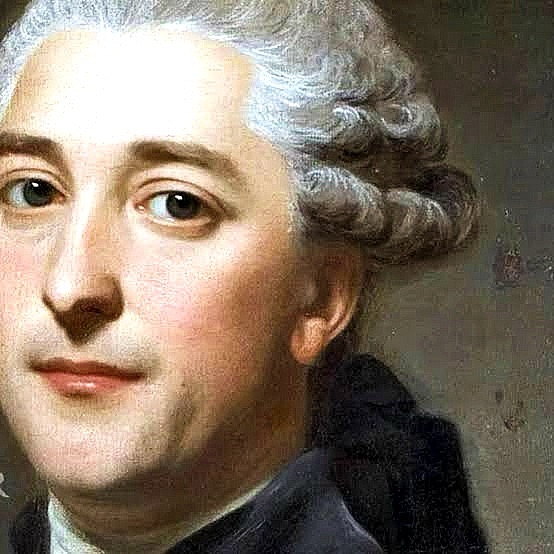
Johan Helmich Roman (1694 – 1758)
Partita in C minor (circa 1730s)
Johan Helmich Roman (1694–1758), often called ’the father of Swedish music’ and sometimes referred to as ‘the Swedish Handel’ was born into a family of royal court musicians, eventually joining the Swedish royal chapel as a violinist and oboist at the age of sixteen. Between 1715 and 1721, Roman studied in London, where he was influenced by Handel and studied under Johann Christoph Pepusch, while also meeting leading musicians like Francesco Geminiani and Giovanni Bononcini. During this time, he developed a distinctive style that blended the late Baroque with Rococo elements, emphasising lightness, elegance, and ornamentation.
Returning to Sweden in 1721, Roman rose to become deputy master and later concertmaster of the Swedish Royal Orchestra by 1727. He was a key figure during Sweden’s Age of Liberty, improving orchestral standards, introducing Handel’s music, and pioneering public concerts in the 1730s.
Among his notable works is the Drottningholmsmusik, composed in 1744 for the royal wedding of King Adolf Fredrik and Queen Lovisa Ulrika. Roman was a prolific composer, writing orchestral suites, sinfonias, trio and solo sonatas, and sacred choral works. He also promoted Swedish-language church music and monody, though only his 12 Flute Sonatas (1727) were published during his lifetime. His later career was hampered by deafness, leading him to focus on translating music theory texts into Swedish until his death in 1758 at his estate in Småland. Roman is remembered as Sweden’s first internationally recognized classical composer.
One of Roman’s most celebrated chamber works is his Partita in C minor, likely composed in the 1730s during his mature period. This multi-movement Baroque suite, featuring oboe, violin, strings, and basso continuo, showcases his blend of Swedish and European Baroque influences through expressive writing and intricate interplay between soloists and ensemble.

Hugo Alfvén (1872 – 1960)
Swedish Rhapsody No 1 ’Midsommarvaka’ Op. 19 (1903)
Hugo Alfvén (1872–1960) was a multifaceted Swedish artist known as a composer, conductor, violinist, and painter. He studied violin at the Royal College of Music in Stockholm from 1887 to 1891 and took private composition lessons with Johan Lindegren. Early in his career, Alfvén played violin in the Royal Swedish Opera orchestra from 1890 to 1901. He gained national recognition with the premiere of his Second Symphony in 1899. Over the years, he held prominent positions at Uppsala University (1910–1939) and led renowned male choirs such as Orphei Drängar (1910–1947) and Allmänna Sången (1919–1931), as well as conducting the Siljansbygdens körförbund and Svenska Sångarförbundet.
Alfvén’s musical style is rooted in the late Romantic and national-romantic traditions, often drawing on Swedish folk music and landscapes which he effused with colourful orchestration. His major works include five symphonies, the widely celebrated Swedish Rhapsody No. 1 ‘Midsommarvaka’ (Midsummer Vigil) Op. 19, and the ballet Bergakungen (The Mountain King), alongside an extensive body of choral music, solo songs, chamber works, and piano pieces. Beyond music, he was an accomplished watercolor painter and author of a four-volume autobiography. In 1954, Alfvén made the first Swedish classical stereo recordings. Today, he is regarded as one of Sweden’s most important composers, with his music regularly performed at national celebrations.
The Swedish Rhapsody No. 1, “Midsommarvaka,” Op. 19, composed in 1903 and published around 1906, was written to highlight Alfvén’s lighter, folk-inspired style as a response to criticism that his music was too serious. The piece is a symphonic rhapsody in three main sections. The rhapsody combines authentic Swedish folk melodies with Alfvén’s own original themes, painting a vivid musical picture of Midsummer Eve celebrations — dancing, games, and the magical atmosphere of Sweden’s shortest night. The piece has also entered popular culture, appearing in films like The Stranger Left No Card (1952) and inspiring the famous tune Mah Nà Mah Nà popularized by The Muppets. Alfén described the rhapsody as a ‘fantasy on popular Swedish folk melodies,’ a fitting tribute to its blend of tradition and imagination.

Wilhelm Stenhammar (1871 – 1927)
Symphony No 1 in F major (1902-1903)
Wilhelm Stenhammar (1871–1927) was a prominent Swedish composer, conductor, and pianist. Born in Stockholm into a musical family – his father, Per Ulrik Stenhammar, was both a composer and architect – he was immersed in music from an early age, especially vocal traditions. He studied music in Stockholm before continuing his education in Berlin (1892–1893) with the pianist Heinrich Barth.
Regarded as Sweden’s leading pianist of his time, Stenhammar toured extensively across Europe, performing both as a soloist and chamber musician, notably with the Aulin Quartet. He served as principal conductor and artistic director of the Gothenburg Symphony Orchestra from 1907 to 1922, during which he elevated the orchestra’s artistic standards and introduced Swedish audiences to works by composers such as Mahler, Debussy, Nielsen, and Sibelius. Later, he was director of music at the Stockholm Opera from 1923 to 1925. A member of the Royal Swedish Academy of Music from 1900, Stenhammar left a profound legacy, commemorated through Gothenburg’s Stenhammarsalen concert hall and statues. He died of a stroke in 1927 near Gothenburg.
Stenhammar’s compositional style evolved from early German Romantic influences – especially Wagner and Bruckner – to a distinct Nordic voice inspired by Carl Nielsen and Jean Sibelius. Among his key works are his two symphonies, piano concertos, serenades, operas like Gildet på Solhaug and Tirfing, as well as chamber music and vocal pieces. Known for being highly self-critical, he revised or withdrew some of his early works.
His Symphony No. 1 in F major was composed between 1902 and 1903 and premiered in Stockholm at the Royal Swedish Academy of Music on December 16, 1903. Lasting about 50 to 55 minutes, it initially received positive attention but was soon withdrawn by Stenhammar himself, who felt the work was too derivative – often described as an ‘idyllic Bruckner’ lacking a unique personal voice. Hearing Sibelius’s Symphony No. 2 inspired him to seek a more original style. Consequently, the symphony remained unpublished and infrequently performed for decades, though modern revivals have brought renewed appreciation for its craftsmanship and lyricism. Musically, the symphony reflects strong late-Romantic Germanic influences with lush orchestration and contrapuntal textures, while incorporating Swedish folk elements, particularly in the second movement.
Despite Stenhammar’s own reservations, Symphony No. 1 stands as a significant work bridging Germanic Romanticism and emerging Nordic musical identity, continuing to gain recognition in Sweden’s concert repertoire and beyond.

Franz Berwald: (1796 – 1868)
Septet in Bb major (1828)
Franz Berwald (1796-1868) is widely regarded as the most important Swedish composer of the 19th century and the first great Scandinavian symphonist. Born into a musical family – his father was a violinist in the Royal Opera Orchestra – Berwald studied violin with his father and composition under J.B.E. Du Puy. He spent about fifteen years performing as a violinist in the Swedish court orchestra and on tour. Later, he lived and worked in major European musical centers such as Berlin (1829–1841), Vienna (1842), and Paris, returning to Vienna again between 1846 and 1849. Near the end of his life, he taught composition and orchestration at the Royal Conservatory of Music in Stockholm (1867–1868). He was elected to the Royal Swedish Academy of Music in 1864 and made an honorary member of the Mozarteum University of Salzburg in 1847.
In addition to his musical career, Berwald worked as an orthopedist and managed various industrial enterprises, including a glassworks, sawmill, and later a brick factory in northern Sweden. Despite his innovative output – including four symphonies that were pioneering in structure – his music was largely ignored or mocked in Sweden during his lifetime, though it was better received in Germany and Austria. Only during the 20th century did his music gain widespread appreciation, becoming an important influence on later Swedish composers like Wilhelm Stenhammar. In recognition of his achievements, Berwald was awarded the Swedish Order of the Polar Star in 1866. He died of pneumonia in 1868 and is now considered Sweden’s greatest 19th-century composer and a foundational figure in Scandinavian symphonic music.
One of his notable works is the Grand Septet in B-flat major (Stor Septett), composed in 1828, possibly based on an earlier version from 1817–1818. Dedicated to Ernst Leonard Schlegel, the septet is scored for clarinet in B♭, bassoon, horn in F/E♭, violin, viola, cello, and double bass. It reflects early Romantic style with influences from composers such as Hummel, Mendelssohn, Schubert, and Spohr. Although the septet was not a success at its first performances in 1818 and 1819, it is now appreciated for its charm, wit, and originality and stands as an important example of early Romantic Swedish chamber music.
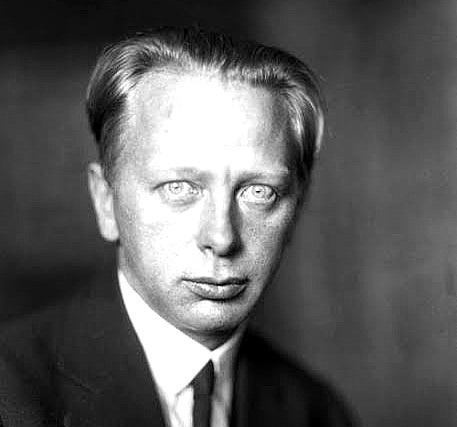
Kurt Atterberg (1887 – 1974)
Symphony No 8 in E minor Op. 48 (1944)
Kurt Atterberg (1887-1974) was a Swedish composer and civil engineer known for blending influences from Russian composers, Brahms, and Max Reger with traditional Swedish folk melodies to create a distinctive national style. Over his career, he composed nine symphonies, along with operas, ballets, and numerous orchestral works. Among his most famous pieces are Symphony No. 6, nicknamed the Dollar Symphony for winning a prize from the Columbia Gramophone Company, as well as the Sinfonia Romantica (Symphony No. 7) and the folk-inspired Symphony No. 8.
Atterberg worked for the Swedish Patent and Registration Office from 1912 until 1968, eventually becoming the division head. He made his conducting debut in 1912 with his own Symphony No. 1 and later served as conductor at Stockholm’s Royal Dramatic Theatre between 1916 and 1922. Additionally, he was a music critic for Stockholmstidningen from 1919 to 1957. He co-founded the Society of Swedish Composers and the Swedish Performing Rights Society in 1924 and was a member of the Royal Swedish Academy of Music from 1926, serving as its secretary between 1940 and 1953.
Atterberg’s early compositions were rooted in late Romanticism and Swedish nationalism. Over time, his style evolved to incorporate elements of Impressionism and polytonality, though he always retained a strong foundation in folk traditions. He is regarded as the leading Swedish symphonist between Wilhelm Stenhammar and Dag Wirén. While his reputation declined after World War II due to changing musical tastes, recent recordings have revived interest in his work, which is admired for its vigorous orchestration, melodic inventiveness, and national character.
His Symphony No. 8 in E minor, Op. 48, composed in 1944 and premiered in February 1945 in Helsinki with Atterberg himself conducting, exemplifies his mature, nationalistic style. Explicitly based on Swedish folk melodies, it merges late-Romantic orchestration with folk-inspired themes, featuring rich contrapuntal textures that reflect Atterberg’s analytical background as an engineer. The symphony bridges the late Romantic tradition and 20th century Swedish musical nationalism. The symphony highlights Atterberg’s melodic creativity, his use of orchestral colour, and exxudes strong national identity.
In Conclusion
Sweden’s classical music scene is supported by strong institutions, notably the Royal Swedish Opera and the Royal Swedish Academy of Music, both founded in the 18th century under King Gustav III. Stockholm serves as the heart of Swedish classical music, home to renowned venues including Berwald Hall, known for its outstanding acoustics and as the base for the Swedish Radio Symphony Orchestra and Choir. The Drottningholm Palace Theatre stands out as the world’s best-preserved 18th-century palace theatre, offering period performances that connect audiences with history. The Royal Opera, Sweden’s national opera and ballet stage, features a choir with origins dating back to 1773. Meanwhile, the Stockholm Concert Hall hosts the Royal Stockholm Philharmonic Orchestra and the prestigious Nobel Prize Award Ceremony. Beyond these historic institutions, Sweden’s classical music culture thrives through regular concerts and festivals, blending tradition with modern innovation.

Leave a comment