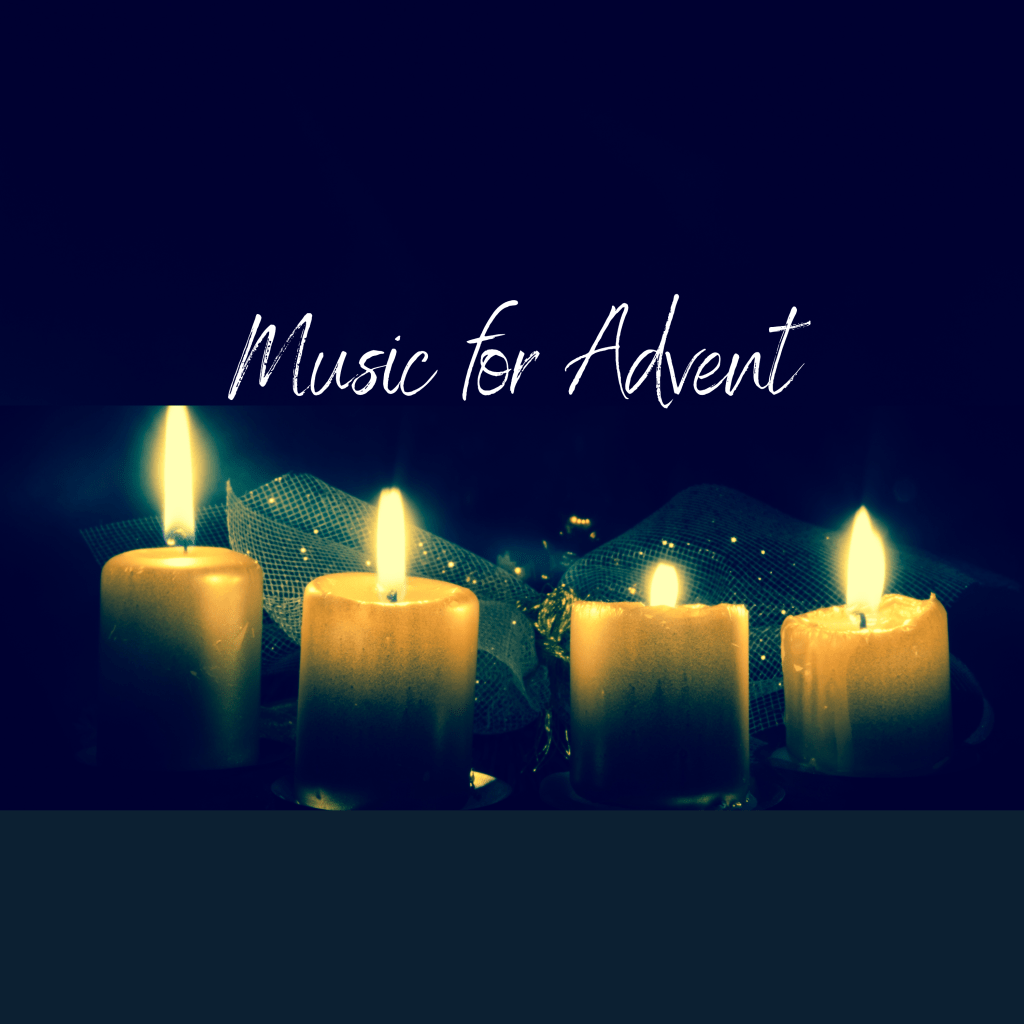
Advent marks the beginning of a new journey in the church year – a season that invites us to slow down, breathe, and look forward with quiet hope. The music we share tin today’s programme captures that feeling of waiting and wonder. You’ll hear melodies that seem to lean toward the light and words that speak of promise, watchfulness, and peace. Our programme brings together a mix of music – ancient chants, Renaissance motets, contemporary carols, and instrumental reflections – all connected by a sense of anticipation. Each piece asks us to listen, to reflect, and to notice the beauty hidden in stillness. Advent reminds us that this is not an ending, but a beginning—a time to pause, to listen, and to hope.
Cecilia McDowall (b.1951)
Now May We Singen (2006)
The Sixteen
Harry Christophers (conductor)
John Rutter (1945)
Candlelight Carol (1984)
The Cambridge Singers
City of London Sinfonia
John Rutter (conductor)
James MacMillan (1959)
Veni, Veni, Emanuel: Dance–Hocket (1992)
Evelyn Glennie (percussion)
Scottish Chamber Orchestra
Jukka-Pekka Saraste
Heitor Villa-Lobos (1887-1959)
Ave Maria (Advent setting)
Riga Chamber Choir
Imamants Kokars (conductor)
J.S. Bach (1685-1750)
Advent cantata BWV 61 (1714£
Ouverture: Nun komm, der Heiden Heiland
Leipzig New Bach Collegium Musicum
Hans-Joachim Rotzsch (conductor)
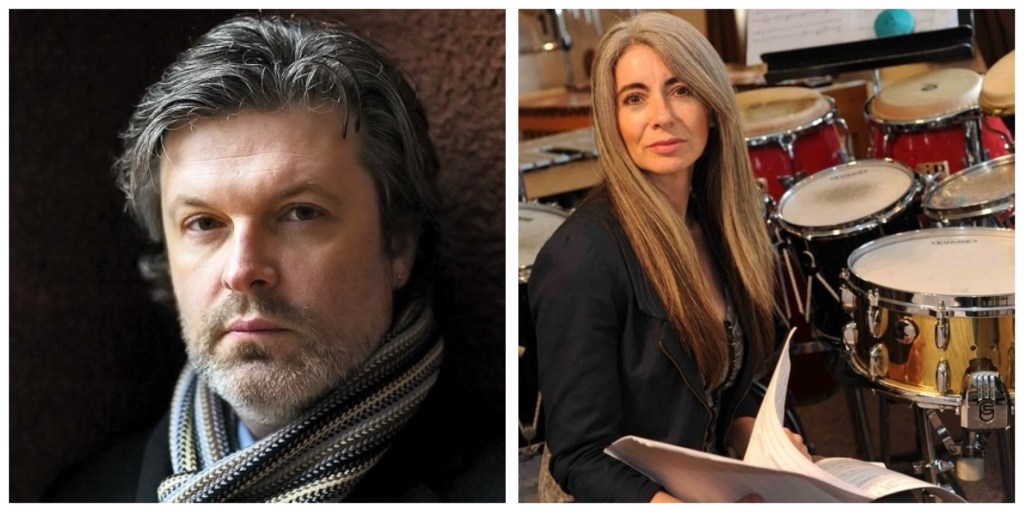
Cecilia McDowall (b.1951)
Now May We Singen (2006)
Cecilia McDowall was born in London in 1951, Cecilia McDowall is one of Britain’s most admired contemporary composers. She studied at Grey Coat Hospital School before reading music at the University of Edinburgh and continuing her studies at Trinity College of Music. Over the years, she has built a reputation for her distinctive and expressive choral music, which is frequently performed by choirs around the world. McDowall’s achievements include winning the 2014 British Composer Award, and since around 2015 she has been Composer-in-Residence at Dulwich College. Her works have been commissioned by leading ensembles such as the BBC Singers and the London Mozart Players, and are published primarily by Oxford University Press. Her musical style combines flowing, lyrical melodies with striking dissonances and rhythmic drive. Recordings of her works, including those by the Phoenix Chorale, have even earned Grammy Awards. Among her teachers were notable composers Joseph Horovitz, Robert Saxton, and Adam Gorb.
Now May We Singen (2006) is a joyful Christmas carol for unaccompanied SATB choir was commissioned in 2006 by the Concord Singers and premiered the following year at the Corn Exchange in Bedford. Setting a 15th‑century English text interwoven with Latin phrases, McDowall creates a beautifully medieval atmosphere. The lively, dance-like rhythm and lilting melody move gracefully between the voice parts, giving the piece a bright, festive energy.

John Rutter (1945)
Candlelight Carol (1984)
John Rutter was born in London on 24 September 1945. He sang as a chorister at Highgate School and even took part in the famous 1963 recording of Benjamin Britten’s War Requiem. He went on to study music at Clare College, Cambridge, where his first compositions — including the much‑loved Shepherd’s Pipe Carol — were published while he was still an undergraduate. From 1975 to 1979, Rutter served as Director of Music at Clare College. In 1981 he founded the Cambridge Singers, a professional choir established mainly for recording projects, with many of their albums released under his own label, Collegium Records. Rutter is celebrated worldwide for his radiant sacred choral works such as Requiem, Magnificat, Mass of the Children, and his countless Christmas carols. He also co‑edited the Carols for Choirs series with Sir David Willcocks, a cornerstone of modern choral repertoire. His music blends the warmth of the English choral tradition with touches of French colour and harmony, and is widely loved for its generosity, clarity, and direct emotional appeal. In recognition of his remarkable contribution to music, he was knighted in the 2024 King’s Birthday Honours.
Composed in 1984, Candlelight Carol is one of John Rutter’s most cherished Christmas pieces. He wrote both the words and music for SATB choir with organ or orchestral accompaniment. The work was commissioned by John Romeri, Director of Music at the Church of the Assumption in Bellevue, Pennsylvania, to honour the Virgin Mary. It was first heard in a recording by the Cambridge Singers on the 1987 album Christmas Night.
Rutter drew inspiration from the painting Nativity at Night by the Dutch artist Geertgen tot Sint Jans, capturing the quiet radiance of candlelight and Mary’s tender love for her newborn son. The carol’s gentle, luminous harmonies beautifully evoke this intimate moment, making it a favourite in Christmas concerts across the UK and the United States. Candlelight Carol has been recorded by artists such as Aled Jones, Joseph McManners, and the Mormon Tabernacle Choir, and even by Neil Diamond on his Christmas Album, Vol. 2 (1994). Versions for brass band and other ensembles continue to preserve the carol’s serene, glowing atmosphere.

James MacMillan (1959)
Veni, Veni, Emanuel: Dance–Hocket (1992)
The ancient hymn Veni, Veni, Emmanuel has its roots in the medieval O Antiphons, chanted during Vespers in the final days of Advent, dating as far back as the 8th century. The haunting melody became widely known in its modern form after appearing in Hymns Ancient and Modern in 1861, and it has since become a beloved Advent hymn across many Christian traditions. MacMillan’s music is deeply rooted in his Scottish heritage and Roman Catholic faith, often drawing on folk idioms and spiritual themes. Veni, Veni, Emmanuel (1992), written for Evelyn Glennie, has been performed more than 500 times worldwide – a remarkable achievement for a modern orchestral work.
Over his career, he has held posts as Affiliate Composer with the Scottish Chamber Orchestra, Artistic Director of the Philharmonia Orchestra’s Music of Today series, and later as Composer/Conductor with the BBC Philharmonic. He also founded The Cumnock Tryst festival in his Ayrshire hometown in 2014. Honours have included a CBE in 2004 and a knighthood in 2015. MacMillan’s music is admired for its rhythmic energy, emotional depth, and unmistakable sense of spirituality.
Veni, Veni, Emmanuel was composed between Advent 1991 and Easter 1992, and is a 25‑minute percussion concerto dedicated to MacMillan’s parents. Commissioned by Christian Salvesen PLC for Evelyn Glennie and the Scottish Chamber Orchestra, the work premiered at the BBC Proms on 10 August 1992 in London’s Royal Albert Hall, with Jukka-Pekka Saraste conducting. Every musical idea in the piece is drawn from the 15th‑century French Advent plainchant Veni, Veni, Emmanuel. The concerto unfolds in a single, continuous movement built in five sections and reflects the Advent theme of light and liberation from fear, moving finally toward an Easter‑like sense of renewal and joy.
MacMillan pushes the solo percussionist to explore a vast sound world – from tuned and untuned instruments to skin, wood, and metal – creating a kaleidoscope of colour and texture. The famous Dance – Hocket section bursts with rhythmic drive and thrilling, hocketing exchanges between the two halves of the orchestra. The result is a work of dazzling physical energy and spiritual force, perfectly capturing the tension and vitality of the Advent journey.

Heitor Villa-Lobos (1887-1959)
Ave Maria (Advent setting)
Villa‑Lobos wrote several settings of Ave Maria across his career, reflecting his deep connection to Catholic devotional music. These include versions from 1914 (for voice and string quartet), 1918 (SATB a cappella, No. 17), 1938 (five‑voice), and 1948 (six‑voice in C minor, marked Adagio). The 1918 version, most often performed today, is written for an unaccompanied mixed choir. It seamlessly fuses the solemnity of the Latin liturgy with subtle Brazilian colour and warmth. Emerging early in Villa‑Lobos’s career, this setting reflects both his Catholic upbringing in Rio de Janeiro and his growing interest in shaping a distinctly national sound. Choirs such as the São Paulo Symphony Choir and the Riga Chamber Choir Ave Sol have championed this work, which remains a serene and expressive example of his sacred choral style.
Heitor Villa‑Lobos was born in Rio de Janeiro on 5 March 1887 and spent most of his life there, passing away in the same city in 1959. The son of a librarian and amateur musician, he grew up surrounded by music and learned several instruments – including the cello, clarinet, guitar, and piano. After his father’s death in 1899, he supported his family through music, becoming largely self‑taught as a composer.
Between 1905 and 1912, Villa‑Lobos travelled widely across Brazil, immersing himself in the rich variety of local folk traditions, particularly those of indigenous and Afro‑Brazilian communities. These experiences shaped his unique musical language, which combined Brazilian rhythms and melodies with European classical forms inspired by Bach and Wagner. Over his lifetime, he composed more than 2,000 works, among them the Bachianas Brasileiras (1930–1945) and the Chôros series, both cornerstones of 20th‑century Brazilian music.
Villa‑Lobos became a leading figure in Brazilian musical life, serving as superintendent of music education from 1932, founding the SEMA choral conservatory in 1942, and establishing the Brazilian Academy of Music in 1945. From the 1920s to the 1950s he toured extensively as a conductor in the United States and Europe, composing patriotic works, film scores, and pieces celebrating Brazil’s cultural identity.

J.S. Bach (1685-1750)
Advent cantata BWV 61 (1714)
Overture: Nun komm, der Heiden Heiland
Johann Sebastian Bach was born on 21 March 1685 in Eisenach, Thuringia, and died in Leipzig on 28 July 1750. Orphaned by the age of ten, he went to live with his elder brother, Johann Christoph, in Ohrdruf, where he continued his musical training. As a young student at St Michael’s School in Lüneburg, he absorbed the French and Italian musical styles that would later shape his own compositions.
Bach’s early career included organist posts in Arnstadt (1703) and Mühlhausen (1707), where he married Maria Barbara Bach, with whom he had seven children. He later served as court musician and organist at Weimar (1708–1717), producing a wealth of organ works. His time as Kapellmeister in Köthen (1717–1723) brought forth some of his greatest instrumental pieces, including the Brandenburg Concertos and numerous suites and sonatas. Following the death of his first wife in 1720, he married Anna Magdalena in 1721; together they had thirteen children.
In 1723, Bach was appointed Thomaskantor in Leipzig, a position he held until his death. There he composed hundreds of church cantatas, large-scale works such as the St Matthew Passion and Mass in B minor, and keyboard masterpieces including The Well-Tempered Clavier. His vast body of over a thousand works showcases his unmatched mastery of counterpoint and expressive depth. Although his music faded from fashion for a time, it was revived by Felix Mendelssohn in 1829 and has since become a cornerstone of Western musical tradition.
Bach composed Nun komm, der Heiden Heiland (“Now come, Saviour of the nations”) in 1714 as part of his Weimar cantata cycle for the First Sunday of Advent, performed at the ducal chapel in Weimar on 2 December 1714. Advent in Bach’s Lutheran tradition marked both joyful anticipation and spiritual preparation, and this cantata captures that sense of urgency and warmth as the faithful await Christ’s coming.


Leave a comment