There is nothing quite like the sound of brass and choir at Christmas. The jubilant ring of brass, combined with the warmth of choral singing, creates a sound world that is both exhilarating and inspiring.
This festive programme brings together music for brass and choir, offering a celebration of the season in all its splendour. Alongside well-loved carols are more recent works that reveal the full spectrum of colour and emotion. Together, they capture what makes Christmas so beloved: its joy, its reflection, and, above all, its enduring sense of community.
.
Anonymous arr Wilcocks
Angelus et Virginem (circa. 1290)
The Bach Choir
Philip Jones Brass Ensemble
Sir David Wilcocks (conductor)
Kevin Norbury (b.1956)
Christmas Day (2020)
New York Staff Band
Dr William Himes (conductor)
Chris Coletti (b.1987)
Bach’s Bells (2012)
Canadian Brass
Franz Xavier Grüber (1787) arr. Darrol Barry
Silent Night (1816)
Black Dyke Band
Nicholas Childs (conductor)
Will Todd (b.1970)
Hark! The Herald Angels Sing (1840)
St Martin’s Voices
Will Todd Ensemble
Will Todd (conductor)
Anonymous arr Wilcocks
Angelus et Virginem (circa. 1290)
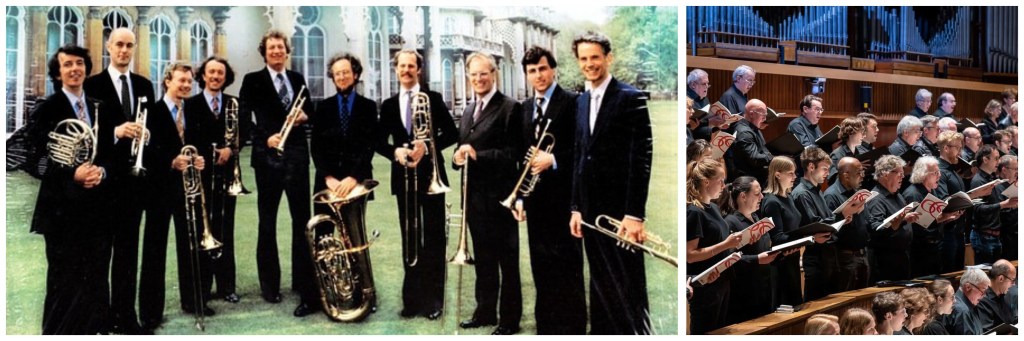
Angelus ad virginem first appeared in early 13th‑century France, probably among Franciscan friars. It made its way to Britain around the 1270s, brought by French friars, and can be found in manuscripts from England, France, and Ireland up to the mid‑1500s. Chaucer mentions it in The Miller’s Tale (c. 1390), showing that it was already well known in England by the 14th century. The earliest surviving version sits in the British Library’s Arundel 248 manuscript from the late 13th century, containing both the original Latin text and a Middle English version, Gabriel fram evene king.
With Queen Victoria as an early patron from 1879, The Bach Choir quickly became a musical institution. Today, the 240‑strong ensemble continues to perform major choral works at the Royal Festival Hall and record at Abbey Road Studios, maintaining its reputation for musical excellence.
As Director of Music at King’s College, Cambridge (1957–1974),Sir David Willcocks helped make the King’s choir world‑famous through tours and the Christmas Eve broadcasts from King’s Chapel. He later conducted The Bach Choir (1960–1998) and served as Director of the Royal College of Music (1974–1984). Knighted in 1977, he was also a prolific composer and arranger, best known for his work on the Carols for Choirs series.
Trumpeter Philip Jones founded the Philip Jones Brass Ensemble in 1951 while playing at the Royal Opera House. Starting as a quartet, it expanded into a quintet – two trumpets, horn, trombone, and tuba – by the late 1950s. During the 1970s and 1980s, the ensemble grew to ten players for international tours across the US, Japan, and Europe. It commissioned new works – most famously Takemitsu’s Garden Rain – and featured some of Britain’s finest brass musicians, including Elgar Howarth, Ifor James, John Iveson, and John Fletcher.
Kevin Norbury (b.1956)
Christmas Day (2020)
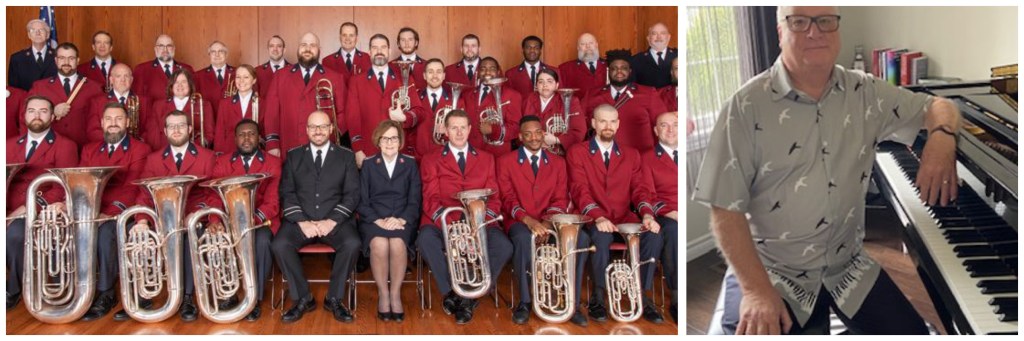
Kevin Norbury was born in 1956 in Andover, Hampshire, and grew up surrounded by the Salvation Army’s rich musical tradition. He studied at Royal Holloway, the Royal Academy of Music, Trinity College of Music, and the Royal College of Organists, gaining a solid foundation as both a performer and composer. Before settling in Canada, Kevin worked as a music editor for the Salvation Army in London, New York, and Toronto. His compositions are well loved in the brass world, including Odyssey (1997), the test piece for the 1999 European Brass Band Championships, Spirit of Adventure (2008), and the joyful On Christmas Day (c. 2020).
Kevin Norbury wrote On Christmas Day in 2020 for the New York Staff Band of the Salvation Army. It was premiered that same year during a virtual Christmas concert conducted by Bandmaster Derek Lance – at a time when the world was in lockdown and musicians found creative ways to stay connected. The piece celebrates the warmth and joy of the season, weaving carol‑like themes into an original concert work that uplifts both players and listeners.
Formed in June 1887 in Brooklyn, the New York Staff Band was the first ‘staff band’ of the Salvation Army, founded under Commander Ballington Booth. What began as a small seven‑member street band soon grew into one of America’s finest brass ensembles, travelling widely while staying true to its Christian mission. Now approaching its 140th anniversary, the band continues to set high standards in musical excellence and ministry. It has recorded extensively since its first LP in 1957 under Bandmaster Richard Holz and has long been known as ‘America’s Foremost Brass Band’
Chris Coletti (b.1987)
Bach’s Bells (2012)
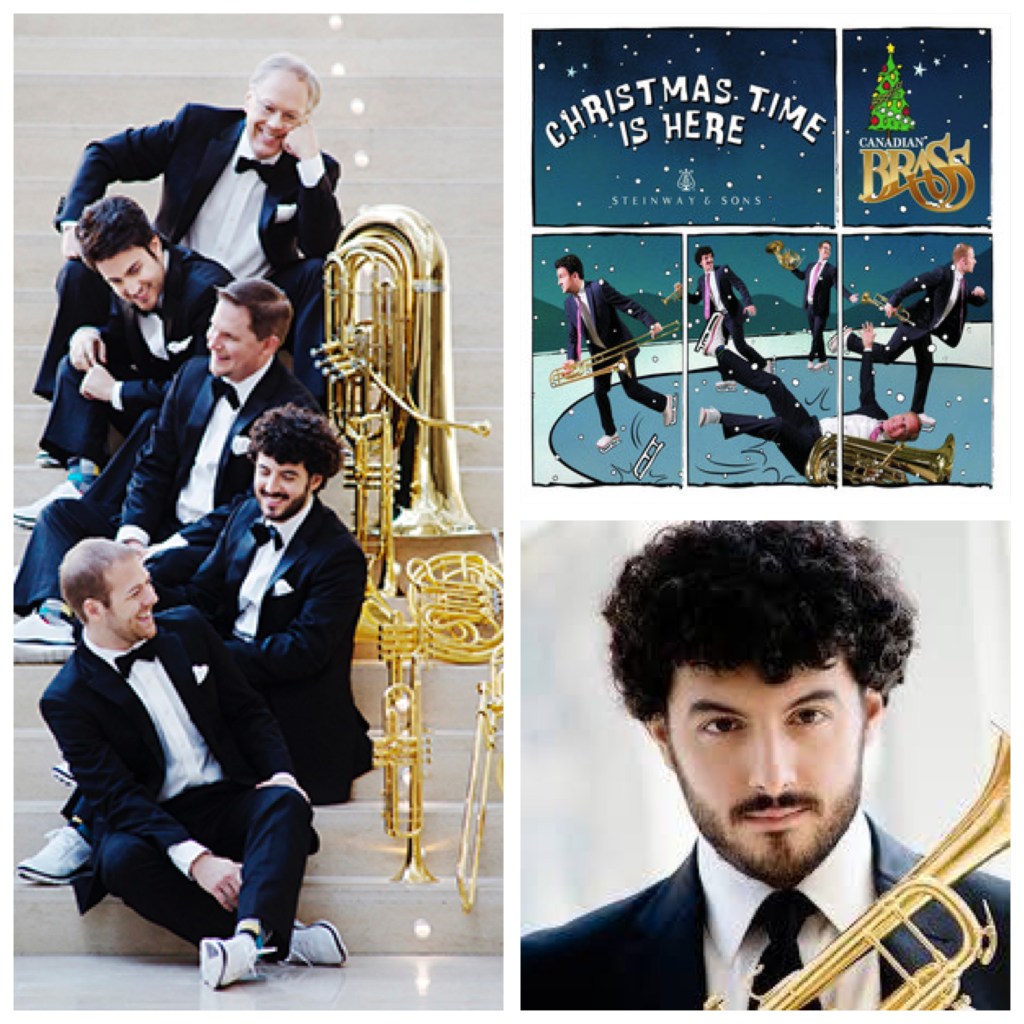
Chris Coletti, born around 1987 in Brooklyn and raised on Staten Island, is a highly regarded American trumpeter, arranger, conductor, and educator. At just 22, he joined the world‑famous Canadian Brass, beginning a decade of international touring, award‑winning recordings, and collaborations with artists as varied as Pierre Boulez, Quincy Jones, Gloria Estefan, and Kanye West. Now an Associate Professor of Trumpet and Director of the Contemporary Ensemble at Ithaca College, Chris continues to inspire the next generation of musicians.
Bach’s Bells was written especially for Canadian Brass’s holiday album Christmas Time Is Here, capturing one of the ensemble’s first performances of the piece that same year. It’s a sparkling fusion of J. S. Bach’s Cantata BWV 29 (Wir danken dir, Gott) with the driving rhythm of Mykola Leontovych’s Carol of the Bells – a clever blend of Baroque counterpoint and festive energy. Chris crafted the arrangement during his time as a Canadian Brass trumpeter, creating a virtuosic and joyful showpiece for piccolo trumpet that lights up holiday concerts.
Founded in 1970 in Toronto, Canadian Brass was the world’s first fully self‑sustaining professional brass quintet. The founders, tubist Chuck Daellenbach and trombonist Gene Watts, aimed to carve out a performance career beyond the symphony orchestra circuit – and they succeeded brilliantly. Their big break came in 1977 with a WQXR broadcast that led to a recording contract with RCA Red Seal. Just two years later, they became the first Western ensemble to tour China after the Mao era. Their reputation for virtuosity and good humour soon made them global ambassadors for brass music, recording with major orchestras such as the Berlin Philharmonic and even appearing on Sesame Street in 1979. Over more than 50 years, Canadian Brass has released dozens of albums, commissioned countless new arrangements, and entertained audiences around the world.
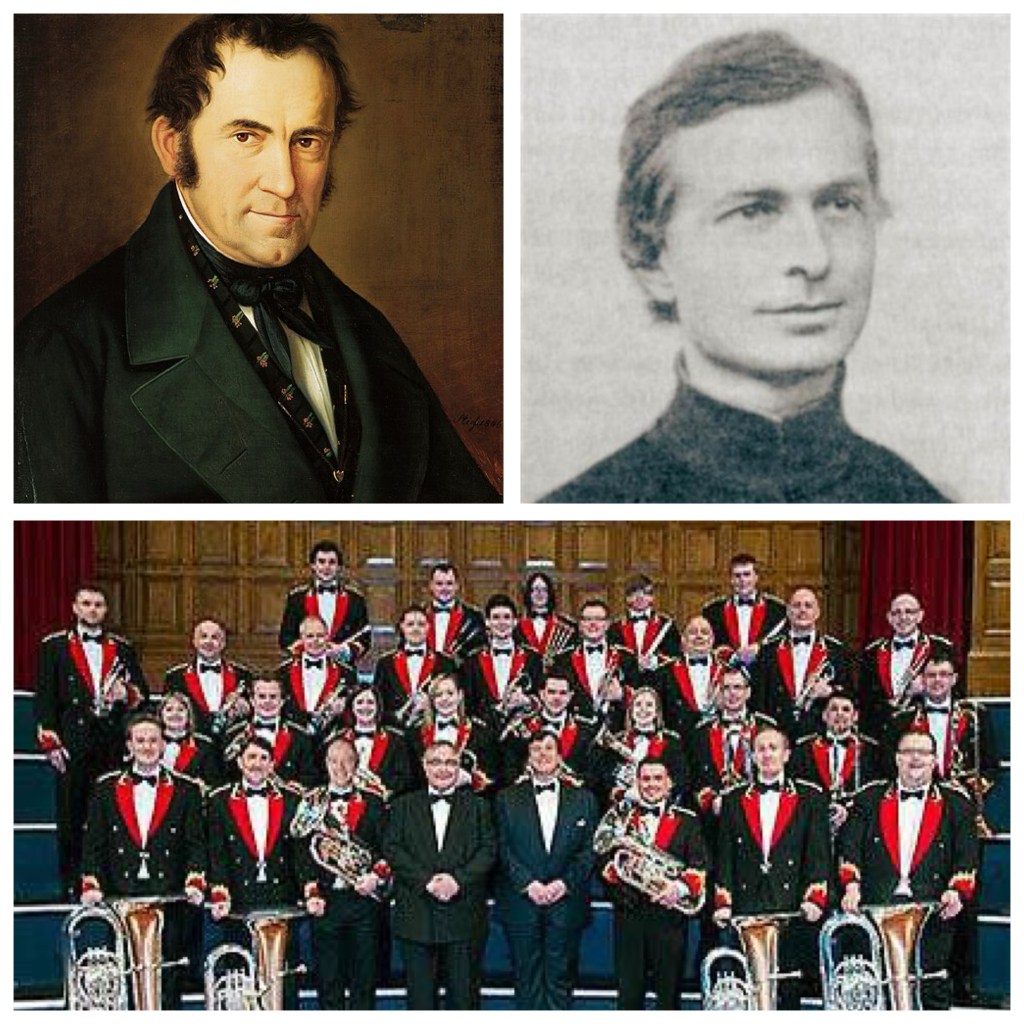
Franz Xaver Gruber, Joseph Mohr and Black Dyke Band
Franz Xavier Grüber (1787) arr. Darrol Barry
Silent Night (1816)
Franz Xaver Gruber was an Austrian schoolteacher, organist, and composer best known for writing the much‑loved melody of Silent Night. Born in Hochburg‑Ach, Upper Austria, in 1816, he became the schoolteacher and organist in Arnsdorf, where he met the young priest Joseph Mohr. Two years later, on Christmas Eve 1818, the pair created a piece that would become one of the world’s most famous carols. With the organ temporarily out of action, Mohr asked Gruber to set his poem Stille Nacht to music for guitar accompaniment. That evening, they premiered it together at St Nicholas Church in Oberndorf – Mohr singing and playing the guitar, Gruber singing bass, and the church choir joining in the choruses. Though Gruber went on to write more than a hundred sacred works, Silent Night was the piece that brought him enduring fame. The carol spread throughout Europe after organ builder Karl Mauracher took a copy to Tyrol, where the Rainer Family Singers helped popularise it. Gruber’s authorship, long the subject of speculation, was officially confirmed in 1995 when his handwritten 1820 manuscript was discovered.
The Black Dyke Band has its roots in the 19th‑century textile mills of Queensbury, West Yorkshire. The earliest known ensemble dates back to 1816, when Peter Wharton formed a brass and reed band in the area. After a few changes and local reorganisations, mill owner John Foster officially established the Black Dyke Mills Band in 1855, providing instruments and a practice room at the mill itself. From humble industrial beginnings, the band grew into one of the most celebrated brass ensembles in the world. Their collaborations have ranged from Paul McCartney and The Beatles (on the 1968 single Yellow Submarine) to Tori Amos, and they’ve maintained a vibrant performing and touring schedule from their Queensbury home.
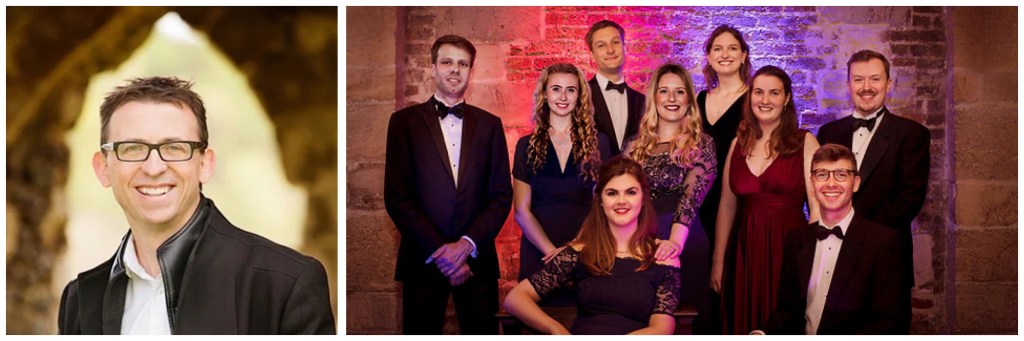
arr. Will Todd (b.1970)
Hark! The Herald Angels Sing (1840)
Will Todd is a British composer and jazz pianist whose music bridges the worlds of classical and jazz with warmth, energy, and soul. Born on 14 January 1970 in County Durham, he grew up singing in church choirs, where his lifelong love of choral music began. Will’s musical language blends lush jazz harmonies, blues colours, and moments of improvisation, whether he’s writing for the concert stage or the church. His work spans opera, orchestral, chamber, and educational music, though he’s best known for his choral writing. His breakthrough came with Mass in Blue (2003), a jazz‑inspired setting of the Mass that has been performed by choirs all over the world. Other favourites include Jazz Missa Brevis, Passion Music, Songs of Peace, and The Call of Wisdom. As a composer for the stage, Will has written operas and music theatre works such as The Blackened Man, Alice’s Adventures in Wonderland, Migrations, and The Screams of Kitty Genovese. He has worked with many of the UK’s finest choirs and ensembles, including The Sixteen, Tenebrae, the BBC Singers, BBC Concert Orchestra, Hallé Orchestra, Welsh National Opera, Opera North, and Opera Holland Park.
The words of Hark! The Herald Angels Sing were written by the great Methodist hymn‑writer Charles Wesley (1707–1788) and first published in 1739 in Hymns and Sacred Poems. The tune we know today comes from Felix Mendelssohn’s 1840 cantata Festgesang; it was matched to Wesley’s text by William Hayman Cummings in the 1850s. Together, words and melody have created one of the most joyful and enduring Christmas carols of all time.
St Martin’s Voices is the professional vocal ensemble based at St Martin‑in‑the‑Fields, Trafalgar Square, London. As the church’s flagship choir, the group sings for services, concerts, broadcasts, and a wide range of special events. Formed from a pool of outstanding young professional singers, the ensemble is known for its versatility and polished sound. It regularly performs with leading orchestras such as the Academy of St Martin in the Fields, London Mozart Players, and the Piatti Quartet. The group leads the popular weekly Great Sacred Music lunchtime events at St Martin’s, which combine live choral performance with thoughtful reflections. Committed to supporting emerging talent, St Martin’s Voices offers valuable opportunities for young singers and conductors and regularly commissions new choral works from contemporary composers.

Leave a comment