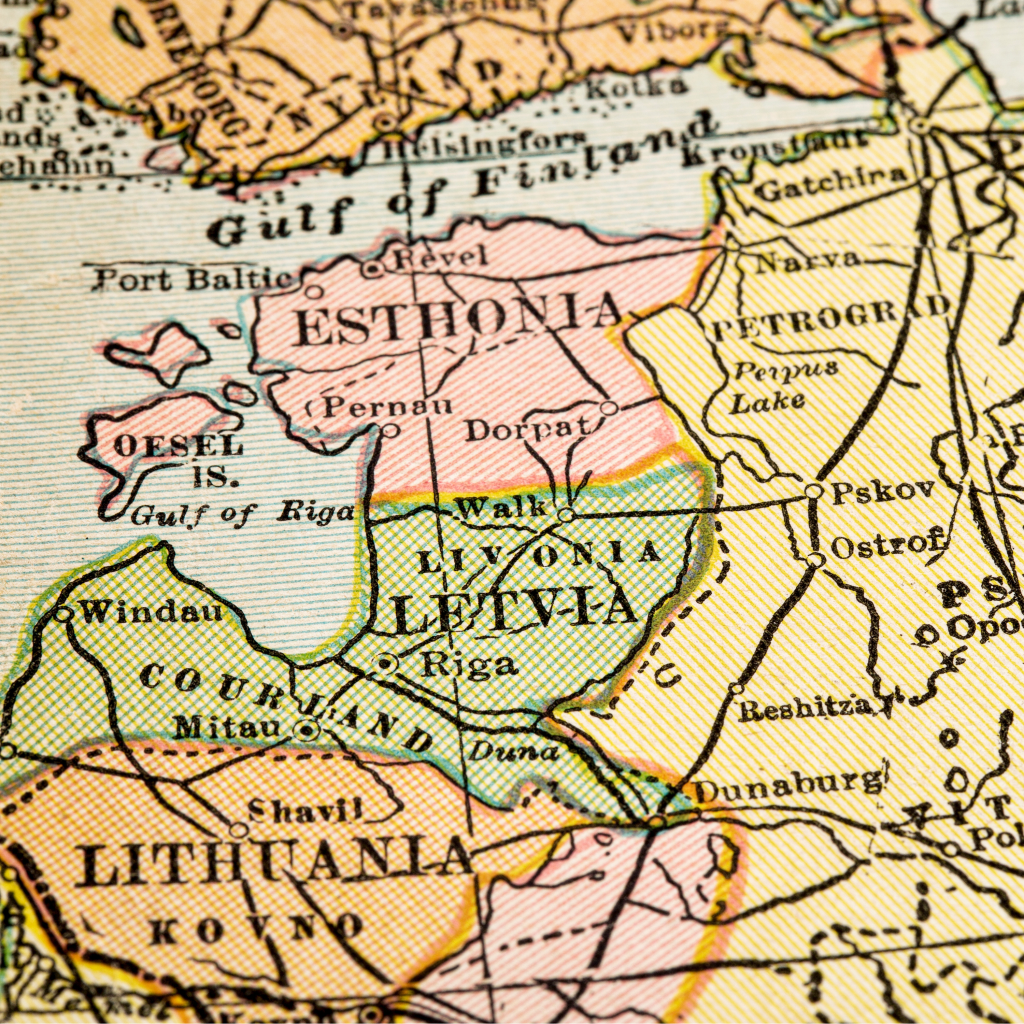
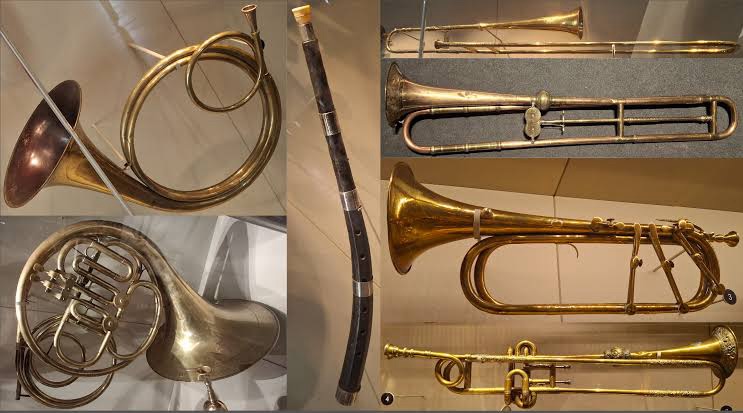
The Baltic countries – Estonia, Latvia, and Lithuania – share a musical heritage shaped by history, resilience, and pride. Through centuries of foreign rule, music became a lifeline, carrying their languages and identity when little else could. At its core lies a rich folk tradition: ancient songs accompanied by distinctive instruments such as Estonia’s kannel, Latvia’s dūdas bagpipes and stabule flute, and Lithuania’s birbynė, with its bright, singing tone. These sounds still echo through the region’s music today. From these roots grew an extraordinary generation of composers who shaped Baltic classical music. Today, Baltic music ranges from vast choral festivals to bold contemporary works, always reflecting a deep connection to nature, heritage, and hope. It’s a living tradition and one that reflects freedom and resilience.
Imants Kalniņš (1941)
Symphony No 6 III (2001)
Liepaja Symphony Orchestra
Maris Sirmais (conductor)
Jāzeps Vītols (1863–1948)
Latvian Folk Song Fantasy Op. 42 (1908-1910)
Valdis Zariņš (violin)
Latvian National Symphony Orchestra
Dmitry Yablonsky (conductor)
Mikalojus Konstantinas Čiurlionis (1875–1911)
The Sea (1903-1906)
Lithuanian National Symphony Orchestra
Modestas Pitrenas (conductor)
Ēriks Ešenvalds
O Salutaris hostia (2008)
Choir of Trinity Choir Cambridge
Stephen Layton (conductor)
Rudolf Tobias (1873–1918)
Jonah’s Mission (1904): The Marriner’s Give Thanks
Estonian State Symphony Orchestra
Tallinn Boys Chor
Oratorio Choir
Estonian Philharmonic Chamber Choit
Neeme Jarvi (conductor)
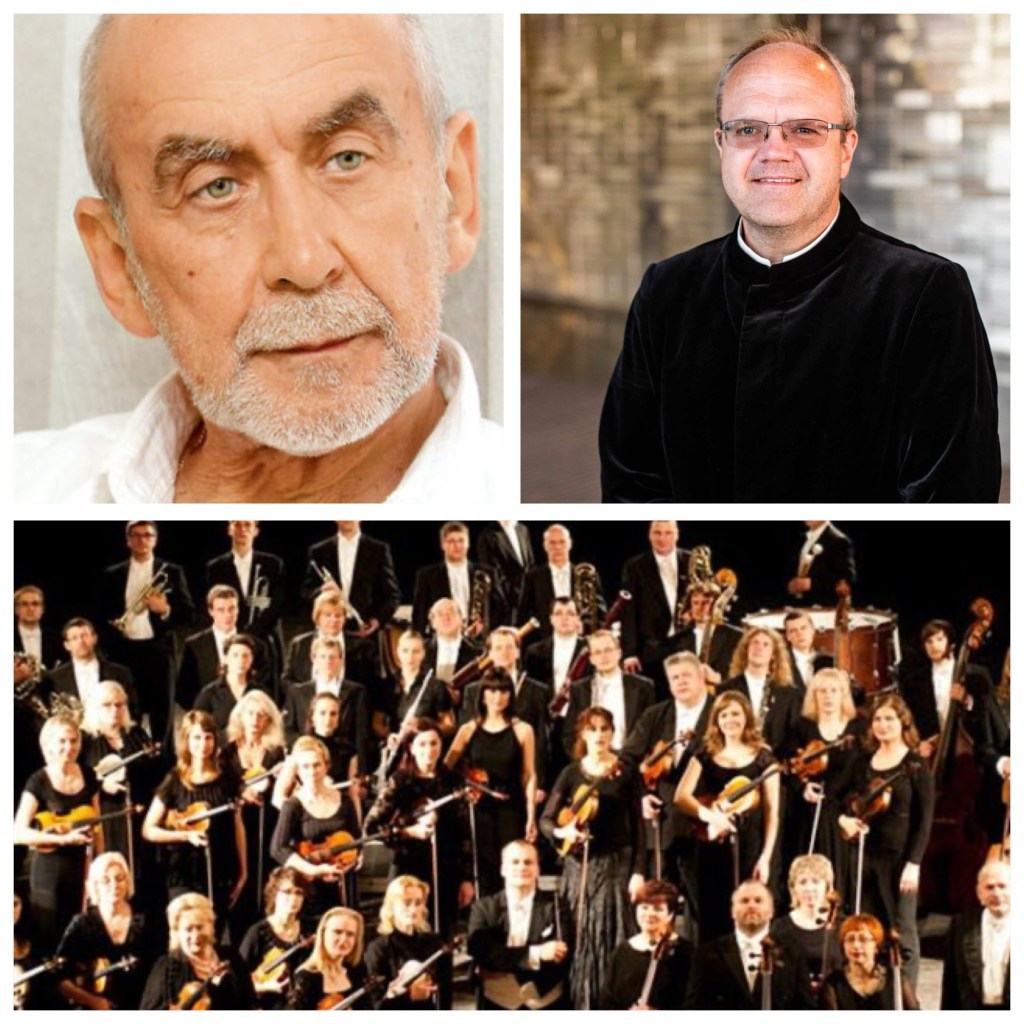
Imants Kalniņš (1941)
Symphony No 6 (2001)
Few figures in Latvian music have shaped the nation’s sound and spirit quite like Imants Kalniņš. Born in Riga in 1941, he is not only one of Latvia’s most distinctive composers but also a cultural icon whose work bridges classical music, rock, politics, and poetry. Over the decades, his boundless creativity has made him both a national treasure and a pioneer of new musical ideas.
Kalniņš’s career began in the 1960s, when he led the rock band 2xBBM, a symbol of freedom and youthful expression in the Soviet era. His compositions soon became songs of their time, performed by legendary Latvian bands such as Menuets and Pērkons. In 1985, he founded his own group, Turaidas Roze, and his music continues to echo every summer at the much-loved Imantdienas festivals. Across classical and stage music, Kalniņš has shown extraordinary range. He has written seven symphonies, numerous cantatas and oratorios, and several operas. His work for theatre and film often blends Latvian folk melodies with classical texture and even electric guitar, creating soundscapes that feel both familiar and modern.
Equally influential is his Symphony No. 6 (2001), a deeply reflective work that engages directly with Latvia’s recent history. Mixing choral and orchestral forces, the symphony resonates with emotion and national memory, standing as one of his most ambitious creations. Alongside his musical achievements, Kalniņš served several terms in parliament between 1993 and 2010, continuing his lifelong commitment to Latvia’s cultural and civic life. Through every phase of his career, his music has spoken of freedom, imagination, and humanity – qualities that ensure Imants Kalniņš’s voice will remain central to Latvia’s artistic identity for generations to come.
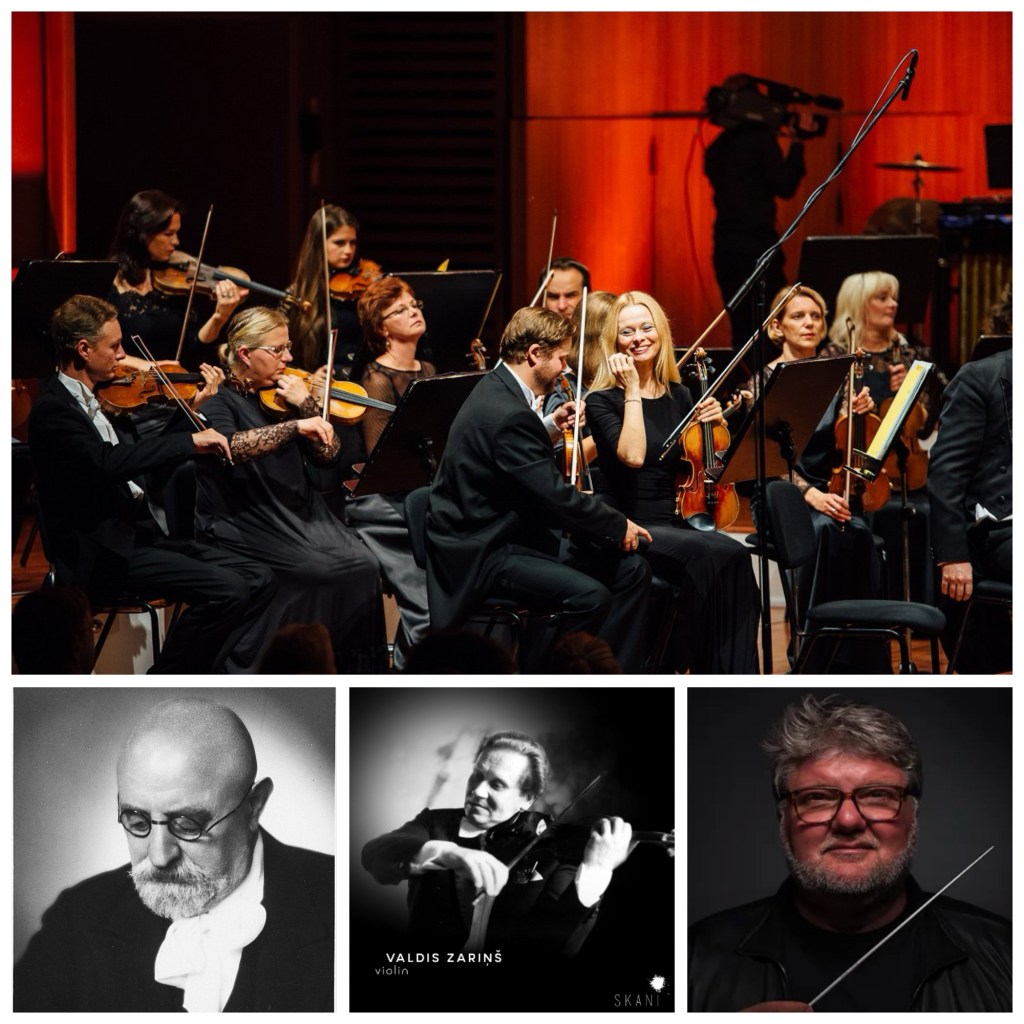
Jazeps Vitols (Jāzeps Vītols) (1863–1948)
Latvian Folk Song Fantasy Op. 42 (1908-1910)
Jāzeps Vītols could be described as Latvia’s musical patriarch. Born in Valmiera in 1863, Vītols’s career spanned composition, performance, teaching, conducting, and criticism – each leaving an enduring mark on Latvia’s cultural identity. His journey began at the Saint Petersburg Conservatory, where he studied composition under Nikolai Rimsky‑Korsakov, learning the art of orchestration and melodic imagination. Remarkably, he later became a professor at the same institution, mentoring students who would become leading Russian composers, including Sergei Prokofiev and Nikolai Myaskovsky.
After World War I, Vītols returned home with a vision for building Latvia’s musical future. He founded the Latvian National Opera and the nation’s first conservatory, now the Jāzeps Vītols Latvian Academy of Music, where he taught composition for more than two decades. His work as a teacher and institutional founder gave Latvian music a lasting professional foundation. Many of his students went on to define 20th‑century Latvian composition, guided by his example of combining Russian romanticism with Latvian folk themes.
As a composer, Vītols combined national feeling with elegance. His choral anthem Gaismas pils (The Castle of Light) has become one of the cornerstones of Latvian identity, often performed with great emotion at national Song and Dance Festivals. His Fantasy on Latvian Folk Songs, Op. 42, for violin and orchestra, is another defining work – a vibrant blend of traditional melodies and symphonic drama that reflects Rimsky‑Korsakov’s influence while speaking with a distinctly Latvian voice.
Vītols’s contribution extended far beyond his compositions. By founding educational and professional institutions, he ensured that Latvian classical music would flourish well beyond his lifetime. His influence even crossed borders, shaping the development of music education in neighbouring Estonia, Lithuania, and Poland. Jāzeps Vītols died in Lübeck, Germany, in 1948, and his remains were returned to Latvia in 1993 – a fitting homecoming for the man who gave his country its musical foundations. Today, his choral and orchestral works continue to represent symbols of Latvia’s spirit, discipline, and creativity.
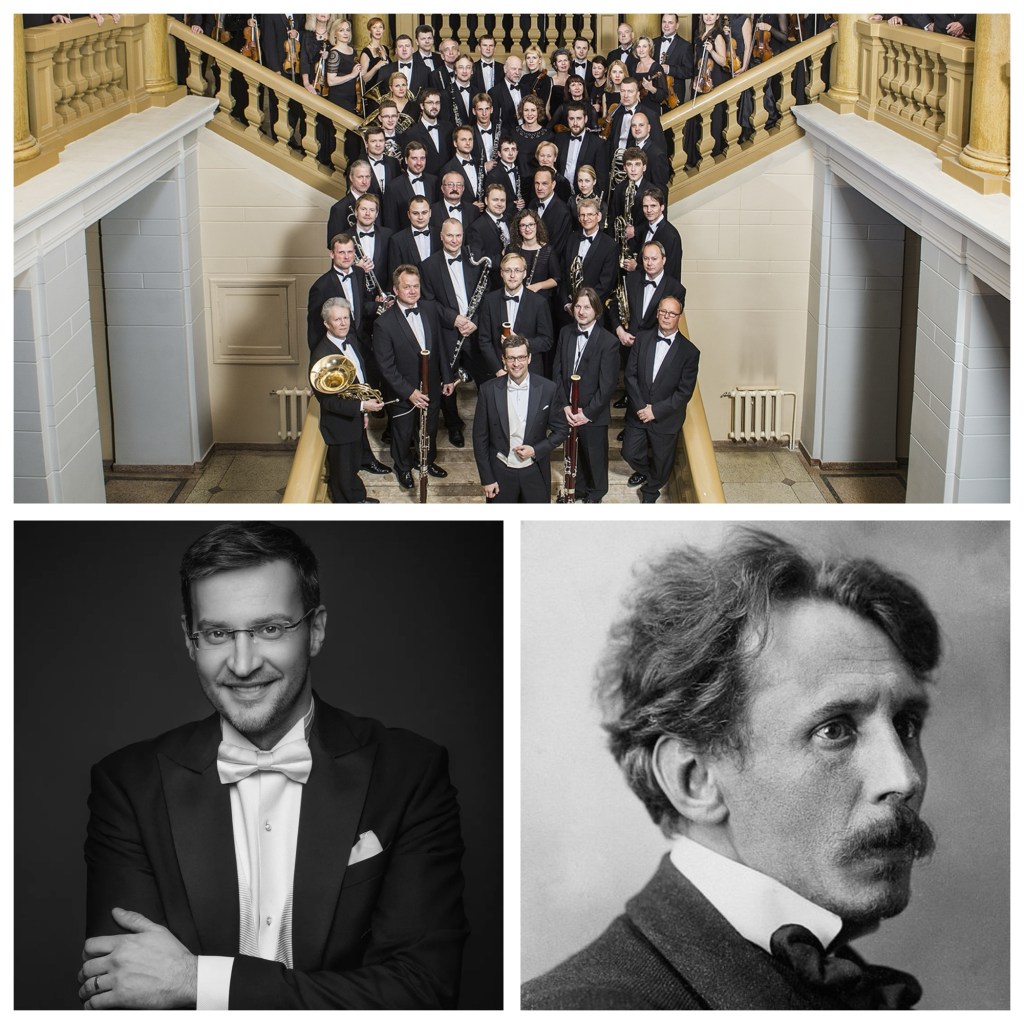
Mikalojus Konstantinas Čiurlionis (1875–1911)
The Sea (1903-1906)
Few artists have captured the spirit of a nation as completely as Mikalojus Konstantinas Čiurlionis, the Lithuanian composer, painter, and visionary who bridged the worlds of sound and colour. Born in 1875 in Varėna, he became a central figure in Lithuania’s cultural awakening – a true polymath whose art joined music, painting, and philosophy into a single creative vision.
Čiurlionis studied at the Warsaw Conservatory and later at Leipzig, where he absorbed the harmonic richness of Wagner and Scriabin along with the sweeping emotion of German Romanticism. Though trained as a musician, he later turned to painting at the Warsaw School of Fine Arts, discovering new ways to express sound through image. His paintings often carried musical titles such as Sonata, Fugue, and Prelude, reflecting his belief that art and music were two voices of the same language.
Over his short life, Čiurlionis created around 400 musical works and 300 paintings, many deeply connected by mood and theme. Among his finest compositions are the symphonic poems In the Forest and The Sea (Jūra), which reveal his extraordinary ability to paint with sound. Composed in 1907, The Sea stands as one of Lithuania’s first great symphonic masterpieces. In this radiant tone poem, Čiurlionis paints with harmony and colour, evoking the movement of waves, the rise of storms, and the shifting play of light across water. The music drifts between calm and power – serene one moment, surging with emotion the next. Its textures recall the impressionistic beauty of Sibelius or Debussy, yet its soul is unmistakably Čiurlionis’s – introspective, lyrical, and deeply Lithuanian.
Beyond composition, Čiurlionis was a central figure in Lithuania’s national revival, collecting folk melodies, conducting choirs, and co‑founding the Lithuanian Artists’ Society in 1907. Though he died in 1911 aged only 35, his music and paintings remain a lasting symbol of Lithuania’s creativity and resilience – radiant works that still teach us to see sound and hear colour.
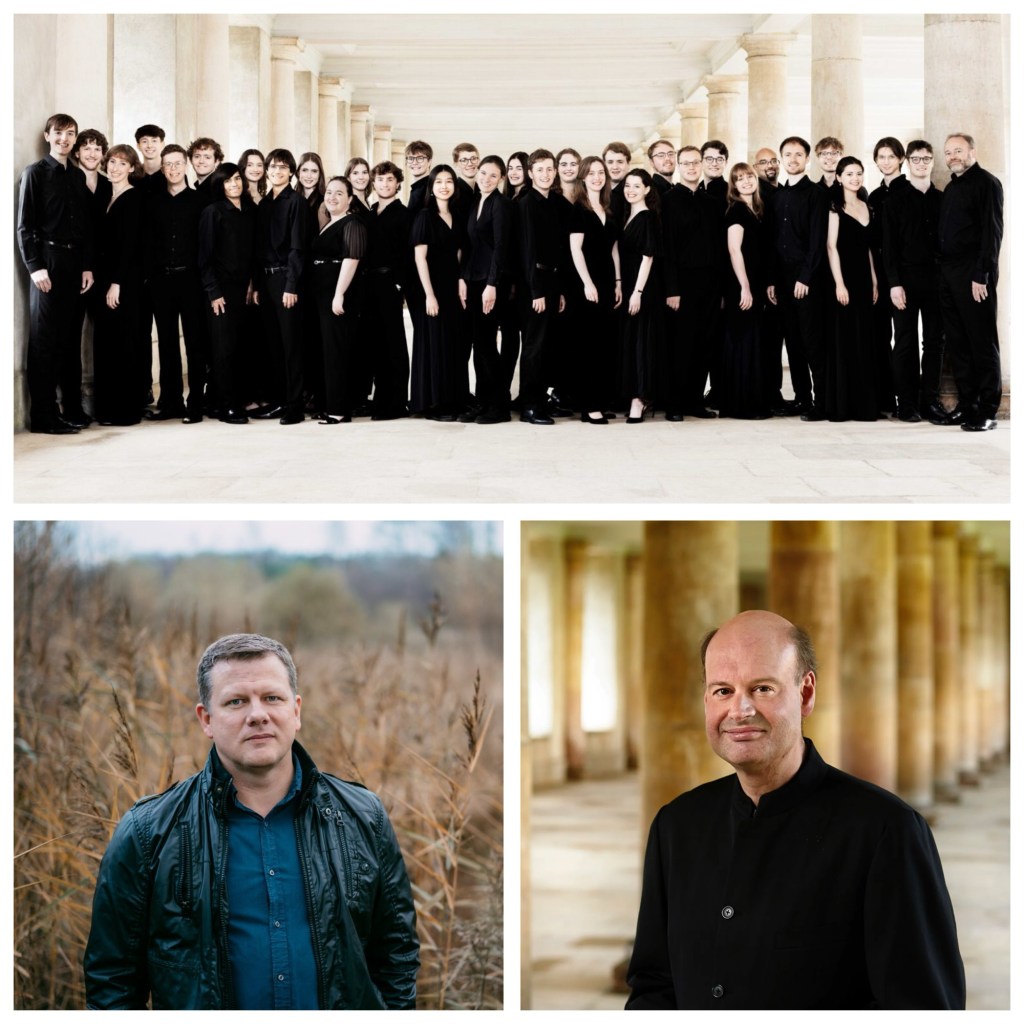
Ēriks Ešenvalds
O Salutaris hostia (2008)
Ēriks Ešenvalds is one of today’s most admired composers, writing music that touches listeners with its warmth, beauty, and deep connection to nature and spirituality. Born in 1977 in Priekule, Latvia, he has become a leading voice in modern choral music, known for his ability to unite faith, emotion, and the natural world in sound. Before turning fully to composition, Ešenvalds studied theology at the Latvian Baptist Theological Seminary, a background that continues to shape the sincerity and sense of wonder found in his music. He later earned a master’s degree in composition from the Jāzeps Vītols Latvian Academy of Music, studying with Selga Mence, and has since taken masterclasses with composers such as Michael Finnissy and Jonathan Harvey. His years singing with the State Choir Latvija gave him an intimate understanding of choral texture and expression.
Ešenvalds’s music is known for its glowing harmonies and ethereal soundscapes. He often draws inspiration from the natural world – stars, sea, light, and sky — using unusual instruments such as glasses, crystal bowls, and wind chimes to create atmospheres that hover between the earthly and the celestial. Works like Stars, Only in Sleep, The Long Road, and his multimedia symphony Northern Lights have brought him international recognition. One of his most cherished works, O Salutaris Hostia, sets a prayer by St Thomas Aquinas for unaccompanied choir. Two solo sopranos soar over luminous harmonies, giving voice to both fragility and faith. Its simplicity and radiance have made it a modern choral classic, performed worldwide by leading ensembles including VOCES8.
Today, as Head of Composition at the Latvian Academy of Music, Ešenvalds guides a new generation of composers. Through his teaching and his luminous body of choral works, he continues to show how music can still express wonder, healing, and human connection in a fast‑changing world.
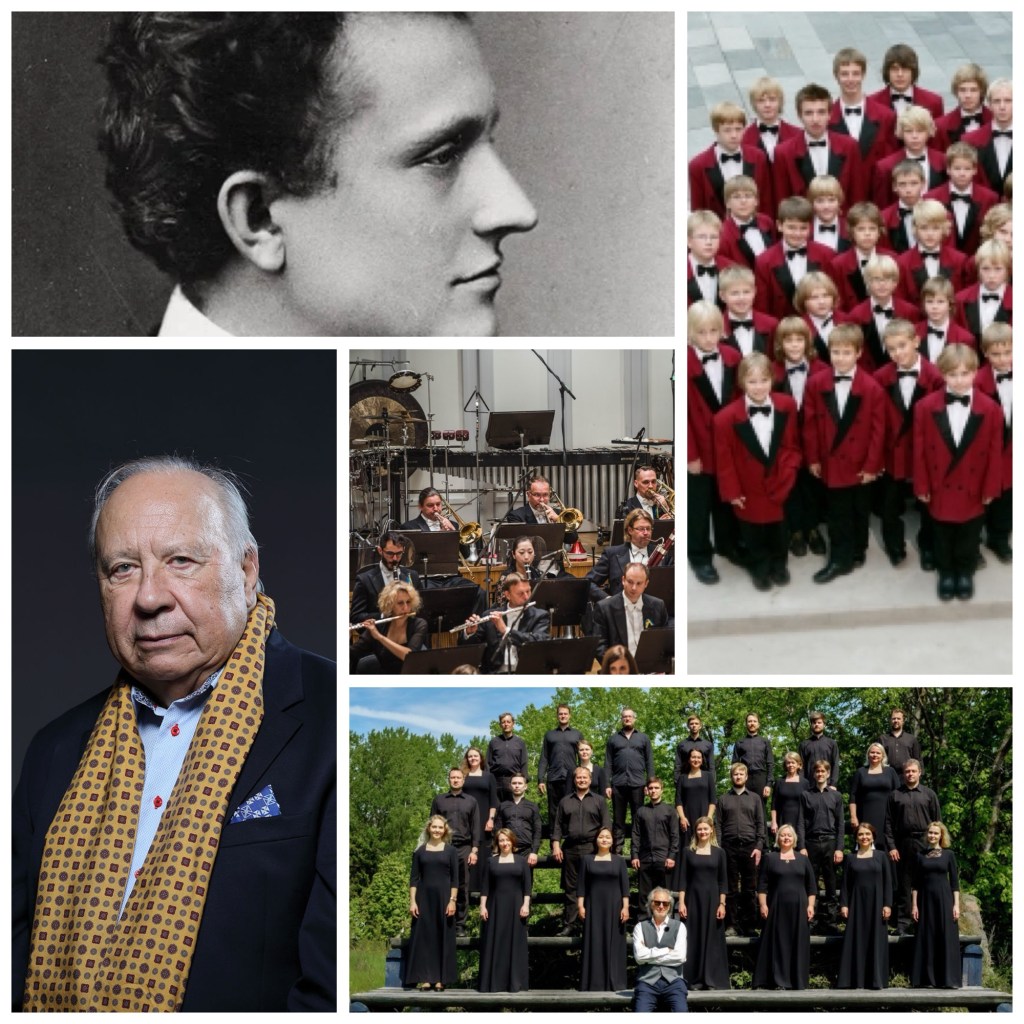
Rudolf Tobias (1873–1918)
Jonah’s Mission (1904): The Marriner’s Give Thanks
Rudolf Tobias (1873–1918) stands as a towering figure in Estonia’s musical history – the nation’s first professional composer and the founder of its classical tradition. Born in the village of Selja, on the island of Hiiumaa, Tobias grew up surrounded by church music. His father, the parish clerk and organist, recognized his son’s musical gift early on, and young Rudolf began composing before the age of ten.
By his twenties, Tobias’s talent had carried him beyond the Baltic shores to the Saint Petersburg Conservatory, where he studied under two of the great teachers of the age: Louis Homilius for organ and Nikolai Rimsky-Korsakov for composition. After graduating in 1898, he served as organist and choir conductor at the Estonian St. John’s Church in Saint Petersburg while composing choral works, chamber music, and symphonic pieces that wove Estonian identity into the fabric of European art music.
Among his achievements, the oratorio Jonah’s Mission (Des Jona Sendung), premiered in Leipzig in 1909, remains his defining masterpiece — a sweeping work of faith, morality, and redemption. It was the first major oratorio written by an Estonian composer and a milestone for the country’s emerging classical voice. Within it, the chorus The Mariners Give Thanks captures one of the most vivid moments: sailors, having cast Jonah into the stormy sea, witness the tempest calm and sing out in awe and gratitude. Tobias’s music here fuses the dramatic power of Wagner with the sacred grandeur of Bach and Handel, creating a blend both deeply spiritual and unmistakably Romantic.
After 1908, Tobias lived in Paris and later Berlin, where he joined the faculty of the Royal Academy of Music. His international career was cut short by his death from pneumonia in 1918, at just 45. Yet his music endured. Jonah’s Mission was finally performed in full in Estonia in 1989 and later recorded under conductor Neeme Järvi. The mariners’ chorus, in particular, remains a radiant symbol of Tobias’s legacy – the moment when Baltic soul and European tradition first met in harmony.


Leave a comment