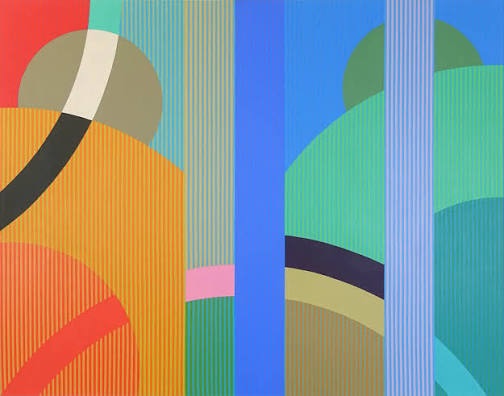
Minimalism in music is one of the most striking shifts in sound to emerge from the last century, and it continues to shape how composers think and how audiences listen today. Rooted in the later decades of the 20th century, it grew out of a desire to move away from the dense, highly complex styles that had dominated much of the post-war musical world In the early 1900s, Western classical music moved steadily towards greater complexity, from late Romantic lushness to the strict, often challenging language of serialism and other avant-garde movements. By the 1960s, a number of American composers began to ask whether music really needed to be so intricate to be powerful, and whether repetition, clarity and a strong pulse might offer a different route to intensity. This questioning spirit gave rise to what became known as minimalism.
Composers such as La Monte Young, Terry Riley, Steve Reich and Philip Glass experimented with small cells of material, repeated over long spans of time, with tiny changes that gradually transform the musical landscape. Influences ranged from non-Western traditions, such as Indian classical music and African drumming, to jazz, rock and the sounds of the urban environment. Instead of traditional themes and development, the focus shifted to process: how a pattern phases, overlaps or slowly shifts out of alignment.
By the late 20th and into the 21st century, minimalism had moved from the musical fringes to the mainstream, becoming one of the most recognisable voices in contemporary music. Its fingerprints can be heard in concert works, film scores, ambient and electronic music, and in the work of composers who might not call themselves minimalists but who share its love of pattern, pulse and harmonic clarity. For many listeners, this music offers a different kind of listening: less about dramatic climax, more about being drawn into a sound-world and noticing gradual change. Minimalism is a chapter in the evolving story of 20th and 21st-century music, where simplicity and repetition became radical tools. Follow the patterns, and see how much can be said with seemingly very little.
Max Richter (b. 1966)
Recomposed by Max Richter: Vivaldi Four Seasons (2012) Summer 3
Kammerorchestra Berlin
Daniel Hope (violin)
Andre de Ridder (conductor)
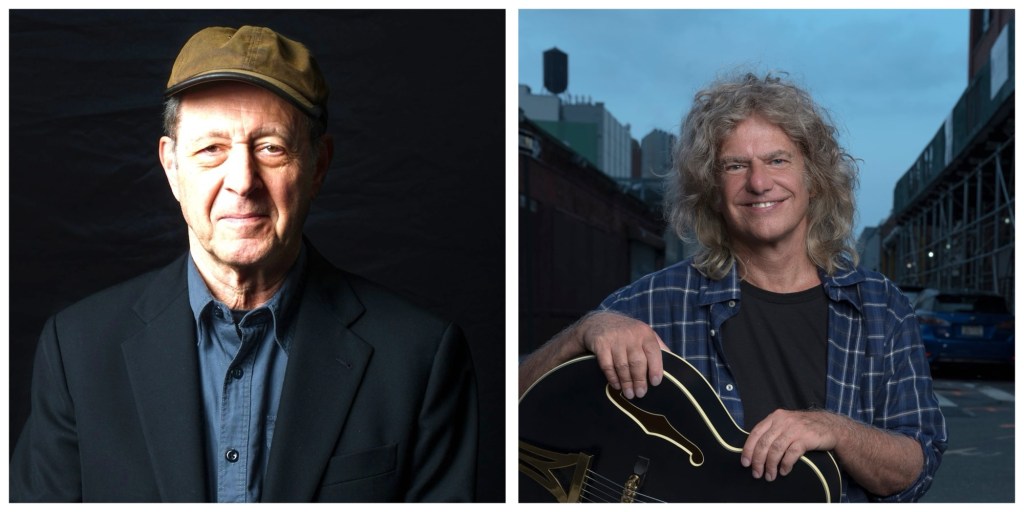
Steve Reich (b. 1936)
Electric Counterpoint (1987) III Fast
Pat Metheny (guitar)
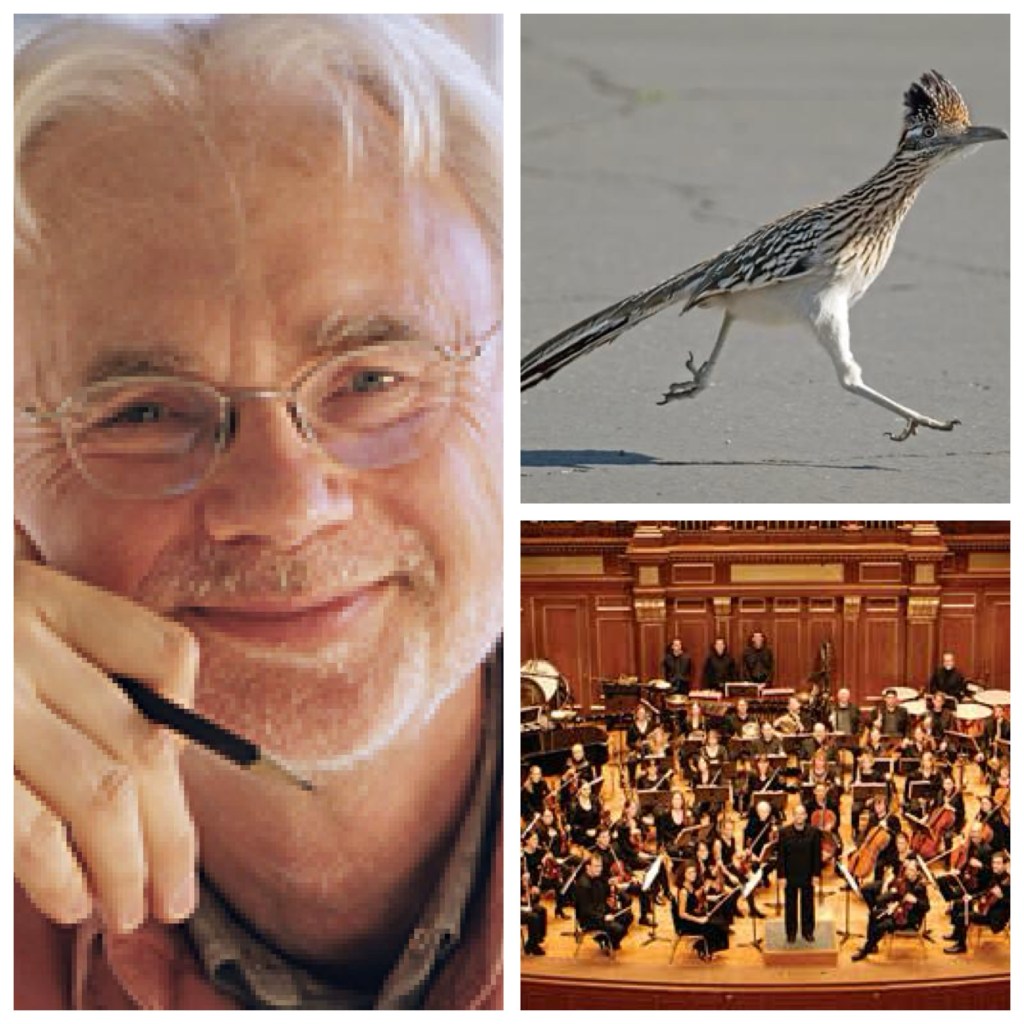
John Adams (b. 1947)
Chamber Symphony (1992) III. Roadrunner
Boston Modern Orchestra Project
Gil Rose (conductor)
Simeon Ten Holt (1923-2012)
Méandres (1995-1997) : Section 161
Ellen Dijkhuizen (piano)
Fred Oldenburg (piano)
Kees Wieringa (piano)
Polo de Haas (piano)
Philip Glass (b.1937)
In The Upper Room (1986) : Dance IX
Philip Glass Ensemble
Dora Ohrenstein (soprano)
Michael Riesman (conductor)

Max Richter (b. 1966)
Recomposed by Max Richter: Vivaldi Four Seasons (2012) Summer 3
Max Richter’s Recomposed by Max Richter: Vivaldi – The Four Seasons (2012) takes one of the most familiar works in the classical repertoire and hears it anew, as if through a modern, cinematic lens. Rather than simply arranging Vivaldi, Richter keeps only small melodic ‘kernels’ and harmonic outlines, then rebuilds the music using repetition, looping, and a slow-evolving sense of atmosphere more associated with minimalism and ambient music. The result feels at once recognisably Vivaldi and unmistakably Richter: lyrical, immersive, and quietly hypnotic.[londonsinfonietta]
Within this project, Summer 3 – Richter’s reimagining of the third movement of Vivaldi’s Summer – is one of the most striking moments. Where the original is a brilliant, storm-lashed finale, full of rapid figuration and dramatic contrasts, Richter focuses instead on a tight web of repeating figures, pulsing harmonies, and gradually intensifying textures. The driving rhythmic patterns create a sense of restless energy, but the sound-world is more dream-like than virtuosic, as if the familiar Baroque storm has been slowed down and viewed in close-up.
In Summer 3, the solo violin still sings at the centre, but often as part of a larger sonic field rather than a traditional showpiece. Short motifs are looped and layered over a steady harmonic foundation, with changes that creep in almost imperceptibly, heightening tension through accumulation rather than sudden surprise. Electronic colour and studio-style production choices deepen the sense of space, drawing listeners into a swirling, almost cinematic soundscape.
Heard in the wider context of the Recomposed project, Summer 3 offers a clear snapshot of what makes Richter’s language so distinctive. It honours Vivaldi’s seasonal drama yet translates it into a contemporary vocabulary of pulse, pattern, and rich, sustained sonorities. For audiences, the piece provides a way to encounter a well-loved classic as something both familiar and new: a storm remembered, refracted through modern ears, and stretched into an intense, meditative climax to Summer.
Steve Reich (b. 1936)
Electric Counterpoint (1987) III Fast
Born in New York City on 3 October 1936, Steve Reich grew up between New York and California, discovering early on a deep curiosity for rhythm and sound. He began piano lessons as a child before turning to percussion, studying snare drum with Roland Kohloff – an experience that would shape his lifelong fascination with pulse and process. After graduating with honours in philosophy from Cornell University in 1957, Reich studied composition privately with Hall Overton and then at the Juilliard School under William Bergsma and Vincent Persichetti. He went on to earn a master’s degree in music at Mills College, working with Luciano Berio and Darius Milhaud. His studies later took him beyond the Western classical tradition to Ghana, where he explored African drumming, and to Bali, to learn gamelan; he also delved into traditional Jewish cantillation.
Emerging in the 1960s as one of the founding figures of musical minimalism, Reich pioneered techniques based on repetition, phase shifting, and gradual change. His early tape works such as It’s Gonna Rain (1965) evolved into live experiments like Piano Phase and Drumming, and his mature pieces – including Music for 18 Musicians, Different Trains, and Double Sextet (Pulitzer Prize, 2009) – cemented his place as one of the most influential composers of the 20th and 21st centuries.
Reich’s music draws equally on high art and everyday sound, from the counterpoint of Bach and the clarity of Debussy to the rhythmic vitality of jazz and the structured logic of African music. Visual art, particularly the conceptual minimalism of Sol LeWitt and Richard Serra, likewise shaped his sense of process and form.
His influence now stretches far beyond classical composition. David Bowie and Brian Eno wove his phasing ideas into albums like Low; Radiohead’s Jonny Greenwood and countless electronic artists have cited Reich as a cornerstone of their own experimentation. Through his ensemble, formed in 1966 and still active, Reich continues to bring listeners into a hypnotic world of pattern, pulse, and transformation – a music that listens as intently to time itself as to melody or rhythm.
John Adams (b. 1947)
Chamber Symphony (1992) III. Roadrunner
John Coolidge Adams was born on February 15, 1947, in Worcester, Massachusetts, and raised in New England in a musically supportive family. He learned the clarinet from an early age, performing with community ensembles and composing by his teenage years. At Harvard University, where he studied under Leon Kirchner, Roger Sessions, and David Del Tredici, he became the first undergraduate permitted to submit a musical composition as his senior thesis. Adams completed his A.B. in 1969 and M.A. in 1971 before moving west to California – a relocation that would reshape his creative voice.
From 1972 to 1982, Adams taught at the San Francisco Conservatory of Music and became a central figure in the Bay Area’s thriving contemporary music scene. He curated the San Francisco Symphony’s New and Unusual Music series (1978–1985), which brought experimental and minimalist works to new audiences. Out of this period emerged the distinctive idiom that defines his music: the rhythmic drive of minimalism expanded through lush orchestral color, emotional intensity, and a distinctly American lyricism.
Adams’s career has been marked by large-scale works that engage with history and politics as well as sheer musical exuberance: Nixon in China (1987), The Death of Klinghoffer (1991), Harmonielehre (1985), Short Ride in a Fast Machine (1986), and Shaker Loops (1978). His accolades include multiple Grammy Awards and the Pulitzer Prize for On the Transmigration of Souls (2003). From 2003 to 2007 he served as the first Composer Chair at Carnegie Hall, founding the In Your Ear festival of new music.
Composed in 1992, Chamber Symphony is scored for fifteen players and lasts about twenty-three minutes. Adams conceived it while studying Arnold Schoenberg’s Chamber Symphony No. 1 and simultaneously overhearing his young son watching the frenetic cartoons of the 1950s. In this unlikely pairing – Schoenberg’s intense counterpoint and cartoon soundtracks’ hyperactive energy – Adams found inspiration. The result is a virtuosic, volatile work in three movements: Mongrel Airs, Aria with Walking Bass, and Roadrunner.
The finale, Roadrunner, hurtles forward with dizzying momentum and sharp rhythmic dislocations. Its cartoonish title perfectly captures the humor and velocity of the music: sudden starts, screeching halts, and dazzling instrumental interplay unfold with unrelenting brilliance. Few works better embody Adams’s wit, kinetic imagination, and the visceral thrill of his post-minimalist style.

Simeon Ten Holt (1923-2012)
Méandres (1995-1997) : Section 161
Simeon ten Holt (1923–2012) was born on 24 January 1923 in the artists’ village of Bergen, in the Dutch province of North Holland. The son of painter Henri F. ten Holt, he grew up surrounded by visual art and intellectual discussion, an environment that deeply coloured his later musical imagination. Rather than attending one of the major Dutch conservatories, he chose to study piano and theory privately with Jakob van Domselaer, a composer associated with the De Stijl movement, whose ideas about the relationship between music, visual art, and mathematics left a lasting mark on Ten Holt’s aesthetic.
In 1949 Ten Holt moved to Paris, where he studied at the École Normale de Musique with Arthur Honegger and Darius Milhaud, though he later described these years as ‘decorative’ rather than formative for his compositional language. Returning to Bergen in 1954, he established his studio – famously in a converted Second World War bunker – and began to forge a personal path through tonality and atonality, developing what he called the ‘diagonal idea,’ a method based on complementary keys a tritone apart. Early works such as Bagatellen (1954), Diagonaalmuziek (1956–58), Diagonaalsuite (1957), and Diagonaalsonate (1959) already show this search for a new harmonic logic.
From the 1970s onward, Ten Holt became known for expansive, evening-length works – often for multiple keyboards – that marry consonant, tonal materials with repeating cells and performer freedom. His best-known piece, Canto Ostinato (1976–79) for four keyboards, is now regarded as a landmark of Dutch contemporary music and one of the most frequently recorded Dutch compositions. Other major works in this family include Lemniscaat (1983), Horizon (1985), and Incantatie IV (1990), all exploring gradual transformation, tonal centres, and open form. Ten Holt spent most of his life in Bergen, also teaching contemporary music at the Academy for the Visual Arts in Arnhem between 1970 and 1987, where cross‑disciplinary experiments further reinforced his sense of music as part of a larger aesthetic and philosophical landscape. He died on 25 November 2012 in Alkmaar and is widely regarded as one of the most important Dutch composers of the twentieth century.
Composed between 1995 and 1997, Méandres is the fifth in Ten Holt’s series of evening‑length works and is scored for four pianists. Like Canto Ostinato, Lemniscaat, Horizon, and Incantatie IV, it grants performers extensive freedom in repeats, dynamics, and interaction, yet it is marked by greater complexity, pronounced chromaticism, and a more clearly defined division of roles. The piece consists of many numbered sections that performers navigate with some latitude, creating a meandering, labyrinthine journey of tension and release across a vast temporal canvas.
Section 161 forms one of these modular building blocks within the larger structure, embodying the core features of Méandres: flexible repetition, subtle shifts of harmony, and intricate interplay between the four pianos. Its material invites the performers to shape time collectively, listening and reacting as patterns coil, overlap, and gradually evolve. The title—’Méandres,’ or ‘meanders’ – captures the sense of an unfolding path whose destination is never fully fixed: a musical terrain in which direction arises moment by moment from the performers’ choices. This open, exploratory approach, demanding stamina, acute listening, and shared responsibility, is emblematic of Ten Holt’s late style. Public performances require permission from Donemus Publishing, underlining the special status of the work and the care with which the composer and his foundation curate its performance tradition.
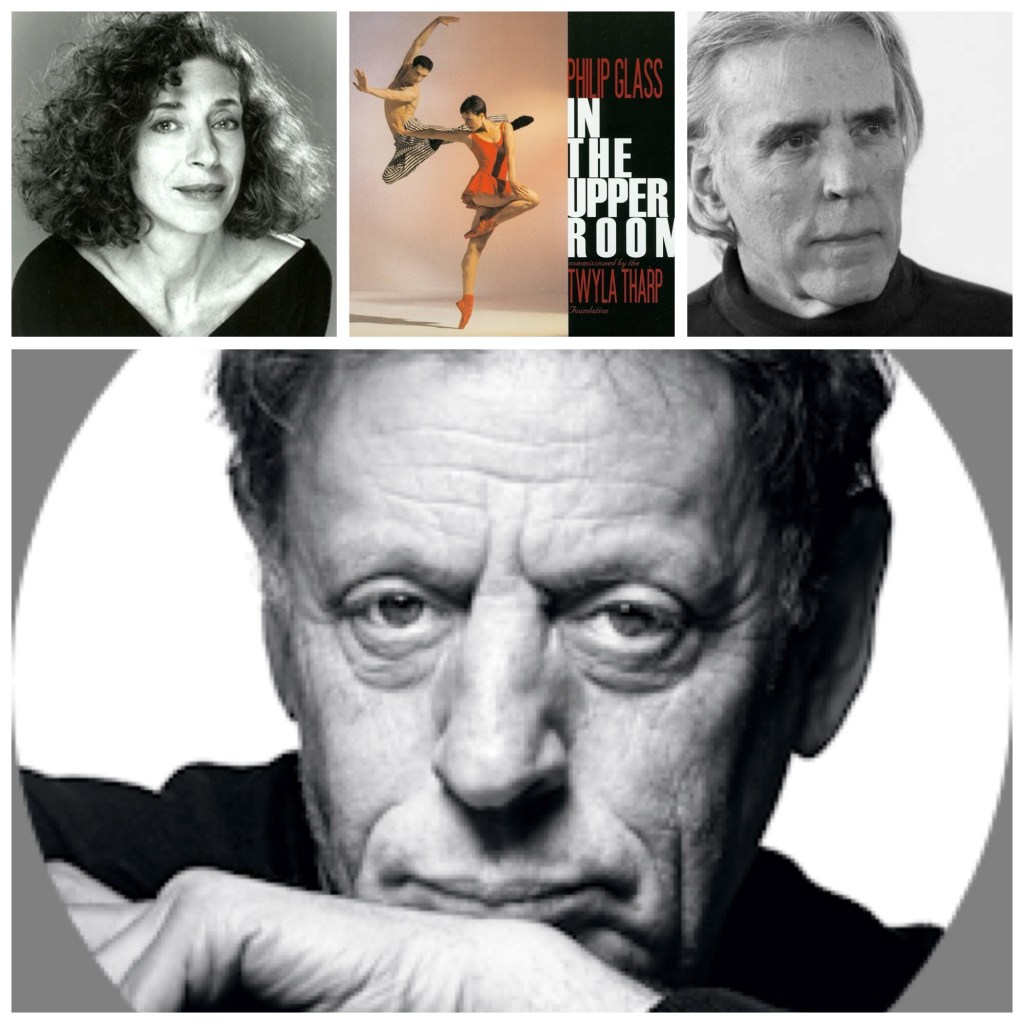
In The Upper Room Poster, Michael Riesman (conductor)
Philip Glass (b.1937)
In The Upper Room (1986) : Dance IX
Philip Glass (b. 1937) is one of the defining musical voices of the late twentieth and early twenty‑first centuries, a composer whose work has reshaped how audiences hear repetition, rhythm, and time in music. Born in Baltimore, Maryland, on 31 January 1937, he grew up around his father’s record shop, discovering everything from classical symphonies to rare modern recordings. He began violin at six, later studied flute at the Peabody Conservatory, and was already composing by twelve.
At fifteen he entered the University of Chicago, studying mathematics, philosophy, and music, and graduated in 1956. He then studied composition at the Juilliard School in New York, completing his master’s degree in 1962 and joining a generation of American composers seeking new musical languages. A Fulbright scholarship took him to Paris to work with Nadia Boulanger, whose rigorous training in counterpoint and harmony proved crucial, and at the same time he collaborated with Indian sitar virtuoso Ravi Shankar on film projects, absorbing the additive rhythmic structures of Indian classical music.
Back in New York, Glass formed the amplified Philip Glass Ensemble in 1968, developing a style built from repeating cells, steady pulse, and slowly shifting layers – music that came to be labelled minimalist. His breakthrough opera Einstein on the Beach (1976), created with director Robert Wilson, offered a five‑hour, non‑narrative spectacle of music, movement, and image that redefined what opera could be. Since then he has written dozens of operas, symphonies, concertos, string quartets, and solo works, as well as influential film scores such as Koyaanisqatsi, Kundun, The Truman Show, and The Hours, earning multiple Grammy and Academy Award nominations. Over time his language has broadened to include more lyrical and Romantic inflections, while retaining the driving patterns and luminous harmonies that make his music instantly recognisable.
Composed in 1986 for choreographer Twyla Tharp, In the Upper Room is an abstract ballet in nine continuous dances, originally written for the Philip Glass Ensemble and later orchestrated. Dancers appear and vanish through mist, their movement style shifting between buoyant ‘stompers’ and more floating, balletic figures, all propelled by Glass’s surging arpeggios, throbbing bass lines, and bright, insistent harmonies
Dance IX crowns the work as its blazing final movement, typically around eight minutes, in which nearly an hour of accumulating rhythmic energy finds ecstatic release. Patterns heard earlier return in intensified form; textures grow denser, harmonies tilt toward brightness, and the pulse seems to push dancers and music to a shared climax. Here Glass’s mature style is on full display: minimalist repetition transformed into large‑scale drama, achieved through layering, momentum, and sheer kinetic force rather than traditional thematic development.
Today In the Upper Room is a landmark of contemporary dance repertory, often revived for its combination of physical challenge and exhilarating impact. For audiences, the final dance feels like reaching a summit in real time – a breathless ascent where sound and movement merge into a luminous, pulsing whole.



Leave a comment