
The emergence of the American symphony marks one of the most fascinating chapters in the nation’s cultural history. In the early nineteenth century, composers began forging a musical identity distinct from European tradition, even as they drew upon its forms and ideals. Among the pioneers was Anthony Philip Heinrich, whose orchestral works evoked the vastness of the American wilderness and the spirit of frontier life. As the century progressed, composers such as George Frederick Bristow, John Knowles Paine, and Amy Beach carried this vision forward. They wrote ambitious symphonies rooted in European Romanticism yet coloured by the rhythms, moods, and imagery of their own country.
Through their music, audiences began to hear an emerging national voice – one that balanced the refinement of Old World symphonic writing with a growing sense of American individuality. These early symphonists laid the groundwork for what would become a flourishing symphonic tradition in the twentieth century. Their efforts to blend inherited forms with new cultural expressions helped define the idea of an ‘American sound,’ paving the way for later generations to continue exploring the character and spirit of a modern, independent musical nation.
Anthony Philip Heinrich (1781-1861)
The Ornithological Combat of Kings or The Condor of the Andes and the Eagle of the Cordilleras – A Grand Symphony; IV. Victory of the Condor – Vivace brillante (1837)
Syraceuse Symphony Orchestra
Christopher Keene (conductor)
George Frederick Bristow (1825-1898)
Symphony No. 2 in D minor, Opus 24 (‘Jullien’) I. Allegro appassionato
Royal Northern Sinfonia
Rebecca Miller (conductor)
John Knowles Paine (1839-1906)
Symphony No 1 in C minor Op.23 Allegro con brio
New York Philharmonic
Zubin Mehta (conductor)
George Whitefield Chadwick (1854-1931)
Symphony No 2 in Bb major Op. 21 IV. Allegro non troppo
Ukraine National Symphony Orchestra
Theodore Kuchar (conductor)
Amy Beach (1867-1944)
Symphony in E minor Op. 32 I. Allegro con fuoco
Nashville Symphony Orchestra
Kenneth Schermerhorn (conductor)
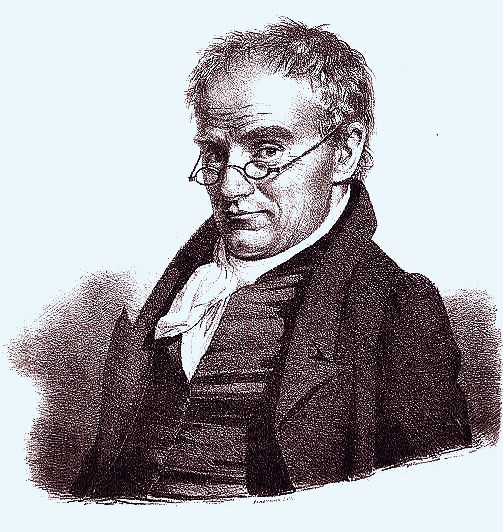
Anthony Philip Heinrich (1781-1861)
The Ornithological Combat of Kings or The Condor of the Andes and the Eagle of the Cordilleras – A Grand Symphony
Anthony Philip Heinrich was a Bohemian-born composer often hailed as the ‘Beethoven of America.’ After losing his fortune in the upheavals of the Napoleonic era, he emigrated to the United States in 1816 and became one of the first composers there to devote himself fully to composition. Largely self-taught, he turned seriously to music in his mid-thirties, working as a violinist and conductor in cities including Philadelphia, Pittsburgh, and Boston. In 1817, in Kentucky, he led what is often cited as one of the earliest American performances of a Beethoven symphony, a landmark for the young nation’s concert life.
Heinrich’s rustic existence on the Kentucky frontier earned him the nickname ‘The Log Cabin Composer,’ and the American wilderness, patriotic subjects, and vivid nature imagery became hallmarks of his style. His first major publication, The Dawning of Music in Kentucky (1820), already reflects this blend of ambition and local colour. Though he travelled frequently between the United States and Europe and presided over the inaugural meeting of the New York Philharmonic Society in 1842, lasting fame proved elusive in a musical world still dominated by European models.
The Ornithological Combat of Kings – also known as The Condor of the Andes and the Eagle of the Cordilleras – is one of Heinrich’s most striking orchestral scores. Conceived as a grand, programmatic symphony, it portrays an imagined struggle between mighty birds of prey, its four movements painted in bold and often unconventional orchestral colours. Heinrich initially considered combining instrumental and vocal forces in a kind of concerto grosso–oratorio hybrid, but ultimately favoured a purely instrumental design. The work, heard in part in Graz, Austria, in the 1830s and completed in New York around the mid-1840s with later revisions, stands as an early and highly individual example of American nature-inspired symphonic writing. Rarely performed for much of the twentieth century, it has attracted renewed interest in modern revivals for its imaginative depiction of wilderness drama and its role in the emergence of an American orchestral voice.
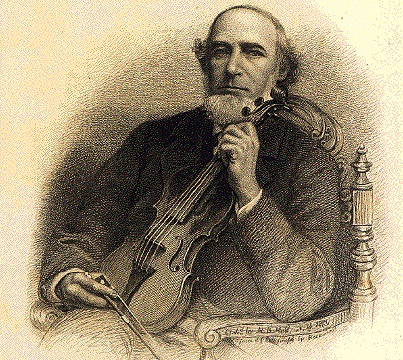
George Frederick Bristow (1825-1898)
Symphony No 2 (Jullien)
In the mid-nineteenth century, American composers were beginning to shape a symphonic tradition within a concert world still dominated by European masters. George Frederick Bristow, born in Brooklyn into a musical family, emerged as one of the leading figures in this early generation of American symphonists. He studied piano, violin, harmony, and orchestration with his father and other teachers, and as a teenager joined the first violin section of the newly founded New York Philharmonic, later serving as its concertmaster. This position placed him at the heart of New York’s orchestral life and in direct contact with the European repertoire that formed the backbone of American programmes.
Beyond his orchestral work, Bristow conducted major choral societies, worked as a church organist, and spent many years teaching in New York’s public schools, becoming a significant force in the city’s musical education. He was also an outspoken advocate for American music, arguing that native composers deserved a place alongside European names in the concert hall. As a composer he was prolific, producing five symphonies, two oratorios, an opera (Rip Van Winkle), as well as numerous choral works, chamber music, and piano pieces. His music reveals clear European influences yet often turns to American subjects and texts, reflecting a growing sense of cultural self-confidence.
Completed in 1853, Bristow’s Symphony No. 2 in D minor, Op. 24, is widely known as the ‘Jullien’ Symphony, after the colourful French conductor Louis Antoine Jullien, who visited New York in 1853–54 and encouraged new works from American composers. Cast in four movements and scored for a conventional mid-nineteenth-century orchestra, the symphony shows the imprint of Beethoven and Mendelssohn in its structure and lyrical Romantic language. Rather than pursuing the radical, programmatic path of contemporaries such as Berlioz or Liszt, Bristow works within a more conservative symphonic idiom. First performed by the New York Philharmonic in 1856, the ‘Jullien’ Symphony offers a vivid glimpse of early American orchestral writing and of the efforts of composers like Bristow to establish a serious American symphonic voice.
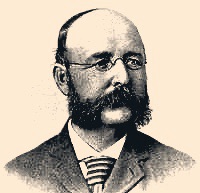
John Knowles Paine (1839-1906)
Symphony No 1 in C minor Op.23
In the decades after the Civil War, a small group of composers began to show that large-scale orchestral works could also come from American hands. John Knowles Paine, born in Portland, Maine, was one of the most important figures in this movement. Raised in a musical family, he showed early promise and, like many ambitious musicians of his generation, travelled to Germany for serious training. In Berlin he immersed himself in organ playing, counterpoint, and orchestration, absorbing the language of Bach, Beethoven, and their successors.
When Paine returned to the United States, he settled in Boston, which was fast becoming the country’s leading musical centre. His appointment as Harvard University’s first organist and choirmaster, and later as the first professor of music at any American university, gave him an influence that reached far beyond the concert hall. Through his teaching and his role in shaping Harvard’s music department, he helped establish a rigorous, conservatory-style musical education on American soil and trained a generation of younger composers.
Paine’s own works reflect his deep grounding in German symphonic tradition. His oratorio St. Peter, the Mass in D, and two symphonies reveal a command of large forms and a serious artistic ambition that were still relatively new in American music. Symphony No. 1 in C minor, composed in the early 1870s and premiered in 1876, quickly came to be seen as a landmark: a work by an American composer that could stand alongside European symphonies in craftsmanship and expressive range. Listeners heard echoes of Beethoven, Mendelssohn, and Schumann in its themes, harmonic language, and orchestration, yet also sensed that this was a confident American voice speaking through European forms.
For later generations, Paine’s First Symphony symbolised the moment when American orchestral music claimed a place within the broader international tradition and helped open the door for the flourishing of American symphonies in the twentieth century.
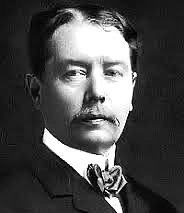
George Whitefield Chadwick (1854-1931)
Symphony No 2 in Bb major Op. 21
George Whitefield Chadwick belonged to the circle of late nineteenth‑century American composers who built on European Romantic models while beginning to articulate a more confident American voice. Born in Lowell, Massachusetts, he showed early musical promise and, like many ambitious American musicians of his time, completed his training in Germany, studying with leading figures such as Karl Reinecke and Josef Rheinberger. On returning to Boston in 1880, he joined the New England Conservatory, eventually becoming its director in 1897 and turning it into one of the most important training grounds for American performers and composers. Through this role he taught and influenced a new generation, helping to anchor serious musical life in New England.
Chadwick’s output is wide‑ranging: three symphonies, operas, symphonic poems, overtures, chamber pieces, and choral and vocal works. His style is rooted in the German Romantic tradition but coloured by French refinement and, increasingly, by American idioms. Listeners often notice his flair for vivid orchestral writing and programmatic, descriptive pieces that evoke stories, places, or characters. In this respect, he stands at an important crossroads in American music, carrying forward the symphonic ambitions of earlier figures such as John Knowles Paine while pointing toward the more individual national voices of the twentieth century.
Composed between 1883 and 1886, Chadwick’s Symphony No. 2 in B‑flat major, Op. 21, is one of the landmarks of American Romantic orchestral music. First performed in Boston in 1886, it shows a composer fully in command of the European symphonic tradition, yet willing to weave in material that feels distinctly American. The work’s themes and rhythms have often been heard as echoing Scots‑Irish folk inflections, New England hymnody, and the vitality of popular and African‑American musics circulating in the wider culture of the time. Without resorting to overt quotation, the symphony projects warmth, rhythmic energy, and a robust sense of character that some commentators later compared – anachronistically but tellingly – to Dvořák’s ‘New World’ Symphony, written nearly a decade afterwards.
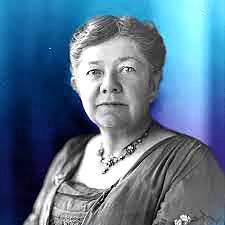
Amy Beach (1867-1944)
Symphony in E minor Op. 32 ‘Gaelic’
By the late nineteenth century, American symphonies were evolving from European models toward a more distinct national character, often drawing on folk traditions and landscapes. Amy Beach, born Amy Marcy Cheney in New Hampshire, stands out as the first American woman to compose a successful large-scale symphony. A child prodigy who began composing at four and debuted as a pianist with the Boston Symphony Orchestra in 1883 (at age 16), she achieved mastery through self-study and private lessons rather than formal European conservatory training – a rarity among her peers.
After marrying Dr. Henry Harris Aubrey Beach in 1885, she paused public performances at his request, focusing on composition until resuming concerts and European tours after his 1910 death. Her catalogue spans over 300 published works: symphonies, a piano concerto, chamber music, choral pieces, songs, and piano music, often infused with her Anglo-American roots and Celtic flavours. She co-founded the Society of American Women Composers (serving as its first president) and composed summers at the MacDowell Colony, helping pave the way for women in classical music while enriching the American orchestral tradition.
Completed in late 1894 (begun November) and premiered by the Boston Symphony under Emil Paur on October 30, 1896, the ‘Gaelic’ Symphony holds historic distinction as the first by an American woman to be published (1897) and widely performed internationally. Its four movements (~35–40 minutes) weave in traditional English, Irish, and Scottish tunes—including her own 1890 song Dark Is the Night – in cyclic form, creating lyrical warmth and rhythmic vitality. Strongly responding to Antonín Dvořák’s 1890s call for native folk sources (though predating his New World Symphony’s 1893 premiere), Beach selected Celtic melodies to evoke New England’s heritage, diverging from his suggestions of African-American or Native American elements.
In conclusion
Early American symphonies mark a nation’s musical awakening, blending European forms with emerging American spirit. From Heinrich’s frontier dramas to Beach’s Celtic warmth, composers like Bristow, Paine, Chadwick, and Beach mastered Beethoven’s craft while infusing folk tunes, landscapes, and patriotism. Rooted in New York and Boston’s concert halls, these works reflect shared ambition: rigorous structure meets national identity. Jullien’s commissions, Harvard’s innovations, and the Second New England School built platforms for their voices, challenging imported dominance. Rarely famous in their day, they inspired Dvořák and paved the way for Ives, Copland, and beyond.


Leave a comment