
Simon Rattle rose to international prominence during the 1980s and 1990s, while music director of the City of Birmingham Symphony Orchestra (1980–1998). He was principal conductor of the Berlin Philharmonic from 2002 to 2018 and music director of the London Symphony Orchestra from 2017 to 2023. Rattle has been chief conductor of Bavarian Radio Symphony Orchestra since September 2023. Among the world’s leading conductors, in a 2015 Bachtrack poll, he was ranked by music critics as one of the world’s best living conductors.
Edward Elgar (1857-1934)
Enigma Variations Op. 36: Variation XIV (Finale – Allegro) ‘E.D.U.’
City of Birmingham Symphony Orchestra
Simon Rattle (conductor)
Carl Orff (1895-1982)
Carmina Burana: Fortuna imperatrix mundi: O Fortuna
Rundfunkchor Berlin
Berlin Philharmonic Orchestra
Simon Rattle (conductor)
George Gershwin (1898-1937)
Porgy and Bess: Summertime
Harolyn Blackwell (soprano)
London Symphony Orchestra
Simon Rattle (conductor)
Gustav Mahler (1860-1911)
Symphony No 8: Finale
Berlin Philharmonic Orchestra
Leipzig Radio Chorus – Bavarian Radio Chorus
Simon Rattle (conductor)
Simon Rattle rose to international prominence during the 1980s and 1990s, while music director of the City of Birmingham Symphony Orchestra (1980–1998). He was principal conductor of the Berlin Philharmonic from 2002 to 2018 and music director of the London Symphony Orchestra from 2017 to 2023. Rattle has been chief conductor of Bavarian Radio Symphony Orchestra since September 2023. Among the world’s leading conductors, in a 2015 Bachtrack poll, he was ranked by music critics as one of the world’s best living conductors. Simon Rattle was born in Liverpool, England and educated at Liverpool College.

Although Rattle studied piano and violin, his early work with orchestras was as a percussionist for the Merseyside Youth Orchestra (now the Liverpool Philharmonic Youth Orchestra). He entered the Royal Academy of Music in 1971. After organising and conducting a performance of Mahler’s Second Symphony while he was still at the academy, he was talent-spotted by the music agent Martin Campbell-White, of Harold Holt Ltd (now Askonas Holt Ltd), who has since managed Rattle’s career. He spent the academic year 1980–81 at St Anne’s College, Oxford studying English Language and Literature and was elected an Honorary Fellow of St Anne’s in 1991. He was admitted to the degree of Doctor of Music honoris causa of the University of Oxford in 1999.
In 1974, he was made assistant conductor of the Bournemouth Symphony Orchestra and joined the Glyndebourne Festival Opera music staff at the age of 20 in 1975. He went on to conduct over 200 performances of 13 different operas at Glyndebourne and on tour during the subsequent 28 years. In his first Prom at the Royal Albert Hall in 1976, he conducted the London Sinfonietta and in 1977 he became assistant conductor of the Royal Liverpool Philharmonic.
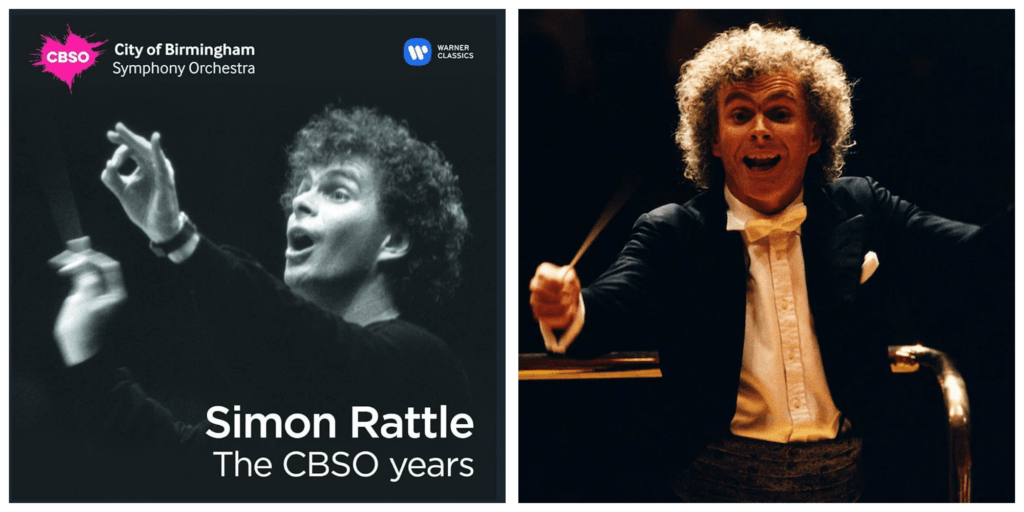
His time with the City of Birmingham Symphony Orchestra (CBSO) from 1980 to 1998 drew him to the attention of critics and the public. In 1980, Rattle became the CBSO’s principal conductor and artistic adviser, and in 1990, music director. A major achievement during his time was the move of the CBSO from its former venue, Birmingham Town Hall, to a newly built concert hall, Symphony Hall, in 1991. He was appointed a CBE in 1987 and made a Knight Bachelor in 1994. Rattle conducted the London Symphony Orchestra at the Opening of the London Olympics 2012, performing Chariots of Fire with guest Rowan Atkinson playing his Mr. Bean character.
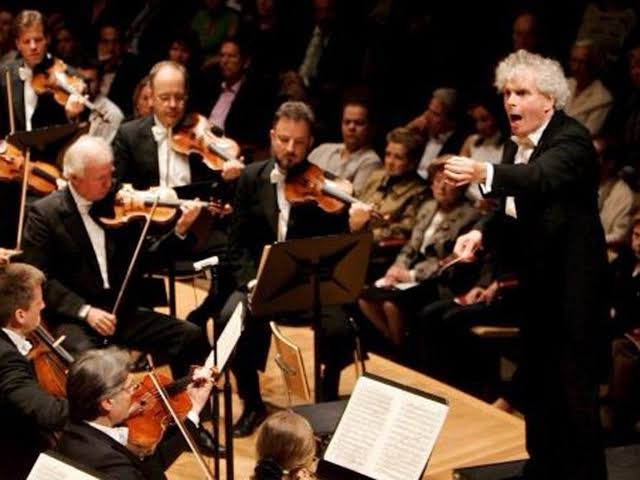
Rattle made his conducting debut with the Berlin Philharmonic (BPO) in 1987, in a performance of Gustav Mahler’s Symphony No. 6 and in 1999, Rattle was appointed as successor to Claudio Abbado as the orchestra’s principal conductor but refused to sign the contract until he had ensured that every member of the orchestra was paid fairly, and also that the orchestra would gain artistic independence from the Berlin Senate. During his appointment, Rattle reorganised the Berlin Philharmonic into a foundation, meaning its activities were more under the control of the members rather than politicians and ensured that orchestra members’ wages increased quite dramatically. He gave his first concert as principal conductor of the BPO on 7 September 2002, leading performances of Thomas Adès’ Asyla and Mahler’s Symphony No. 5, performances which received rave reviews from the press worldwide and were recorded for CD and DVD release by EMI. He has also continued to champion contemporary music in Berlin. Rattle was originally contracted to lead the BPO until 2012, but in April 2008 the BPO musicians voted to extend his contract as chief conductor for an additional ten years past the next season, to 2018. In January 2013, he announced his scheduled departure from the Berlin Philharmonic at the close of the 2017–2018 season. His final Berlin Philharmonic concert as chief conductor was at the Waldbühne on 24 June 2018.

Rattle first conducted the Los Angeles Philharmonic in 1979 during the music directorship of Carlo Maria Giulini, and was their principal guest conductor from 1981 to 1994. He has also guest-conducted the Cleveland Orchestra, Chicago Symphony Orchestra, San Francisco Symphony, Toronto Symphony Orchestra and Boston Symphony Orchestra. His New York City debut was with the Los Angeles Philharmonic in 1985. The musical relationship between Rattle and the Philadelphia Orchestra was reported to be such that Philadelphia wanted to hire Rattle as its next music director after Wolfgang Sawallisch, but Rattle declined. Rattle has continued to guest-conduct the Philadelphia Orchestra, including the Philadelphia Orchestra’s first performances of Robert Schumann’s cantata Das Paradies und die Peri in November 2007.

In March 2015, the London Symphony Orchestra (LSO) announced the appointment of Rattle as its next music director, effective with the 2017–2018 season, with an initial contract of five seasons. In January 2021 the LSO announced an extension of his contract to 2023. Rattle stood down as music director of the LSO at the close of the 2022–2023 season and now has the title of Conductor Emeritus with the LSO for life. In January 2021, the BRSO announced the appointment of Rattle as its next chief conductor, effective with the 2023–2024 season, with an initial contract of five years. In February 2024, the Czech Philharmonic announced the appointment of Rattle as its next principal guest conductor, effective with the 2024-2025 season, for a period of five years.
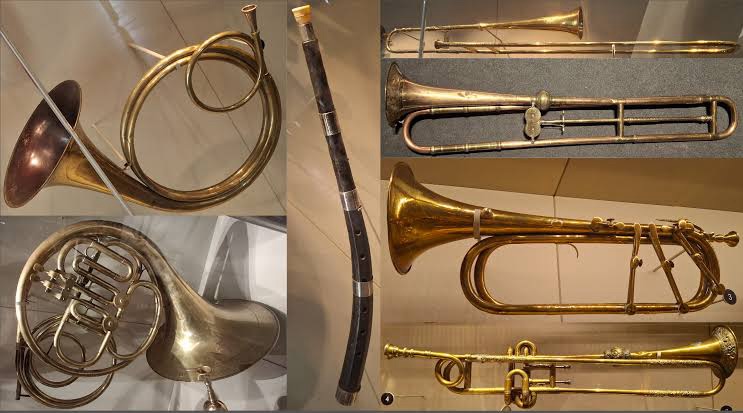
Rattle has conducted a wide variety of music, including some with period instruments (either actual surviving historical musical instruments or modernly made ones informed by commonly used designs and material of the time), but he is best known for his interpretations of late 19th- and early 20th-century composers such as Gustav Mahler, with a recording of Mahler’s Second Symphony winning several awards on its release. He has also championed much contemporary music, an example of this being the 1996 TV series Leaving Home, where he presents a 7-part survey of musical styles and conductors with excerpts recorded by the CBSO. Other recordings in Berlin have included Dvořák tone poems, Mahler’s Symphony No. 9 and Claude Debussy’s La Mer.

Rattle’s first marriage was to Elise Ross, an American soprano, with whom he had two sons: Sacha, who is a clarinettist, and Eliot, who is a painter. They divorced in 1995 after 15 years of marriage. In 1996, he married his second wife, Candace Allen, a US-born writer. This second marriage ended in 2004, and in 2008 Rattle married the Czech mezzo-soprano Magdalena Kožená. The couple live in Berlin and have two sons and a daughter. Rattle is a member of the Incorporated Society of Musicians and a fan of Liverpool Football Club. Rattle announced in January 2021 that he had applied for German citizenship, describing it as “an absolute necessity” for him in order to continue to work freely around the EU after Brexit.


Leave a comment