
The Leipzig Gewandhaus Orchestra, founded in 1743 by 16 musical philanthropists, is the oldest continuously operating orchestra in the world. It has premiered many of the great works from the 19th century including Beethoven’s Triple Concerto, Mendelssohn’s Scottish Symphony, Schubert’s Great Symphony, Schumann’s Spring Symphony, Wagner’s Meistersinger Prelude, and Brahms’ Violin Concerto. During Brahms’ time, it premiered his A German Requiem and Violin Concerto in D major. The orchestra performed the first complete Bruckner symphony cycle in 1919-20 and continues its legacy with commissions by Friedrich Cerha: Paraphrase (2011) and Thomas Adès’ America: A Prophecy (2024). Its roster of Music Directors have included Felix Mendelssohn, Wilhelm Furtwängler, Kurt Masur, Riccardo Chailly, and currently Andris Nelsons.
The Leipzig Gewandhaus Orchestra traces its roots back to 1479 when the city employed three Kunstpfeifer or ‘artistic pipers’. These musicians played a central role in Leipzig’s cultural life, performing at civic functions, church services, and theatrical productions. In 1743, the Große Concert society was formed, marking a shift towards organised public concerts. The City Pipers collaborated with other musicians to meet the demands of church and theatre music, eventually merging with the local concert orchestra.The orchestra adopted the name Gewandhaus Orchestra in 1781 after moving to the textile merchants’ trading house.

Ludwig van Beethoven (1770-1827)
Piano Concerto No 5
Nelson Friere (piano)
Leipzig Gewandhaus Orchestra
Kurt Masur (conductor)
In 1809, Napoleon’s army successfully occupied Vienna, leaving Beethoven disillusioned with the ideals he had once associated with Napoleon. The composer erased the dedication of his Third Symphony (Eroica) after Napoleon declared himself emperor in 1804, instead re-dedicating it to celebrate the memory of a great man. During the occupation, Beethoven sheltered in his brother’s basement to escape cannon fire and worked on his Fifth Piano Concerto in E-flat major, completing most of it by December. The public premiere of the Emperor Concerto occurred on November 28, 1811, at the Gewandhaus in Leipzig, with Friedrich Schneider as the soloist and Johann Philipp Christian Schulz conducting. By this time, Beethoven could not perform due to his near-complete deafness. A notable highlight of the concerto is the innovative duet between piano and timpani near the end. The origin of its nickname remains uncertain; one legend suggests a French officer exclaimed “C’est l’empereur!” (“It is the emperor!”) during its premiere, while others attribute it to Johann Baptist Cramer. The concerto marked a turning point in piano composition, redefining the relationship between soloist and orchestra.
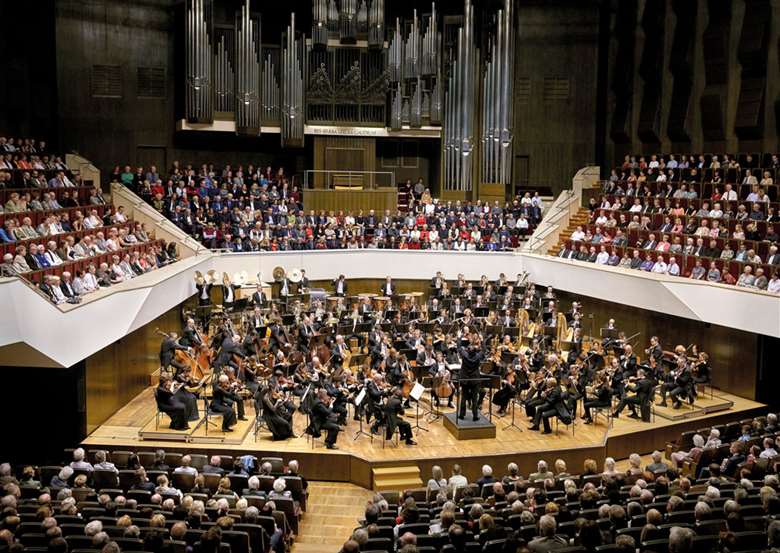
The performances of Richard Wagner’s Ring Cycle in Leipzig’s New Theatre in 1878 significantly impacted the city’s musical landscape. This event led to changes in orchestral music and discussions about musicians’ status. In response, the Leipzig city council provided social security for the Gewandhaus Orchestra musicians in 1881, formalising their role across multiple venues: the church, concert halls, and opera house. The Gewandhaus Orchestra, renowned for its distinctive sound, serves the Gewandhaus concert hall, Leipzig Opera, and St. Thomas’s Church. It performs nearly 300 times annually, contributing to Leipzig’s rich musical heritage. This setup allows the orchestra to maintain a versatile presence, blending tradition and innovation, and solidifying Leipzig’s reputation as a city deeply rooted in music.

Felix Mendelssohn (1809-1847)
Violin Concerto in E minor, Op. 64, MWV O 14, III. Allegro molto vivace
Maxim Vengerov (violin)
Leipzig Gewandhaus Orchestra
Kurt Masur (conductor)
Felix Mendelssohn’s Violin Concerto in E minor, Op. 64, is a masterpiece born from his close friendship with violinist Ferdinand David. Their bond began at fifteen and lasted a lifetime. In 1835, Mendelssohn became Music Director of the Leipzig Gewandhaus Orchestra and appointed David as concertmaster. Three years later, he proposed the idea for the concerto, but its completion in 1844 was delayed by his busy schedule However, once restarted, David’s technical advice proved invaluable to Mendelssohn who was himself a pianist-conductor. The concerto premiered on March 13, 1845, in Leipzig with David as the soloist and Niels W. Gade conducting in place of the ailing Mendelssohn. It was an immediate success and remains one of the great violin concertos of the 19th century. The concerto features an immediate solo violin entrance, a written-out cadenza integrated into the first movement, and seamless transitions between its three movements. These include the passionate Allegro molto appassionato, Andante, and Allegretto non troppo—Allegro molto vivace. Today, Its lyricism and technical brilliance ensures it remains a cornerstone of the violin repertoire.
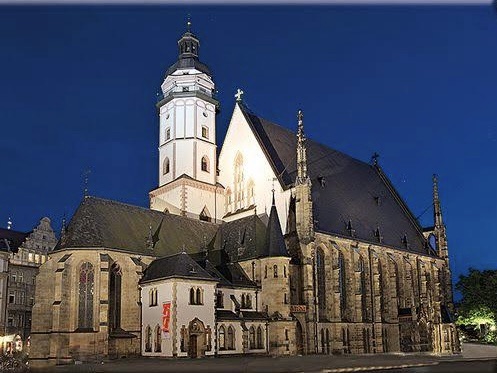
As the Gewandhaus Orchestra evolved, it took on an additional role as the orchestra for the city’s churches. Two principal churches, St. Nicolas and St. Thomas, were under the responsibility of the Thomaskantor (Cantor of St. Thomas’s). However, as the demands for musical performances increased, the City Musicians were augmented by seven members of the Gewandhaus and Theatre Orchestra starting from 1789. Over time, the orchestra became increasingly involved in fulfilling the musical requirements of the churches. This integration reached a significant milestone in 1840 when the Gewandhaus Orchestra was officially declared the civic orchestra by the City Council. Since then, the performance of sacred music has been a staple part of the orchestra’s duties. This development was preceded by a pivotal moment in the orchestra’s history: the first Gewandhaus concert, which took place in November 1781 with a 32-man orchestra known as the Gewandhaus and Theatre Orchestra.’ This concert marked the beginning of a long-standing tradition that would see the orchestra play a central role in both secular and sacred musical life in Leipzig.
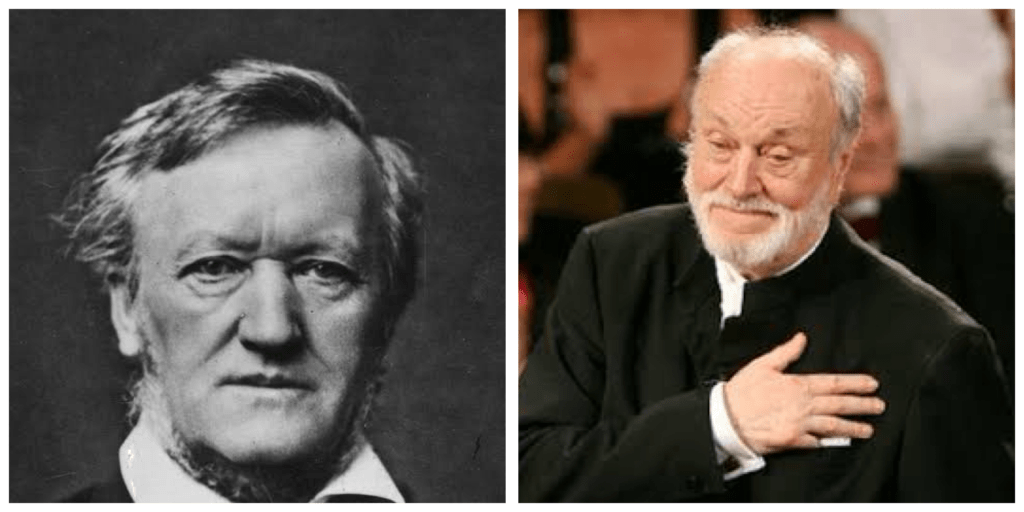
Richard Wagner (1813-1883)
Prelude Die Meistersinger von Nürnberg
Leipzig Gewandhaus Orchestra
Kurt Masur (conductor)
In March 1862, Richard Wagner composed the Prelude to Act I of Die Meistersinger von Nürnberg during a train journey, marking the beginning of his work on the opera. This Prelude was first performed on November 2, 1862, at the Leipzig Gewandhaus, with Wagner himself conducting. The full opera, however, did not premiere until June 21, 1868, at the Munich Court Opera. Wagner’s initial ideas for Die Meistersinger date back to 1845, but it wasn’t until 1861, following a visit to Venice, that he revived the project. The opera was conceived as a lighthearted counterpart to Tannhäuser, exploring themes of song contests within medieval German legend. Wagner’s focus on other projects, such as Lohengrin, Parsifal, and The Ring, led to Die Meistersinger being set aside until later. The optimistic tone of Die Meistersinger, combined with its resonance with the growing nationalist sentiment across German-speaking states in the 1860s, contributed to its triumphant premiere in Munich in 1868. This sentiment culminated in Germany’s unification in 1871, making the opera a timely and culturally significant work. Despite the long gestation period, Wagner’s vision for Die Meistersinger as a celebration of music and tradition ultimately resulted in one of his most beloved and enduring compositions.
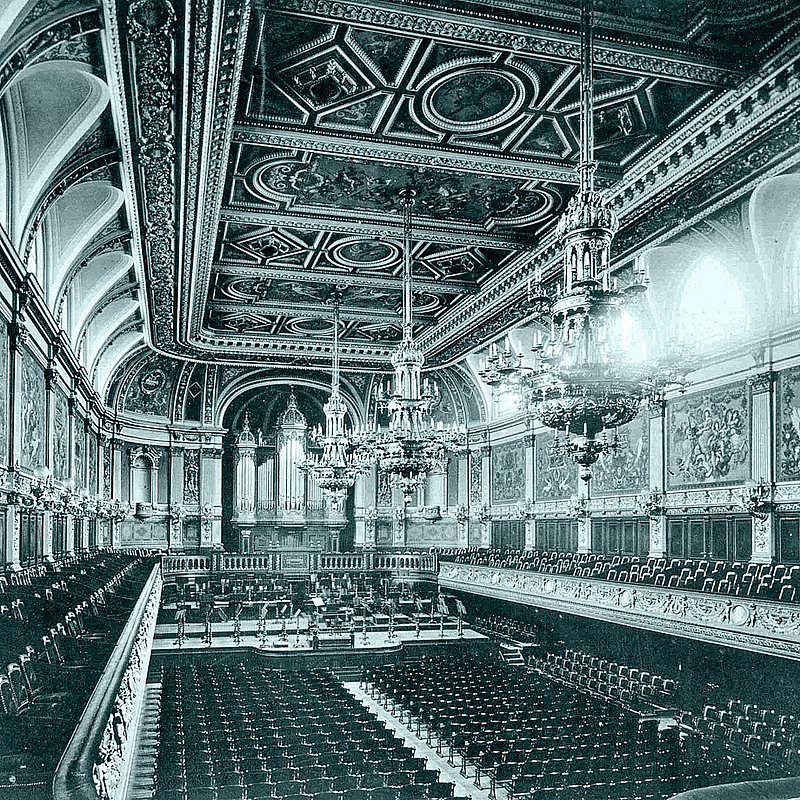
In 1789, Wolfgang Amadeus Mozart performed at the Gewandhaus in Leipzig, a venue that had become the heart of the city’s concert scene. This concert featured Mozart’s own compositions, solidifying the hall’s reputation as a musical hub. Years later, in 1825/26, the Gewandhaus hosted the first complete cycle of Ludwig van Beethoven’s nine symphonies during his lifetime, marking a significant moment in classical music history. Felix Mendelssohn Bartholdy became Gewandhauskapellmeister in 1835, premiering his Scottish Symphony and Violin Concerto in E minor, as well as works by Robert Schumann and Franz Schubert. The Gewandhaus continued to innovate with premieres by Richard Wagner in 1862 and Johannes Brahms in 1879, both conducted by the composers themselves, further establishing its legacy as a premier concert venue.

Franz Schubert (1797-1828)
Symphony No. 9 in C major, D 944, known as The Great
Leipzig Gewandhaus Orchestra
Herbert Blomstadt (conductor)
Franz Schubert’s Symphony No. 9 in C major, D 944, The Great, is a landmark in orchestral music. Composed between 1825 and 1826 during a period of renewed health, it was initially called a grand symphony and later nicknamed to distinguish it from his earlier Symphony No. 6, The Little C major. Despite its brilliance, the work faced rejection during Schubert’s lifetime due to its length and complexity. A planned premiere by the Vienna Gesellschaft der Musikfreunde in 1828 was cancelled and the symphony remained unperformed until March 21, 1839. Felix Mendelssohn conducted its first public performance in Leipzig, thanks to Robert Schumann, who discovered the manuscript and championed its value. Initially considered challenging, The Great eventually secured its place in the orchestral repertoire. Its melodic richness and structural innovation reflect Schubert’s genius and Beethoven’s influence. Today, it is celebrated as one of Schubert’s finest achievements.
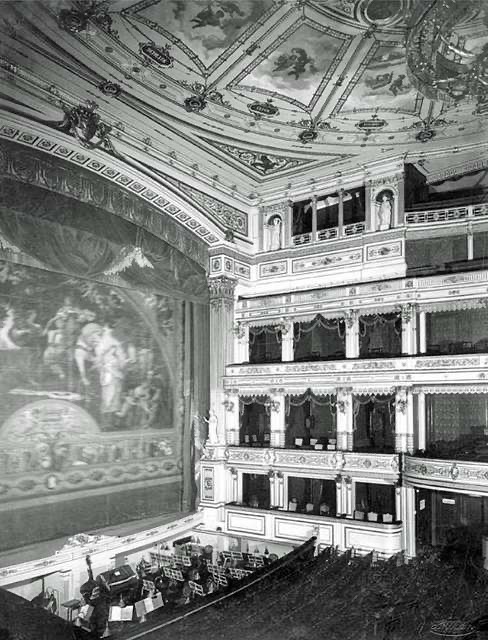
Leipzig’s Neues Theater, inaugurated in 1868 on Augustusplatz, was a major upgrade from the Comedy Theatre. Designed by Carl Ferdinand Langhans and managed by Otto Brückwald, it featured 1,700 seats and 300 standing places, enabling larger and more elaborate productions. Its opening performance included Goethe’s Iphigenia in Tauris alongside overtures by Weber and Gluck, marking a new era for opera in Leipzig. The Gewandhaus Orchestra, initially 58 musicians, expanded to 72 players to meet the demands of both operatic productions and concerts. By the late 19th century, the original Gewandhaus concert hall struggled with increasing public attendance. In response, the Neues Gewandhaus opened in December 1884 as a modern venue. Renowned composers like Brahms, Tchaikovsky, Grieg, and Richard Strauss conducted their works there, while Bruckner performed an organ recital. The hall also became a site for early audio and film recordings, solidifying Leipzig’s reputation as a hub for classical music innovation.
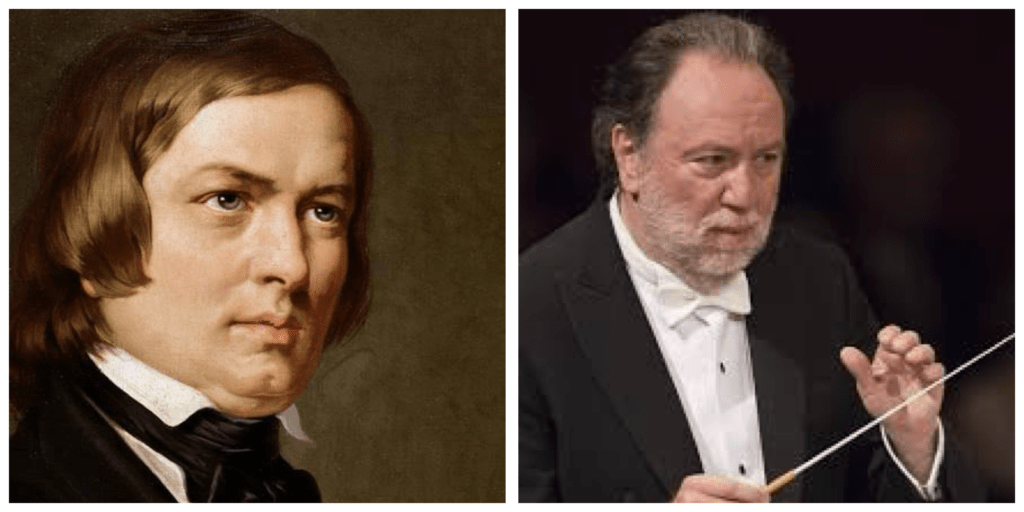
Robert Schumman
The Symphony No. 4 in D minor, Op. 120
Leipzig Gewandhaus Orchestra
Riccardo Chailly (conductor)
Initially an aspiring pianist, Schumann’s early works were naturally focused on the piano, producing imaginative and romantic pieces. Unfortunately, his dream of becoming a virtuoso pianist ended tragically when he irreparably injured his hands using a self-designed mechanical device intended to strengthen his fingers. This setback plunged him into a prolonged and painful depression. However, in 1840, Schumann’s spirits were lifted when he married Clara Wieck, a talented pianist and the daughter of his teacher, Friedrich Wieck, who had opposed their union due to concerns about Schumann’s temperament and drinking habits. That year Schimman composed around 120 exquisite songs for voice and piano.Following this period, Schumann turned to orchestral composition, debuting with his Symphony in B-flat major, nicknamed the Spring Symphony with its joyful final movement meeting great success. Encouraged by this triumph, he quickly composed a second symphony in D minor. While it initially received less acclaim, Schumann believed it was equal to his first symphony. Due to delays in revision, this work was completed ten years later and came to be known as his Fourth Symphony. In its final version, Schumann reworked the orchestration and linked the four movements to create a unified structure.

In 1916 the orchestra undertook its first international tour being during World War I, traveling to Switzerland despite initial scepticism from its management about commercialism and potential demands for more tours. The trip was approved as an important cultural mission, followed by two more visits to Switzerland and the first extensive European tour in 1931. World War I limited the orchestra’s international projects and post-war destruction left it temporarily homeless until Leipzig’s new opera house opened in 1960. The orchestra resumed tours in 1951 with trips to Japan in 1960 and the United States in 1974. A major change came with the opening of the new Gewandhaus concert hall in 1981, credited largely to Kurt Masur. Subsequent leaders Herbert Blomstedt, Riccardo Chailly, and Andris Nelsons continued to enhance its legacy. Today, the Gewandhausorchester remains an essential part of Leipzig’s cultural life performing weekly the symphonic, operatic, and sacred repertoire.




Leave a reply to Paul Archibald Cancel reply