
Rodney Newton, born in 1945 and this year celebrating his 80th birthday, has created a body of work that reflects a remarkable range of musical forms, highlighting his adaptability across a range of musical genres. Starting his journey as a composer in his teenage years, Newton has produced a substantial amount of orchestral repertoire and has been deeply involved with brass bands since the early 1990s, creating both original pieces and arrangements. Between 1967 and 1979, he composed numerous orchestral works, including eight symphonies and a ballet score. His work earned him recognition, notably a commendation in the 1975 Prince Pierre of Monaco competition.
RHTK Radio 3 The Brew – recorded on Wednesday 23rd July 2025
Newton’s symphonic output includes at least 14 symphonies written for various ensembles. He has also written concertos for instruments such as tuba, euphonium, and flute. His extensive catalogue extends to brass and wind bands, featuring original works and adaptations, alongside chamber music compositions such as string quartets and works for other small ensembles. His repertoire further includes vocal music, scores for film and television, a two-act chamber opera, and various works for orchestras and ensembles.
Rodney Newton
Four Spanish Impressions I. Seville
The Williams Fairy Band
James Gourlay (conductor)
Rodney Newton
Wing and Waves
Trio B3
Rodney Newton
Heroes and Warriors
Philharmonic Wind Orchestra
Marc Reift (conductor)
Rodney Newton
Distant Nebulae (1978)
Malaga Philharmonic Orchestra
Paul Mann (conductor)
Rodney Newton
Symphony No 1 (1967-1969) I. Allegro
Malaga Philharmonic Orchestra
Paul Mann (conductor)
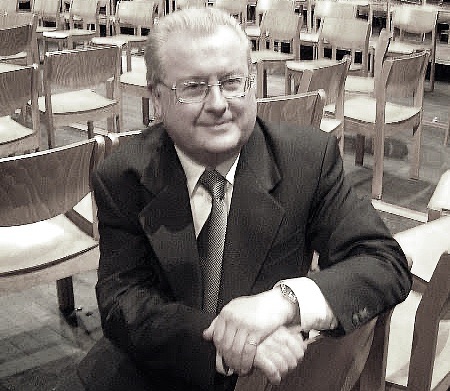
Rodney Newton (b. 1945)
Four Spanish Impressions
Rodney Newton’s composition Four Spanish Impressions for brass band vividly captures the spirit of Spain through four movements, each named after a Spanish town. Lasting about 14 minutes, the piece evokes distinct local atmospheres without directly quoting folk tunes, instead using characteristic phrases, harmonies, and rhythms associated with Spanish music.
The first movement, Seville, reflects the flamenco vocal and dance traditions, incorporating dissonant fanfares that symbolize the dramatic spectacle of a bullfight. Xativa portrays a small town north of Valencia during siesta time, conveying the heat and stillness of the midday sun. In Tarragona, the music depicts an evening in this southern port town, featuring a gentle habañera rhythm that drifts in the warm air. The final movement, Sant Iago di Compostella, imagines medieval pilgrims approaching the cathedral of Saint James at dawn, with music evoking candle-lit cathedral scenes and priests singing, culminating in bells and a grand hymn.
Composed specifically for the Williams Fairey Band, Four Spanish Impressions is dedicated to James Gourlay and Léa Havas. It is frequently performed and recorded and is a favourite within the brass band repertoire. This work highlights Newton’s skill in blending traditional Spanish musical elements with his own original style, effectively portraying regional character within light concert music for brass.
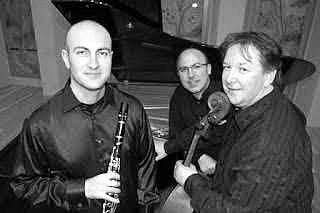
Rodney Newton
Wing and Waves
Wing and Waves is a chamber music composition by Rodney Newton featured on the album Chamber Music Discoveries, released on November 27, 2007. Scored for clarinet, cello, and piano, the piece is influenced by Spanish musical styles and exemplifies Newton’s fascination with creating evocative, intimate textures within this chamber ensemble setting.
The album itself offers a blend of newly uncovered or rarely performed chamber works alongside contemporary compositions, including Newton’s. The repertoire fuses classical chamber music traditions with folk and regional elements, incorporating lyrical qualities and vocal-like expression.
The performing ensemble, Trio B3 Classic, is an international concert group specialising in this rare combination of clarinet, cello, and piano. The members of Trio B3 Classic are Joan Borràs (clarinet), David Johnstone (cello), and Joanjo Albinyana (piano).
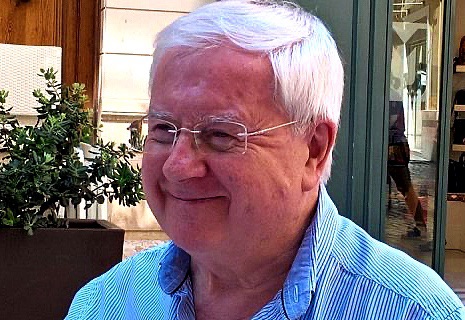
Rodney Newton
Heroes and Warriors
Heroes and Warriors is a composition for brass band and concert band by Rodney Newton. The piece draws inspiration from themes of heroism and warrior spirit, conveying a powerful and dramatic character that makes it well suited for concert performances and competitions. Within the brass band community, Heroes and Warriors is recognized as an exciting and challenging contemporary contest or concert piece, underscoring Newton’s significant and ongoing contributions to brass band repertoire.

Rodney Newton
Distant Nebulae
Rodney Newton’s Distant Nebulae is a tone poem composed between 1978 and 1979, later revised around 2017 for a new recording. The work, performed in 1979 and 1981, draws inspiration from astronomy and cosmic themes, serving as a gentle meditation on the night sky and the universe’s mysteries. Influenced by Charles Ives’ The Unanswered Question but filtered through Newton’s distinct style, the piece also evokes elements reminiscent of Ralph Vaughan Williams and Alan Hovhaness.
Musically, Distant Nebulae features chromatic and modal melodic development, with recurring fragments that evolve in an improvisatory manner. The composition is largely based on an F minor pentatonic scale with added pitches, building toward a poignant climax centered on a minor sixth interval, known for its evocative and melancholic character. Newton later reused some thematic material from this tone poem in his percussion concerto Nocturnale (2010).
As one of Newton’s significant orchestral works, Distant Nebulae represents an important part of his late 20th-century British composition legacy. It is available on the Toccata Classics label alongside his symphonies.

Rodney Newton
Symphony No 1
In September 2017, Rodney Newton finally heard the premiere performance of a symphony he had composed in his early twenties. This work, his Symphony No. 1, was performed for the first time by the Orquesta Filarmónica de Málaga under the direction of Paul Mann. Newton wrote the symphony between 1967 and 1969 while living in a small apartment in Bristol and serving as a member of the BBC Training Orchestra. At the time, he doubted whether he would ever complete the piece or hear it performed.
The symphony consists of three movements and reflects the efforts of a young composer searching for his unique voice, drawing on the influences of Shostakovich and Vaughan Williams. The first movement begins quietly in D minor with a slow introduction featuring a motif of a falling minor second followed by a rising minor third. It builds to a dramatic timpani solo and closes with a brisk coda based on a march-like theme.
The second movement, marked Lento ma con moto, is pastoral and slow, incorporating modal elements such as a medieval-style trumpet solo accompanied by harp. This movement contrasts calmness with underlying tension, ultimately culminating in a consoling violin solo.
The finale is a lively rondo in irregular meters that combines bold, brassy themes with jazzy syncopations and romantic episodes. The movement culminates in a full orchestral climax that recalls the initial germ cell motif, bringing thematic cohesion to the work.
After nearly 50 years without performance or recording, the 2017 premiere of Symphony No. 1 marked a significant moment for Newton. The work is characterised by the youthful exploration of varied stylistic traits and demonstrates an early dedication to rich orchestral colour and thematic development.
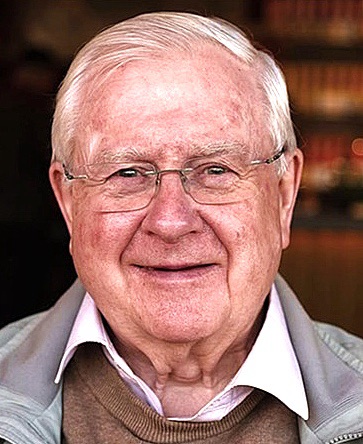
In Conclusion
Born in 1945 in Birmingham, England, Newton came from a musical family. His father was an amateur choir singer, while his grandmother performed with Granville Bantock’s Midland Singers. Although Newton had only brief piano lessons as a child, he received his first formal musical training at the Birmingham School of Music, starting part-time in 1963 before becoming a full-time student focusing on percussion and composition. After graduating in 1967, Newton balanced a career as a percussionist and composer. He joined the BBC Training Orchestra, freelanced, and in 1974 became principal timpanist at Sadler’s Wells (English National) Opera, a position he held for 11 years.
During his tenure with the opera company, Newton composed prolifically, joined the Composers’ Guild of Great Britain, and served on the executive committee of the Association of Professional Composers. He also worked in music publishing as a promotion manager. In 1985, after pursuing further studies in film music composition and conducting, Newton left the opera company to focus on composing, orchestrating, and directing music for film and television, while continuing his orchestral playing. He contributed scores for BBC Television, Thames Television, and S4C, and served as a music consultant to the London Film School for nearly 22 years. Additionally, he taught film music at the London College of Music and the Royal Academy of Music.

In the 1990s, Newton became increasingly involved with brass and military bands, holding residencies with esteemed groups such as the Cory Band, the Williams Fairey Band, and the Band of the Coldstream Guards. Beginning in 2001, he worked as Features Editor for British Bandsman magazine for nine years. His accomplishments were recognised in 2008 when he was elected a Fellow of the Royal Society of Arts. Newton earned his MA with distinction and later his PhD in musical composition from Salford University in 2010 and 2014, respectively, and serves as an external examiner there. Although only his Second Symphony was performed during the earlier part of his career, recordings made in 2017 of his First and Fourth Symphonies marked their first public performances

Leave a comment