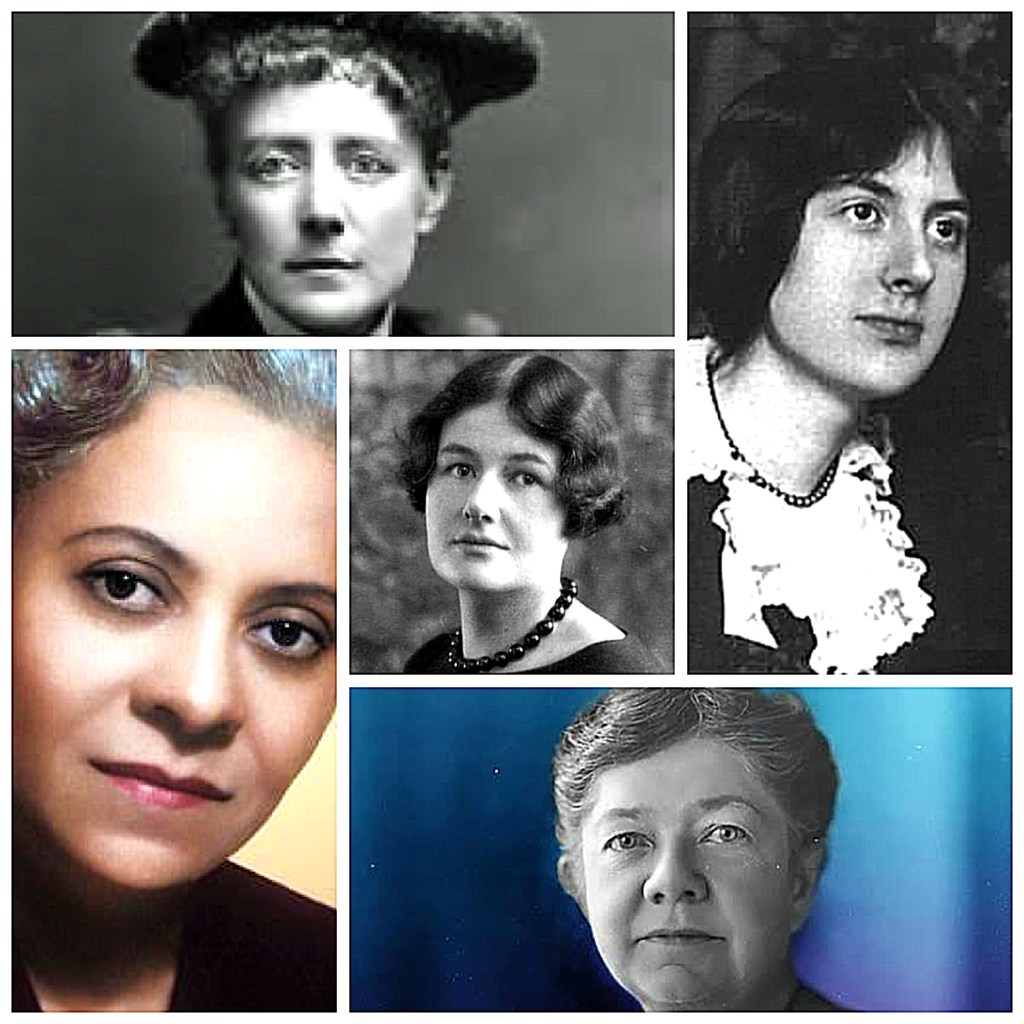
In the concert halls of 19th-century Europe and America, male composers such as Beethoven, Brahms, and Berlioz dominated the programmes. Their works helped define the standard repertoire, securing their legacies for generations. However, women also composed symphonies, operas, and chamber music of remarkable originality during this period. So why have we largely overlooked their contributions?
Ethel Smyth (1858–1944)
Mass in D (1891): Gloria
Philharmonia Choir of Stuttgart
Wurttemburg Philharmonic Orchestra
Helmut Wolff (conductor)
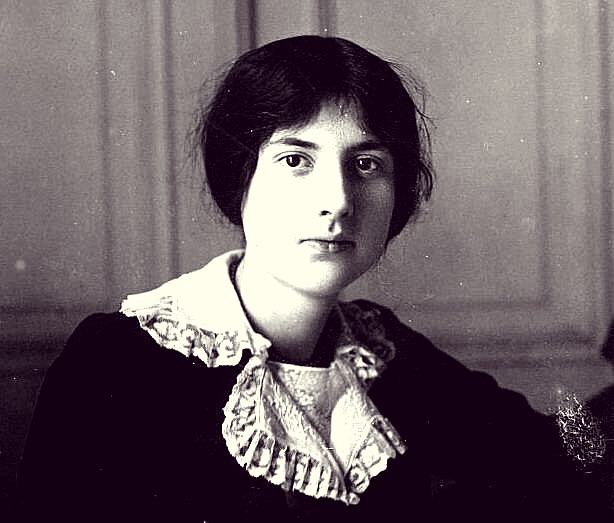
Lili Boulanger (1893–1918)
D’un matin de printemps (1917-1918)
BBC Philharmonic Orchestra
Jan Pascal Tortelier (conductor)
Florence Price (1887–1953)
Symphony No 4 in D minor (1945): Scherzo
Fort Worth Symphony Orchestra
John Jeter (conductor)
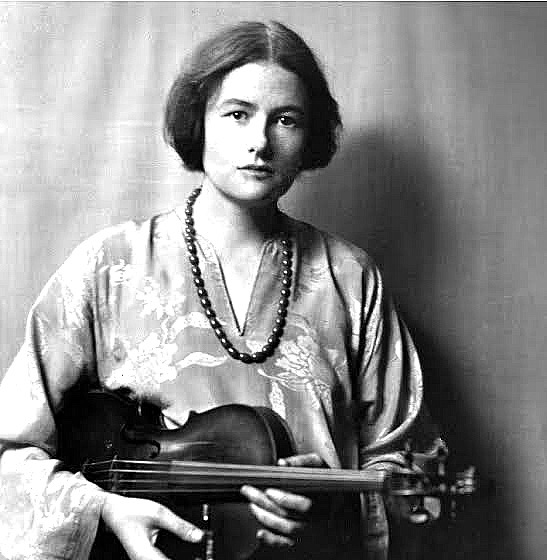
Rebecca Clarke (1886–1979)
Irish Folk Song: As I was goin’ to Ballynure (1926)
Patricia Wright (soprano)
Jonathan Rees (violin)
Amy Beach (1867–1944)
Symphony in E minor Op.32 ‘Gaelic’ (1894-1896): IV Allegro di molto
Munich Philharmonic Orchestra
Joseph Bastien (conductor)
Ethel Smyth, Lili Boulanger, Florence Price, Rebecca Clarke, and Amy Beach refused to accept the limitations society imposed on them. They navigated a world that sought to exclude them and created music that reflects both their individual artistry and the collective barriers they faced. By examining the lives and works of these five composers, celebrating their achievements and exploring why their contributions were marginalised, we can understand the challenges they overcame and better appreciate why we have overlooked their stories and why their legacy matters today.

The 19th century presented women in music with a fundamental contradiction. Society encouraged women to cultivate musical talent as a mark of feminine accomplishment, but met the idea of a woman composing for the concert hall – or worse, the opera stage – with scepticism, if not outright hostility. The expectations of the time confined women to the home and restricted their creativity to the drawing room. The Victorian ideal of womanhood cast women as nurturing, self-sacrificing figures whose primary role was to support the men in their lives. A woman aspiring to a professional career in music—particularly in composition – challenged this ideal. Ethel Smyth defied her military father’s wishes to pursue her musical ambitions. One critic dismissed her as “a woman who has stepped out of her sphere.” Such attitudes were not uncommon.
Conservatories slowly began to admit women, but often restricted their studies to instruments deemed ‘suitable’ for the fairer sex – piano, harp, or voice. Florence Price, an African American composer, faced a double barrier. Not only was she a woman, but many institutions also excluded her due to her race. She studied at the New England Conservatory, one of the few schools that accepted Black students. Her decision to attend there was both a necessity and an act of defiance. But even there, she encountered discrimination. Her later move to Chicago was as much about escaping racial violence as it was about pursuing opportunities.
Lili Boulanger’s admission to the Paris Conservatoire marked a landmark achievement, but her experience was far from easy. Her frail health and the scepticism of her male peers made her journey a testament to her resilience. Similarly, Amy Beach, though a child prodigy, faced discouragement from pursuing a professional career. Her husband insisted that she limit her public performances to one charity concert a year, a stark reminder of the constraints placed on women’s ambitions.
Performing in public was controversial for women, and conducting or composing for large ensembles was nearly unthinkable. Rebecca Clarke, a virtuoso violist, became one of the first women to play in Henry Wood’s Queen’s Hall Orchestra. Yet, even as she broke barriers as a performer, orchestras often overlooked her compositions. Rebecca Clarke’s Viola Sonata (1919) tied for first prize in the Berkshire Festival Chamber Music Competition, entered anonymously. When the jury realized it was by a woman, some assumed the piece was by Ernest Bloch or another man. Women composers even submitted works under a male pseudonym – a common practice for women composers seeking to avoid prejudice. Amy Beach’s Gaelic Symphony became the first symphony by an American woman performed by a major orchestra, marking a landmark achievement. Yet, critics of the time often attributed its success to her husband’s influence rather than her own talent.
Even when women’s compositions were published, publishers frequently marketed them as ‘salon pieces’ or ‘domestic music,” diminishing their artistic value. Ethel Smyth’s Mass in D, a monumental work, was premiered at the Royal Albert Hall in 1893, but its reception was overshadowed by the novelty of a woman composing such a piece. Smyth herself later reflected, ‘I was not taken seriously as a composer until I was taken seriously as a suffragette.’ For women composers in the 19th century, the path to recognition was fraught with obstacles. These barriers were not merely incidental; they were systemic and designed to keep women from achieving the same status as their male counterparts. Yet, despite these challenges, Ethel Smyth, Lili Boulanger, Florence Price, Rebecca Clarke, and Amy Beach each found ways to assert their voices – both musically and professionally.

The personal toll of defying expectations was high. Ethel Smyth’s father vehemently opposed her musical ambitions, and she left home at 19 to study in Leipzig. Florence Price’s marriage ended in divorce, leaving her a single mother supporting her family through teaching and composing. Lili Boulanger’s life was tragically short, her career cut off at 24 by tuberculosis. Amy Beach, though married to a supportive husband, was still constrained by societal expectations. Despite these challenges, the music of these five composers endures. Their works are not just musical achievements; they are testaments to the resilience of women who refused to be silenced.
The marginalisation of women composers was not confined to the 19th century. Its effects extended well into the 20th century, and in many ways, its legacy lingers even today. Overwhelmingly male orchestras, publishers, and critics held the power to shape the musical canon. They resisted change systematically. Florence Price’s First Symphony, performed in 1933, was a rare exception, but her subsequent works struggled to find a place in the repertoire. For women of colour, the barriers were even higher. Florence Price faced both racial and gender discrimination. Major orchestras often ignored her work, and her manuscripts were lost or overlooked for decades.
The struggles of 19th and early 20th-century women composers were not confined to their time. Even as the 20th century progressed, the classical music world remained resistant to change. People often saw women composers who achieved recognition as exceptions rather than as part of a broader movement. Today, despite progress, gender disparity in classical music remains a pressing issue. Donne, Women in Music found that in the 2019–2020 season, only about 3–8% of works performed by the orchestras surveyed were by women composers, with women making up a small fraction of composers on programmes.
Efforts to redress the historical erasure of women composers are underway. Florence Price’s Symphony No. 3 received its world premiere in 2018—75 years after she wrote it. The exclusion of women composers is not just a historical footnote; it is a gap in our cultural heritage. Their legacy reminds us that talent knows no gender. The question is not whether women can compose great music—history has already answered that – but whether we, as listeners, performers, and institutions, are willing to listen.

The stories of Ethel Smyth, Lili Boulanger, Florence Price, Rebecca Clarke, and Amy Beach are testaments to the power of creativity in the face of adversity. These composers did not merely write music; they carved out spaces for themselves in a world that sought to silence them. Today, their legacy urges us to ask difficult questions: Why are women still underrepresented in concert programmes and recordings? How can we ensure that the next generation of women composers does not face the same barriers? The answers lie not only in recognising the past but in actively reshaping the future – by programming their works, amplifying their voices, and demanding equality in the classical music world. Hopefully, Florence Price’s frustration at being overlooked by orchestras—she once said, ‘I have two handicaps—those of sex and race’ – won’t be repeated by women composers in the 21st century. We need to listen to their music, and their voices must be heard.
Selected bibliography
Cooke, Maura. Women Composers in the 19th Century and Early 20th Century. In Grove Music Online. Oxford University Press.
Dubal, David. Women in Music: The 19th‑Century Legacy. In The Art of the Piano: Its Performers, Literature, and Recordings. Amadeus Press, 2000.
Gänzl, Kurt. Ethel Smyth. In The Oxford Companion to Music. Oxford University Press.
Smyth, Ethel. Impressions That Remained. Longmans, Green, 1987
Nectoux, Jean‑Michel. Lili Boulanger. In The New Grove Dictionary of Women Composers. Macmillan, 1994.
Oxford International Song Festival. Lili Boulanger.
Website: Göteborgs Symfoniker. Lili Boulanger (1893–1918).
Price, Florence. In Grove Music Online. Oxford University Press.
Symphony No. 1 (Price). Wikipedia. May 2025.
Symphony No. 3 (Price). Wikipedia. May 2025.
Stolaf College, Music 345 blog. Florence Price and the Erasure of Black History.
Rebecca Clarke. In Classical Music Magazine.
Clarke, Rebecca. Sonata for Viola and Piano. Programme notes and biographical material.
Strings Magazine. Intoxicating Vitality—Rebecca Clarke’s Sonata for Viola and Piano.
Amy Beach. In Grove Music Online. Oxford University Press.
Beach, Amy: Gaelic Symphony. musically‑oriented encyclopedic entry, Grove Music Online or New Grove Dictionary of American Music.
EarRelevant. Amy Beach: Pioneering American Woman Composer.
Donne, Women in Music. 2019–2020 Season Survey: Women Composers in Major Orchestras.
Donne, Women in Music. Equality & Diversity in Global Repertoire 2021–2022 Report.
Institute for Composer Diversity. Orchestra Repertoire Reports 2021–2023.



Leave a Reply