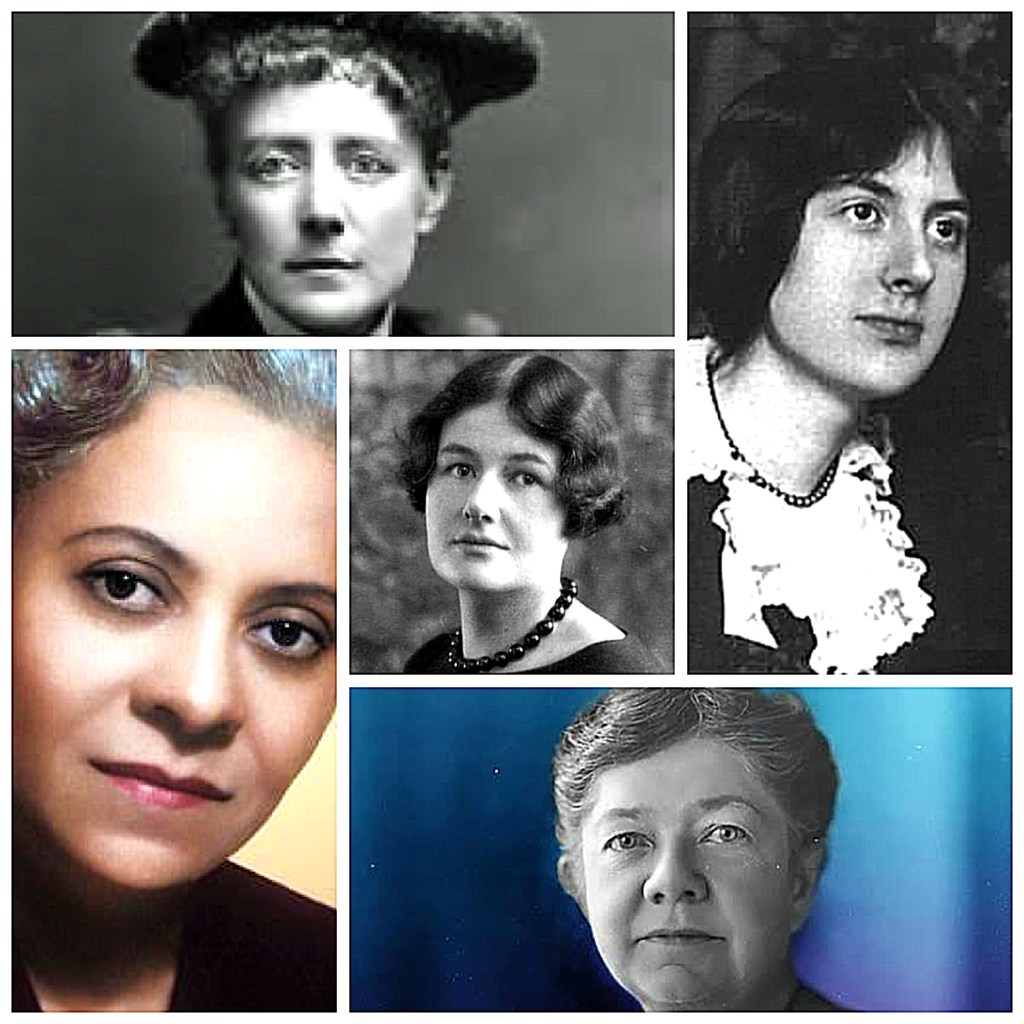
In the 19th century, the world of classical music was overwhelmingly dominated by men, with women often relegated to the sidelines, their talents overlooked or dismissed. Yet amid these challenges, a remarkable group of women composers broke through these barriers, creating opportunities both for themselves and future generations, to express their musical creativity. These five trailblazing women not only composed beautiful and innovative music but also challenged societal norms and defied expectations with their talent, resilience, and determination. Their stories reveal not only their extraordinary contributions to music but also the broader struggle for women’s recognition and equality in a male-dominated profession.
Ethel Smyth (1858–1944)
Mass in D (1891): Gloria
Philharmonia Choir of Stuttgart
Wurttemburg Philharmonic Orchestra
Helmut Wolff (conductor)
Lili Boulanger (1893–1918)
D’un matin de printemps (1917-1918)
BBC Philharmonic Orchestra
Jan Pascal Tortelier (conductor)
Florence Price (1887–1953)
Symphony No 4 in D minor (1945): Scherzo
Fort Worth Symphony Orchestra
John Jeter (conductor)
Rebecca Clarke (1886–1979)
Irish Folk Song: As I was goin’ to Ballynure (1926)
Patricia Wright (soprano)
Jonathan Rees (violin)
Amy Beach (1867–1944)
Symphony in E minor Op.32 ‘Gaelic’ (1894-1896): IV Allegro di molto
Munich Philharmonic Orchestra
Joseph Bastien (conductor)

Ethel Smyth
Mass in D
Ethel Smyth was a British composer, conductor, writer, and a fierce suffragette. Born in Sidcup, England, she was the fourth of eight children in a military family. Despite her father, a major general, firmly opposing her ambitions to pursue music professionally, she was stubborn and refused to back down. At 19, she went off to study at the Leipzig Conservatory in Germany, meeting composers such as Brahms and Tchaikovsky, which inevitably shaped her musical style. She wrote a wide variety of music – from operas and orchestral works to chamber music, choral pieces, and songs. Her operas, especially Der Wald (1902) and The Wreckers (1906), were significant works; in fact, Der Wald was the first opera by a woman performed at New York’s Metropolitan Opera and was the top-grossing opera that year.
Ethel Smyth’s Mass in D is a significant choral-orchestral work composed in 1891 and first performed in 1893 at London’s Royal Albert Hall. Smyth wrote much of it while staying near Monaco and dedicated it to her friend Pauline Trevelyan. Musically, it is in a late-Victorian English romantic style, influenced by Brahms. The work is structured in six movements but is really intended more for concert performance than for the church. The Mass had initial royal support, with Queen Victoria endorsing its orchestral performance after Smyth played it for her. After the premiere, the work helped establish Smyth’s reputation as a serious composer, especially impressive given the rarity of major Mass settings by English women at that time.
Ethel was more than just a composer; she was committed to the women’s suffrage movement, joining the Women’s Social and Political Union in 1910. She put her music career on hold for two years to campaign for women’s right to vote. Her anthem, The March of the Women (1911), became a rallying cry for suffragettes worldwide. She even took part in militant activism, was imprisoned for breaking windows at politicians’ homes, and famously conducted fellow prisoners singing The March of the Women from her prison window using a toothbrush as a baton – an iconic moment of defiance. In 1922, she was honoured as a Dame Commander of the Order of the British Empire, the first female composer to receive such recognition. Later in life, she wrote ten volumes of memoirs, sharing her remarkable journey and friendships with important figures such as Virginia Woolf. Open about her romantic relationships with women, Smyth also challenged Victorian norms off the stage.
Ethel Smyth was a trailblazer who combined art with activism, using her music to champion women’s rights and leaving a lasting mark on British classical music, even though she faced serious gender biases in her time.
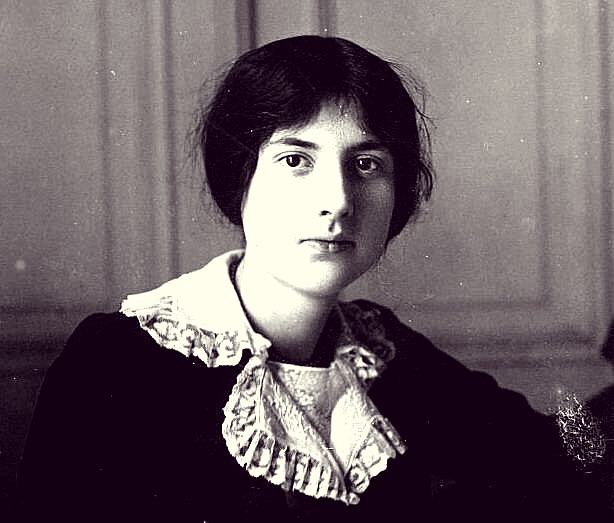
Lili Boulanger
D’un matin de printemps (Of A Spring Morning)
Marie-Juliette ‘Lili’ Boulanger was a French composer born in 1893, in Paris. She came from a very musical family – her father, Ernest Boulanger, was a composer and a Prix de Rome winner, while her sister Nadia Boulanger became a well-known composer and teacher. Lili showed musical talent from a very young age, starting music lessons around six years old despite struggling with chronic health issues like bronchial pneumonia and later Crohn’s disease. She was a gifted singer and could play multiple instruments including piano, violin, cello, and harp.
At just 19, Lili made history by becoming the first woman to win the prestigious Premier Grand Prix de Rome with her cantata Faust et Hélène. This achievement earned her international recognition and a publishing contract with Ricordi. Her music is known for its beautiful harmony, rich orchestration, and sensitive text-setting. Influenced by composers like Gabriel Fauré and Claude Debussy, Lili’s style often included Impressionist touches that gave her compositions a distinctive and colourful sound. Throughout her career, Lili studied under respected teachers like Paul Vidal and Georges Caussade at the Paris Conservatoire and had the support of Gabriel Fauré. Despite her frail health, she was committed and professional but tragically, Lili’s life was cut short when she died from tuberculosis at just 24 in1918. Her music continues to be admired for its radiant beauty and deep emotional power – an impressive achievement given her brief life.
D’un matin de printemps is a charming piece composed between 1917 and 1918. The music beautifully blends Impressionist style with Romantic touches. It is bright, colourful, and full of energy, featuring rich harmonies and lush orchestration. The light, lively rhythms and a playful mood perfectly capture the freshness and spirit of spring. The piece highlights wind instruments alongside vibrant string textures, creating a wonderful contrast between lively, cheerful sections and more dreamy, mysterious moments. Lili composed this work during a brief recovery period after surgery, making it one of her last completed pieces before her untimely death. D’un matin de printemps shows her incredible skill with orchestration and her unique Impressionist voice. It contrasts with some of her darker works, such as D’un soir triste (Of a Sad Evening), revealing her youthful passion and sophistication even in the face of frail health.
Lili Boulanger was a trailblazer due to her vibrant creativity and delicate handling of mood and colour cut short due to her untimely death at age 24

Florence Price
Symphony No 4 in D minor
Florence Beatrice Smith was born on April 9, 1887, in Little Rock, Arkansas, into a well-respected African American family. She was something of a child prodigy – playing her first piano recital at just 4 and publishing her first composition by 11. She went on to study at the New England Conservatory of Music in Boston from 1903 to 1906, focussing on organ performance and piano teaching, and took lessons from the composer George Whitefield Chadwick, eventually graduating with honours in 1906. Florence then went on to teach music at historically black colleges in the South, but in 1927, she moved to Chicago to escape racial violence and to find more opportunities. There, she set up her own piano studio and composed teaching pieces for children.
Her talent was recognised in 1932 when her Symphony in E minor won the Rodman Wanamaker national prize. The next year, the Chicago Symphony Orchestra performed it – the first time a major American orchestra played a symphony by an African American woman. She went on to compose over 300 works, including symphonies, concertos, choral pieces, songs, chamber music, solo piano and organ pieces. She also wrote popular music under the pen name ‘Veejay’ for radio and theatre.
In her personal life, she married Thomas J. Price in 1912 and had two daughters, but the marriage ended in 1931 due to financial struggles and abuse. As a single mum, she supported her family by working as a silent film organist and writing commercial music. Musically, she blended European classical traditions with African American spiritual and folk influences but Florence always faced big challenges due to her race and gender – she once wrote to a conductor about her ‘two handicaps.’ Her Symphony No. 4 in D Minor was composed in 1945 but the world premiere only took place on May 12 2018, when the Fort Smith Symphony, led by John Jeter, brought it to life in Fort Smith, Arkansas.
Stylistically, Price blends European symphonic traditions with African-American musical elements like spirituals, work songs, and dance forms, drawing inspiration from composers such as Dvořák and Samuel Coleridge-Taylor but, at the same time, creating something fresh and distinctly her own. Though much of her music was forgotten after her death in 1953, she was rediscovered in 2009 when a large collection of her manuscripts was found.
Florence Price was a trailblazer in American classical music, breaking barriers for women and African Americans, with her work increasingly performed and recorded.
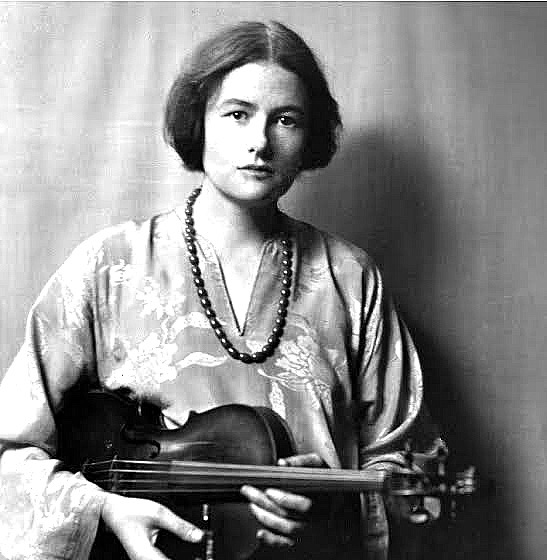
Rebecca Clarke
Irish Folk Song: As I was goin’ to Ballynure
Rebecca Clarke was born in 1886 in Harrow, England. Her mother was German and her father was American, giving her an international background. She studied violin and harmony at the Royal Academy of Music, continuing her studies at the Royal College of Music in 1907 where she became the first female composition student of Charles Villiers Stanford undertook viola lessons with Lionel Tertis. Rebecca didn’t have an easy childhood, her father was strict, sometimes even harsh. In 1910 she was thrown out of her home and suddenly had to support herself. In spite of this setback she became one of the first women to play professionally in orchestras in London and her skills as a violist earned her the chance to perform alongside artists such as Pablo Casals, Jacques Thibaud, and Guilhermina Suggia. In 1913, she made history as one of the first women in Henry Wood’s Queen’s Hall Orchestra.
Over her life, she composed around 80 to 100 pieces – everything from chamber music and songs to choral works and solo piano pieces.She was influenced by the English pastoral style but also embraced modern harmonies with her works often exploring themes of passion, power, and humour. In her later yearslived in America, marrying the composer and pianist James Friskin in 1944. After the war, she slowed down her composing but she kept revising her old works well into her 90s.
As I Was Goin’ to Ballynure (also called A Ballynure Ballad) was composed in 1926 and is written for a high voice and violin. The story of the ballad is about a visit to Ballynure, a village in Northern Ireland and touches on classic Irish themes like courtship and local celebrations. Clarke is especially admired for treating the folk material with both respect and sophistication, capturing the sense of community and tradition often found in Irish folk music.
Rebecca Clarke was a trailblazer as, in spite of difficulties in her early life, she became internationally famous as a viola virtuoso and was one of the first women to break into the male-dominated orchestral world. Her Viola Sonata remains one of the most admired pieces in the viola repertoire from the 20th century.

Amy Beach
Symphony in E minor Op.32 ‘Gaelic’
Amy Beach was an American composer and pianist born in 1867, in Henniker, New Hampshire. She was a true musical prodigy from a very young age – she could sing over 40 songs by the time she was one year old, was improvising music by age two, and wrote waltzes when she was just four. Amy gave her first public piano performance at 16 and by the age of 18, was playing with the Boston Symphony Orchestra. Unlike many composers of her time she didn’t study music in Europe, making her one of the first successful American composers without European training.
Amy married Dr. Henry Harris Aubrey Beach, a Harvard-trained surgeon, in 1885. After her marriage she mostly stepped away from public performances – her husband preferred her not to perform – so she only played once a year, always for charity. After he passed away in 1910, Amy began performing again, travelling around Europe, and earning praise for her compositions. She made history as the first American woman to have a symphony performed by a major orchestra when her Gaelic Symphony debuted in 1896 with the Boston Symphony Orchestra, marking a big milestone. Amy’s music blends Romantic expressiveness with American nationalism and often features Irish and Scottish folk influences, becoming well-known for her large orchestral works, chamber music, choral pieces and piano compositions, with over 300 pieces across many styles published. She helped found the Society of American Women Composers and became its first president, as well as taking a leadership role in the Music Educators National Conference.
The Symphony in E minor, Op. 32, known as the ‘Gaelic Symphony,’ was begun in November 1894 and completed by 1896. It premiered on October 30, 1896, performed by the Boston Symphony Orchestra. She composed the Gaelic Symphony in response to Dvořák’s urging that American composers draw on their cultural roots in their music. While Dvořák emphasised Native American and African American musical themes as foundational elements of American music, Beach chose instead to celebrate her own Irish immigrant heritage. She described Irish folk melodies as having a “simple, rugged, and unpretentious beauty,” and incorporated several traditional Irish folk tunes alongside one of her earlier songs, Dark is the Night. As a result, the symphony fuses the Romantic symphonic tradition with Gaelic melodic and rhythmic influences, expressing both Beach’s personal and cultural identity. During Beach’s lifetime, the Boston Symphony performed the work four times, and it was also taken up by major orchestras in Chicago, Philadelphia, Detroit, Hamburg, and Leipzig.
Amy Beach was a trailblazer as she was a pioneer who broke down barriers for women in classical music, composed and published the first symphony by an American woman, and was the first American woman composer to receive international acclaim. She is warmly remembered as the ‘dean of American women composers’ and remains a key figure in American music history.

Leave a comment