
The connection between music and sport spans many centuries. From ancient rituals to modern venues like the Mercedes-Benz Stadium in Atlanta, opened in 2017, both serve as outlets for expression and foster a sense of community among participants. They share deep psychological, philosophical, and physiological links, driven by our need for rhythm, excellence, and shared experiences. Whether it’s the accuracy of a concert pianist or the fluid movement of athletes like Usain Bolt, both demonstrate human aspirations for mastery, connection, and meaningful existence.
Claude Debussy (1862 – 1918)
Jeux (1913)
London Symphony Orchestra
Michael Tilson Thomas (conductor)
Arthur Honegger (1892 – 1955)
Rugby (1928)
BBC National Orchestra
Thierry Fischer (conductor)
Jean Sibelius (1865 – 1957)
The Lonely Ski Trail (1925)
Lahti Symphony Orchestra
Osmo Vänskä (conductor)
Michael Nyman (b. 1944)
The Final Score (1991) III
Michael Nyman Band
Richard Strauss (1864 – 1949)
Olympic Hymn T266 (1936)
Munich Philharmonic Orchestra and choir
Hayko Siemens (conductor)
From the ancient Greek Olympics, where lyre players competed alongside runners, to modern-day athletes standing on the podium, listening proudly to a national anthem, music and sport have always been intertwined. Both are universal expressions of ambition, discipline and joy. Both music and sport require consistent work, precision, and a spiritual-like connection between mind and body. When musicians and athletes perform at their best, they transcend the ordinary and lift us to the sublime.
A Celebration of Art and Athletics
In 776 BCE, Olympia, Greece, hosted the first recorded Olympic Games. Athletes ran races, wrestled, and drove chariots, but the Games celebrated more than just physical prowess. They were also a celebration of the arts. Musicians played the lyre, poets recited their poems, and dancers performed – all in honour of Zeus and the pursuit of beauty and goodness in both body and mind.
The ancient Greeks saw no divide between the athlete and the artist. To them, excellence in sport was akin to excellence in music, bringing a connection to something greater than the individual. Judges crowned the winners of the Games with olive wreaths, and musicians immortalised the athletes’ deeds through song. Athletic triumphs provided music with its grandest stage.

Debussy’s Jeux: Capturing the Spirit of Sport in Music
Claude Debussy’s Jeux is a subtle mix of music and athletic energy, turning a tennis game into a ballet of smooth, spontaneous movements. Since it first premiered in 1913, its modernist scene – young people playing in a garden at dusk – really captures the lively and unpredictable spirit of sport, offering a fresh take away from traditional ballet themes. Nijinsky’s choreography, although seen as controversial by some, beautifully reflects the agility of athletes, while Debussy’s music moves away from Romantic melodies, instead using fragmented motifs that add a sense of complexity. The overall effect is a vibrant piece where music and movement come together to celebrate the playful, fleeting joy of the game.
Arthur Honegger’s Rugby: The Brutality and Beauty of the Game
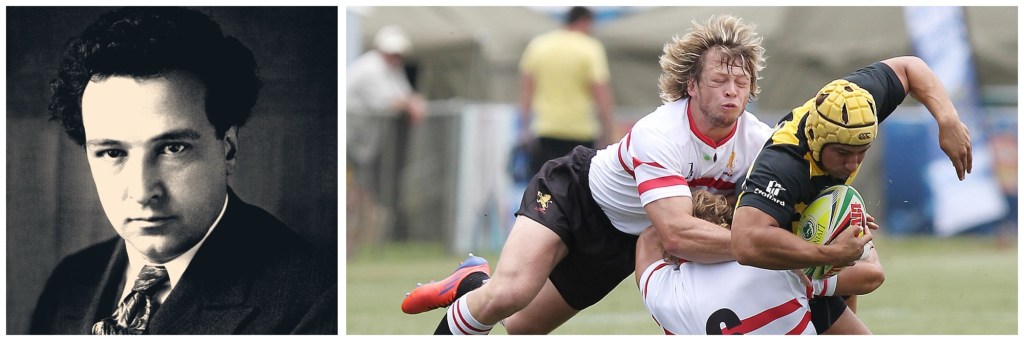
Arthur Honegger, a passionate rugby fan, masterfully evokes the excitement of the sport in Rugby (1928) – not by painting a literal match, but by capturing its very essence. Through vibrant melodies, he conveys the thrill of daring attacks and swift counterattacks, the mounting tension as teams compete fiercely, and the exhilarating joy of scoring a try. His composition is a triumphant celebration of rugby’s energy and spirit, bringing the game’s dynamic pulse vividly to life through music.
Jean Sibelius’s The Lonely Ski Trail: A Reflection on Sport and Existence
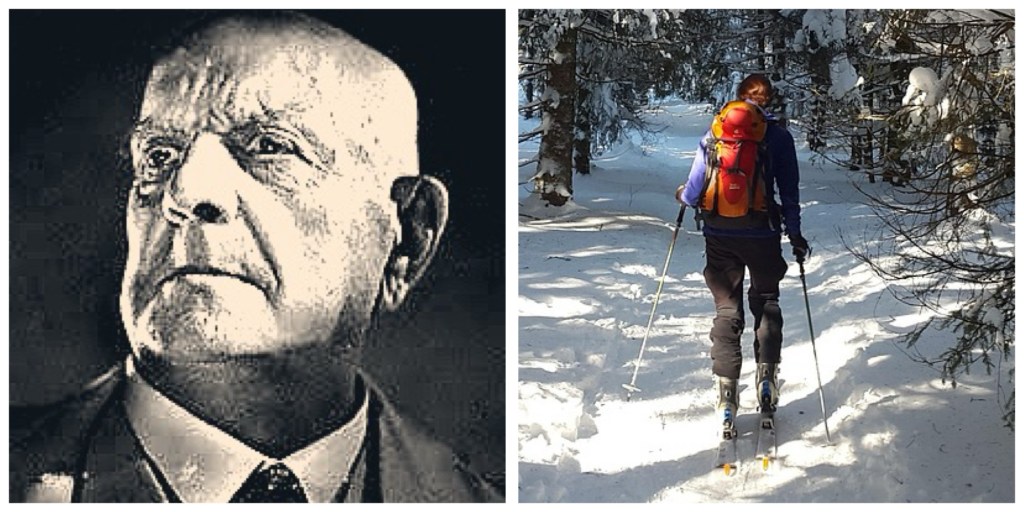
Jean Sibelius’s The Lonely Ski Trail (1925) is a melodrama for narrator and piano, based on a poem by Bertel Gripenberg. The work follows a solitary skier’s journey through a silent, snowy forest, using skiing as a metaphor for existential searching and introspection. The text and music together create an atmospheric, almost ominous mood, evoking the solitude and fleeting impressions of the skier’s path.
Sibelius’s connection to sport here is not about competition but about the individual’s relationship with nature and self. The ski trail, like life, is uncertain and ephemeral, and the skier’s journey mirrors the human quest for meaning. The piece is a reminder that sport, at its core, is not just about winning – it’s about the experience, the struggle, and the connection to something larger than oneself.
Richard Strauss’s Olympic Hymn: The Dual Legacy of Sport and Politics
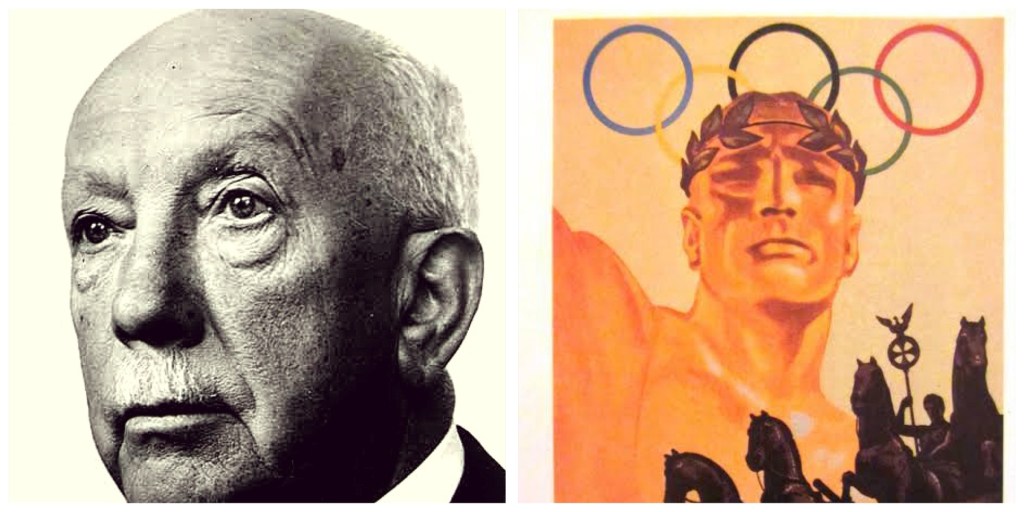
Richard Strauss’s Olympic Hymn (1936) was composed for the Berlin Olympics, a grand, ceremonial work celebrating the ideals of peace, unity, and athletic competition. The hymn’s text, by Robert Lubahn, calls on nations to come together in the spirit of Olympia, with lyrics such as “Peoples! Be guests of the German people, come in through the open gate!” Strauss, however, was ambivalent about the commission, famously writing, “I am whiling away the boredom of the advent season by composing an Olympic Hymn for the plebs—I of all people, who hate and despise sports.”
Despite his personal feelings, the Olympic Hymn became a symbol of the Games, performed at the opening ceremonies and immortalised in Leni Riefenstahl’s propaganda film Olympia,. The hymn’s legacy is complex, tied to the political context of 1936 but also to the enduring ideal of sport as a unifying force.
Flow, Fear, and the Zone – The Psychology of Peak Performance
Ask a musician about their best performance, and they’ll likely describe a moment when the notes flowed effortlessly, as if the instrument were an extension of their body. Ask an athlete the same, and they’ll tell you about a game where every pass and every shot felt inevitable. Psychologists call this state flow – a concept popularised by Mihaly Csikszentmihalyi, who described it as “being completely involved in an activity for its own sake. The ego falls away. Time flies. Every action, movement, and thought follows inevitably from the previous one.”
Flow is the holy grail of both music and sport. For a pianist, it might arrive in the middle of a concerto, fingers moving faster than thought. For a basketball player, it’s the “hot hand” phenomenon, where every shot swishes through the net. Neuroscientists have found that flow states activate the brain’s reward centres, flooding the system with dopamine and endorphins. In that moment, fear and self-doubt vanish. There is only the music, the game, and the pure joy of doing.
The Shadow of Performance Anxiety
But the flip side of flow is anxiety. Stage fright and pre-game nerves are so common that they’ve spawned entire industries of coaches, therapists, and self-help gurus. The physiological responses are eerily similar: a racing heart, sweaty palms, and a mind that suddenly feels like it’s working against you.
Musicians and athletes combat this in remarkably parallel ways. Breathing exercises, visualisation, and routine are key. A soloist might practise deep breathing before a performance, just as a footballer might visualise scoring the winning penalty. The goal is the same: to quieten the noise and trust the training.
The 10,000-Hour Rule: How Practice and Talent Shape Mastery
Anders Ericsson’s famous ‘10,000-hour rule’ – the idea that mastery requires roughly 10,000 hours of deliberate practice – applies as much to musicians as to athletes. But it’s not just about time. It’s about how you practise. Both musicians and athletes break their craft into tiny, repeatable chunks, refining each note or movement until it’s second nature.
Consider the daily routine of a concert pianist: scales, arpeggios, and etudes, each repeated until the fingers move without thought. Now compare that to a tennis player’s drills – forehands, backhands, and serves, each hit hundreds of times until muscle memory takes over. The discipline is identical. The mindset is identical. The only difference is the stage.
Although the 10,000-Hour Rule suggests that mastery requires hours of deliberate practice, talent still matters. While innate ability can provide an edge, sustained, focused effort is what transforms potential into exceptional skill, whether in music, sports, or any complex field.
Motion, Sound, and Meaning – Exploring Aesthetics and Ethics
In sport, we admire grace, power, and efficiency. A gymnast’s routine is judged not just on difficulty but on artistry. A footballer’s dribble is celebrated not just for its effectiveness but for its flair. Similarly, in music, we value not just technical skill but emotional depth. A perfectly played scale is impressive, but a phrase that makes us feel – that’s art.
The 18th‑century philosopher Immanuel Kant thought beauty isn’t built into objects themselves – it’s something that happens in us when we experience them. A sunset doesn’t come with ‘beauty’ stamped on it; it feels beautiful because of the way our minds respond to it. The same goes for a violin solo or even a slam dunk. For Kant, beauty is about the pleasure we take in perceiving something, not about the thing’s usefulness or function. While it’s rooted in our perception, he believed that when we call something beautiful, we’re also inviting others to see it that way.
Michael Nyman’s The Final Score: The Sound of the Beautiful Game
Michael Nyman’s The Final Score (1991) is a tribute to football and his beloved Queens Park Rangers. Composed for a documentary film, the score is a set of variations based on a simple four-note bass line, designed to evoke the spirit and energy of the game. Nyman, a lifelong football fan, described the piece as “anthemic enough to lift QPR immediately back into the Premier League.” The music captures the dynamism and passion of football culture, using rhythmic drive and melodic clarity to mirror the sport’s excitement.
Nyman’s work is a modern example of how classical music can draw inspiration from – and give voice to – the drama and camaraderie of team sports. It’s a reminder that the line between the concert hall and the stadium is thinner than we might think.
Conclusion: The Common Pursuit of Excellence
Music and sport are two of humanity’s greatest inventions. They are how we celebrate, how we mourn, how we push ourselves beyond what we thought possible. They are rituals that connect us to our past and to each other. And they are, at their core, the same.
The next time you hear music that moves you, think of the athlete who trains to the same rhythm. The next time you watch a game that leaves you breathless, remember the musician who pours the same passion into their craft. We are all performers in the end, striving for that perfect note, that perfect play – the moment when everything aligns, and we become something greater than ourselves.

Leave a comment