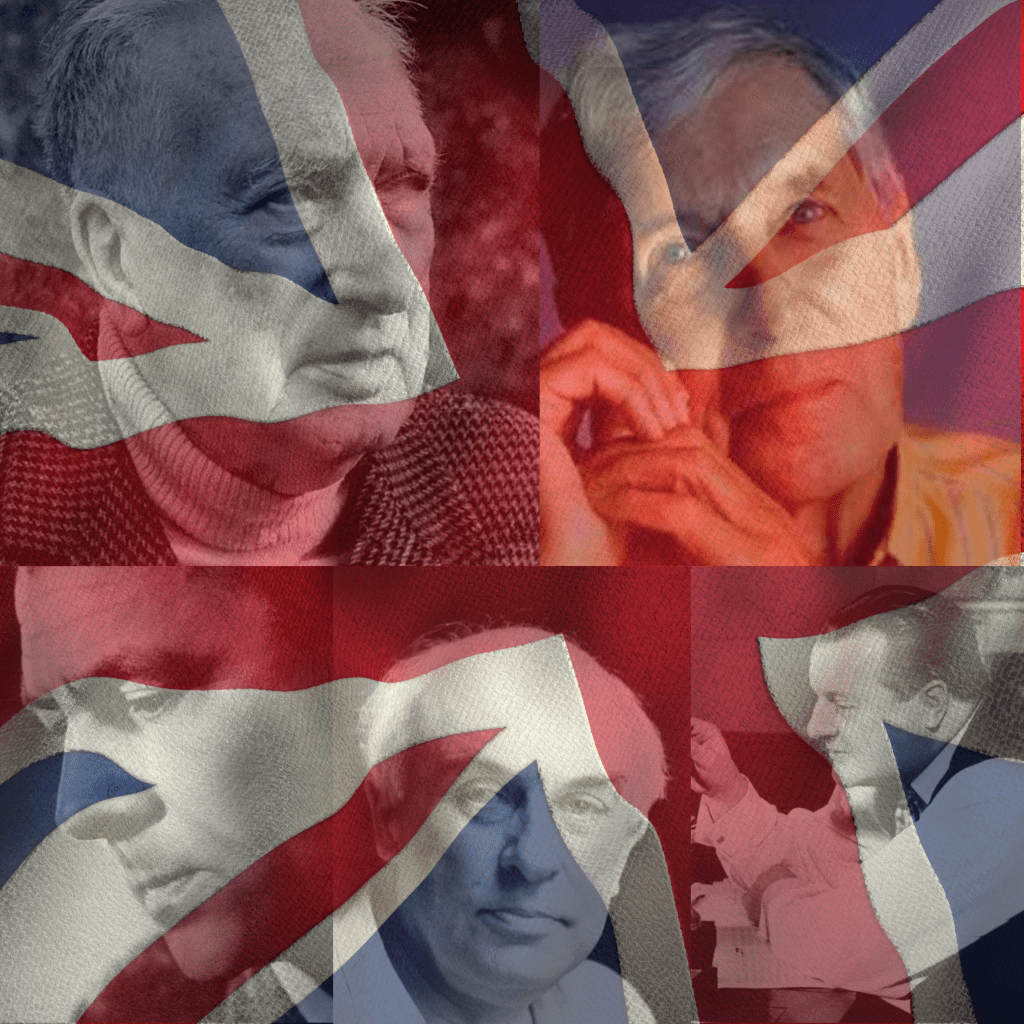
Constant Lambert, Alan Bush, Gerald Finzi, Michael Tippett, and William Walton were among the leading British composers born in the first decade of the 20th century. Their work shaped the sound of English music between the World Wars and beyond, blending traditional English melodies and harmonies with striking modern ideas. They often drew inspiration from folk tunes, choral traditions, and the social or spiritual concerns of their time. Many trained at the country’s major conservatories and moved in the same musical and social circles. Together, they carried English music forward from the legacy of Elgar, Vaughan Williams, and Holst into a new and distinctive era. Their work helped shape mid-20th-century British classical music as a rich blend of innovation and national identity.
Constant Lambert (1905–1951)
The Rio Grande (1927)
Orchestra of Opera North
David Lloyd Jones (conductor)
Alan Bush (1900–1995)
Three Concert Studies Op 31 (1947) No 1: Moto perpetuo
Adam Summerhayes
Catherine Summerhayes
Joseph Spooner (cello)
Gerald Finzi (1901–1956)
Grande Fantasia & Toccata
Peter Katin (Piano)
New Philharmonia Orchestra
Vernon Handley (conductor)
Michael Tippett (1905–1998)
Child of Our Time (between 1939 and 1941)
London Symphony Orchestra
Richard Hickox (conductor)
William Walton (1902–1983)
Scapino: A Comedy Overture (1940)
London Philharmonic Orchestra
Bryden Thompson (conductor)
Constant Lambert (1905–1951)
The Rio Grande (1927)
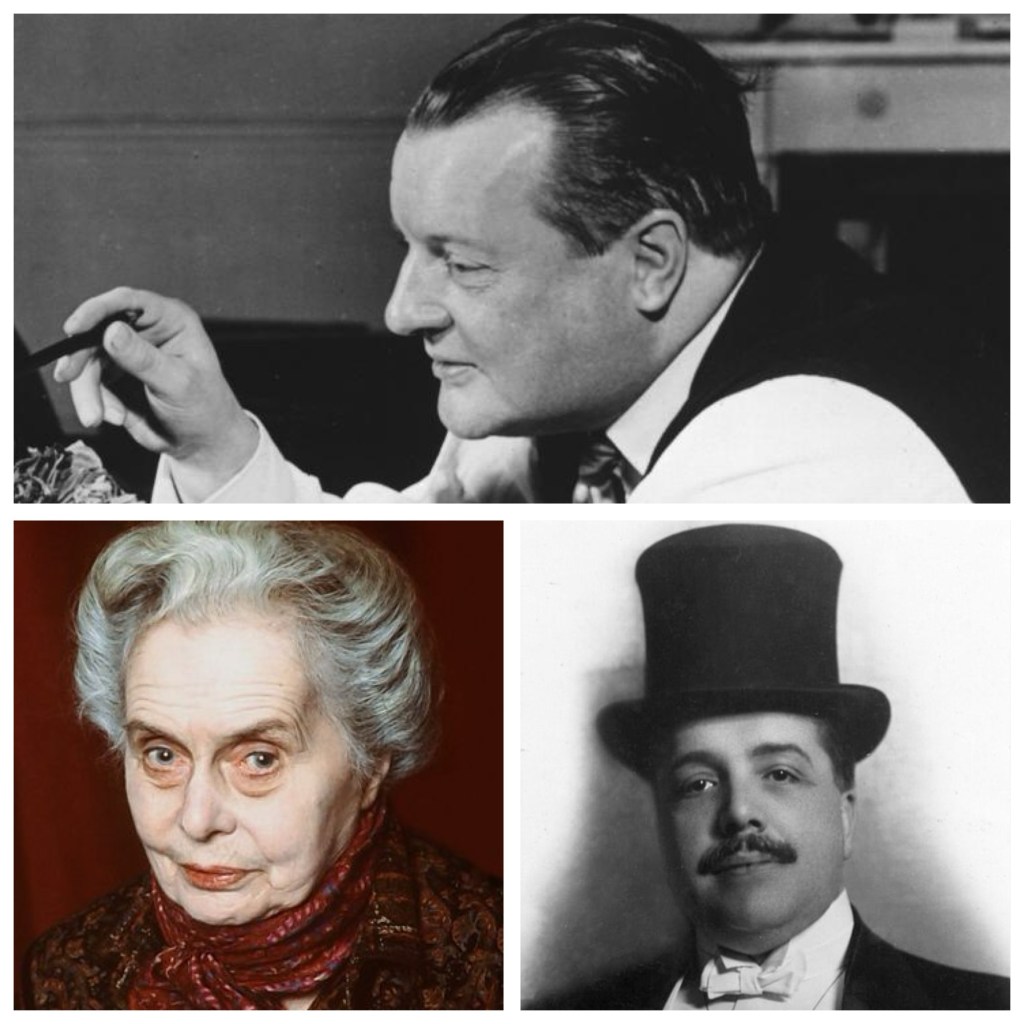
Constant Lambert was born in London in 1905 and died in 1951. He was the son of a Russian-Australian painter and showed extraordinary musical talent from an early age, writing orchestral works by the time he was 13. In 1922, he won a scholarship to the Royal College of Music, where he studied with Ralph Vaughan Williams and R.O. Morris. Early in his career, he became connected with fellow composers William Walton and Philip Heseltine (better known as Peter Warlock).
Lambert was a central figure in the rise of English ballet, serving as conductor and music director of the Vic-Wells Ballet – later the Royal Ballet – from 1931 to 1947. He co-founded the company with Ninette de Valois and played a vital role in establishing ballet as a major art form in Britain. He was also the first English composer to write a ballet for Diaghilev’s Ballet Russes, presenting Romeo and Juliet in 1928. Although much of his later career focused on conducting, Lambert was also an admired critic and the author of the influential book Music Ho! (1934). His work with major ballet companies helped shape the artistic direction of British ballet and inspired generations of dancers and musicians.
One of his best-known compositions is The Rio Grande (1927), a lively secular cantata for alto soloist, chorus, piano, brass, strings, and a large percussion section, setting a poem by Sacheverell Sitwell. The piece fuses jazz, ragtime, Brazilian dance rhythms, and English choral tradition into a brilliantly original style. Its bright outer sections contrast with a lyrical, nocturnal middle passage, and the writing for piano is dazzlingly virtuosic. Syncopation, rhythmic layering, and percussion colour lend the work its distinctive energy and charm.
The Rio Grande was first broadcast by the BBC in 1928 and became instantly popular. Lambert himself recorded it several times, notably in 1930 and 1949. Today, the work remains a beloved fixture of the British choral and orchestral repertoire, admired for its rhythmic vitality, inventive orchestration, and the freshness of its jazz-inspired sound.
Alan Bush (1900–1995)
Three Concert Studies Op 31 (1947) No 1: Moto perpetuo
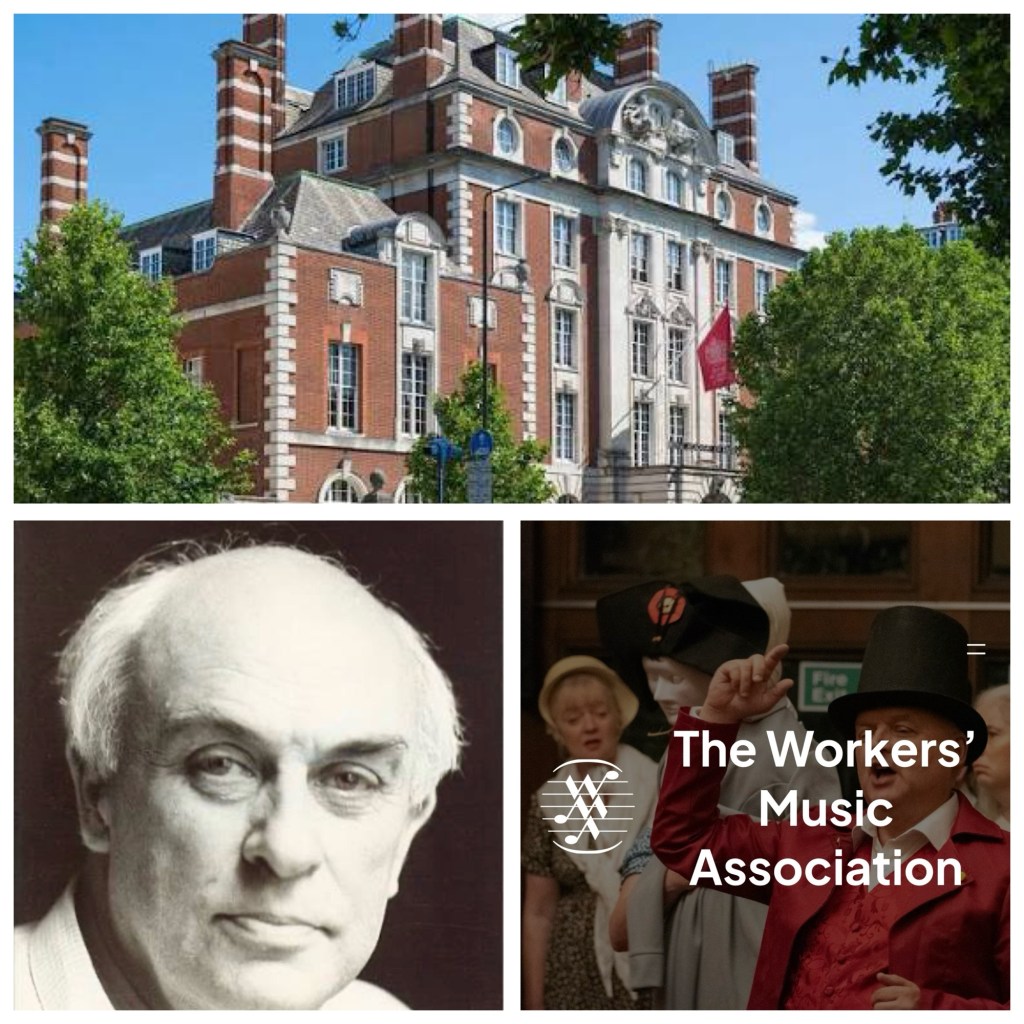
Alan Bush was born on 22 December 1900 in Dulwich, London, and died on 31 October 1995. He was a British composer, pianist, conductor, teacher, and political activist, known for his lifelong commitment to communism. Bush studied composition, piano, and organ at the Royal Academy of Music, where he won several scholarships and prizes. He went on to teach composition there for more than fifty years, retiring in 1975. A passionate believer in music’s social role, he helped to found the Workers’ Music Association in 1936 and served as its president for many years, promoting access to music for working people. His compositions often reflected his political convictions, exploring themes of social justice, equality, and community. Bush was a prolific composer, although recognition came slowly, his reputation grew later in life as admiration for his craftsmanship and integrity deepened. He also published a well-regarded textbook on counterpoint and remained active as both composer and teacher until his death.
In 1947, Bush wrote Three Concert Studies, Op. 31, for piano trio – piano, violin, and cello. The three movements, Moto Perpetuo, Nocturne and Barbican Chimes, display striking contrasts of character. The opening Moto Perpetuo is a whirlwind of continuous rhythmic energy and intricate interplay between instruments, showing Bush’s skill in texture and momentum. The work as a whole is often regarded as one of the finest examples of his chamber writing, admired for its inventiveness and emotional depth.
Gerald Finzi (1901–1956)
Grande Fantasia & Toccata
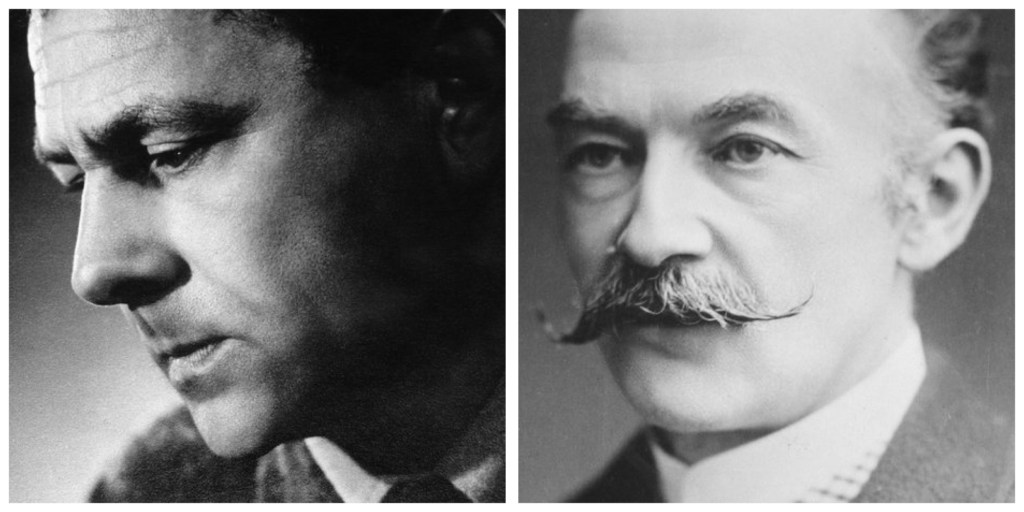
Gerald Finzi was born on 14 July 1901 in London and died on 27 September 1956. He is best remembered as one of England’s finest choral composers, admired for his lyrical, pastoral voice and a gentle sense of melancholy that runs through much of his music. Finzi studied with Edward Bairstow at York Minster and later with R.O. Morris in London. His first published work, the song cycle By Footpath and Stile (1921–22), set poems by Thomas Hardy – a writer who would become a lifelong inspiration. In fact, Finzi drew deeply on English poetry throughout his career, setting words by Hardy, Traherne, and Wordsworth in some of his most moving works.
Among his best-known compositions are the cantata Dies natalis, the Clarinet Concerto (1949), and the large-scale choral work Intimations of Immortality. In 1939, Finzi and his family settled in Ashmansworth, Hampshire, where he founded the Newbury String Players – an amateur orchestra that championed neglected English composers and offered performing opportunities to young musicians.
Finzi was also devoted to the revival of 18th-century English music, editing and performing works by composers such as William Boyce and Ivor Gurney. Diagnosed with Hodgkin’s Disease in 1951, he continued composing and helping others until his death five years later. His catalogue is characterised by a distinctively English lyricism and a profound sense of humanity.

Michael Tippett (1905–1998)
Child of Our Time (between 1939 and 1941)
Sir Michael Tippett was one of Britain’s most important 20th‑century composers. Born in London on 2 January 1905, he spent part of his childhood in Suffolk before studying composition at the Royal College of Music between 1923 and 1928, and later privately with R.O. Morris. Tippett first came to wide attention with his oratorio A Child of Our Time (1939–41), written during the Second World War. Around this time, he served as Director of Music at Morley College (1940–51), where he rebuilt and revitalised the department in difficult wartime conditions. His music evolved constantly – from an early, more traditional style to a distinctive modern voice known for its rhythmic energy, contrapuntal detail, and complex harmony. Later works show his openness to a wide range of influences, including blues and jazz. He was knighted in 1966, made a Companion of Honour in 1979, and directed the Bath International Music Festival from 1969 to 1974. A committed pacifist, Tippett was briefly imprisoned during the war for refusing military service. He continued composing well into old age despite failing eyesight and died in London on 8 January 1998.
A Child of Our Time remains Tippett’s best-known and most frequently performed work. Written between 1939 and 1941, he wrote both the music and the libretto himself after T.S. Eliot – whom Tippett had first approached – declined the commission. The work was inspired by the real-life events of 1938, when a young Jewish refugee, Herschel Grynszpan, assassinated a German diplomat, provoking the Nazi pogrom known as Kristallnacht. Premiered at London’s Adelphi Theatre in 1944, the oratorio follows the traditional three-part structure of Handel’s Messiah and Bach’s Passions, but Tippett replaced Bach’s chorales with African-American spirituals. He used these deeply expressive songs to represent universal suffering and hope, linking the tragedy of the Jews in Nazi Germany with all victims of oppression. The spirituals, performed with an underlying rhythm and swing, give the work a soulful immediacy and emotional power.
Drawing on influences from Purcell, Beethoven, Kurt Weill, and the Hall Johnson Choir, A Child of Our Time also reflects Tippett’s interest in Jungian psychology – particularly the idea of confronting humanity’s collective ‘shadow.’ It stands as his first fully mature masterpiece and a timeless expression of both mankind’s cruelty and its capacity for compassion and renewal.

William Walton (1902–1983)
Scapino: A Comedy Overture (1940)
Sir William Walton was one of England’s most celebrated 20th‑century composers, admired for his orchestral, choral, and film music. Born on 29 March 1902, he was the son of a choirmaster and a singer – music was in his blood from the start. Walton first attracted attention in the 1920s with Façade (1923), a witty and inventive set of chamber pieces written to accompany Edith Sitwell’s poetry. His Viola Concerto (1928–29), premiered by the great violist Paul Hindemith soon followed and established him as a major voice in British music. Among his masterpieces are the oratorio Belshazzar’s Feast (1931), the First Symphony (1931–35), and the Violin Concerto (1939), commissioned by Jascha Heifetz. He also had a gift for ceremonial music, writing the coronation marches Crown Imperial (1937) for King George VI and Orb and Sceptre (1953) for Queen Elizabeth II. Walton’s film scores are equally distinguished, particularly for Laurence Olivier’s Shakespeare productions—Henry V (1944), Hamlet (1948), and Richard III (1955). His opera Troilus and Cressida (1947–54) premiered at Covent Garden in 1954.
Walton’s music grew more reflective and lyrical in his later years, always marked by rich orchestration, rhythmic invention, and emotional depth. He spent his final decades on the island of Ischia in Italy, where he continued to compose and enjoy an active artistic life until his death on 8 March 1983. He remains one of Britain’s foremost composers, celebrated for blending the elegance of English tradition with modern vitality and colour.
His Scapino Overture, begun in 1940 and completed later that year (then revised in 1949), is one of his brightest and most playful orchestral works. Written to celebrate the fiftieth anniversary of the Chicago Symphony Orchestra, it was first performed in Chicago on 3 April 1941 under Frederick Stock. Lasting around eight or nine minutes, Scapino bursts with energy and humour. The piece is a joyful display of Walton’s rhythmic flair and orchestral imagination, weaving witty melodic fragments into a whirlwind of sound. Scapino remains one of his most recorded and beloved concert pieces, a shining example of his ability to combine sophistication with sheer delight.


Leave a comment