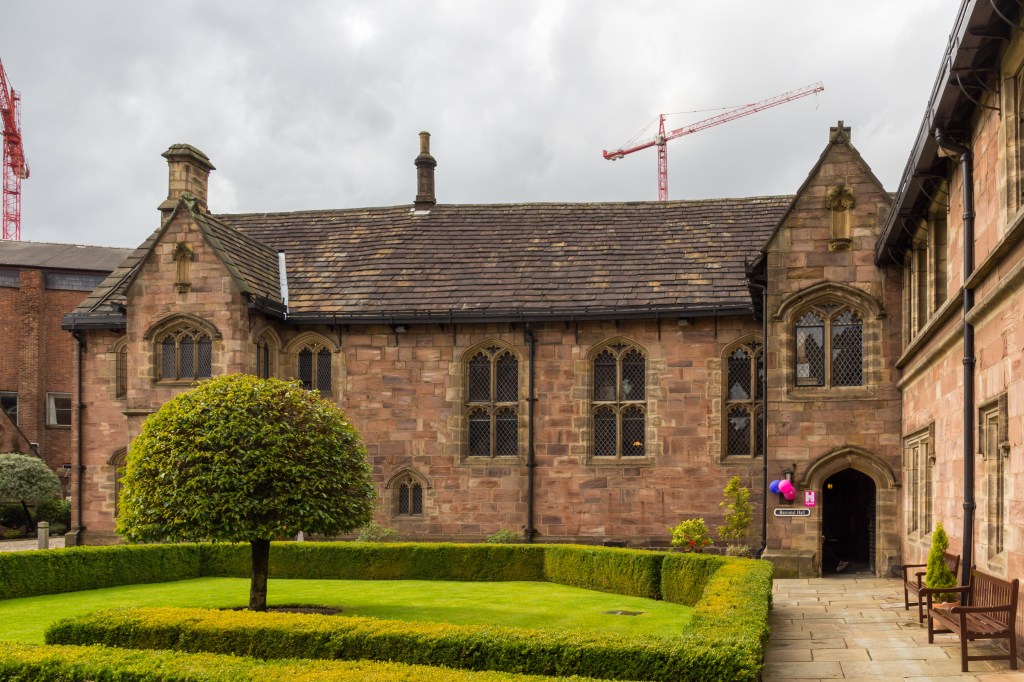
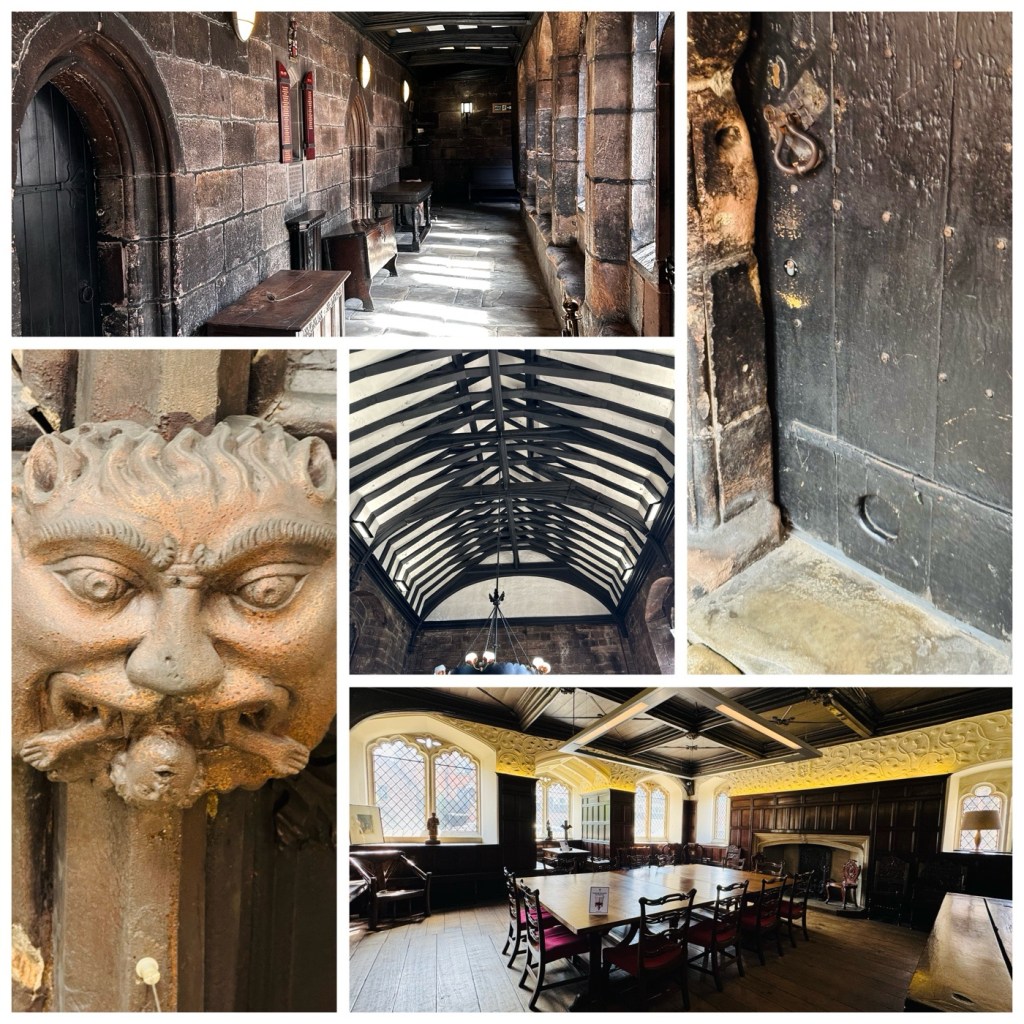
In the centre of Manchester stands Chetham’s School of Music; its buildings date back to the late Middle Ages and are now home to one of the finest music schools in the world. The story begins in 1422 when the complex was built as a residence for priests serving the Collegiate Church – today’s Manchester Cathedral. Although the Dissolution of the Monasteries in 1547 left the site in disrepair, a reprieve came in 1653 when the wealthy merchant Humphrey Chetham endowed it as both a free public library and a school for forty boys from “honest, industrious” families.
Jean-Baptiste Barrière (1707–1747)
Sonata No 4 in G for Two Cellos (between1733 and 1740)
Guy Johnston (cello studied at Chetham’s 1996 to 1999)
Sheku Kanneh-Mason (cello)
Jean Sibelius (1865-1957)
Violin Concerto Op. 47 (1903-1904 revised 1905) III. Allegro, ma non tanto
Jennifer Pike (violin – studied at Chetham’s School of Music from 1998 to 2001)
Bergen Philharmonic Orchestra
Sir Andrew Davis (conductor)
Dani Howard (b. 1993)
Trombone Concerto (2021) I. Realisation
Royal Liverpool Philharmonic Orchestra
Peter Moore (trombone – studied at Chetham’s School of Music from 2008 to 2014)
Michael Seal (conductor)
Gwilym Simcock (b. 1981 studied at Chestham’s circa 1989–1998)
On Broadway
Gwilym Simcock (piano)
Stephen Hough (b. 1961 – studied at Chetham’s 1972-1978)
Piano Concerto (1924) III. Tarentella
’The World of Yesterday’ (premiered 2024)
Hallé Orchestra
Stephen Hough (piano)
Mark Elder (conductor)
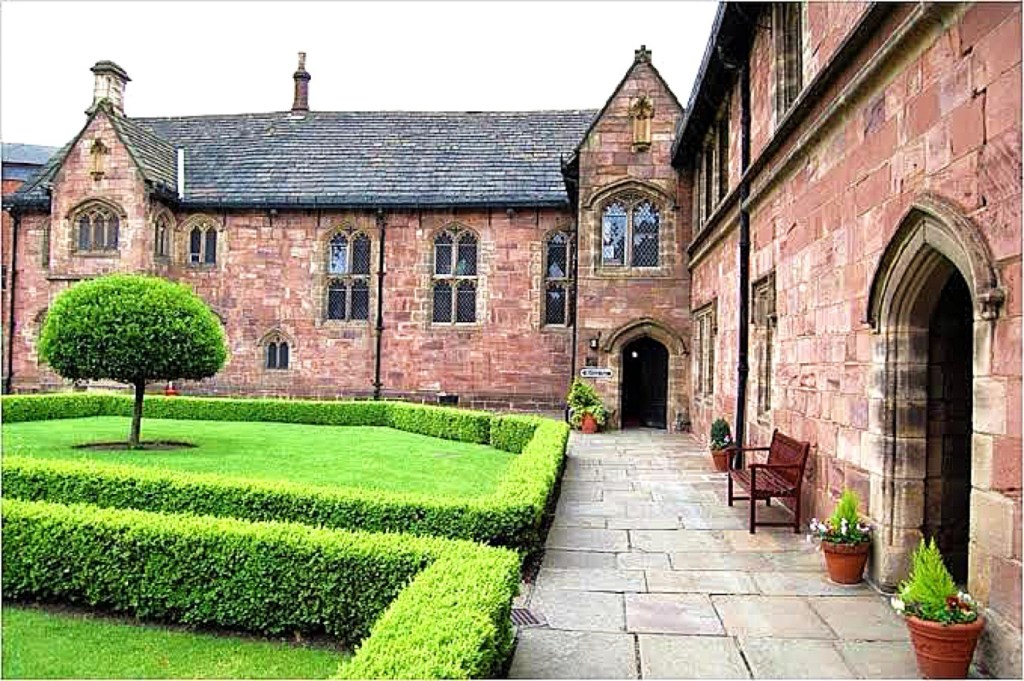
The Baronial Hall, now the library’s reading room, retains its hammer-beam roof and oak panelling. Meanwhile, the Audit Room’s timber ceiling is carved with grotesque bosses, including a fearsome ‘Mouth of Hell’ mask. Ghost stories have long circulated among staff and visitors, with reports of footsteps, whispers, and pages turning over the years. The Cloister Court features vaulted ceilings and the medieval stone-carved cat flap is often cited as one of the oldest surviving examples. Evidence of the practical measures once taken to protect books from mice, as librarians brought cats to patrol and guard the rare books from rodents.
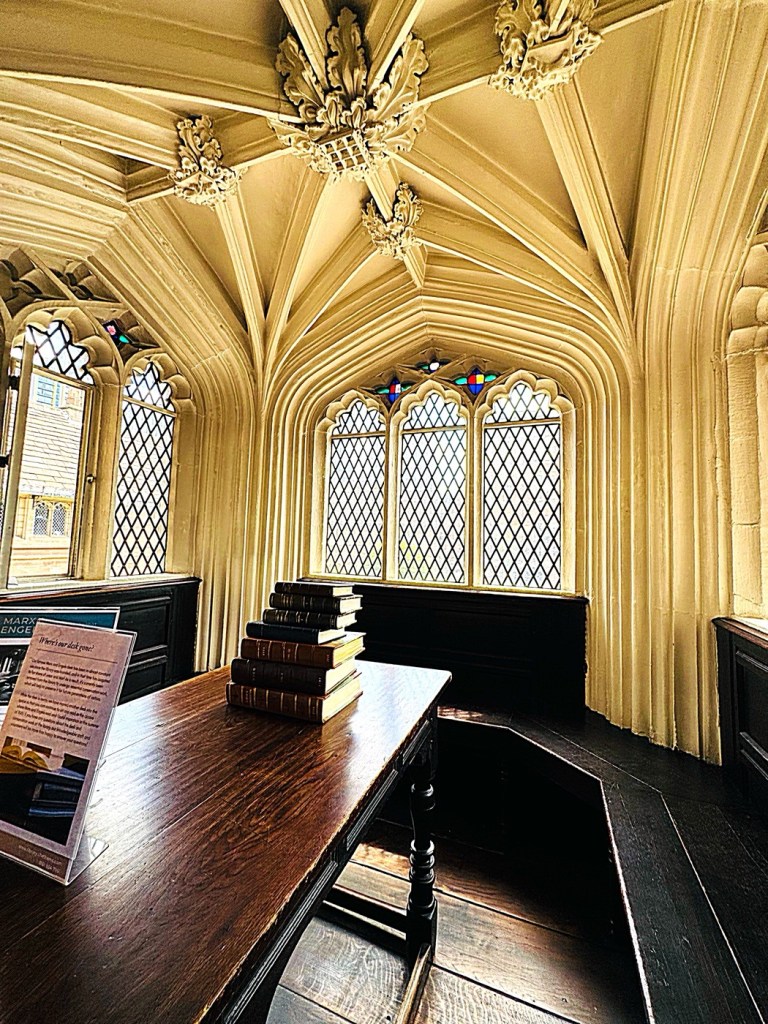
In a quiet alcove of the library, Karl Marx and Friedrich Engels sat together in the summer of 1845, discussing ideas that would culminate in The Communist Manifesto. A few centuries earlier, the Elizabethan mathematician and alchemist Dr John Dee had been appointed Warden of the Collegiate Church in 1598, bringing with him a reputation for occult study and mystical experiments. Though his tenure was troubled, Dee’s presence has forever linked Chetham’s with the world of esoteric learning.
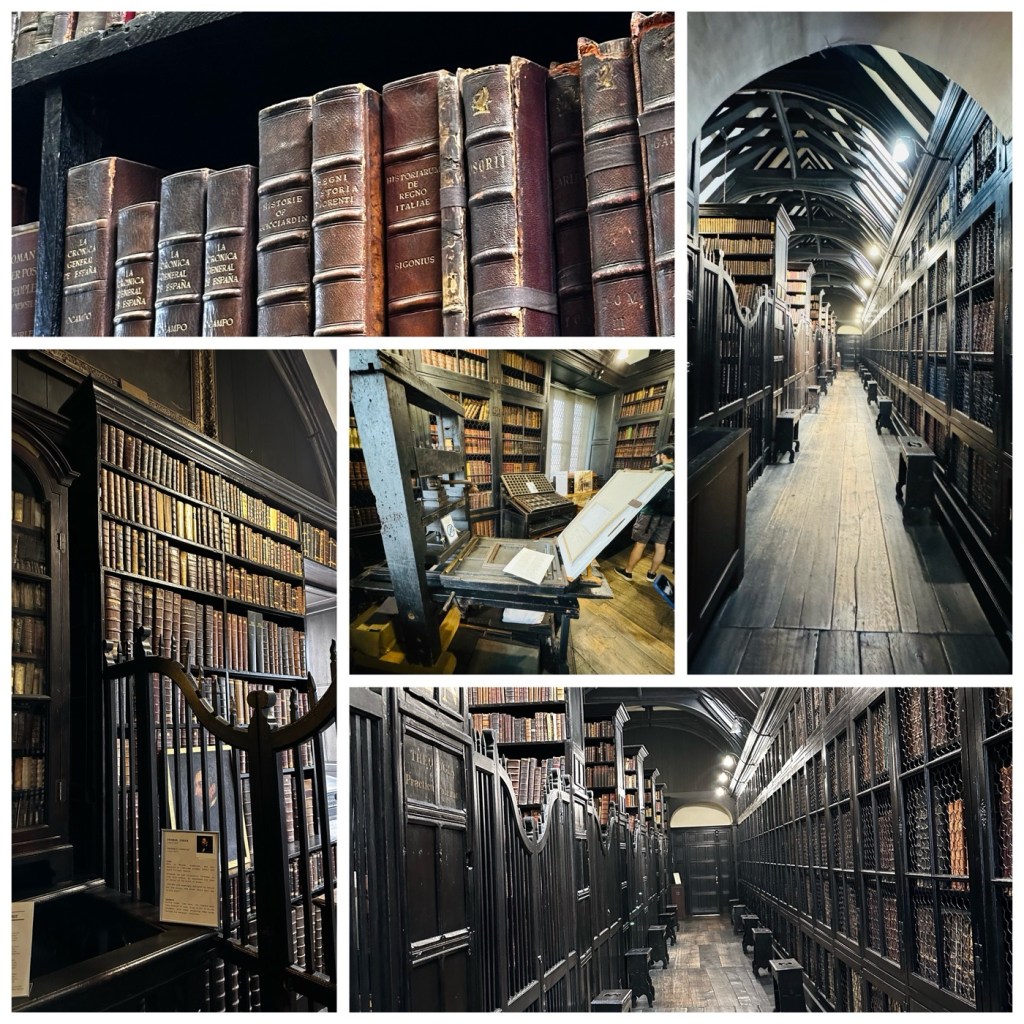
Remnants of the chained book system are still visible on the oak panels of the bookcase – iron hinges and chain plates. However, the books are no longer chained to the shelves, as this practice was abandoned in the mid-19th century when gates were installed instead to deter theft. Chaining was indeed an ingenious medieval method of securing volumes with iron links. Its collection includes 41 medieval manuscripts, over 100,000 printed volumes (including 60,000 published before 1851), and rare printed works from the 16th and 17th centuries. Although the library doesn’t house a Shakespeare First Folio – a common misconception (the library holds a Third Folio from 1663/64 instead) – the historical books it contains establish Chetham’s as the oldest free public reference library in the English-speaking world, with collections recognised for their national and international significance.
Chetham’s history has not always been one of success. In 2013, the school was shaken by revelations of historic child sexual abuse involving former staff, including Michael Brewer, a director of music jailed for abusing a pupil, and Christopher Ling, a violin teacher convicted of abusing students in the 1980s. The Independent Inquiry into Child Sexual Abuse (IICSA) later revealed a culture of silence, where reputation was prioritised over student welfare. It was a dark chapter, but one that prompted profound change. Today, Chetham’s has implemented rigorous safeguarding measures, ensuring that artistic excellence is inseparable from student welfare.

Today, Chetham’s continues to serve as a springboard for nurturing musical talent. Jennifer Pike, who entered the school at eight, became one of the youngest-ever winners of the BBC Young Musician of the Year at just twelve, performing Mendelssohn’s Violin Concerto. Her Sibelius is particularly highly praised, played on a 1708 Stradivarius violin.
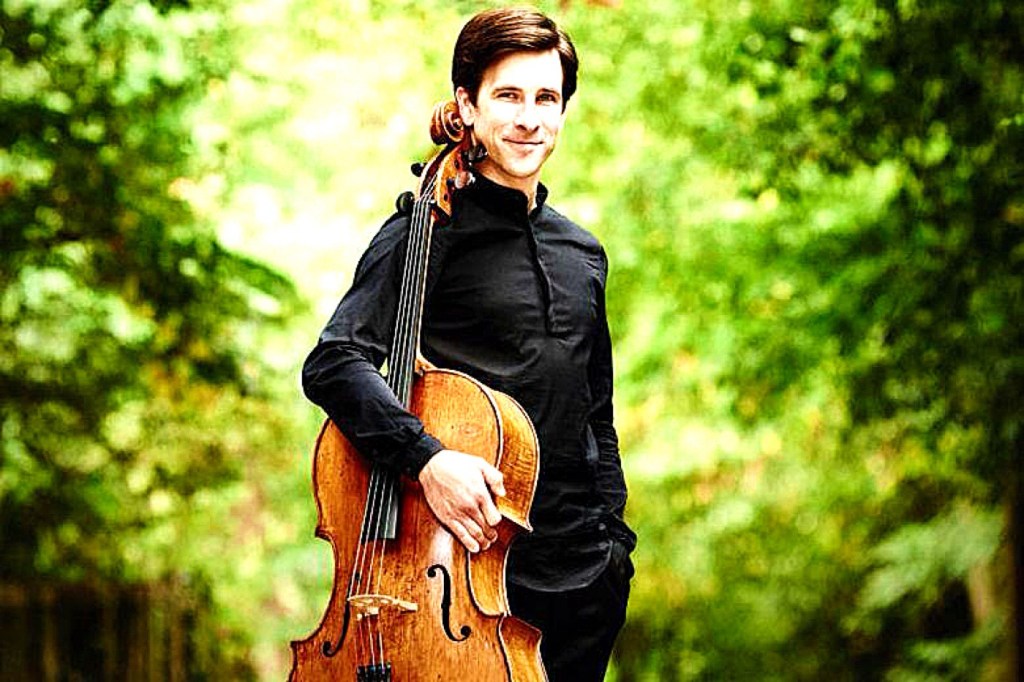
Guy Johnston, a chorister turned cellist, won the same competition in 2000 and now performs on a 1714 Tecchler cello, while also speaking passionately about safeguarding reforms in music education.
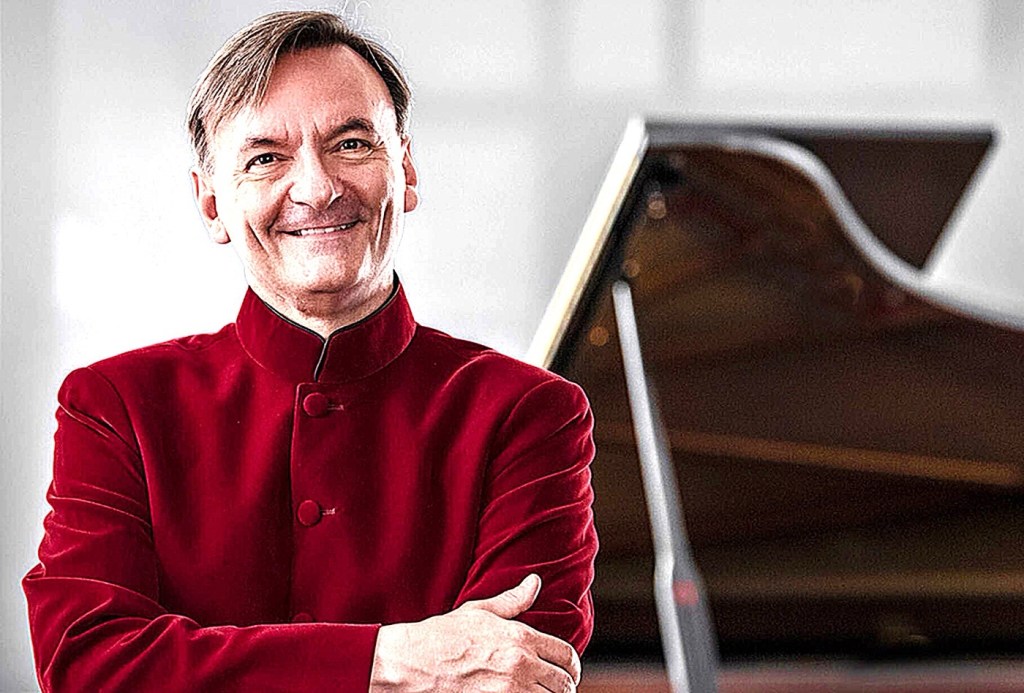
Stephen Hough, who studied at Chetham’s in the 1970s, has become one of the world’s greatest pianists, composers, and writers. In 2001, he became the first classical musician to receive a MacArthur ‘Genius’ Grant, and his recent Piano Concerto The World of Yesterday (2024) reflects his deep literary influences.
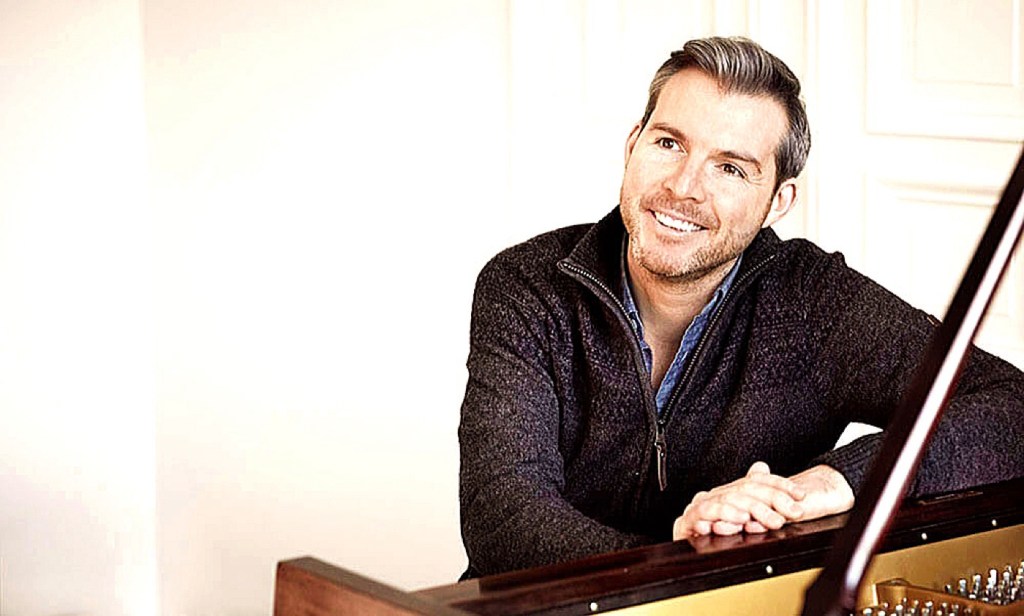
Gwilym Simcock, a classical prodigy turned jazz innovator, was the first jazz musician selected for the BBC Radio 3 New Generation Artists scheme, and his improvisations bridge genres with ease and fluency.
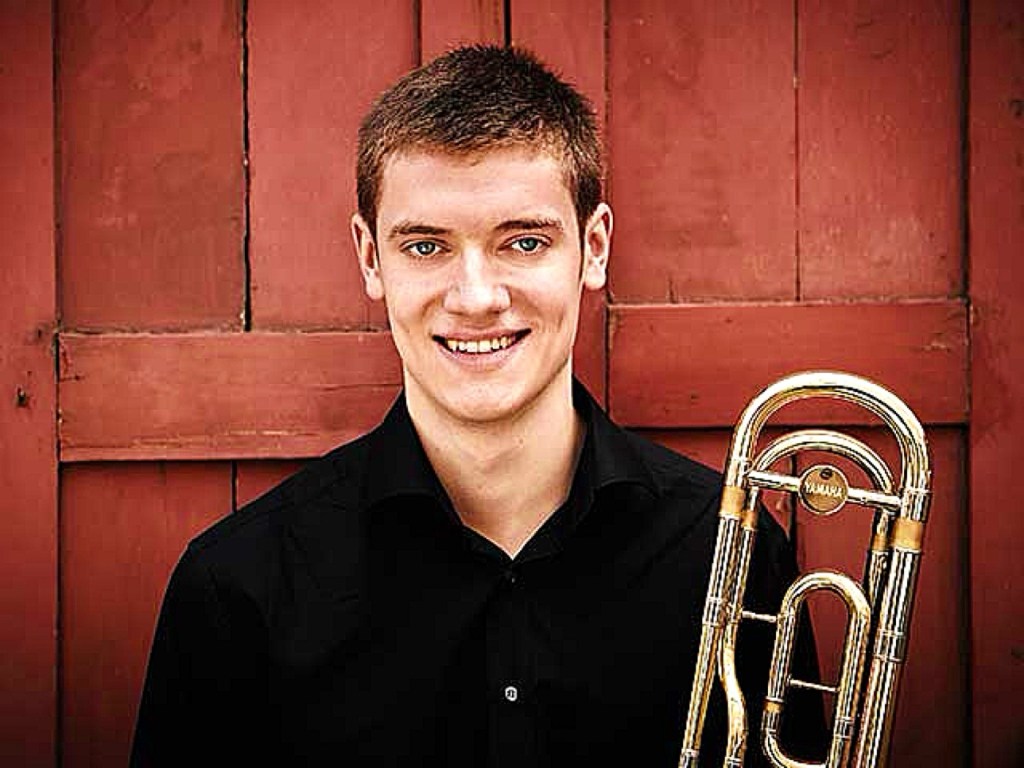
Peter Moore, who won the BBC Young Musician at eighteen, went on to become one of the youngest members of the London Symphony Orchestra and has since premiered new works, such as Dani Howard’s Trombone Concerto, with the Royal Liverpool Philharmonic.
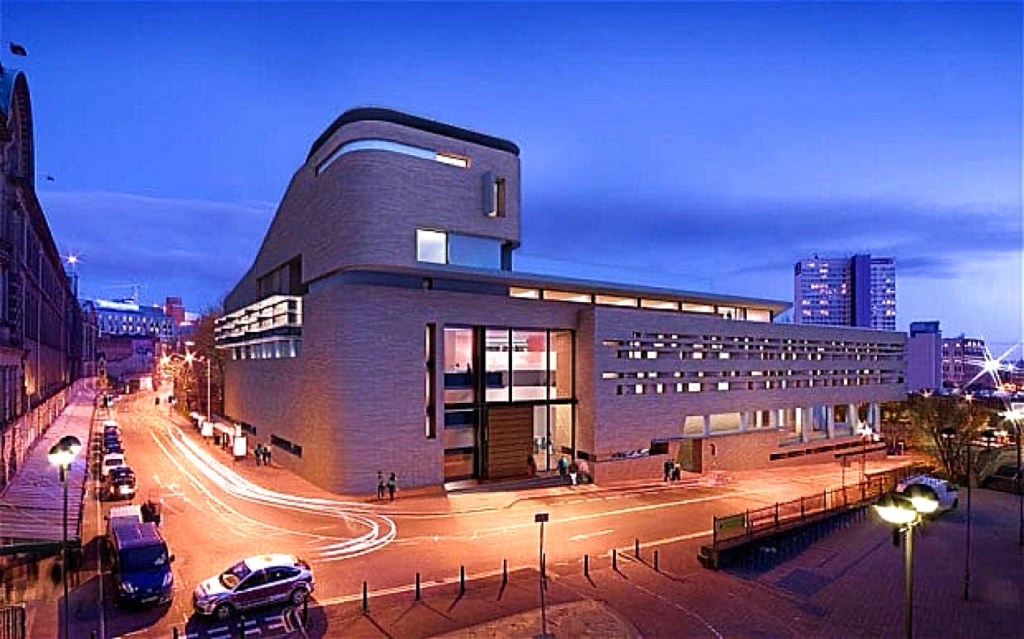
Chetham’s is a distinctive institution where history and innovation coexist. Its medieval walls have witnessed everything from alchemy and political debates to apparitions and centuries of scholarship. Today, Chetham’s alumni continue to make their mark and play a crucial role in shaping the musical landscape. It’s a place where the past undoubtedly influences its future, and where music, history, and perhaps a touch of magic come together to make Chetham’s one of the world’s most unique educational establishments.
Bibliography
Chetham’s School of Music and Library. History. Chetham’s Library. “Collections.”
Guppy, Henry. Chetham’s Library: The First Free Public Reference Library. Manchester: Chetham Society, 1910.
Hall, Geoffrey. Chetham’s Hospital and Library. Manchester: Chetham’s Library, 1983.
Francis, Mark. Marx and Engels in Manchester. Manchester Region History Review 1, no. 1 (1987): 45–52.
Roberts, Julian. John Dee and the Collegiate Church. Northern History 35, no. 1 (1999): 123–140.
Independent Inquiry into Child Sexual Abuse (IICSA). The Report of the Independent Inquiry into Child Sexual Abuse: Residential Schools. London: IICSA, 2022. https://www.iicsa.org.uk/reports-recommendations/publications/investigation/residential-schools.
BBC. BBC Young Musician Winners.
Hough, Stephen. Biography.
Pike, Jennifer. Jennifer Pike. IMG Artists.

Leave a comment