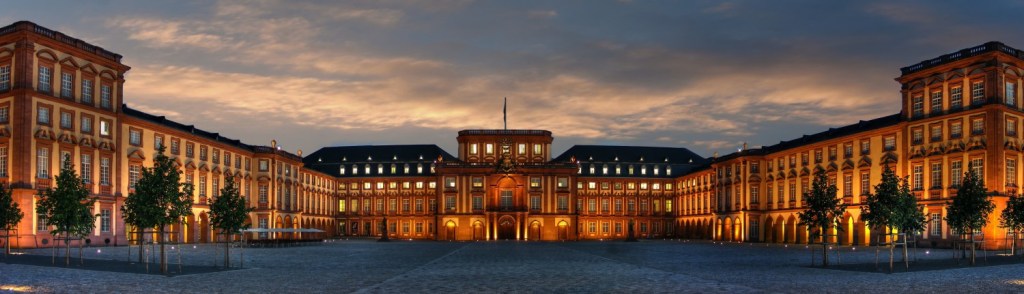
The Mannheim School refers both to an orchestra, which was based in the southwest German city of Mannheim, and to their musical innovations in instrumental music. The orchestra, under the patronage of Duke Karl Theodor (reigned 1743–99), the elector palatine, became the crème de la crème of the musical world and was made up of the finest European musicians. We explore the music composed at Mannheim and some of the leading musicians who were responsible for its unrivalled success.
Johann Stamitz (1717–1757)
Symphony in F Major Op 4 No 1 Movt 4 Presto
Northern Chamber Orchestra
Nicholas Ward (conductor)
Georg Vogler (1749–1814)
Ballet Suite No 1 Movt 4 Allegretto
London Mozart Players
Matthias Bamert (conductor)
Christian Cannabich (1731–1798)
Symphony No 55 in C major
Movt 3 Presto ma non troppo
Freiburg Baroque Orchestra
Gottfried von der Goltz (conductor)
Franz Xavier Richter (1709–1789)
Te Deum 1781 Movt 10 In te Domin e speravi
Czech Ensemble Baroque Choir and Orchestra
Roman Valek (conductor)
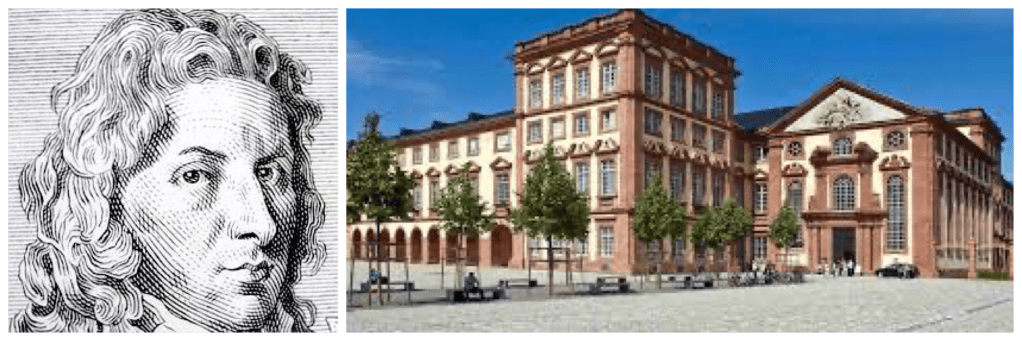
Johann Stamitz was born in Bohemia. From an early age, his prodigious musical talent became apparent, leading him to receive formal training in both violin and composition and around 1742 he was accepted as a violinist in the Mannheim court orchestra. Stamitz’s career trajectory reached new heights when he assumed the role of director of the Mannheim court orchestra in 1744, a position that would prove pivotal in the history of classical music.
Under Stamitz’s leadership, the Mannheim court orchestra became a hotbed of musical creativity and innovation, earning a reputation as the center of the Mannheim School.
This period marked a significant transition from the Baroque to the Classical era of music, and Stamitz played a central role in shaping its trajectory. His tenure in Mannheim saw the development of orchestral techniques that were groundbreaking for the time.
One of Stamitz’s most notable contributions was his innovative approach to orchestration, characterized by dynamic contrasts and expressive qualities. His symphonies, in particular, showcased a boldness and daring that set them apart.
The Mannheim School, under Stamitz’s guidance, became a crucible for experimentation, attracting the attention and admiration of contemporaries and later composers alike.
Stamitz’s influence extended far beyond his immediate circle. Composers such as Wolfgang Amadeus Mozart and Joseph Haydn looked to Stamitz as a source of inspiration, drawing from his daring musical expressions and pioneering orchestral techniques.
Stamitz’s impact on the evolution of the symphony and orchestral music remains palpable in the works of these later luminaries. His legacy endures through his compositions and his role in propelling classical music into a new era.
His willingness to push the boundaries of musical expression and his commitment to innovation have secured him a lasting place in the pantheon of classical composers, making him a central figure in the transition to the Classical era and a source of inspiration for generations of musicians.
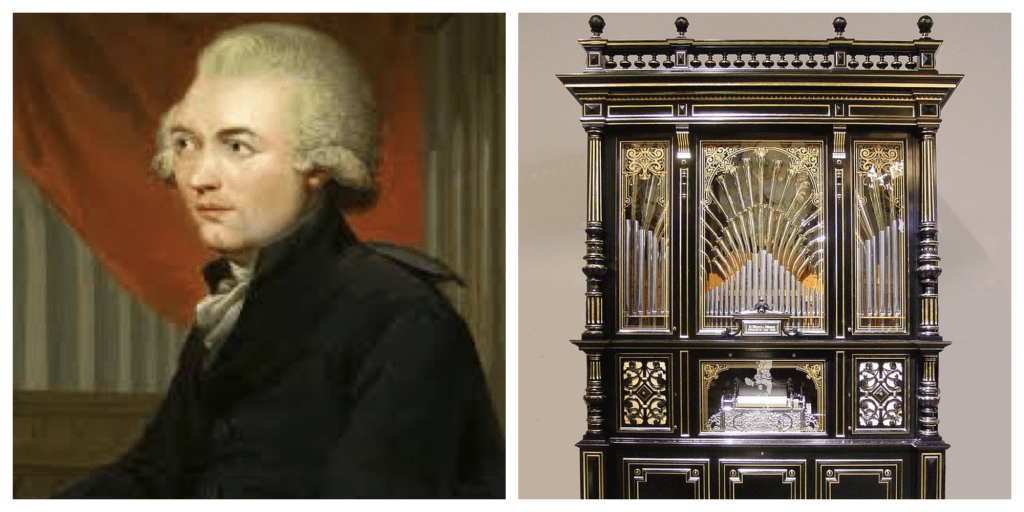
The name of Georg Joseph Vogler means little today, yet in his time he was an important and influential musician. In a long and colorful career extending over many decades, Vogler established himself as a foremost experimenter in baroque and early classic music.
His greatest successes came as performer and designer for the organ at various courts and cities around Europe, as well as a teacher, attracting highly successful and devoted pupils such as Carl Maria von Weber.
Vogler’s compositions included 10 operas, much church music and organ preludes in every key but his reputation as a composer was mixed, with contemporaries such as Mozart believing Vogler to have been a charlatan.
Despite this, his highly original contributions in many areas of music (particularly musicology and organ theory) and influence on his pupils endured, and combined with his eccentric and adventurous career, prompted one historian to summarize Vogler as ‘one of the most bizarre characters in the history of music’.
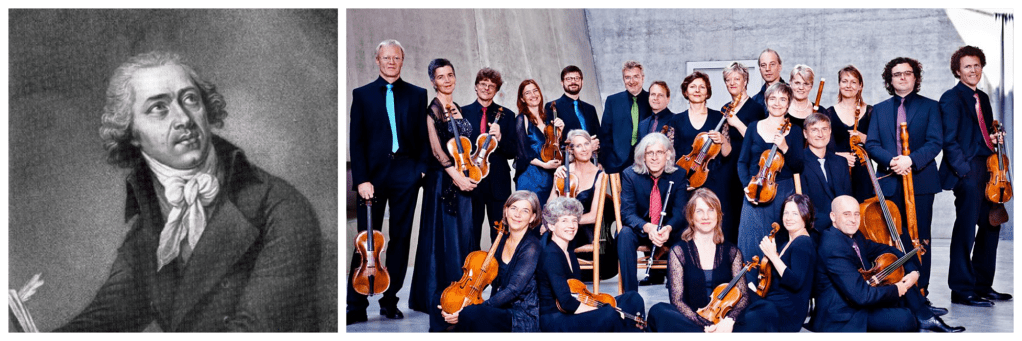
The Mannheim school also saw itself as a school of composition. On the one hand the compositional craft was to be learned, on the other hand practical experience was to be gained with new works by numerous composers from Germany and abroad.
Particularly talented students were sent to Italy for study visits at the Elector’s expense. Christian Cannabich was one such student.
He was born in Mannheim and came to Johann Stamitz as a student at the age of 10. At the age of 12 he joined the Hofkapelle as a scholar, three years later he was a court musician.
After the early death of Johann Stamitz, Cannabich took over the position of concertmaster in 1758 and became the leader of the most famous orchestra of the time.
In the following years he composed 70 symphonies and over 40 ballet pieces, became a highly esteemed conductor and orchestra teacher and taught many students.
Among them were the sons of his predecessor, Carl and Anton Stamitz. These two were not only virtuoso violinists, but also played and composed for the viola.
One of the first concertos for viola was written by Carl Stamitz, who had great success with it throughout Europe, and it still belongs to the standard repertoire of every viola player today.
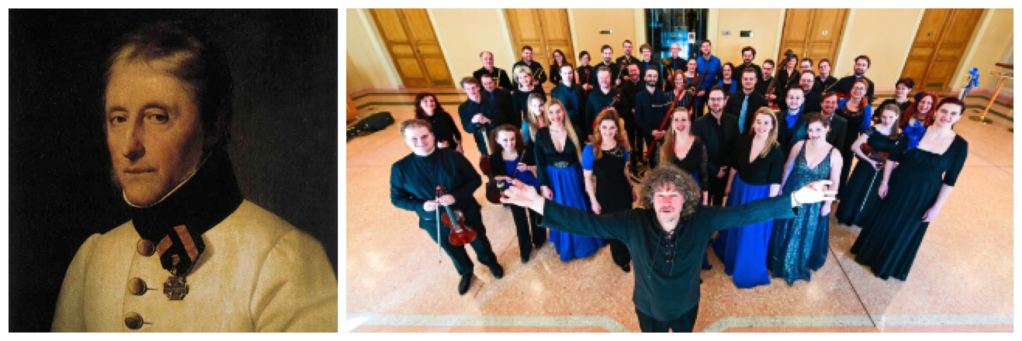
The origins of Franz Xaver Richter are uncertain beyond the fact that he is known to have been of Moravian-Bohemian descent and may have been born in Holleschau although there is no record of his birth there in the church archives.
Richter was a professional singer and received a very thorough musical education possibly under Fux’s personal supervision in Vienna.
In April 1740 he was appointed vice-Kapellmeister to the Prince-Abbot Anselm von Reichlin-Meldegg in Kempten, Allgäu where he probably worked for the next five or six years.
By 1747, however, his name appears among the court musicians of Mannheim; he is also named in published opera libretti and occasionally styled virtuoso di camera.
Six of Richter’s symphonies had been published in Paris by 1744 – that is before his appointment to the Electoral court – but he also obtained recognition in Mannheim as a composer of sacred music.
Among his most important pupils were J.M. Kraus, H.J. Riegel, Carl Stamitz and Ferdinand Fränzl. In 1768 he was appointed a court chamber composer
During the 1750s and 1760s he became increasingly displeased with the preoccupation with virtuosity and modishness at Mannheim which he considered was mum leading composers to over-rely on stereotyped musical effects.
In April 1769 he succeeded Joseph Garnier as Kapellmeister at Strasbourg Cathedral, where both his performing and composing activities turned increasingly to sacred music.
During his last years Haydn’s star pupil Ignaz Pleyel served as his assistant at the cathedral.
He is considered one of the foremost Mannheim composers even though he consciously eschewed the fashionable style prevalent there.
His early works, with their strong Austrian Baroque flavour, found a much warmer reception in musically conservative centres such as London and Berlin than in the south of Germany.




Leave a Reply