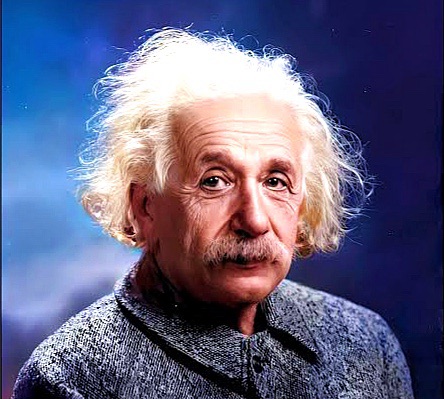
Albert Einstein (1879–1955) revolutionised our understanding of space, time, and energy, but he was also a passionate musician. For him, science and music expressed the same longing: to grasp the harmony of the universe.
A radio broadcast, produced for RTHK Radio 3 and now available on SoundCloud, features excerpts from five key composers: Antonio Vivaldi, Wolfgang Amadeus Mozart, Johann Sebastian Bach, Franz Schubert and Joseph Haydn
Antonio Vivaldi (1678-1741)
Concerto No. 1 in E Major, Op. 8, RV 269, “Spring” from The Four Seasons 1716 and 1720)
Camille Berthollet (violin)
Orchestra National du Capitol de Toulouse
Benjamin Levy (Director)
Wolfgang Amadeus Mozart (1756-1791)
Violin Sonata in E Minor, K. 304 – Allegro con spirito (1778)
Augustin Dumay (violin)
Maria Joã Pires (piano)
Johann Sebastian Bach (1685–1750)
Brandenburg Concerto No. 3 in G major BWV 1048 III. Allegro (1711-1720)
English Concert
Trevor Pinnock (Director)
Franz Schubert (1797-1828)
Ave Maria (1825) (violin/piano arrangement)
Nicola Benedetti (violin)
Academy of St-Martin-in-the-Fields
James MacMillan (conductor)
Joseph Haydn (1731-1809)
Symphony No. 94 in G major Hob. 194 IV. (1791) Finale
Collegium Musicum
Richard Hickox (conductor)
In 1905, during his Annus Mirabilis (Miracle Year), Einstein published four pioneering papers. He explained the photoelectric effect, demonstrating that light can act as discrete particles (photons) – a discovery that earned him the Nobel Prize in 1921. He provided proof for the existence of atoms through his work on Brownian motion. He redefined space and time as a single spacetime in his theory of special relativity. He also introduced the iconic equation, revealing the interchangeability of mass and energy.
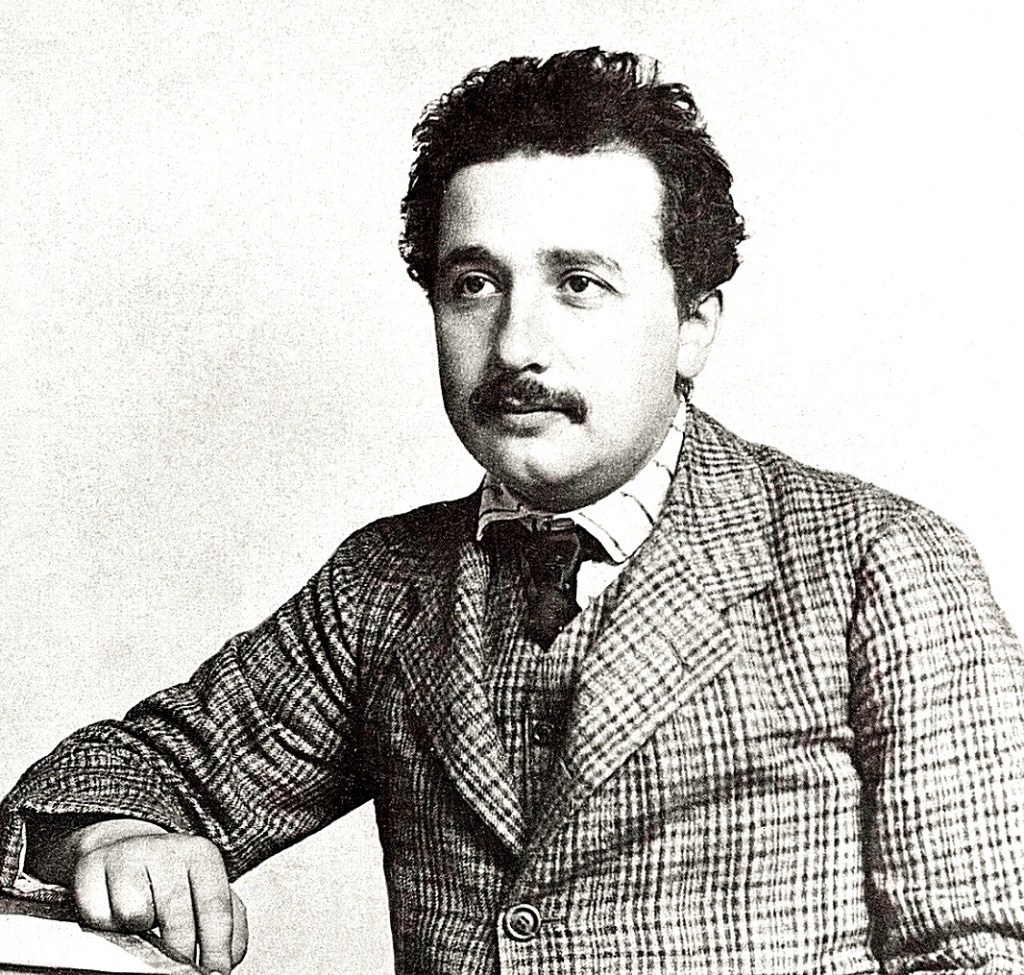
By 1915, he extended these ideas into general relativity, describing gravity as the curvature of spacetime. Its predictions, including the bending of light, received spectacular confirmation during the 1919 solar eclipse, when Arthur Eddington’s expedition measured starlight deflected by the Sun. The announcement made headlines worldwide, catapulting Einstein to international fame.
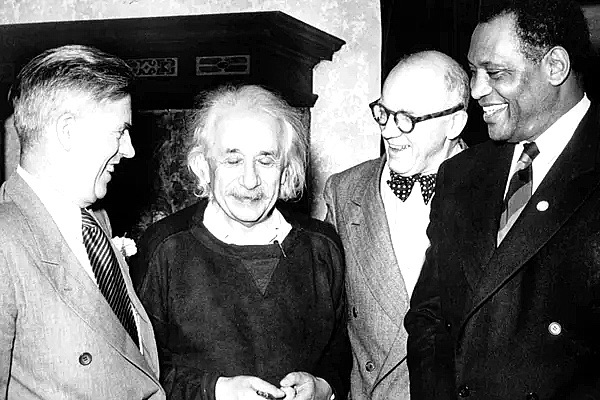
Beyond science, he campaigned for pacifism, though he moderated this stance during World War II in opposition to Nazism. In the United States, he spoke out against racial segregation, supporting the NAACP (National Association for the Advancement of Colored People), a civil rights organization founded in 1909. He befriended W.E.B. Du Bois (1868–1963), a pioneering African American sociologist, historian, civil rights activist, and co-founder of the NAACP. He championed Zionism, helping to establish the Hebrew University of Jerusalem while imagining peaceful coexistence between Jews and Arabs.
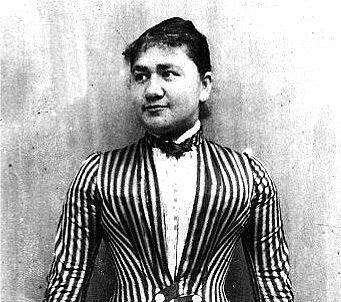
Music was Einstein’ss other great passion. At six years old, his mother, Pauline Koch, arranged violin lessons for him. Though he initially resisted practice, at thirteen he discovered Mozart’s Violin Sonatas—especially the E minor Sonatas (K. 301 and K. 304)—and fell in love with them. Mozart became his favorite composer. Einstein described Mozart’s music as “so pure and beautiful that I see it as a reflection of the inner beauty of the universe.” His second wife, Elsa, recalled falling in love with him because of the way he played Mozart on the violin.
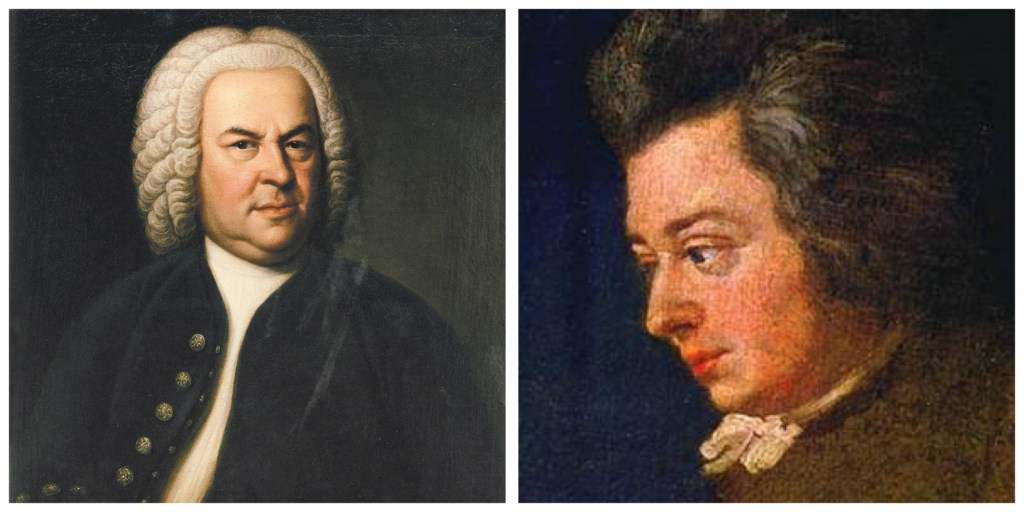
Wolfgang Amadeus Mozart (1756-1791)
Johann Sebastian Bach (1685–1750) was also a major influence on Einstein’s musical life. He admired Bach’s fugues for their clarity and mathematical precision, often playing them while contemplating scientific problems. He also admired Joseph Haydn (1731–1809), describing him as “the absolute tops.” Franz Schubert (1797–1828) captivated him with his chamber pieces such as Ave Maria, which Einstein often played on the violin and piano. He also enjoyed the vivid imagery of The Four Seasons by Antonio Vivaldi (1678–1741), which he called “painting with sound.” However, Einstein disliked Richard Wagner, calling his music “downright repugnant” and criticizing its lack of architectural structure.
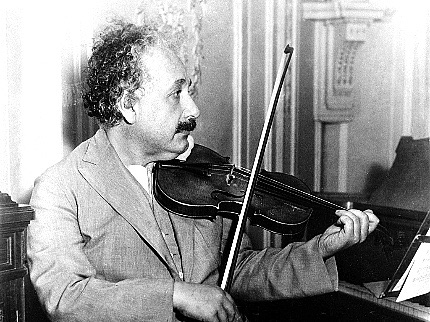
Einstein used music as a refuge and a means of clarity, playing the violin or piano daily. His love for Bach and Mozart shaped his scientific approach, inspiring him and providing mental discipline. He once remarked: “If I were not a physicist, I would probably be a musician.” Einstein was not alone in bridging science and music. Figures like Brian May, astrophysicist and guitarist of Queen, and Oliver Sacks, neurologist and author of Musicophilia, also found inspiration in both fields.
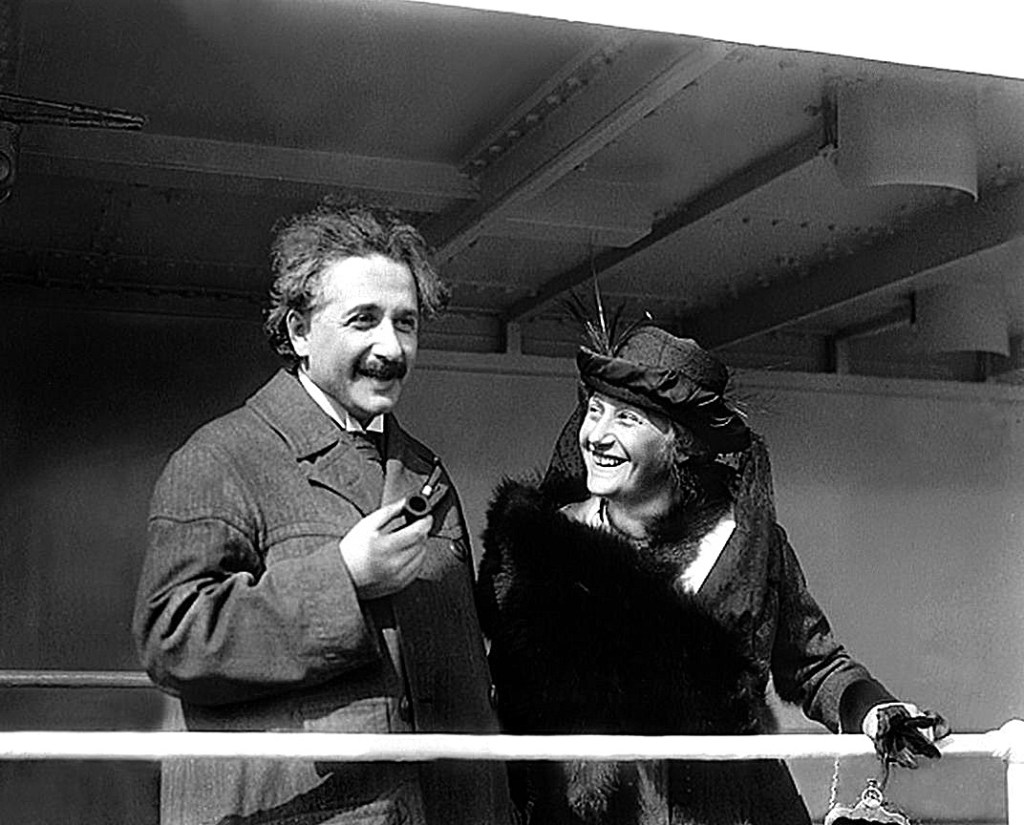
Einstein’s life illustrates how the pursuit of knowledge – whether in physics or music – is fundamentally a human endeavor. His violin playing was more than a hobby; it served as a companion to his scientific creativity. Ultimately, Einstein was both a physicist and a musician, aiming to uncover the harmony of the universe.
This article was researched using primary and secondary sources with the assistance of Le Chat Pro. The research was cross-checked for accuracy.

Leave a Reply