
Alexander Scriabin entered a musical world in 1872 that was still deeply influenced by the Romantic traditions of Chopin and Liszt. Yet as a young composer, he went beyond these influences and developed a style uniquely his own. His music, particularly in works like The Poem of Ecstasy and Piano Sonata No. 5, Op. 53, revealed a highly chromatic and non-functional harmonic language that distinguished him from contemporaries such as Rachmaninoff.
A radio broadcast, produced for RTHK Radio 3, is now available on SoundCloud, featuring excerpts from Rimsky-Korsakov Scheherazade, Rachmaninoff Symphony No. 2, Scriabin Symphony No. 1, Op. 26, Piano Sonata No. 5, Op. 53 and The Poem of Ecstasy, Op. 54
Nikolai Rimsky-Korsakov (1844 – 1908)
Scheherazade (1888) II.The Kalender Prince
London Symphony Orchestra
Andre Previn (conductor)
Alexander Scriabin (1872-1915)
Symphony No. 1, Op. 26 (1899-1900) – II. Allegro drammatico
Philadelphia Orchestra
Riccardo Muti (conductor)
Alexander Scriabin (1872-1915)
Piano Sonata No. 5, Op. 53 (1907)
Vladimir Ashkenazy (piano)
Sergei Rachmaninoff (1873-1943)
Symphony No. 2 (1906-1907) IV. Allegro vivace
Berlin Philharmonic Orchestra
Herbert von Karajan (conductor)
Alexander Scriabin (1872-1915)
The Poem of Ecstasy, Op. 54 (1905–1908)
USSR Symphony Orchestra
Evgeny Svetlanov (conductor)
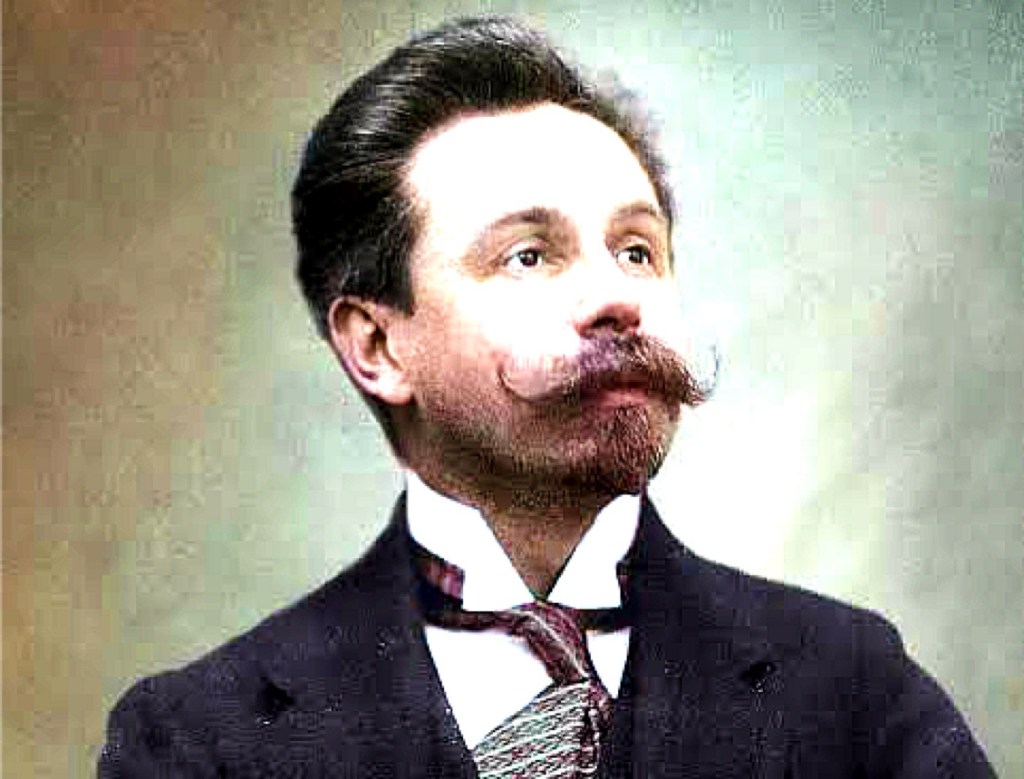
The broader Russian orchestral tradition shaped Scriabin’s early development. Although he did not study formally under Rimsky-Korsakov, he absorbed Rimsky-Korsakov’s influence. As a student of Anton Arensky and Sergei Taneyev at the Moscow Conservatory, Scriabin became deeply familiar with Rimsky-Korsakov’s compositions, such as Scheherazade and Capriccio Espagnol, which were widely performed in Moscow during his formative years. The advanced harmonic techniques in these works, including chromaticism and modal mixtures, formed part of the musical environment Scriabin absorbed. He then pushed these influences further into the realm of post-tonal expression in his own compositions. Rimsky-Korsakov, as a leading figure in Russian music, would likely have been aware of Scriabin’s rising reputation, especially as Scriabin’s Symphony No. 1 and Piano Concerto in F# minor were performed in major Russian cities.

Scriabin pursued intellectual interests well beyond music. He explored Theosophy, a spiritual movement seeking to understand the divine through religious, philosophical, and mystical traditions. He also engaged with philosophy, addressing fundamental questions about existence, knowledge, and ethics. His fascination with Synesthesia—the idea of perceiving music as colours or shapes—led him to create a system associating musical keys with specific colours, such as C as red and F# as bright blue or violet.

Rimsky-Korsakov’s Scheherazade, Op. 35, provided an excellent example of inspiration for the young Scriabin. This symphonic suite, inspired by One Thousand and One Nights, is renowned for its vivid orchestration and exotic melodies. Rimsky-Korsakov’s mastery of orchestral colour and texture is evident throughout, with each movement depicting a different tale from the collection. The piece remains a staple of the Romantic orchestral repertoire and demonstrates Rimsky-Korsakov’s ability to evoke vivid imagery and tell a story through music.
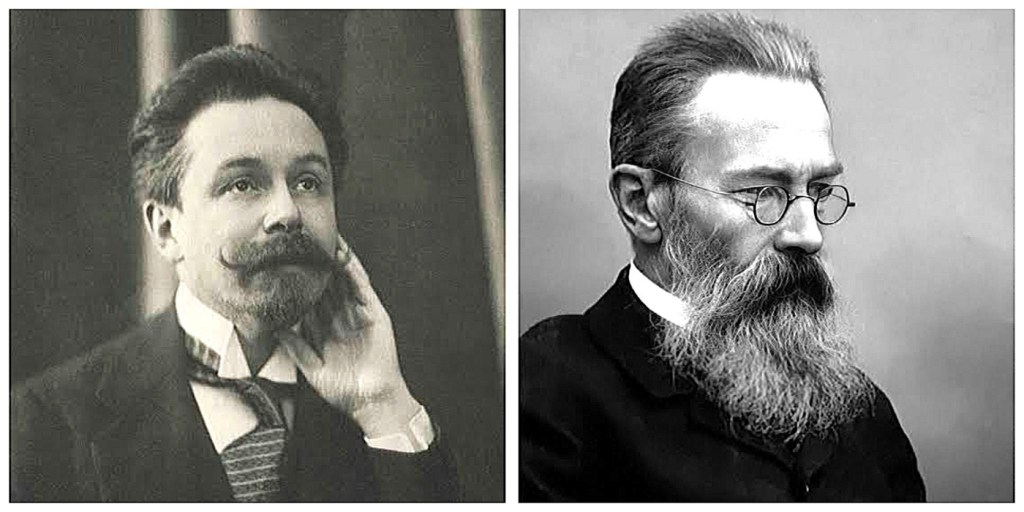
Both Scriabin and Rimsky-Korsakov experienced synesthesia which allowed them to “see” colors when they heard specific musical sounds.
Scriabin composed his Symphony No. 1 in E major, Op. 26, as one of his early major orchestral works. It reflects Rimsky-Korsakov’s orchestration style, especially in its use of woodwinds and strings. Yet, it also foreshadows Scriabin’s early harmonic daring with chromaticism and unconventional progressions that prefigure his later modernist style. Critics at its premiere were divided, praising its orchestration but finding its harmonic language confusing. This symphony marked an important step in Scriabin’s development, bridging his Romantic roots with the radical innovations to come.
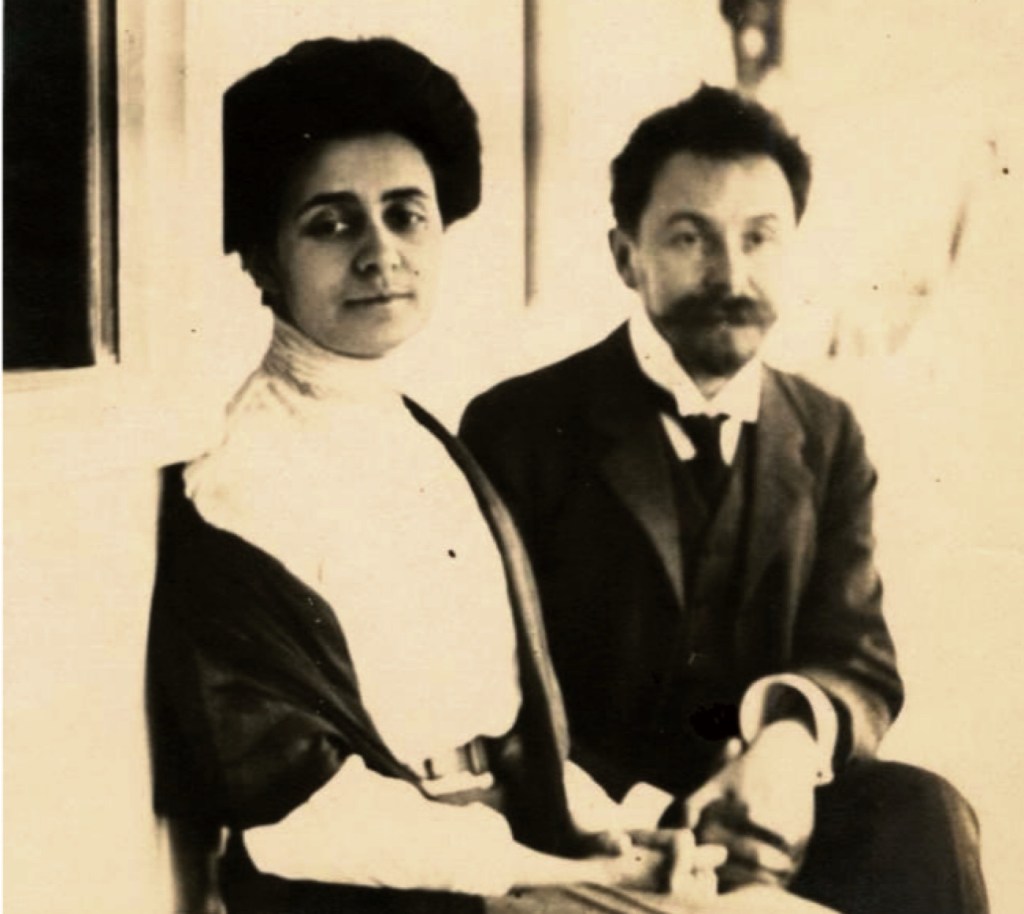
Scriabin’s personal life combined struggle and vision. At 16, he injured his right hand from over-practising, which led him to develop a unique piano technique and focus more on composition. Financially, he struggled for much of his early career until his partner, Tatyanae de Schloezer, provided support. His relationship with Margarita Morozova, a wealthy patron, also enabled him to compose full-time. Influenced by Theosophy and philosophy of Vladimir Solovyov, Scriabin saw himself as a divine figure destined to transform humanity through music. His most ambitious project, Mysterium, envisioned a week-long ritual in the Himalayas, combining music, colour, light, and dance to usher in a new era of enlightenment. Tragically, this work remained unfinished at his death.
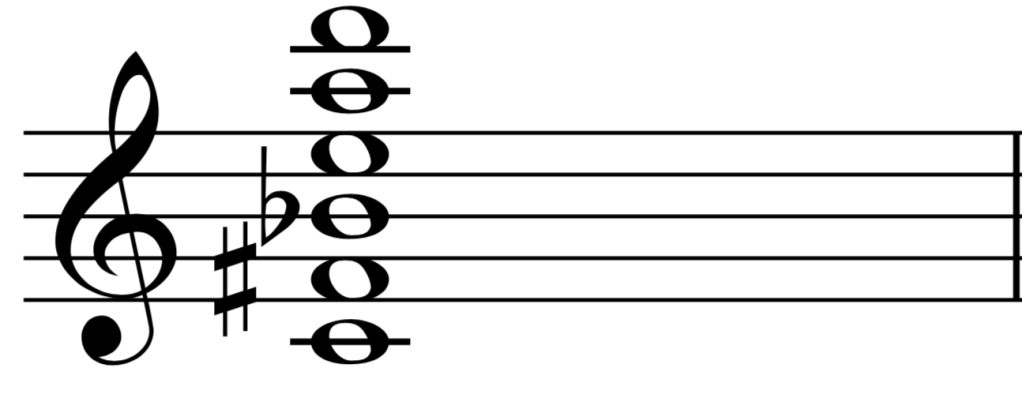
Scriabin introduced his famous mystic chord in Piano Sonata No. 5, a sonority that would become a hallmark of his later works. This sonata marked a significant departure from traditional tonality, embracing a highly chromatic and post-tonal harmonic language.The piece was divisive at its premiere, with some critics and musicians, including Rachmaninoff, struggling with its radical harmonic language.
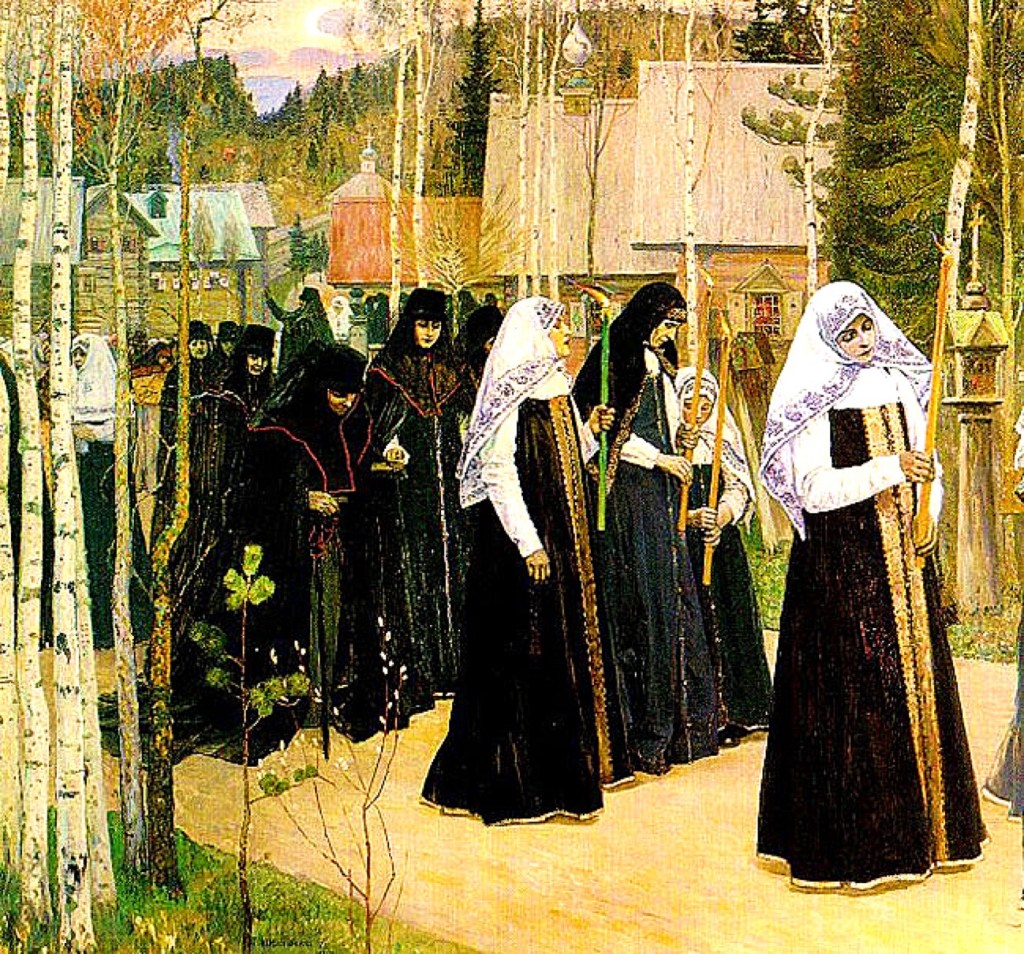
Scriabin’s relationship with musical schools and contemporaries was complex. Unlike the Mighty Handful, who focused on Russian nationalism, Scriabin’s style was cosmopolitan, individualistic, and spiritual. Chopin, Liszt, and Tchaikovsky influenced him, but his later works broke away from all schools, embracing a post-tonal, mystical, and individualistic approach. His mature style is distinctly his own—a fusion of Russian Romanticism, Symbolist mysticism, and modernist innovation.
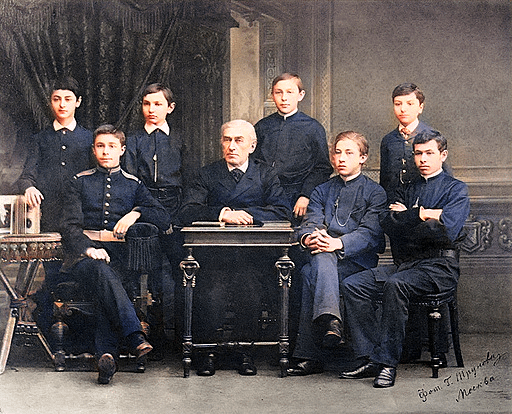
Scriabin and Sergei Rachmaninoff shared a relationship of mutual respect and professional connection. Both studied at the Moscow Conservatoire in the late 1880s and early 1890s, with Scriabin graduating a year ahead of Rachmaninoff with a Gold Medal in piano. They knew each other well from their time at the Conservatory and early careers, with Rachmaninoff later recalling Scriabin’s virtuosity and improvisational skills. In their early years, Rachmaninoff conducted Scriabin’s Symphony No. 1 in subsequent performances, and he championed Scriabin’s early works, such as the Preludes, Op. 11, which he performed in recitals. Scriabin, in turn, admired Rachmaninoff’s compositions and attended premieres of his works, including the Piano Concerto No. 2.
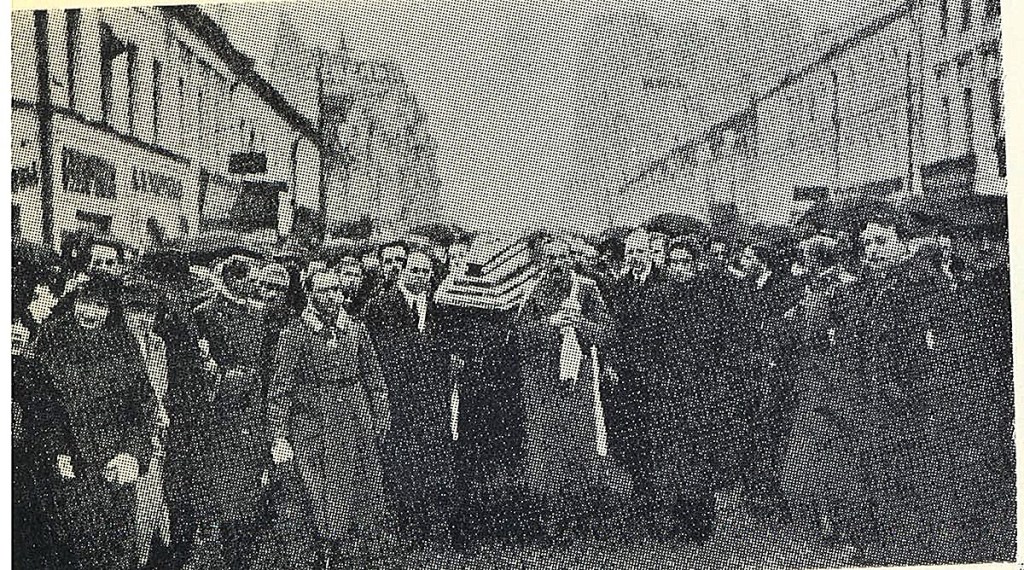
However, as Scriabin’s music became more harmonically unconventional, particularly with works like Piano Sonata No. 4, Op. 30, and Piano Sonata No. 5, Op. 53, Rachmaninoff began to struggle with the dissonance. The latter work, with its introduction of the mystic chord, marked a turning point in their artistic relationship. Rachmaninoff showed little affinity for Scriabin’s later works, and their paths diverged. Despite this, they remained on good terms, and Rachmaninoff was deeply affected by Scriabin’s death in 1915. The musical community attended Scriabin’s funeral in large numbers, testament to the impact he had on his contemporaries.
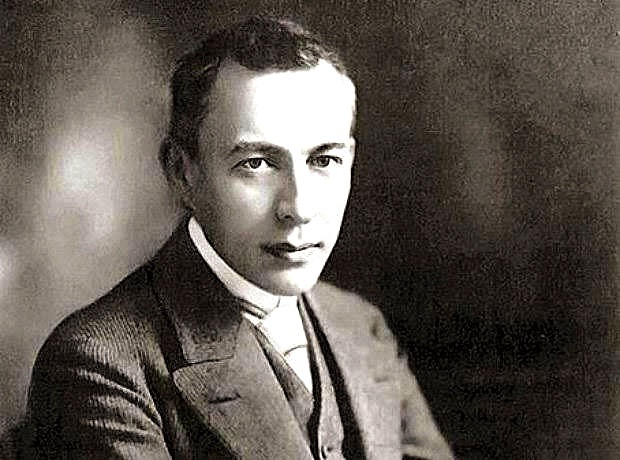
In contrast to the Piano Sonata No. 5, Op. 53, Rachmaninoff’s Symphony No. 2 in E minor, Op. 27, is a quintessential example of late Romantic music. Known for its lyrical melodies, rich harmonies, and emotional depth, the symphony highlights Rachmaninoff’s mastery of orchestration and his ability to convey profound emotional expression. It was well-received at its premiere and has become a staple of the orchestral repertoire, appreciated for its balance of passion and structure.
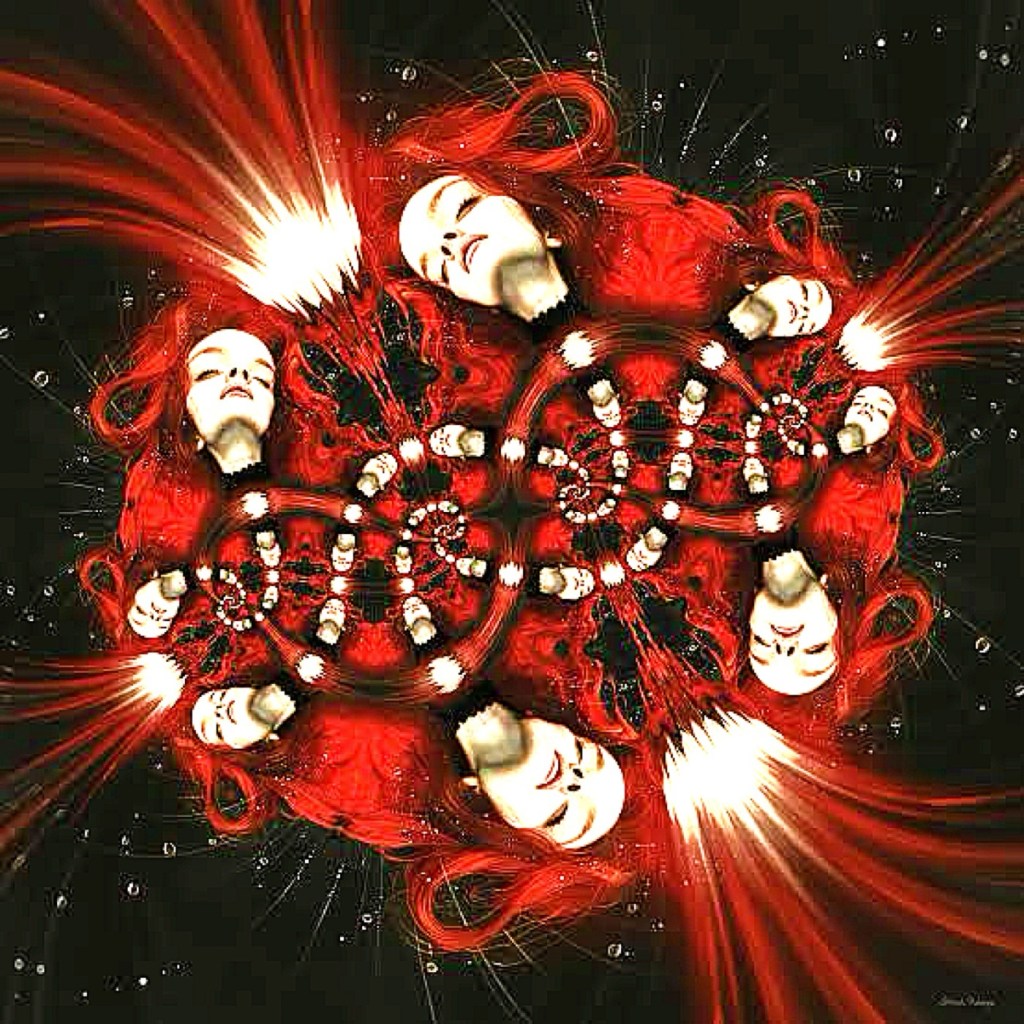
Scriabin’s The Poem of Ecstasy abandons traditional sonata form in favour of a free, ecstatic structure. Composed between 1905 and 1908, it reflects Scriabin’s mystical and spiritual vision, with lush orchestration and innovative use of timbres that evoke a sense of transcendence and emotional intensity. Scriabin himself described it as “a poem of the soul’s struggle toward freedom and light.” This work is often seen as a pivotal moment in Scriabin’s output, marking his transition from the Romantic tradition to a more modernist approach.
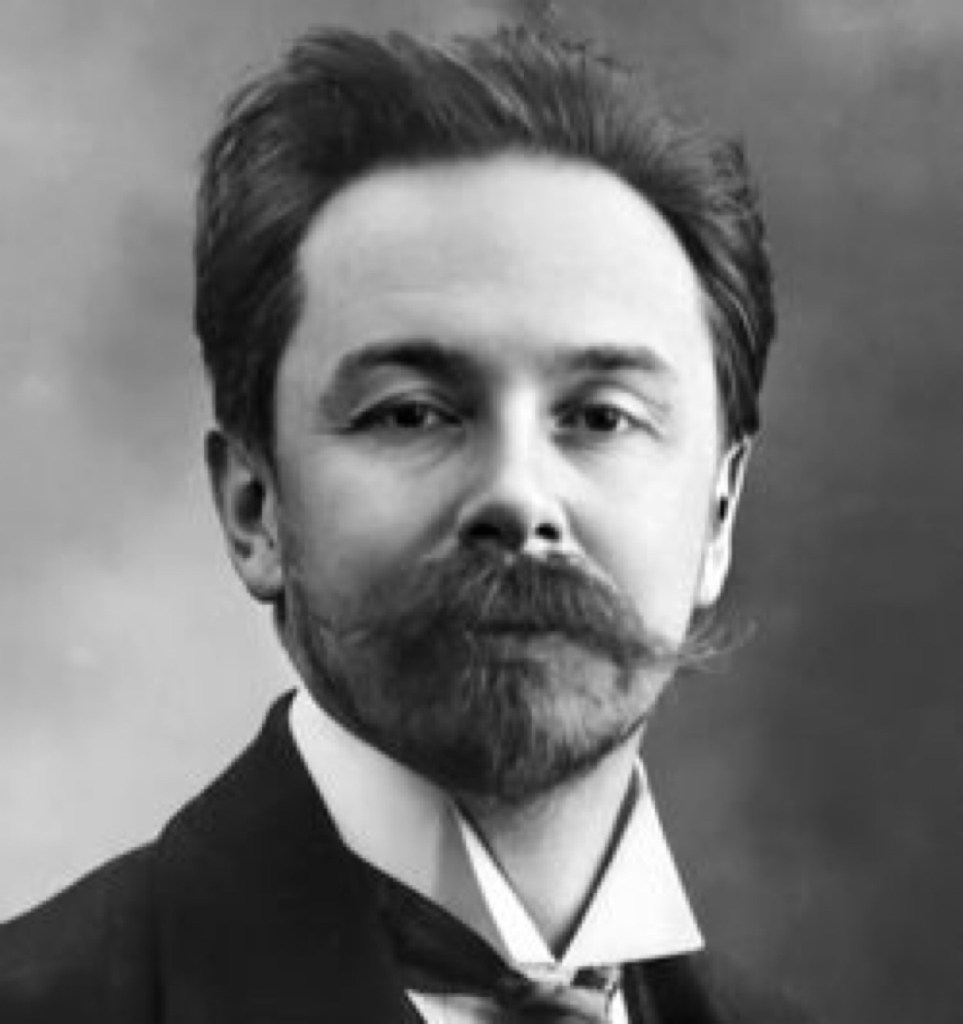
Scriabin’s legacy endures powerfully in the evolution of 20th-century music. Olivier Messiaen explicitly acknowledged the impact of Scriabin’s harmonic and spiritual approach, particularly in his own masterpiece, Turangalîla-Symphonie. Sergei Prokofiev, though critical of Scriabin’s later atonal experiments, admired his early piano works and was influenced by his daring harmonic language. Pierre Boulez and György Ligeti recognised Scriabin as a pioneer whose innovations paved the way for modernist atonality and serialism. Even in contemporary film scoring, Hans Zimmer has noted that Scriabin’s bold harmonic dissonance inspired the dark, textural soundscapes of works like Inception and Dune. Through these diverse musical lineages, Scriabin’s visionary spirit continues to resonate, cementing his reputation as one of the most forward-thinking composers of his era.
This article was researched using primary and secondary sources with the assistance of Le Chat Pro. The research was cross-checked for accuracy.


Leave a comment